
Kartik Purnima -- The Full Moon a Month After Sharad, a Fortnight After Diwali
कार्तिक पूर्णिमा -- शरद के एक महीने बाद, दीवाली के पखवाड़े भर बाद वाली पूर्णिमा
Eternal Raga's article on Sharad Purnima opens with a warning: do not confuse it with Kartik Purnima, the full moon that follows a lunar month later. This article carries the same warning in reverse. Kartik Purnima is not Sharad Purnima. It does not belong to Krishna's Raas Leela in Vrindavan or to Bengal's all-night Kojagari vigil for Lakshmi. It falls a full lunar month after that festival, on the Purnima tithi of the month of Kartik, and in 2026 that date is 24 November.
The two full moons are also structurally different in what surrounds them. Sharad Purnima stands alone in the calendar, the brightest single night of the Ashwin-Kartik transition. Kartik Purnima instead falls at the far end of a month that is already crowded with observance. In the Purnimanta reckoning followed across most of North India, Kartik month begins the day after Sharad Purnima and ends on Kartik Purnima itself, fifteen days later. Diwali, the main night of Lakshmi Puja, falls roughly halfway through this month on Kartik Amavasya, the new moon. Ten days after that comes Prabodhini or Dev Uthani Ekadashi, when Vishnu is said to wake from his four-month yogic sleep and the wedding season reopens with the ritual marriage of Tulsi and Shaligram, a practice covered in full on Eternal Raga's Tulsi Vivah page. Kartik Purnima, five days later again, closes the whole sequence.
This makes Kartik Purnima less a single festival with one clean origin story and more a finish line. It inherits the accumulated weight of a month that Hindu tradition treats as unusually auspicious for bathing, fasting, and lamp-lighting (a set of practices generally called Kartik Snan and Kartik Vrata), and it gathers several distinct traditions, Hindu, Sikh, and Jain, onto the same night without any of them being reducible to the others.
न कार्तिकसमो मासो न कृतेन युगं समम्। न वेदसदृशं शास्त्रं न तीर्थं गङ्गया समम्॥
na kārtikasamo māso na kṛtena yugaṃ samam | na vedasadṛśaṃ śāstraṃ na tīrthaṃ gaṅgayā samam ||
No month equals Kartik, no yuga equals the Krita Yuga, no scripture equals the Veda, and no sacred place equals the Ganga.
— Padma Purana, Kartik Mahatmya, traditionally recited through the month of Kartik in North Indian households and temples
Dev Diwali and the Story Behind Tripurari Purnima
The most visible modern expression of Kartik Purnima happens roughly 800 kilometres from Vrindavan, on the ghats of Varanasi. Dev Diwali, literally the Diwali of the gods, has grown over the past two decades into one of the city's largest public events: in 2025, an estimated 25 lakh (2.5 million) earthen lamps were lit across Varanasi's 84 ghats along the Ganga, arranged partly by the Uttar Pradesh tourism department and partly by residents and local trusts, alongside a Ganga aarti performed at a scale far beyond its usual evening ceremony. The belief behind the name is straightforward: on this one night, the gods themselves are said to descend to bathe in the Ganga and celebrate among mortals, which is why the illumination on this night is framed as a celebration hosted for them rather than by them.
The Puranic story most directly tied to this night is not about Vishnu but about Shiva. Three demon brothers, sons of Tarakasura, are said to have won a boon from Brahma that let them build three flying cities of gold, silver, and iron, together called Tripura, from which they terrorised the three worlds. When the devas could not defeat them by ordinary means, Shiva took up a single arrow capable of destroying all three cities at once and, on this tithi, fired it, earning the epithet Tripurantaka or Tripurari, destroyer of Tripura. Several regional temple traditions, including at Ramtek in Maharashtra, mark this specific story under the name Tripurari Purnima or Tripuri Purnima, treating it as functionally the same observance as Kartik Purnima under a different name tied to a different deity's role in it.
A separate and less universally fixed claim links this night to Vishnu instead, through Matsya, the fish avatar who is said in some Puranic accounts to have rescued the Vedas and the seed of humanity from a great deluge. Some devotional calendars place Matsya's appearance on this tithi; others place it on Chaitra Purnima or leave the date unspecified altogether. Unlike the well-documented Tripurasura story, the Matsya-Kartik Purnima link is best treated as one regional tradition among several rather than a fixed, universally agreed date, and readers encountering it elsewhere should expect that variation.
Kartik Purnima Across Three Traditions
| Tradition | परंपरा | What Is Marked | Where It Is Most Visible |
|---|---|---|---|
| Hindu | हिंदू | Dev Diwali at Varanasi; Tripurari Purnima, Shiva's destruction of the demon cities of Tripura | Varanasi ghats; Ramtek and other Shiva temples |
| Sikh | सिख | Gurpurab, the birth anniversary of Guru Nanak, the first Sikh Guru | Gurdwaras worldwide, especially Nankana Sahib and the Golden Temple |
| Jain | जैन | The nirvana (liberation) of Gautam Swami, chief disciple of Mahavira, observed as a festival of light | Jain temples and communities, particularly in Gujarat and Rajasthan |
These three observances share a calendar date but not a shared theology or origin story; each community marks the night for reasons specific to its own tradition, and none of the three treats the others' reasons as central to its own.
Guru Nanak's birth anniversary is calculated on the lunar Kartik Purnima tithi rather than a fixed Gregorian date, which is why Gurpurab moves across the Western calendar from year to year even though Sikh tradition holds the date itself, Purnima of Kartik, as fixed. The main celebrations at Nankana Sahib in present-day Pakistan and at the Golden Temple in Amritsar include an Akhand Path, an unbroken 48-hour reading of the entire Guru Granth Sahib that concludes on the morning of the Purnima itself, alongside processions called Nagar Kirtan. Separately, several regional Hindu Kartik Snan traditions hold that any of the thirty days of the Kartik month carries merit for an early-morning river bath, but that the merit of the full month is concentrated most strongly on its final day, which is one reason Kartik Purnima draws crowds at river ghats, from the Ganga at Varanasi to the Narmada at Omkareshwar, well beyond Varanasi's Dev Diwali events alone.
A Month That Ends Where Diwali's Cluster Began
Read against the rest of the Kartik month, Kartik Purnima's position starts to make more sense than it does as an isolated date on a calendar app. The month opens the day after Sharad Purnima with the last stretch of the monsoon's retreat; it holds Diwali roughly at its midpoint; it reopens the wedding season at Prabodhini Ekadashi, when the four-month Chaturmas restriction on new ventures and weddings, observed since Vishnu's ritual sleep began at Devshayani Ekadashi in the monsoon month of Ashadha, is said to lift; and it ends, five days after that reopening, at the full moon. Eternal Raga's article on Ekadashi Vrata covers the Chaturmas cycle and the Devshayani-to-Prabodhini arc in detail; this article's job is simply to place Kartik Purnima correctly at the far end of that arc rather than repeat it.
In practice, most households mark the day itself with a version of the same core acts that recur throughout Kartik month: an early bath, ideally in a river or at least before sunrise, a lamp lit at the household Tulsi plant, and, where a temple or riverbank observance is accessible, participation in the evening's aarti. What distinguishes Kartik Purnima from an ordinary day within the month is less any unique ritual invented for it and more its position as a threshold, the night the month's accumulated observance is considered to reach its fullest merit, its correspondingly largest crowds, and its formal close. Read together, Sharad Purnima and Kartik Purnima bracket the same seven-week stretch of the Hindu calendar from two directions: one opens Kartik with Krishna's moonlit dance in Vrindavan, and the other closes it with lamps on the Ganga at Varanasi.
Mark Kartik Purnima With a Lamp for Tulsi
At dusk on Kartik Purnima, recite the Vishnu Sahasranama or a short Tulsi stotra. If you cannot reach a river ghat, lighting a single diya at home facing the Tulsi plant carries the same intention. The Vishnu Sahasranama and the Tulsi Stotram are both on Eternal Raga with their meaning.
Tags
Eternal Raga · शाश्वत राग
Institutional voice — scholarly articles on Sanatan Dharma
Deepen Your Understanding
अपनी समझ और गहरी करें
rituals traditions
Sharad Purnima -- The Full Moon That Ends the Monsoon
One full moon, three names, three quite different focal points. In Vrindavan it is Raas Purnima, the night of Krishna's circular dance with the gopis. In Bengal it is Kojagari Purnima, the night Lakshmi is believed to ask who is still awake. In most North Indian kitchens it is simply the night kheer gets left out under the sky. Sharad Purnima is not to be confused with Kartik Purnima, the full moon that follows it a month later.
rituals traditions
Diwali -- Five Days of Light
Diwali is not one night of firecrackers. It is a five-day arc from Dhanteras to Bhai Dooj, layering wealth, ancestors, Lakshmi, community, and sibling bonds into a single liturgical sequence. Its origins span Rama's return, Krishna's Narakasura victory, Jain Mahavira's nirvana, and Sikh Bandi Chhor Divas -- making it the most theologically layered festival in the Indian calendar.
rituals traditions
Tulsi Vivah -- When Hindus Marry a Plant to a Stone (And Why It Makes Perfect Sense)
On Prabodhini Ekadashi (the 11th day of Kartik Shukla), Hindu households across India perform a wedding ceremony -- not between two people, but between Tulsi (the sacred basil plant) and Shaligram (a fossilised ammonite stone representing Vishnu). The plant is dressed as a bride. The stone is the groom. Mantras are chanted. Seven rounds are taken. And from this day, the Hindu marriage season officially opens -- because Vishnu has awakened from his four-month sleep, and the first wedding of the year is his own.
rituals traditions
Ekadashi -- Why Hindus Fast on the 11th Day (And What the '11' Actually Means)
Twice every lunar month, millions of Hindus stop eating grains. Not as a diet. Not for health. Because the Padma Purana says that on the 11th day of the lunar fortnight, all sin takes refuge in grain -- and the person who abstains from grain on that day is freed from sin and drawn closer to Vishnu. The number 11 is not accidental: it represents the 10 senses plus the mind, and Ekadashi is the day you master all eleven. This is the most widely observed Vrata in the Hindu world -- and it maps almost perfectly onto modern intermittent fasting science.
deities avatars
Dashavatara -- Why Vishnu Comes Back Ten Times
Fish, tortoise, boar, half-lion, dwarf, axe-warrior, prince, cowherd, enlightened teacher, future horseman. The ten avatars of Vishnu are not random folklore. Read them in sequence and you get something startling -- a narrative that mirrors evolutionary biology, tracks the rise and fall of political systems, and argues that God does not sit above history but enters it, gets dirty, and does the work. The Dashavatara is Hinduism's answer to the question every civilisation asks: why does the world keep breaking, and who fixes it?
vedic sciences
Kaal Ganana -- The Hindu Measure of Time
From a single blink of the eye (Nimesha) to one Day of Brahma (4.32 billion years) -- explore the complete cosmic time hierarchy of Hindu cosmology, anchored in Vishnu Purana 1.3, with its remarkable parallels to modern science.
Guru Nanak's birth anniversary is calculated on the lunar Kartik Purnima tithi rather than a fixed Gregorian date, which is why Gurpurab moves across the Western calendar from year to year even though Sikh tradition hold…
More in Rituals & Traditions
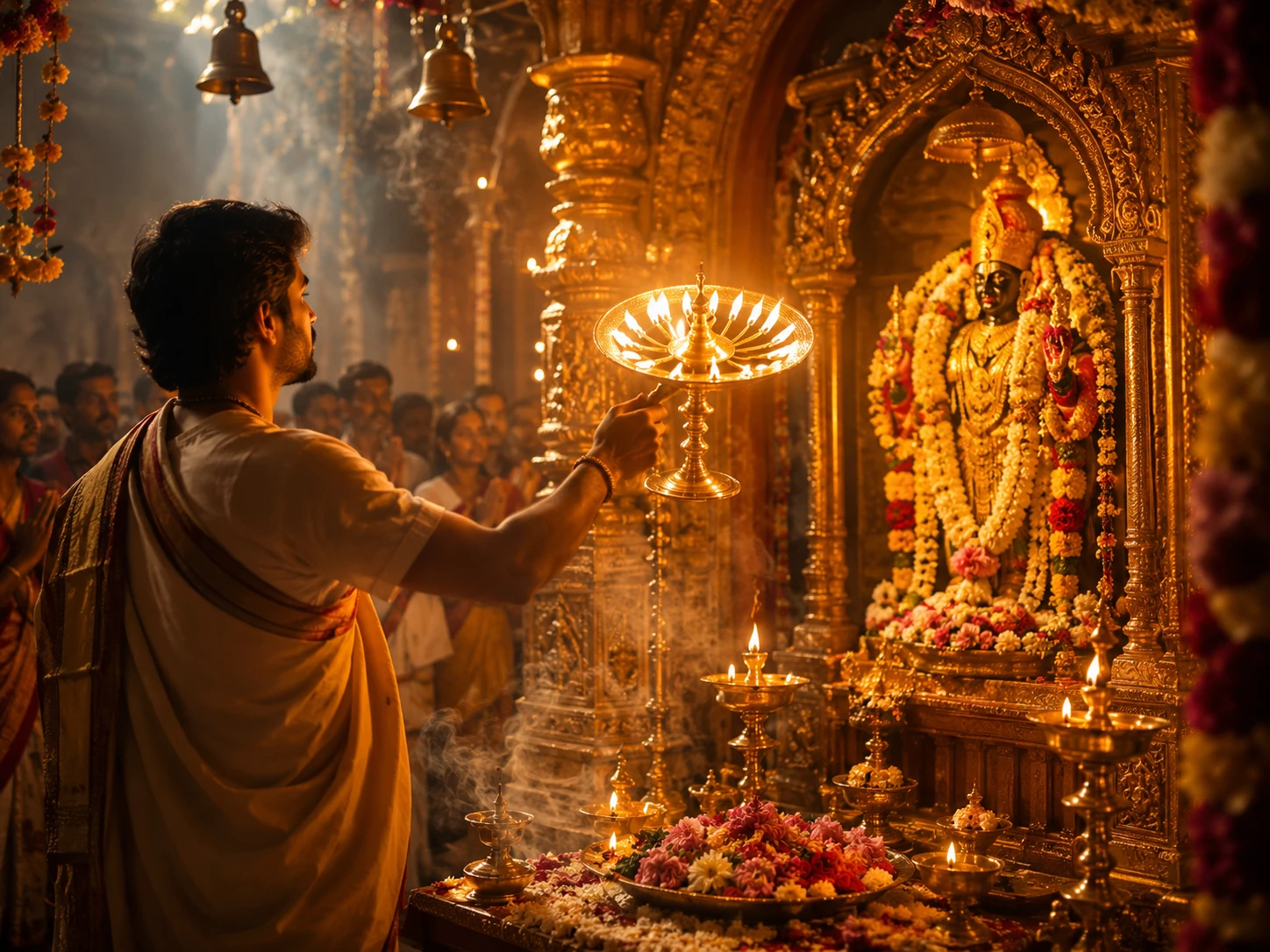
Aarti -- Why Hindus Circle Light Before God
13 min read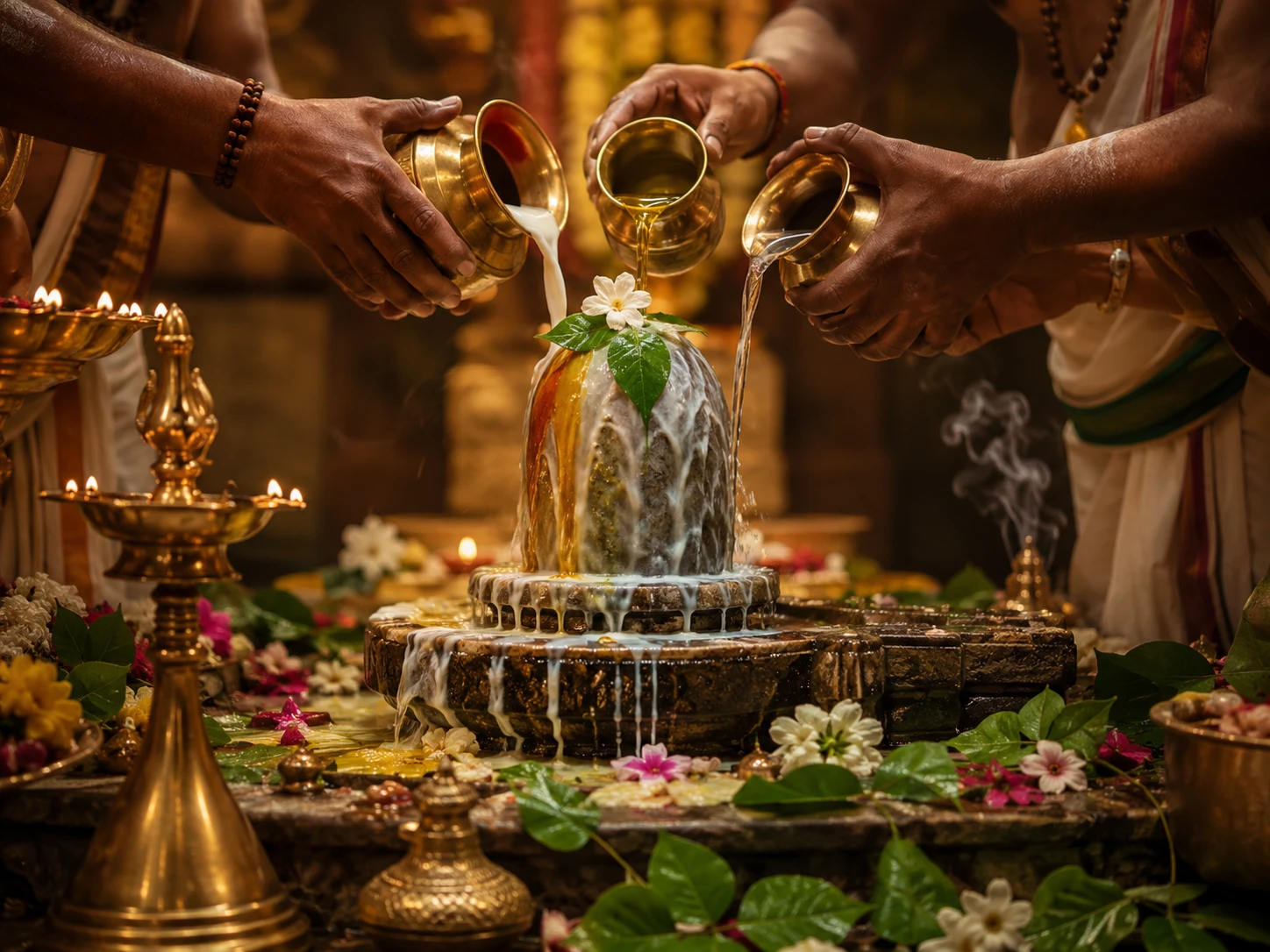
Abhisheka -- Why Hindus Bathe Their Gods
10 min read
Akshaya Tritiya -- The Day Nothing Given Away Runs Out
12 min readThe same translation error that turned '33 Koti' into '33 crore' in Hinduism also happened in Buddhism. The Chinese translation of Buddhist texts rendered 'Sapta Koti Buddha' (7 Supreme Buddhas) as '7 Crore Buddhas.' The…
Deities AvatarsCommunity Reflections
🕉️
Be the first to share your reflection.