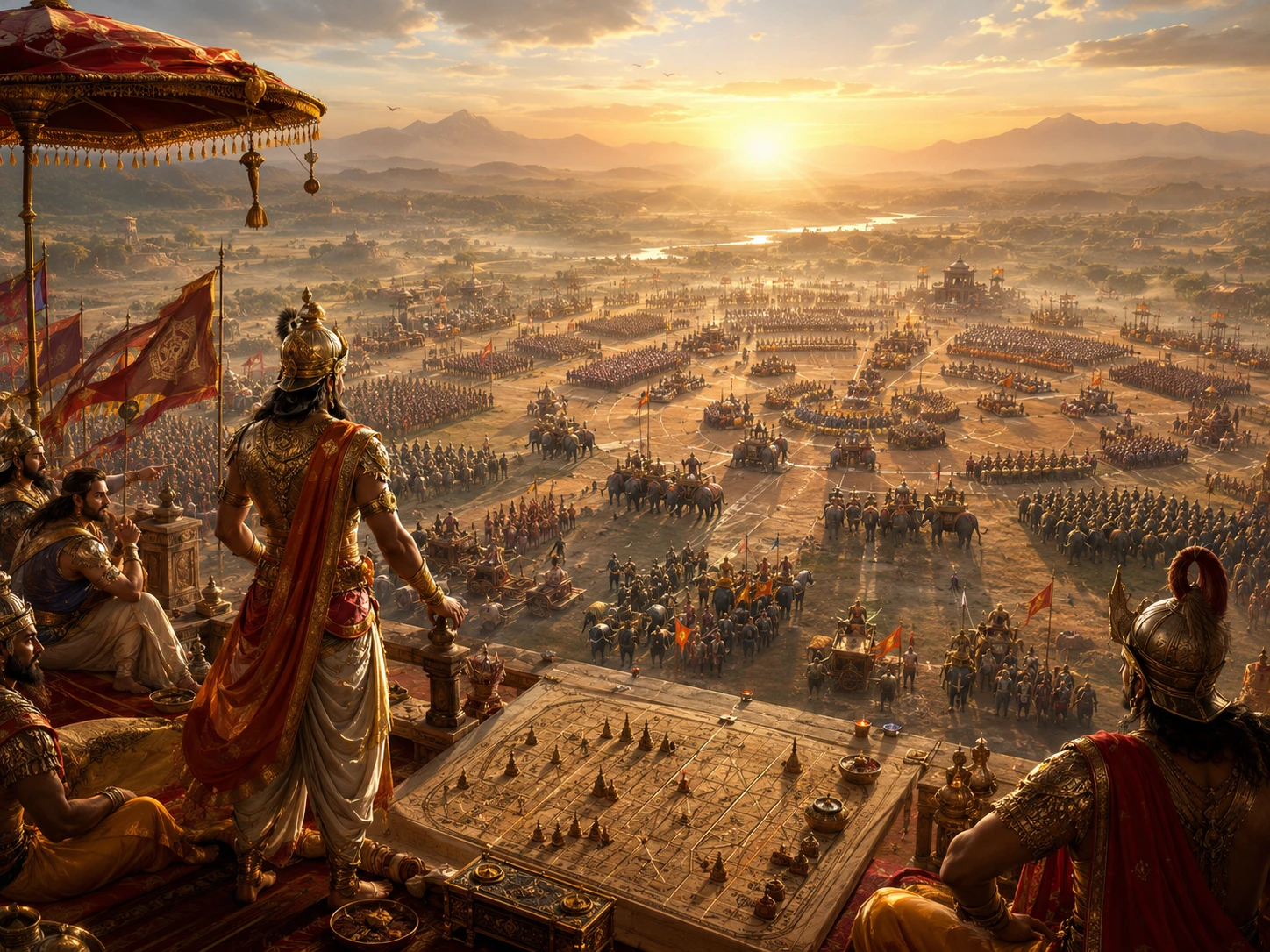
Ancient Indian Martial Arts -- Kalaripayattu to Malla-Yuddha
प्राचीन भारतीय मार्शल आर्ट्स -- कलारिपयट्टु से मल्लयुद्ध तक
When the Western world discusses martial arts, the conversation invariably centres on East Asia -- Kung Fu, Karate, Taekwondo, Judo. India is almost never mentioned. This is one of the great oversights in global cultural history. India possesses the oldest documented martial arts tradition on the planet, the most diverse regional fighting systems in any single country, and a living tradition that has survived colonialism, modernisation, and cultural amnesia to remain practised today in gymnasiums, temples, and village grounds from Thiruvananthapuram to Tarn Taran.
The Dhanur Veda -- literally 'the science of archery,' but functioning as a comprehensive military science treatise -- is referenced in texts dating to the Vedic period. The Agni Purana devotes multiple chapters to martial training. The Vishnu Dharmottara Purana describes 32 types of combat training. Kautilya's Arthashastra (4th century BCE) mandates systematic military education for all Kshatriyas and describes training regimens for infantry, cavalry, charioteers, and elephant corps.
What makes Indian martial arts distinctive is not just their antiquity but their integration with other knowledge systems. Kalaripayattu is inseparable from Ayurveda. Malla-Yuddha is intertwined with Yoga. Gatka is embedded in Sikh spiritual practice. In India, learning to fight was never just about combat -- it was about understanding the body, controlling the breath, and channelling discipline into a form that could protect dharma when words failed.
धनुर्वेदं महेशानाद् विश्वामित्रो महामुनिः। लेभे तपोबलाद् देवात् ससर्ज च महाबलः॥
dhanurvedam maheshaanaad vishvaamitro mahaammunih | lebhe tapobalaat devaat sasarja ca mahabalah ||
The great sage Vishvamitra received the Dhanur Veda from Lord Maheshwara (Shiva) through the power of his austerities, and the mighty one then propagated it.
— Agni Purana, Adhyaya 249
Kalaripayattu, practised primarily in Kerala and parts of Karnataka and Tamil Nadu, is widely considered the oldest surviving systematic martial art in the world. Tradition attributes its founding to Parashurama, the sixth avatar of Vishnu, who is said to have established 108 kalaris (training centres) across Kerala after reclaiming the land from the sea. The historical record is more measured but still extraordinary: references to organised combat training in Kerala appear in Sangam literature (3rd century BCE to 3rd century CE), and the art's integration with Ayurvedic marma therapy (targeting the body's 108 vital pressure points) places it at the intersection of medicine and martial skill.
A kalari is not merely a gym. It is a temple. Students begin training with a prayer to the Poothara (the seven-tiered platform representing the guardian deity of the kalari). The floor is dug below ground level for temperature control and injury absorption. Training begins with Meippayattu (body conditioning), progresses through Kolthari (wooden weapons), Angathari (metal weapons including the Urumi -- a flexible whip-sword unique to Kerala), and culminates in Verumkai (bare-hand combat). The highest level of training is not fighting at all -- it is Marma Chikitsa, the ability to heal the injuries you now know how to inflict.
The CVN Kalari in Thiruvananthapuram, founded in 1945 by C.V. Narayanan Nair, remains the most respected institution. Today, kalaris in Kozhikode, Kannur, and Kasaragod train thousands of students annually. The Kerala government has integrated Kalaripayattu demonstrations into its tourism calendar, and performers from the Kerala Kalamandalam regularly tour internationally.
Major Indian Martial Arts -- Regional Heritage Map
| Martial Art | Region | Primary Weapons / Style | Spiritual Root | Current Status |
|---|---|---|---|---|
| Kalaripayattu | Kerala, Karnataka | Urumi, Otta, Sword-Shield, Bare hand + Marma | Parashurama / Shiva; integrated with Ayurveda | Thriving. Government-funded. International tours. 1,000+ kalaris. |
| Malla-Yuddha | Pan-India (Varanasi, Kolhapur, Punjab) | 4 styles: Hanumanti (strength), Jambuvanti (locks), Jarasandhi (breaks), Bhimaseni (power) | Hanuman; Akhara system tied to temple culture | Declining but alive. Varanasi akharas, Kolhapur talim. Kushti revived via Pro Wrestling League. |
| Gatka | Punjab, Haryana | Stick, Sword (Kirpan/Talwar), Chakram, Lathi | Sikh Gurus; Khalsa warrior tradition | Strong revival. Gatka at Hola Mohalla. Recognized by Govt of India as a sport (2010). |
| Silambam | Tamil Nadu | Bamboo staff (primary), flexible sword, deer horn | Murugan (Kartikeya); Sangam-era references | Growing. World Silambam Federation. Exported to Malaysia/Singapore via Tamil diaspora. |
| Thang-Ta | Manipur | Sword (Thang) + Spear (Ta); dance-combat fusion | Sanamahi faith; Meitei warrior culture | Reviving. Huyen Langlon academy. Cultural performances. |
| Varma Kalai | Tamil Nadu, Sri Lanka | Pressure point striking (Varma Adi); 108 vital points | Siddha medicine tradition; Agastya Muni | Rare. Secretive transmission. Fewer than 200 masters estimated. |
| Paika Akhada | Odisha | Sword, shield, khanda, stick | Jagannath Temple warrior tradition | Reviving. Paika Rebellion (1817) heritage. State cultural events. |
| Sqay | Kashmir | Curved single-edge sword + shield | Buddhist/Hindu warrior tradition of Kashmir Valley | Recognized sport. National Sqay Championship held annually. |
India has more distinct indigenous martial arts than any other country. Each is tied to a specific geography, spiritual tradition, and community -- making them irreplaceable cultural heritage, not just fighting techniques.
Malla-Yuddha -- literally 'wrestler's combat' -- is the Indian wrestling tradition that produced the akhara system, influenced Mughal-era Pehlwani, and ultimately contributed to the global sport of wrestling. The Mahabharata contains the most famous wrestling match in Indian literature: Bhima versus Jarasandha, where Bhima -- on Krishna's strategic advice -- tears Jarasandha's body in half along the seam where he was originally joined at birth.
The Malla Purana (13th century) classifies Malla-Yuddha into four styles named after mythological figures: Hanumanti (emphasising raw strength), Jambuvanti (emphasising locks and holds, named after the bear-king Jambavan), Jarasandhi (emphasising breaking and joint manipulation), and Bhimaseni (emphasising raw power and intimidation). Each style maps to a body type and temperament.
The akhara -- the traditional Indian wrestling gymnasium -- is a living institution. In Varanasi, akharas like Tulsi Ghat Akhara and Sankat Mochan Akhara have operated continuously for centuries. The floor is prepared with ghee-mixed red earth. Training begins before dawn with surya namaskar, followed by bethak (deep squats, 500-3,000 daily), dand (Hindu push-ups, 500-2,000 daily), and rope climbing. The diet is strictly vegetarian, built around almonds, milk, ghee, and chana. There is no protein powder. There are no supplements. The results speak through bodies that have been built this way for millennia.
In Kolhapur, Maharashtra, the talim (wrestling gymnasium) tradition produces national-level wrestlers. Sakshi Malik, Bajrang Punia, and the Phogat sisters all trained in variations of this akhara-rooted system. When Vinesh Phogat competes at the Olympics, the muscle memory in her body traces back through the Pehlwani tradition, through the Mughal akharas, through the Rajput wrestling pits, all the way to Bhima and Hanuman.
Bodhidharma (known as Damo in China), the Indian monk who travelled to China in the 5th-6th century CE and is credited with founding Chan (Zen) Buddhism, is also traditionally credited with teaching physical exercises to the monks at the Shaolin Temple that eventually evolved into Shaolin Kung Fu. While this claim is debated by historians, the Shaolin Temple itself acknowledges an Indian martial influence. If even partially true, it means that Kung Fu -- the most famous martial art in the world -- has Indian roots. The chain runs: Kalaripayattu/Vajramushti (India) to Bodhidharma to Shaolin to Kung Fu to Okinawan Karate to global martial arts. India may be the grandmother of them all.
Gatka, the Sikh martial art of Punjab, has a history inseparable from the formation of the Khalsa itself. When Guru Gobind Singh Ji created the Khalsa in 1699 at Anandpur Sahib, he mandated that every Sikh carry a Kirpan (sword) and be trained in its use. Gatka became the system through which this mandate was fulfilled. The word itself derives from the wooden stick used in training.
Gatka is performed at every major Sikh festival, most spectacularly at Hola Mohalla in Anandpur Sahib -- a three-day martial arts festival established by Guru Gobind Singh Ji as a counterpart to Holi. Nihang warriors demonstrate sword work, tent-pegging, bareback horse riding, and the use of the chakram (steel quoit) that they wear in their turbans. The Nihang tradition is the living embodiment of the warrior-saint ideal: men who are simultaneously meditators and fighters, scholars and soldiers.
In 2010, the Government of India officially recognized Gatka as an indigenous sport. National championships are held annually. The Gatka Federation of India has affiliated units in 15 states. At the Khalsa Heritage Complex in Anandpur Sahib, young Sikhs learn Gatka alongside Gurbani and Kirtan -- warfare and worship in the same breath.
Silambam, from Tamil Nadu, centres on the bamboo staff and has Sangam-era roots. Its influence extends across Southeast Asia, where Tamil traders and warriors carried the art to Malaysia, Singapore, and the Philippines. Filipino Eskrima, one of the most practical stick-fighting systems in modern martial arts, shows documented parallels with Silambam techniques. When an Eskrima practitioner in Manila executes a double-stick sinawali pattern, the geometric structure of the movement echoes training drills that were practised in Madurai two thousand years ago.
The Urumi -- the flexible whip-sword of Kalaripayattu -- is considered one of the most dangerous weapons ever created for personal combat. Made of flexible steel, it can be coiled around the waist like a belt when not in use and unsheathed to become a whirling blade that can strike from unpredictable angles. A skilled urumi fighter can wield two simultaneously while defending against multiple opponents. The weapon has no direct equivalent in any other martial tradition worldwide. It is so dangerous that masters in Kalaripayattu teach it only to advanced students who have demonstrated both technical skill and emotional stability -- the belief being that a weapon this lethal requires a mind that will not use it rashly.
Build Warrior Discipline -- Morning Meditation
Indian martial traditions such as kalaripayattu set great store by breath control and stillness. Start your own warrior discipline with ten minutes of nadi shodhana each morning, before any physical training. The nadi shodhana page on Eternal Raga explains the technique step by step.
Eternal Raga · शाश्वत राग
Institutional voice — scholarly articles on Sanatan Dharma
Deepen Your Understanding
अपनी समझ और गहरी करें
divine arsenal
Astra vs Shastra -- The Two Classes of Weapons in Hindu Warfare
One is hurled with mantras and divine invocation. The other is wielded by hand and muscle. Understanding the fundamental difference between Astra and Shastra unlocks the entire weapons philosophy of ancient India.
divine arsenal
Rules of War -- Dharmayuddha and the Geneva Conventions
Three thousand years before the Geneva Conventions, Indian warriors debated whether you could strike a man who had dropped his weapon. The Mahabharata's rules of engagement cover night fighting bans, non-combatant immunity, treatment of prisoners, proportional force, and the use of weapons of mass destruction -- and then shows what happens when every single rule is broken.
divine arsenal
Wootz Steel -- How India Armed the Ancient World
For over two thousand years, the finest sword steel on earth came from one place: India. Wootz -- the crucible steel of South India -- was exported to Damascus, Persia, China, Rome, and Arabia. Its distinctive watered pattern, legendary sharpness, and carbon nanotube microstructure were not replicated by Western metallurgy until the 21st century. The Iron Pillar of Delhi has stood corrosion-free for 1,600 years. Indian metallurgy was not primitive. It was the most advanced in the world.
divine arsenal
The Sacred Swords -- Chandrahasa, Nandaka, Asi, and the Wootz Steel Legacy
Ravana's Chandrahasa laughed like the crescent moon as it cut. Vishnu's Nandaka separated truth from illusion with a single stroke. And the first sword ever created -- Asi -- was forged by Brahma himself as a living being of fire. These blades shaped mythology, and the steel that made them shaped world history.
divine arsenal
The Divine Shields and Armour -- Karna's Kavach-Kundal, Agastya's Gift, and the Spiritual Meaning of Protection
Karna was born wearing armour that made him invincible -- and gave it away to the one man who wanted him dead. Rama received divine armour from a sage moments before facing Ravana. In Hindu tradition, the greatest protection is not what you wear on your body but what you carry in your soul.
deities avatars
Hanuman -- The Perfect Devotee
He could lift mountains, leap oceans, and burn Lanka to the ground -- yet his greatest power was this: he never forgot whose work he was doing. Hanuman is not just a mythological hero. He is the operating system of selfless devotion that India still runs on.
Bodhidharma (known as Damo in China), the Indian monk who travelled to China in the 5th-6th century CE and is credited with founding Chan (Zen) Buddhism, is also traditionally credited with teaching physical exercises to…
More in Divine Arsenal
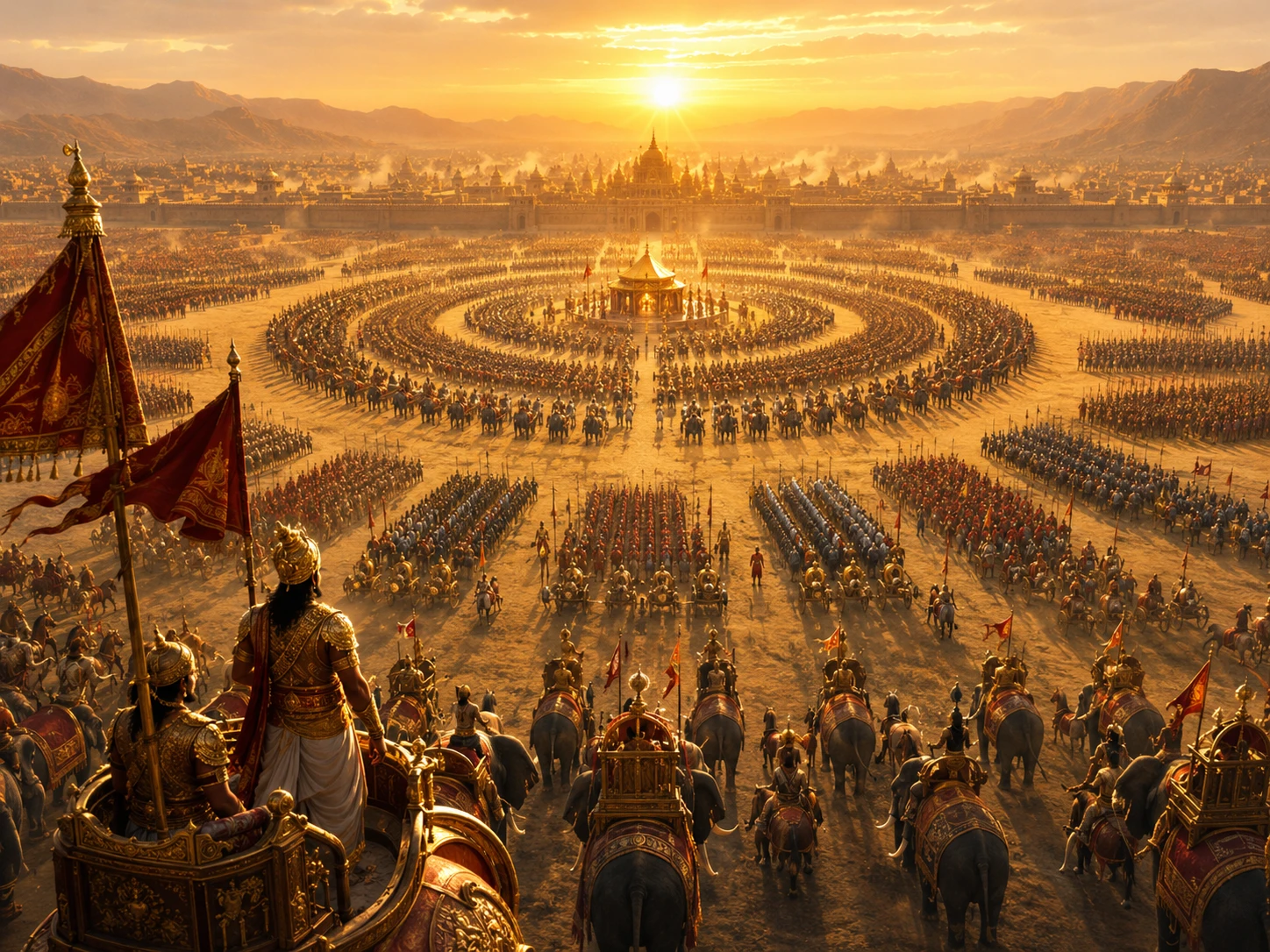
Akshauhini -- The Epic Army Structure Where Every Digit Sums to 18
14 min read
Astra Invocation and Withdrawal -- The Ritual of Weapons
16 min read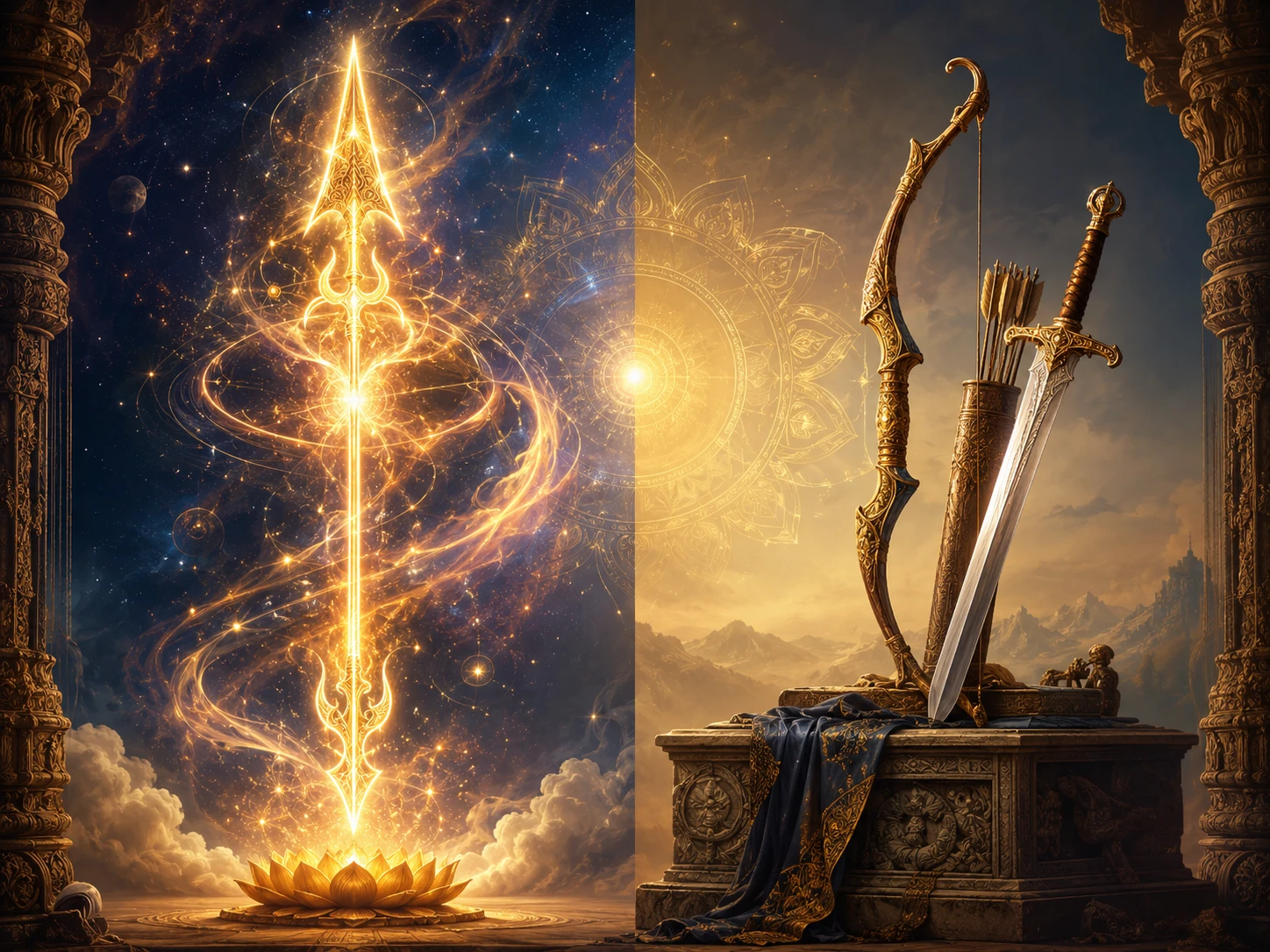
Astra vs Shastra -- The Two Classes of Weapons in Hindu Warfare
14 min readThe same translation error that turned '33 Koti' into '33 crore' in Hinduism also happened in Buddhism. The Chinese translation of Buddhist texts rendered 'Sapta Koti Buddha' (7 Supreme Buddhas) as '7 Crore Buddhas.' The…
Deities AvatarsCommunity Reflections
🕉️
Be the first to share your reflection.