Japa, Tapa, Dana -- The Three Disciplines That Purify Everything
जप, तप, दान -- तीन अनुशासन जो सब कुछ शुद्ध करते हैं
Chapter 18 of the Bhagavad Gita contains one of Krishna's most unequivocal instructions: 'Acts of sacrifice, charity, and austerity should not be abandoned. They must be performed. Yajna, Dana, and Tapa are purifiers of even the wise.' This is not a recommendation. It is a command. And it applies to everyone -- the sannyasi and the householder, the scholar and the labourer, the young and the old.
In daily Hindu practice, these three cosmic principles distil into three accessible disciplines that any person can perform every day:
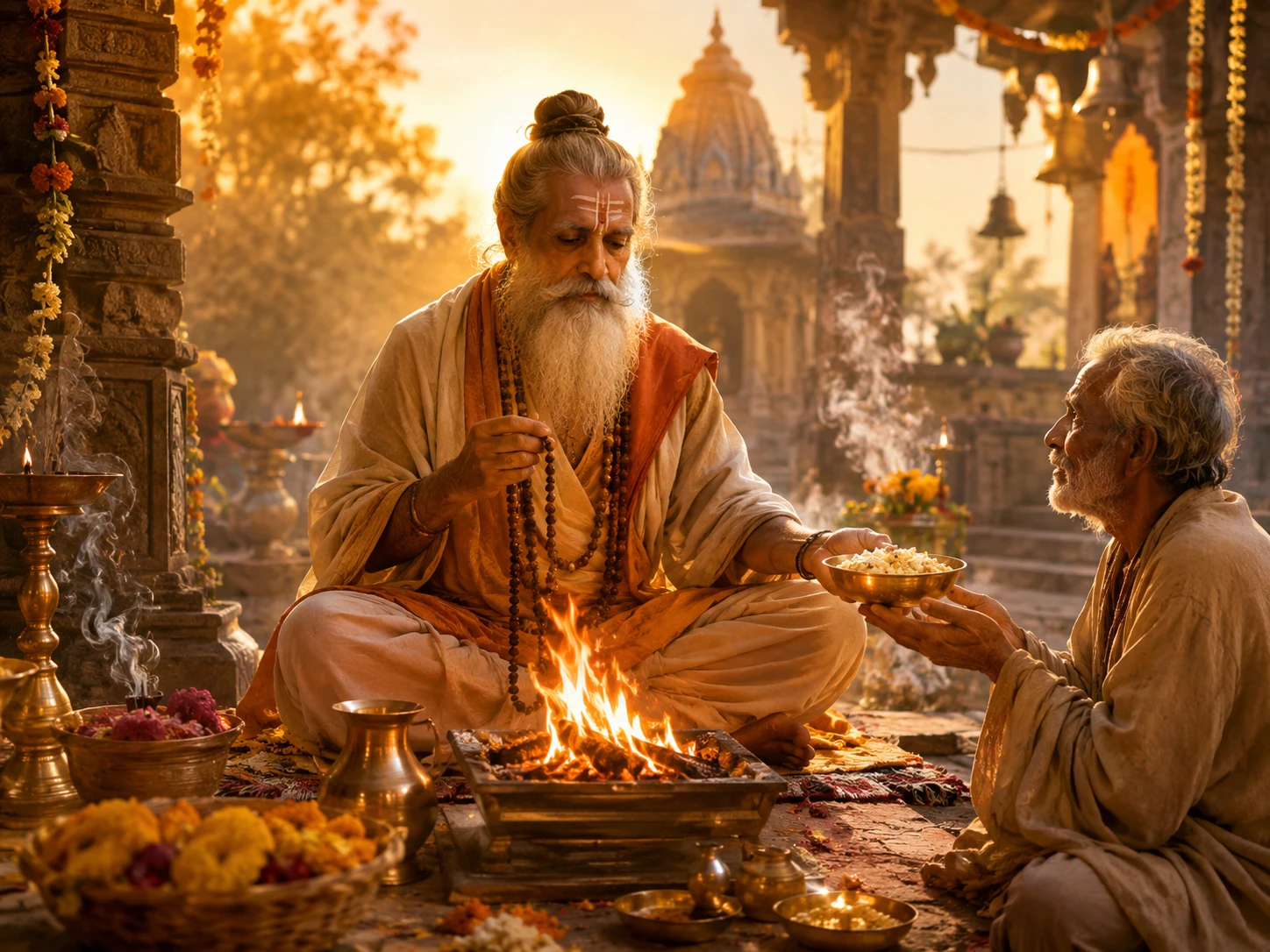
Japa -- the repetitive chanting of a mantra, typically on a mala (string of 108 beads). This is the householder's Yajna -- the daily sacrifice of time and attention offered to the divine through sound.
Tapa -- voluntary self-discipline or austerity. In its dramatic form, this is the forest-dwelling ascetic sitting motionless for years. In its daily form, it is any act of deliberate restraint: waking early, fasting on Ekadashi, controlling speech, maintaining a cold shower in winter, resisting the impulse to check the phone during meditation.
Dana -- giving without expectation of return. In its grandest form, this is the endowment of a temple or a university. In its daily form, it is the Rs 10 given to the beggar at the traffic light, the meal shared with the office peon, the knowledge freely transmitted to a junior colleague.
These three together form what the tradition calls the 'Tri-Vidha Tapas' -- the three-fold austerity that Krishna describes in Gita Chapter 17 as the foundation of a sattvic life. The three are not alternatives. They are a package. Japa without Tapa becomes mechanical. Tapa without Dana becomes self-centred. Dana without Japa lacks spiritual grounding. The three reinforce each other, creating a triangular foundation on which the entire structure of spiritual life rests.
यज्ञदानतपःकर्म न त्याज्यं कार्यमेव तत्। यज्ञो दानं तपश्चैव पावनानि मनीषिणाम्॥
yajña-dāna-tapaḥ-karma na tyājyaṁ kāryam eva tat yajño dānaṁ tapaś caiva pāvanāni manīṣiṇām
Acts of sacrifice, charity, and austerity should not be abandoned -- they must be performed. Sacrifice, charity, and austerity are purifiers of even the wise.
— Bhagavad Gita 18.5
Japa, Tapa, Dana -- The Three-Fold Daily Practice
| Discipline | अनुशासन | Cosmic Principle | Daily Form | Time Needed | Gita Reference |
|---|---|---|---|---|---|
| Japa | जप | Yajna (sacrifice) | 108 mantra repetitions on mala | 10-15 min | BG 10.25: 'Of yajnas, I am Japa Yajna' |
| Tapa | तप | Tapas (austerity) | Any voluntary restraint: early rising, fasting, silence, cold shower | Varies | BG 17.14-16: Three types of Tapas |
| Dana | दान | Dana (charity) | Giving food, money, knowledge, or time without expectation | 5-10 min | BG 17.20-22: Three types of Dana |
Krishna declares in BG 10.25: 'Of all Yajnas, I am Japa Yajna.' This makes Japa the supreme form of sacrifice -- more powerful than elaborate fire rituals, more accessible than Ashvamedha, and available to every human being regardless of circumstance.
Japa -- The Sacrifice You Can Perform Anywhere
Of the three, Japa is the most widely practiced and the most transformative for beginners. The word comes from the root 'jap' -- to mutter, to repeat. In practice, it means the repetitive chanting of a mantra -- silently, in a whisper, or aloud -- typically counted on a mala of 108 beads.
Krishna elevates Japa above all other forms of Yajna in Gita 10.25: 'Of sacrifices, I am the sacrifice of Japa.' This is a remarkable statement. Fire rituals require priests, materials, and specific Muhurtas. Ashvamedha requires a horse and a kingdom. But Japa requires nothing except a mantra and a willing mind. It can be performed on a Metro ride from Rajiv Chowk to Huda City Centre. It can be performed in a hospital bed. It can be performed during a walk in Cubbon Park, Bangalore. It is the most democratic spiritual practice in existence.
The tradition prescribes three levels of Japa (as discussed in the Tantra-Mantra-Yantra article): Vachika (spoken aloud), Upamshu (whispered, lips moving), and Manasika (silent, in the mind only). Each successive level is considered more powerful but requires greater concentration. Most practitioners begin with Vachika and progress inward over years.
The choice of mantra depends on the practitioner's Ishta Devata (chosen deity) and the initiation (Diksha) they may have received from a guru. Common Japa mantras include: Om Namah Shivaya (Shiva), Om Namo Narayanaya (Vishnu), Om Namo Bhagavate Vasudevaya (Krishna), Hare Krishna Maha Mantra, Om Aim Saraswatyai Namah (Saraswati), Om Shreem Mahalakshmyai Namah (Lakshmi), and the Gayatri Mantra (universal).
For the absolute beginner: sit comfortably, hold a Japa mala in your right hand, and chant 'Om Namah Shivaya' or 'Om Namo Narayanaya' 108 times, moving one bead per repetition. This takes approximately 10-12 minutes. Do it every day at the same time. Within thirty days, you will notice a measurable difference in mental clarity, emotional stability, and the quality of your attention. The tradition guarantees it. Modern meditation research confirms it. And the Eternal Raga app's Japa counter makes tracking it effortless.
Tapa and Dana -- The Two Wings
If Japa is the engine, Tapa and Dana are the two wings that allow the spiritual life to fly.
Tapa in the Gita (Chapter 17, verses 14-16) is classified into three categories: Tapas of the body (Sharira Tapa -- cleanliness, celibacy, non-violence, service to gurus and elders), Tapas of speech (Vak Tapa -- truthful, pleasant, beneficial speech and scriptural study), and Tapas of the mind (Manasa Tapa -- serenity, gentleness, silence, self-control, and purity of intention). Notice that the Gita's definition of Tapa is not punitive. It is not self-torture. It is the cultivation of excellence in three dimensions: body, speech, and mind.
For the modern professional, daily Tapa might look like: waking at 5:30 AM consistently (body), speaking only truthfully and kindly in all meetings (speech), and maintaining fifteen minutes of silent meditation before checking email (mind). None of these require a forest retreat or a loincloth. They require discipline applied to ordinary life -- which is, the tradition insists, far harder than sitting in a cave.
Dana in the Gita (Chapter 17, verses 20-22) is similarly classified. Sattvic Dana is given to a worthy recipient, at the right time and place, without expectation of return. Rajasic Dana is given reluctantly, with expectation of reciprocity or public recognition. Tamasic Dana is given carelessly, to unworthy recipients, at inappropriate times, or with contempt.
The tradition's daily Dana prescription is modest but non-negotiable: before you eat, ensure that someone else has also been fed (Manushya Yajna). Give something -- however small -- every single day. The Rs 10 coin to the temple hundi. The old clothes to the maid's children. The extra tiffin to the security guard. The free tutoring to the neighbour's daughter preparing for NEET. Every act of giving, performed with the right attitude, is Dana -- and Dana is, Krishna says, a purifier of even the wisest soul.
The three together -- Japa in the morning, Tapa throughout the day, Dana before bed -- create a daily spiritual rhythm that requires no temple, no priest, no special equipment, and no special knowledge. It requires only the decision to begin. And the tradition says: begin today. Not tomorrow. Not next Monday. Not after the project deadline. Today.
Krishna's declaration in BG 10.25 -- 'Of yajnas, I am Japa Yajna' -- makes Japa the single highest-ranked spiritual practice in the entire Gita. Higher than Homa. Higher than Ashvamedha. Higher than any elaborate ritual. The Manusmriti echoes this: 'All cooked offerings and all ordained sacrifices are not worth one-sixteenth of the sacrifice consisting in the repetition of mantras' (2.86). This means a person sitting silently on a Mumbai local train, mentally repeating 'Om Namo Narayanaya' on their commute, is performing a sacrifice that the tradition ranks above everything except direct knowledge of Brahman. The most powerful spiritual technology in Hinduism fits in your pocket -- it is your mala, your mantra, and your will.
Start Your Japa-Tapa-Dana Today
Morning: 108 repetitions of a mantra on a mala (about ten minutes). Day: one act of tapa -- skip one unnecessary indulgence. Evening: one act of dana -- give something to someone who cannot repay you. Three acts, three purifiers, one day at a time. The mantra meditation library on Eternal Raga has mantras to choose from.
Eternal Raga · शाश्वत राग
Institutional voice — scholarly articles on Sanatan Dharma
Deepen Your Understanding
अपनी समझ और गहरी करें
rituals traditions
Nitya, Naimittika, and Kamya Karma -- The Three Categories of Duty
Hinduism does not say 'do good things.' It says 'know which kind of action you are performing and why.' The three-fold classification of Karma into Nitya (daily non-negotiable), Naimittika (occasion-triggered), and Kamya (desire-driven) is the most practical decision-making framework the tradition offers -- and it works as well in a Bangalore startup as it did in a Vedic gurukul.
rituals traditions
Panchamaha Yajnas -- The 5 Daily Duties Every Householder Owes
You owe five debts the moment you wake up: to knowledge, to the divine, to your ancestors, to all living beings, and to fellow humans. The Panchamaha Yajnas are not grand fire rituals -- they are five daily micro-acts that the tradition considers the minimum operating system of a responsible life. Skip them and you are, according to Manu, living as a thief.
rituals traditions
Vrata -- What a Hindu Vow Really Means (It Is Not Just Fasting)
Your mother kept Karva Chauth without water for sixteen hours. Your grandmother observed Ekadashi every fortnight without fail. Your colleague skips lunch on Tuesdays 'for Hanuman.' The world sees Hindu fasting as dietary restriction. The tradition sees it as something far more radical: Vrata is a voluntary, time-bound act of self-imposed discipline that rewires the relationship between desire and willpower. Fasting is the most visible expression. But the real Vrata happens inside.
rituals traditions
Sandhyavandana -- The Daily Vedic Practice That Even Rama and Krishna Never Skipped
Three times a day, at the junction of night and day, morning and afternoon, afternoon and night, the twice-born Hindu is commanded to stop everything and perform Sandhyavandana. It combines pranayama, the Gayatri Mantra, water offerings, and meditation into a single twenty-minute ritual. The Ramayana shows Rama doing it in the forest. The Mahabharata shows Krishna doing it before battle. And somewhere in India right now, an IIT student is doing it in his hostel room.
rituals traditions
Annadana -- Why Feeding Is the Highest Form of Charity in Hindu Tradition
The Taittiriya Upanishad declares: 'Do not turn away anyone who comes for food.' The Mahabharata ranks Annadana above all other forms of giving. The Sikh Langar feeds 100,000 people daily at the Golden Temple alone. The Akshaya Patra Foundation, inspired by ISKCON, serves mid-day meals to 2 million schoolchildren every day. In a civilisation that equates food with Brahman (Annam Brahma), feeding another person is not charity -- it is worship.
sacred symbols
108 -- The Sacred Number That Links Your Mala to the Solar System
Why does a japa mala have exactly 108 beads? Why do temples list 108 names for every deity? The answer involves astronomy, anatomy, music, and mathematics -- and a coincidence so precise it still stuns astrophysicists: the distance from Earth to the Sun is approximately 108 times the Sun's diameter.
tantra mantra yantra
Tantra, Mantra and Yantra -- The Three Pillars of Spiritual Practice
Tantra is the loom, Mantra is the thread, Yantra is the pattern. Together they form the complete technology of spiritual transformation that India gifted to the world -- and they are far more profound than popular culture imagines.
Krishna's declaration in BG 10.25 -- 'Of yajnas, I am Japa Yajna' -- makes Japa the single highest-ranked spiritual practice in the entire Gita. Higher than Homa. Higher than Ashvamedha. Higher than any elaborate ritual.…
More in Rituals & Traditions
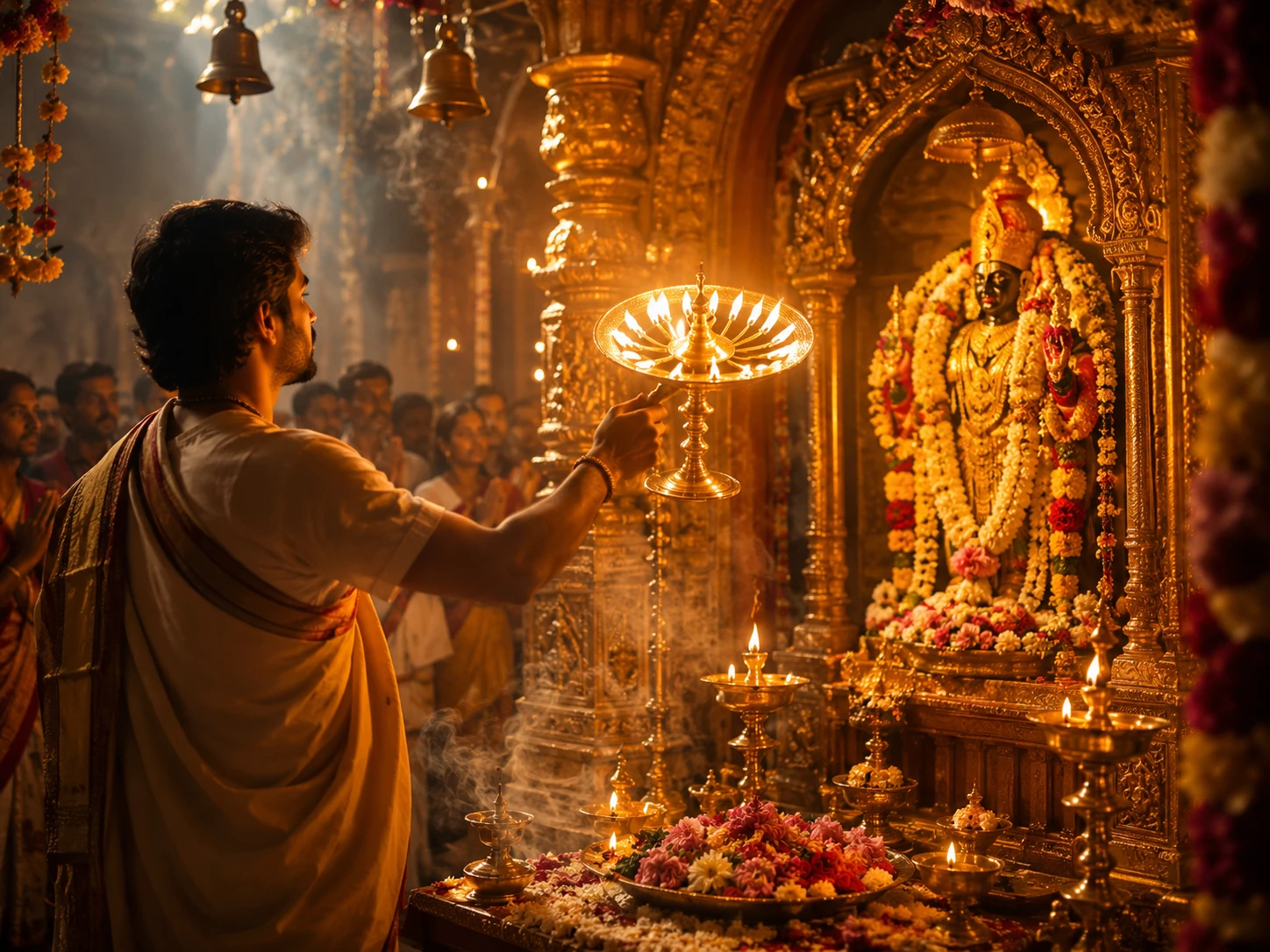
Aarti -- Why Hindus Circle Light Before God
13 min read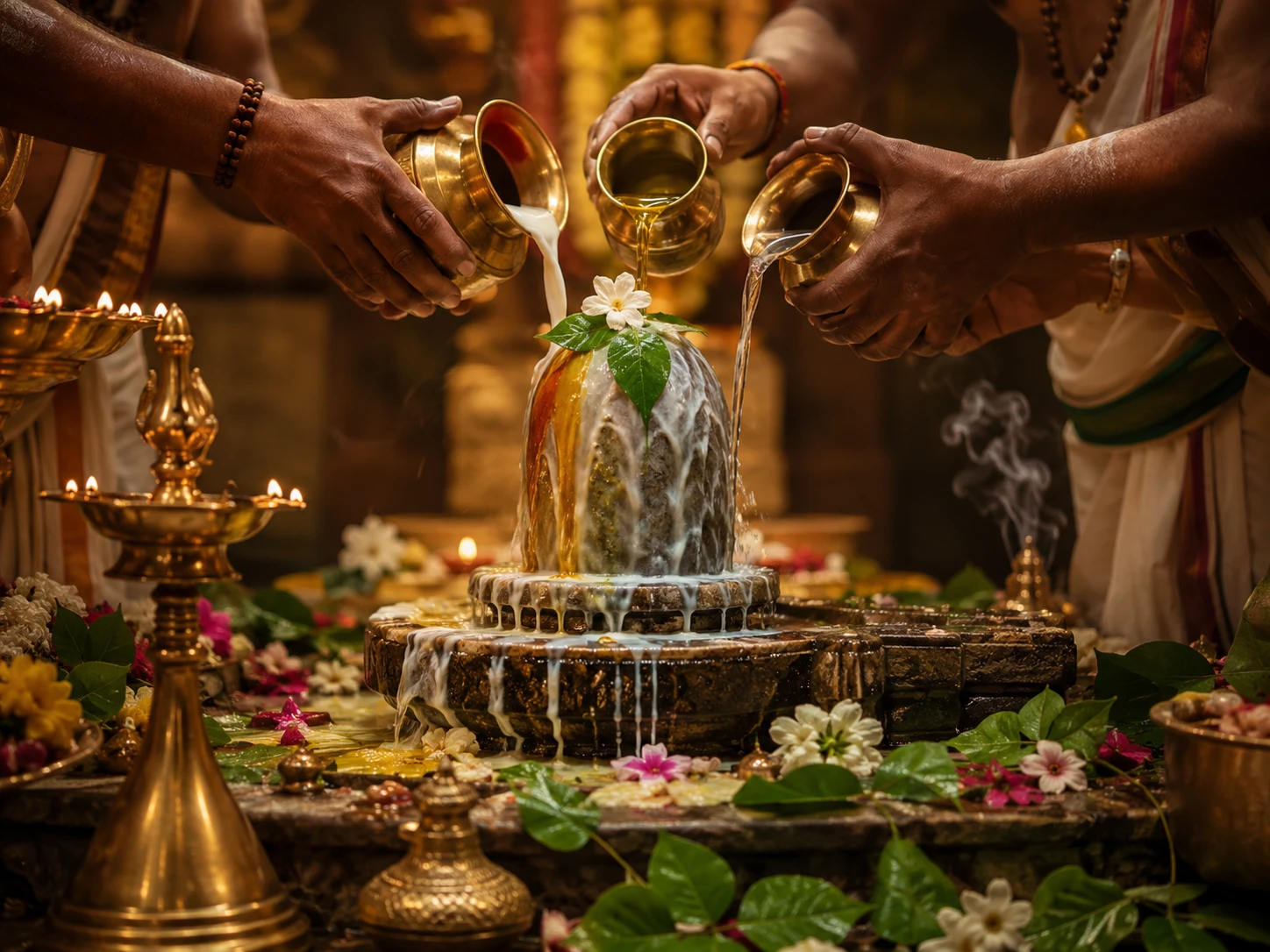
Abhisheka -- Why Hindus Bathe Their Gods
10 min read
Akshaya Tritiya -- The Day Nothing Given Away Runs Out
12 min readThe same translation error that turned '33 Koti' into '33 crore' in Hinduism also happened in Buddhism. The Chinese translation of Buddhist texts rendered 'Sapta Koti Buddha' (7 Supreme Buddhas) as '7 Crore Buddhas.' The…
Deities AvatarsCommunity Reflections
🕉️
Be the first to share your reflection.