Sandhyavandana -- The Daily Vedic Practice That Even Rama and Krishna Never Skipped
सन्ध्यावन्दन -- वह दैनिक वैदिक अभ्यास जो राम और कृष्ण ने भी कभी नहीं छोड़ा
In the Bala Kanda of the Ramayana (1.23.2), Vishwamitra wakes Rama and Lakshmana at the break of dawn for the worship of Sandhya. In the Udyoga Parva of the Mahabharata (82.21), Krishna himself is described performing Sandhya. These are not throwaway references. They establish that even God, when incarnate as a human being, observed this daily obligation. If Rama in exile and Krishna on the eve of war did not skip Sandhyavandana, the implicit message is: neither should you.
Sandhyavandana is the most fundamental daily religious duty (nitya karma) in the Hindu Brahmanical tradition. The word breaks into 'Sandhya' (twilight, the junction between two periods of the day) and 'Vandana' (salutation, worship). It is performed three times daily: at dawn (Pratah Sandhya, when night meets day), at midday (Madhyahnika, when morning meets afternoon), and at dusk (Sayam Sandhya, when day meets night). The tradition regards these junction moments as cosmically charged -- times when the veil between the mundane and the divine is thinnest.
The ritual is centred on the Gayatri Mantra -- the most sacred verse of the Vedas, found in Rig Veda 3.62.10, composed by Brahmarishi Vishwamitra. With 24 syllables divided into three padas of eight syllables each, the Gayatri is addressed to Savitur (the divine solar principle) and asks for the illumination of the intellect. The mantra is transmitted from father or guru to the child during the Upanayana ceremony, and from that moment, its daily recitation becomes a lifelong obligation.
Sandhyavandana is not a casual prayer you mumble before breakfast. It is a structured ritual combining breath control (pranayama), purification with water (marjana and prashana), offerings to the sun (arghya pradana), meditation on the Gayatri (japa), and formal salutations to cosmic entities (devata namaskara). The Kanchi Paramacharya, Sri Chandrasekharendra Saraswati, described it as simultaneously karma yoga, bhakti yoga, and jnana yoga -- uniting action, devotion, and knowledge in a single daily practice.
Who is supposed to do it? Traditionally, all Dvijas (twice-born) -- Brahmins, Kshatriyas, and Vaishyas -- after receiving the sacred thread during Upanayana. In practice, it is most regularly observed among Brahmins, particularly in South Indian traditions (Tamil, Telugu, Kannada, and Kerala). The Arya Samaj has advocated its practice for all Hindus regardless of caste. In modern India, a significant revival is underway -- YouTube channels, WhatsApp learning groups, and apps (including Eternal Raga) are making the procedure accessible to a generation that never learned it from their fathers.
ॐ भूर्भुवः स्वः तत्सवितुर्वरेण्यं भर्गो देवस्य धीमहि धियो यो नः प्रचोदयात्॥
oṃ bhūrbhuvaḥ svaḥ tatsaviturvareṇyaṃ bhargo devasya dhīmahi dhiyo yo naḥ pracodayāt ||
We meditate on the most excellent radiance of the divine Sun (Savitur). May he stimulate our intellects.
— Rig Veda, Mandala 3, Sukta 62, Mantra 10 (Rishi: Vishwamitra, Chhanda: Gayatri, Devata: Savitur)
The complete Sandhyavandana procedure varies by Veda (Rig, Yajur, Sama, Atharva), by tradition (Smarta, Sri Vaishnava, Madhva), and by region. What follows is the general architecture common to most versions, particularly the widely practised Yajurveda (Taittiriya Shakha) format.
The ritual has two main parts: Poorva Bhaga (preliminary purifications and arghya) and Uttara Bhaga (Gayatri japa and concluding prayers).
Poorva Bhaga begins with Achamana -- sipping water three times while invoking divine names. In the Vaishnava tradition, the names are Keshava, Narayana, and Madhava. In Smarta tradition, they may differ. This act purifies the body and establishes ritual readiness. The water is sipped from the right palm, at the base of the thumb -- a specific anatomical point called the Brahma Tirtha.
Sankalpa follows -- a formal declaration of intent. The devotee states, in Sanskrit, the date (by Hindu calendar), the location, the gotra (lineage), and the purpose: 'I am performing Pratah Sandhya with Gayatri Japa for the pleasure of Sriman Narayana (or Parameshwara).' This is the Vedic equivalent of committing your intention to the universe before executing a task -- something every startup founder in Koramangala or project manager at an IT company in Hinjewadi would recognise as a 'kickoff declaration.'
Marjana (sprinkling water on the head) purifies the body while reciting mantras from the Taittiriya Aranyaka. Prashana (drinking water) purifies internally. Punar Marjana (second sprinkling) is a deeper purification. These water-based steps are not symbolic -- they involve actual physical contact with water, engaging the tactile and cooling sensory pathways.
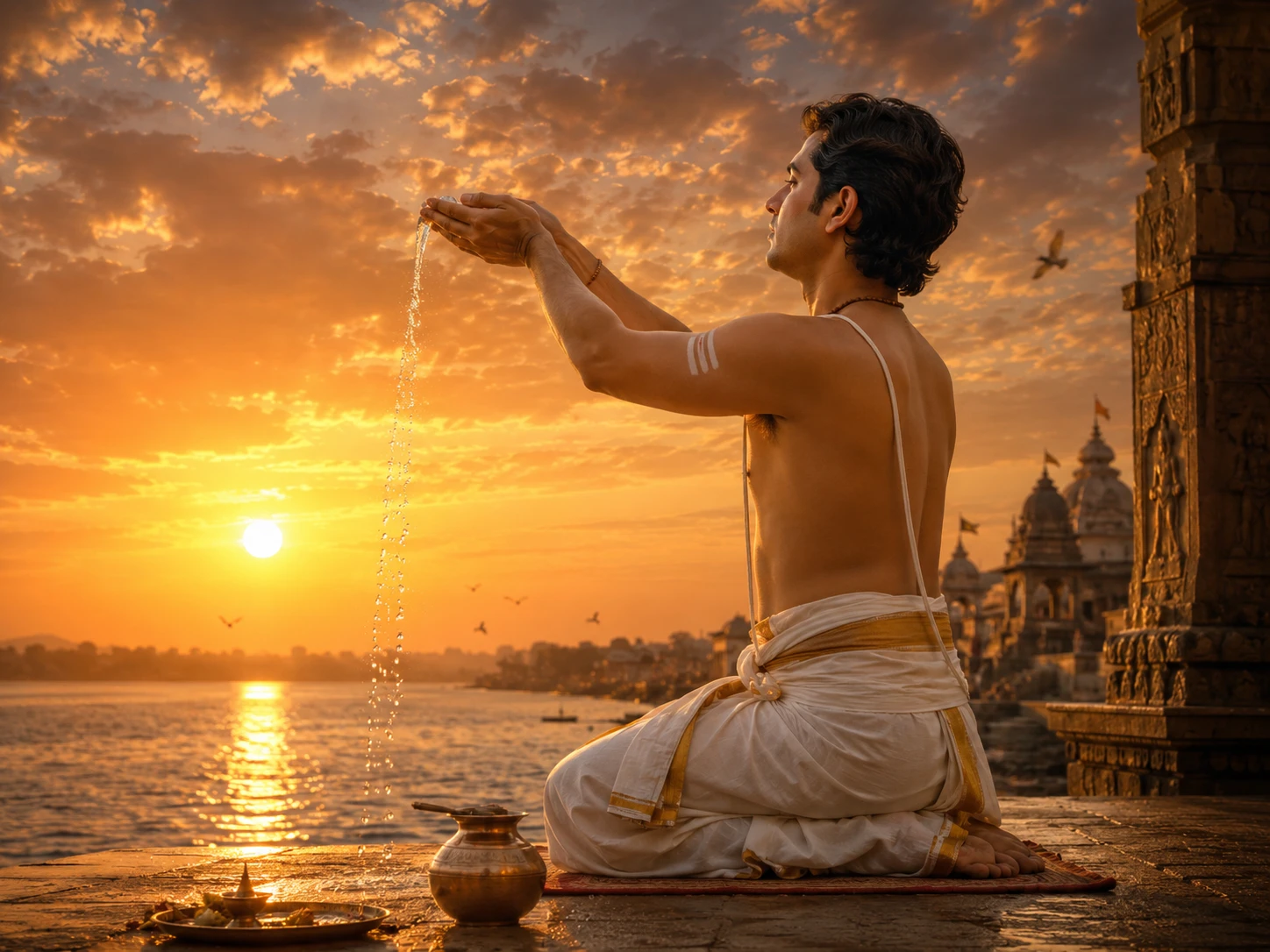
Arghya Pradana is the central action of the Poorva Bhaga. The devotee holds water in cupped palms, recites the Gayatri Mantra with the Vyahritis (Om Bhur Bhuvah Svah), and pours the water as an offering to the Sun. This is done facing east in the morning, east at noon, and west in the evening. The arghya is offered three times at Pratah and Sayam Sandhya, and twice (or once, by some traditions) at Madhyahnika.
The mythology behind arghya is vivid: demons called Mandeha attack the Sun at every dawn and dusk. The water offered by Dvijas during Sandhyavandana, charged with the Gayatri Mantra, becomes a vajra (thunderbolt weapon) that destroys these demons and allows the Sun to rise and set unimpeded. The first arghya destroys their vehicle, the second their weapon, the third the demons themselves. This cosmic warfare narrative ensures that the devotee understands the arghya not as a passive offering but as an active intervention in the daily maintenance of cosmic order.
The Uttara Bhaga centres on Gayatri Japa -- the meditative repetition of the Gayatri Mantra, traditionally 108 times (one full mala) or a minimum of 28 times. Before japa, the devotee performs Pranayama -- controlled breathing with mantra recitation.
The Sandhyavandana Pranayama is not the elaborate Hatha Yoga pranayama of modern yoga studios. It is a specific sequence: inhale (puraka) through the left nostril while mentally reciting the Gayatri with Vyahritis, hold the breath (kumbhaka) while reciting the mantra again, and exhale (rechaka) through the right nostril with a concluding mantra (Om Apo Jyotiraso Amritam Brahma Bhurbhuvah Suvarom). This cycle is repeated three to ten times. The Kanchi Paramacharya recommended holding breath for about 30 seconds -- enough for mental stillness without physical strain.
The effect is measurable. The combination of nadi-shodhana (alternate nostril breathing) and mantra recitation produces a state of focused calm. The breath hold creates a momentary pause in the default mode network of the brain -- the same effect that modern neuroscience associates with meditation-induced clarity. When the arghya is offered in this state of pranayama-induced stillness, the tradition holds, its cosmic potency is maximised.
After pranayama, Gayatri Avahana invites the Gayatri Devi into the heart of the devotee. The Gayatri is not merely a mantra -- she is personified as a goddess, described in the Mahanarayana Upanishad as white-complexioned in the morning (Gayatri), red at midday (Savitri), and dark in the evening (Saraswati). The devotee visualises the appropriate form before beginning japa.
The japa itself is silent (manasika) or whispered (upamshu) -- never loud. The lips may move but no sound should be audible to anyone nearby. Counting is done on the right hand's finger joints (each finger has three phalanges, giving 12 positions on four fingers, multiply by 9 rounds of thumb-tracking for 108). The traditional posture is Padmasana (lotus pose) or any stable seated position, facing east in the morning and north in the evening.
Gayatri Upasthana concludes the japa with a standing prayer to the sun -- different mantras for each Sandhya time. Devata Namaskara follows, offering obeisances to the Navagrahas and directional deities. The ritual concludes with Samarpanam -- dedicating the entire practice to the Supreme.
The whole procedure, done properly, takes 15-25 minutes. Done minimally (achamana, pranayama, arghya, 28 Gayatri repetitions), it can be compressed to 8-10 minutes. The Kanchi Paramacharya's instruction was pragmatic: 'Whatever you do or do not do, you must perform this arghya thrice a day. Do it somehow.'
The Three Sandhyas -- Timing, Direction, and Key Differences
| Aspect | Pratah (Dawn) | Madhyahnika (Noon) | Sayam (Dusk) |
|---|---|---|---|
| Time | Before sunrise | When sun is overhead | Before sunset |
| Direction faced | East | East | West (North for japa in some traditions) |
| Arghya count | 3 times | 2 times (or 1) | 3 times |
| Gayatri form visualised | Gayatri (white, young) | Savitri (red, mature) | Saraswati (dark, wise) |
| Posture for arghya | Standing, slight bend | Standing erect | Seated |
| Primary sin addressed | Sins of previous night | Morning sins | Sins of daytime |
| Upasthana mantra | Mitrasya (to Mitra/Sun) | Varies by tradition | Varies by tradition |
| Modern challenge | Waking before sunrise | Office/school schedule conflict | Evening commute timing |
Timings are based on the Taittiriya Krishna Yajurveda tradition. Rig Veda and Sama Veda variants differ in specific mantras but follow the same three-Sandhya structure.
The Gayatri Mantra has 24 syllables, and Hindu tradition assigns a specific Rishi and a specific power to each syllable. The mantra's origin -- Rig Veda 3.62.10 -- makes it at least 3,500 years old by conservative scholarly estimates, making it one of the oldest continuously recited verses on Earth. In 2019, scientists at AIIMS Delhi published a study showing that regular Gayatri Mantra chanting (as part of Sandhyavandana) correlated with reduced cortisol levels and improved attention span in medical students. Meanwhile, the Sandhyavandana revival is led partly by tech professionals -- multiple Silicon Valley engineers and Bangalore IT workers have created open-source Sandhyavandana apps, YouTube tutorials with timers, and WhatsApp groups that send sunrise-timed reminders. The ritual designed for Vedic-era riverbanks is now being performed in co-working spaces and apartment balconies.
Begin Your Sandhyavandana with Gayatri Japa
Begin daily Gayatri japa on a mala: start with 28 repetitions and build to 108. A panchang gives sunrise and sunset for your city, which mark the sandhya times. The Gayatri mantra's page on Eternal Raga gives its meaning and how to chant it.
Tags
Eternal Raga · शाश्वत राग
Institutional voice — scholarly articles on Sanatan Dharma
Deepen Your Understanding
अपनी समझ और गहरी करें
rituals traditions
The 16 Samskaras -- Rites of Passage from Womb to Pyre
Hinduism does not leave life to chance. From the moment a couple decides to conceive to the moment the body returns to the five elements, there are sixteen rituals -- samskaras -- designed to refine the human being at every critical transition. Think of them as firmware updates for the soul, installed at precisely the right moments.
rituals traditions
Havan Vidhi -- The Vedic Fire Ritual That Purifies Air, Mind, and Karma
Every major Hindu milestone -- birth, thread ceremony, wedding, housewarming, death -- involves fire. The havan is the oldest continuous ritual technology in Hinduism, dating to the Rig Veda. You pour ghee, herbs, and grains into a consecrated fire while chanting 'Svaha,' and Agni carries your offering to the gods. Modern science confirms: the smoke actually does purify the air. Here is the complete procedure.
rituals traditions
Puja at Home -- The Complete Beginner's Guide
You have a small mandir shelf in your apartment. A brass diya your mother gave you. A photo of a deity you feel drawn to. And absolutely no idea what to do next. This guide is for you -- the 22-year-old in Pune who just moved out, the NRI in New Jersey setting up a puja corner for the first time, the curious soul who wants to start but does not know where.
rituals traditions
Shodashopachara Puja -- The Sixteen-Step Protocol of Hindu Worship
When a Hindu temple priest performs puja, he is not improvising. He is executing a precise sixteen-step protocol called Shodashopachara -- literally 'sixteen offerings' -- that treats God as a royal guest arriving at your home. From invitation to farewell, each step has a specific action, material, mantra, and philosophical meaning. This is the complete user manual.
rituals traditions
Aarti -- Why Hindus Circle Light Before God
Every evening, millions of flames are circled before millions of deities across India. The aarti is the single most recognisable act of Hindu worship -- yet most people performing it cannot explain why the light moves clockwise, why camphor is preferred, or why the flame is touched to the eyes afterward. The answer is older than temples, deeper than devotion, and more scientific than you would expect.
vedic sciences
Kaal Ganana -- The Hindu Measure of Time
From a single blink of the eye (Nimesha) to one Day of Brahma (4.32 billion years) -- explore the complete cosmic time hierarchy of Hindu cosmology, anchored in Vishnu Purana 1.3, with its remarkable parallels to modern science.
The Gayatri Mantra has 24 syllables, and Hindu tradition assigns a specific Rishi and a specific power to each syllable. The mantra's origin -- Rig Veda 3.62.10 -- makes it at least 3,500 years old by conservative schola…
More in Rituals & Traditions
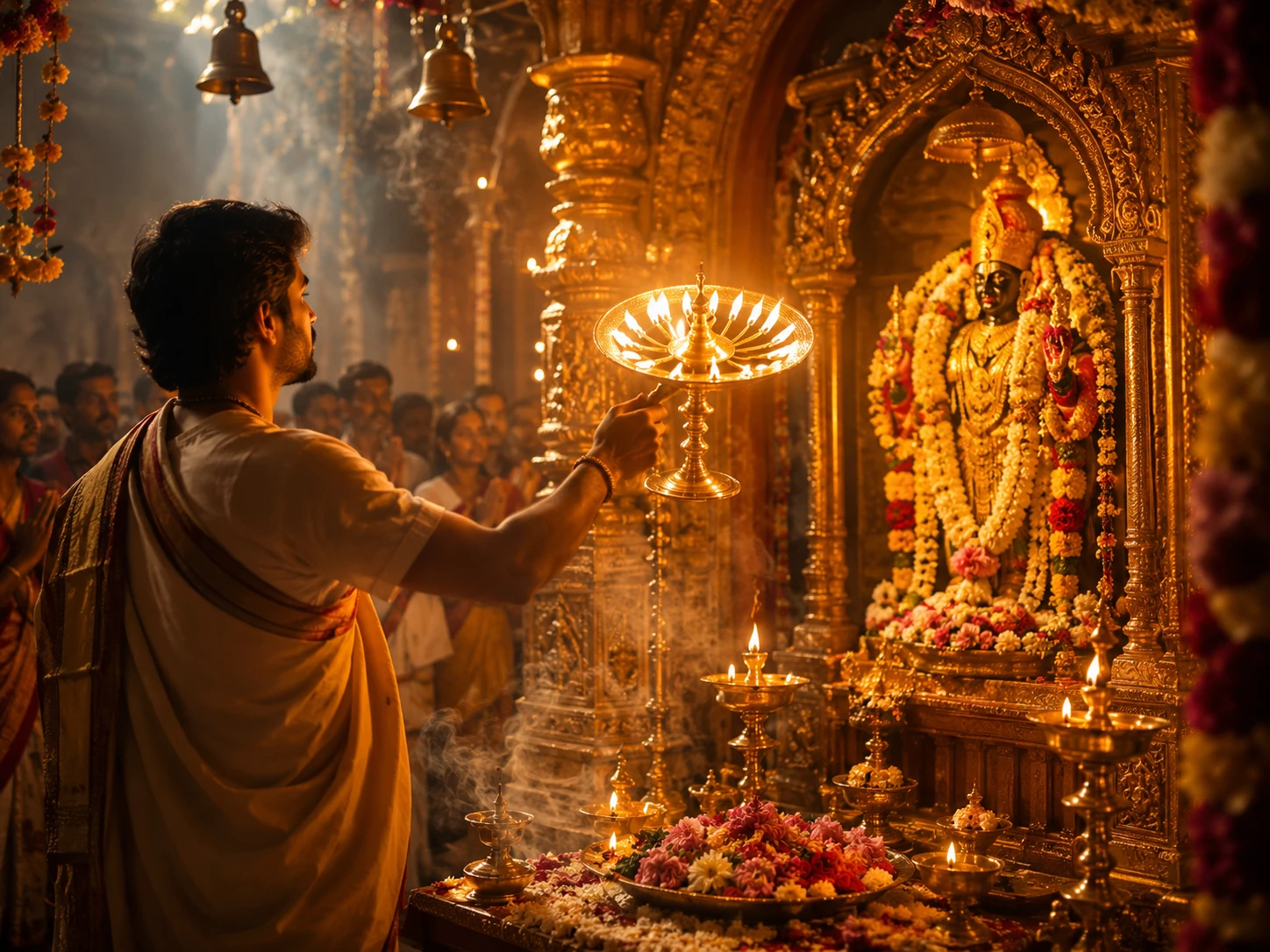
Aarti -- Why Hindus Circle Light Before God
13 min read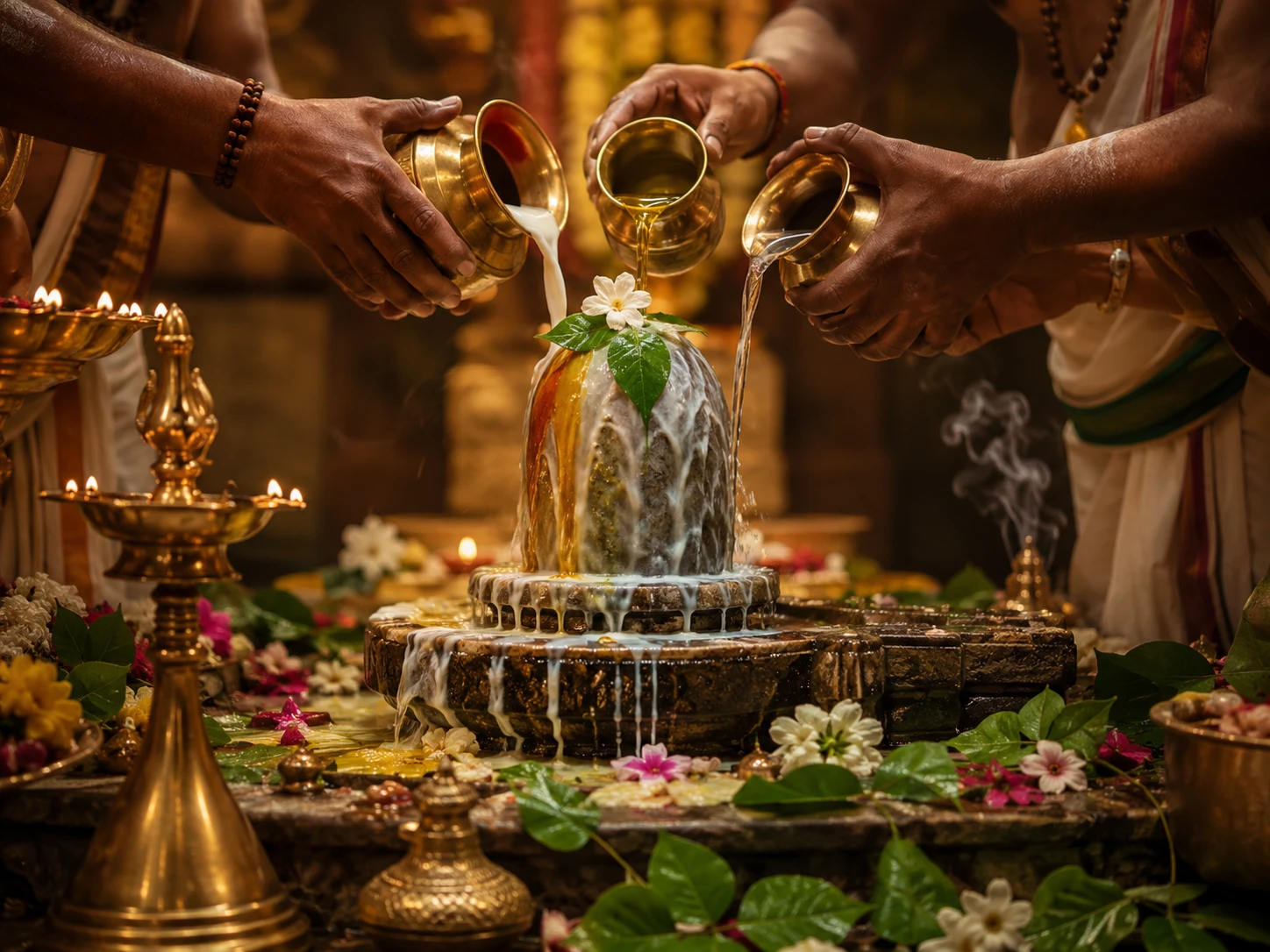
Abhisheka -- Why Hindus Bathe Their Gods
10 min read
Akshaya Tritiya -- The Day Nothing Given Away Runs Out
12 min readThe same translation error that turned '33 Koti' into '33 crore' in Hinduism also happened in Buddhism. The Chinese translation of Buddhist texts rendered 'Sapta Koti Buddha' (7 Supreme Buddhas) as '7 Crore Buddhas.' The…
Deities AvatarsCommunity Reflections
🕉️
Be the first to share your reflection.