
Vaikuntha Ekadashi -- The One Day the Gate to Heaven Opens at Srirangam
वैकुंठ एकादशी -- वह एक दिन जब श्रीरंगम में स्वर्ग का द्वार खुलता है
Eternal Raga's article on Ekadashi Vrata lays out why the eleventh lunar day is fasted twice a month across the Hindu year, and it already introduces Vaikuntha Ekadashi in passing as the Margashirsha Shukla Ekadashi that South Indian Vaishnava tradition considers the most sacred of the roughly twenty-four annual Ekadashis. This article picks up where that overview leaves off: not why Ekadashi fasting exists in general, but why this specific one is treated as categorically different.
The date itself needs a small calendrical note. Vaikuntha Ekadashi falls on the Shukla Paksha Ekadashi of the lunar month that most Hindi-speaking North Indian panchangs call Margashirsha and that the Tamil solar calendar calls Margazhi, which runs roughly mid-December to mid-January; it falls within the broader solar month of Dhanurmasa, considered throughout the year's darkest, most austerity-favouring stretch in several Vaishnava traditions. In 2026 the date is 20 December. The festival is also called Mukkoti Ekadashi in Telugu and Tamil usage, a name drawn from a belief that thirty million (mukkoti) demigods are present on this day, and Mokshada Ekadashi in some North Indian traditions, where the same tithi is separately associated with Krishna's recitation of the Bhagavad Gita to Arjuna, a connection Eternal Raga's Ekadashi Vrata article also touches on.
What makes Vaikuntha Ekadashi distinct from every other Ekadashi in the annual cycle is not a different fasting rule; the fast itself follows the same grain-free, sense-restrained pattern described in that earlier article. It is a specific, physical ritual available at only a small number of temples on this one day: walking through a gate that is kept shut the rest of the year.
क्षीरोदन्वत्प्रदेशे शुचिमणिविलसत्सैकते मौक्तिकानां मालाक्लृप्तासनस्थः स्फटिकमणिनिभैर्मौक्तिकैर्मण्डिताङ्गः। शुभ्रैरभ्रैरदभ्रैरुपरिविरचितैर्मुक्तपीयूषवर्षैः आनन्दी नः पुनीयादरिनलिनगदापाणिरब्जीनाथः॥
kṣīrodanvat-pradeśe śuci-maṇi-vilasat-saikate mauktikānāṃ mālā-klṛpta-āsanasthaḥ sphaṭika-maṇi-nibhair mauktikair maṇḍitāṅgaḥ | śubhrair abhrair adabhrair upari-viracitair mukta-pīyūṣa-varṣaiḥ ānandī naḥ punīyād ari-nalina-gadā-pāṇir abjī-nāthaḥ ||
On the shore of the ocean of milk, gleaming with pure gems and pearl-sand, seated on a throne fashioned of pearl garlands, his body adorned with crystal-clear pearls, under bright, unbroken clouds raining down streams of nectar, may that blissful lord of Lakshmi, bearing the discus, lotus, and mace in his hands, purify us.
— Traditional Vishnu Dhyana Shloka (Kshirodanvatpradeshe), recited before Vishnu Sahasranama and widely used in Vaikuntha Ekadashi puja
Paramapada Vasal -- A Gate That Opens Once a Year
At the Ranganathaswamy temple in Srirangam, Tamil Nadu, one of Vaishnavism's most important Vishnu shrines, a gate on the northern side of the temple complex, formally called the Paramapada Vasal and popularly the Vaikuntha Dwaram or Sorgavasal, stays shut for the rest of the year. On Vaikuntha Ekadashi it opens, and the temple's utsava murti, the processional form of Ranganatha, is carried through it in a procession watched by pilgrims who queue for hours for the chance to walk through it themselves afterward. The belief behind the ritual, drawn from Vaishnava tradition and articulated across Padma Purana passages on Ekadashi generally, holds that passing through this specific gate on this specific day carries the same merit as attaining Vaikuntha, Vishnu's own heavenly abode, directly, without the intervening path most souls are held to travel.
The single day of Vaikuntha Ekadashi sits inside a much longer festival at Srirangam. The temple observes a twenty-one-day cycle divided into two ten-day halves: Pagal Pathu, the daytime ten days leading up to Ekadashi, and Ra Pathu, the nighttime ten days that follow it, with Vaikuntha Ekadashi itself falling as the pivot between the two. Through both halves, a hereditary community of temple performers called Arayars enact verses from the Naalayira Divya Prabandham, the collected Tamil hymns of the twelve Alvar poet-saints composed roughly between the sixth and ninth centuries, in a ritual performance tradition, Araiyar Sevai, found in this form at very few other temples in India.
Tirupati's Venkateswara temple, covered in full on Eternal Raga's Venkateswara-Balaji page, also treats Vaikuntha Ekadashi as one of its most significant annual days, with a comparable, though architecturally distinct, Vaikuntha Dwara Darshanam that draws exceptionally large crowds seeking passage through a specially opened gateway. The shared name and shared date across these temples reflect a common theological source even where the specific architecture and calendar of surrounding festivities differ.
Srirangam's Twenty-One Days -- Where Vaikuntha Ekadashi Sits
| Phase | चरण | Duration | What Happens |
|---|---|---|---|
| Pagal Pathu | पगल पत्तु | 10 days before Ekadashi | Daytime Araiyar Sevai performances of the Divya Prabandham; the temple builds toward the main day |
| Vaikuntha Ekadashi | वैकुंठ एकादशी | The pivot day itself | The Paramapada Vasal opens; Ranganatha's utsava murti and pilgrims pass through it |
| Ra Pathu | रा पत्तु | 10 nights after Ekadashi | Nighttime Araiyar Sevai continues; the festival gradually closes |
The exact festival length and internal sequence vary slightly by temple and year; Srirangam's structure is the most extensively documented and is treated as the reference model across South Indian Vaishnava temples.
The name Mukkoti Ekadashi, used interchangeably with Vaikuntha Ekadashi in Telugu and Tamil regions, literally means thirty-million Ekadashi, from a belief that this day draws the presence of mukkoti devatas, thirty million celestial beings, to witness or participate in the observance, a scale of language the tradition uses elsewhere only for its largest cosmic events. Separately, this same tithi carries a distinct significance in North Indian traditions under the name Mokshada Ekadashi, where it is observed as Gita Jayanti, the day Krishna is said to have spoken the Bhagavad Gita to Arjuna on the battlefield of Kurukshetra. The two names, Vaikuntha Ekadashi in South Indian temple tradition and Mokshada Ekadashi or Gita Jayanti in North Indian devotional practice, refer to the same lunar tithi observed through two largely separate ritual traditions that rarely overlap in a single household's calendar.
Why a Gate, Specifically
It is worth asking directly why Vaikuntha Ekadashi's central ritual is architectural rather than purely devotional, a gate to walk through rather than only a mantra to recite or a fast to keep. The Vaishnava theology behind it treats the physical act of passing through a threshold as a deliberate, embodied enactment of the soul's own journey: just as the devotee's body moves from the ordinary world outside the temple to the sanctified space within, the ritual holds that a soul freed from the cycle of rebirth (moksha) moves through a comparable threshold into Vaikuntha itself. The gate is not merely symbolic decoration bolted onto the fast; within Sri Vaishnava temple architecture and theology it is treated as the sanctified midpoint of that journey made physically walkable, once a year, for anyone present.
This is also why Vaikuntha Ekadashi draws crowds on a scale most single-day temple festivals do not: it offers something Ekadashi fasting alone does not, a specific place and a specific hour in which the abstract promise of the vrata becomes a queue, a gate, and a few steps through it.
Observe Vaikuntha Ekadashi With the Vishnu Sahasranama
If you cannot travel to Srirangam or Tirupati, recite the Vishnu Sahasranama through the day, in the spirit of the vrata that Eternal Raga's Ekadashi Vrata guide covers in full. The Sahasranama is on Eternal Raga with the meaning of each name.
Tags
Eternal Raga · शाश्वत राग
Institutional voice — scholarly articles on Sanatan Dharma
Deepen Your Understanding
अपनी समझ और गहरी करें
rituals traditions
Ekadashi -- Why Hindus Fast on the 11th Day (And What the '11' Actually Means)
Twice every lunar month, millions of Hindus stop eating grains. Not as a diet. Not for health. Because the Padma Purana says that on the 11th day of the lunar fortnight, all sin takes refuge in grain -- and the person who abstains from grain on that day is freed from sin and drawn closer to Vishnu. The number 11 is not accidental: it represents the 10 senses plus the mind, and Ekadashi is the day you master all eleven. This is the most widely observed Vrata in the Hindu world -- and it maps almost perfectly onto modern intermittent fasting science.
deities avatars
Venkateswara -- The Lord of Seven Hills and the World's Most Visited God
Every day, 50,000 to 100,000 pilgrims climb the Seven Hills of Tirumala to see a deity whose face is so sacred that artificial eyes are placed over his real ones so devotees do not look directly into them. The Tirumala Tirupati Devasthanams receives more annual donations than the GDP of several small countries. Venkateswara is not just a god. He is an institution.
deities avatars
Narayana -- Cosmic Vishnu Beyond Avatara
Before Krishna lifted Govardhan and Rama crossed the ocean, there was Narayana lying on the serpent Ananta in the milk ocean. The avatars come and go. Narayana remains. This is the theological Vishnu at the base of every Vaishnava tradition, from Ramanuja's Sri Vaishnavism to the Badrinath pilgrimage to the Ashtakshari mantra every devotee chants.
vedic sciences
Kaal Ganana -- The Hindu Measure of Time
From a single blink of the eye (Nimesha) to one Day of Brahma (4.32 billion years) -- explore the complete cosmic time hierarchy of Hindu cosmology, anchored in Vishnu Purana 1.3, with its remarkable parallels to modern science.
The name Mukkoti Ekadashi, used interchangeably with Vaikuntha Ekadashi in Telugu and Tamil regions, literally means thirty-million Ekadashi, from a belief that this day draws the presence of mukkoti devatas, thirty mill…
More in Rituals & Traditions
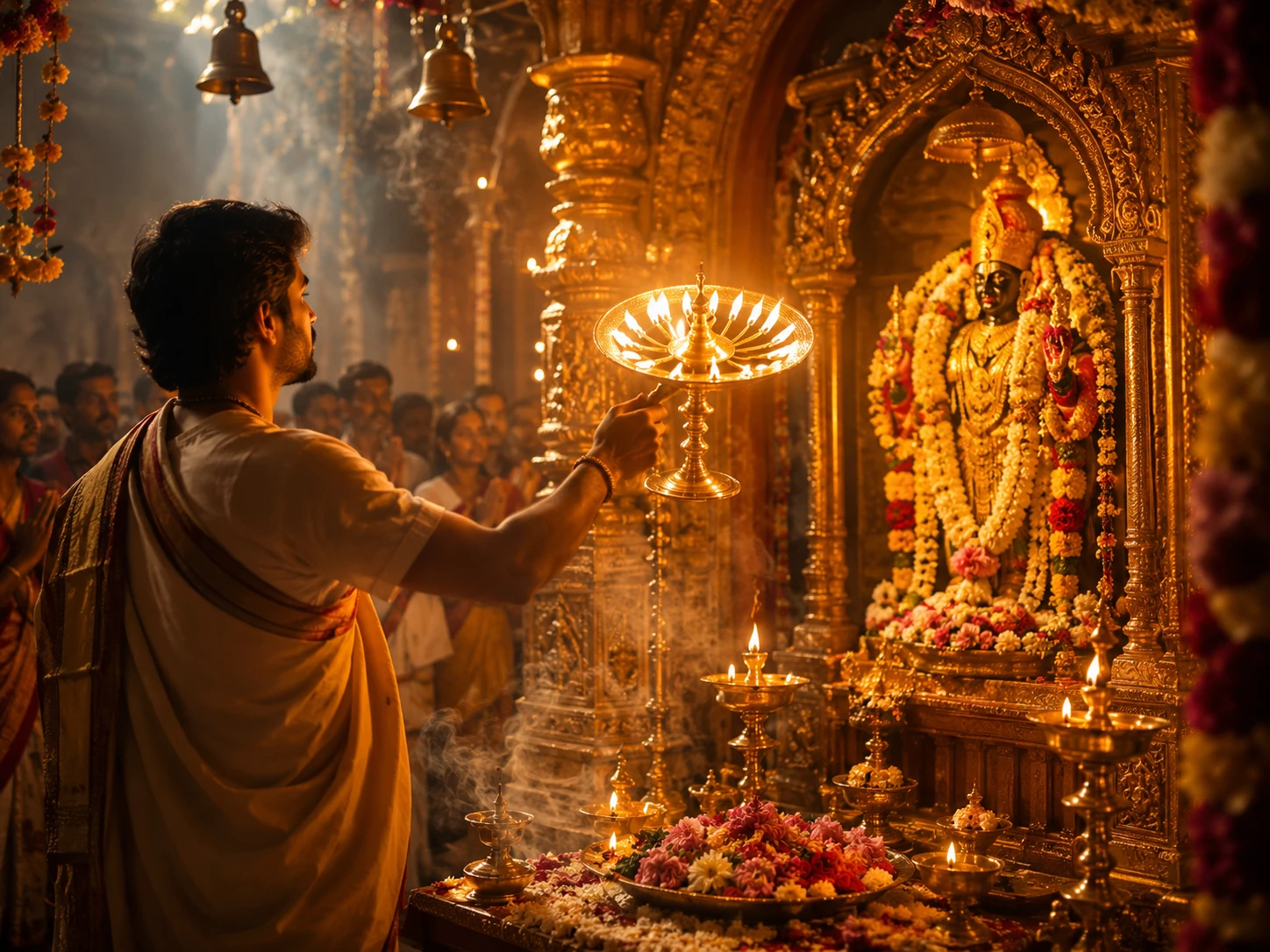
Aarti -- Why Hindus Circle Light Before God
13 min read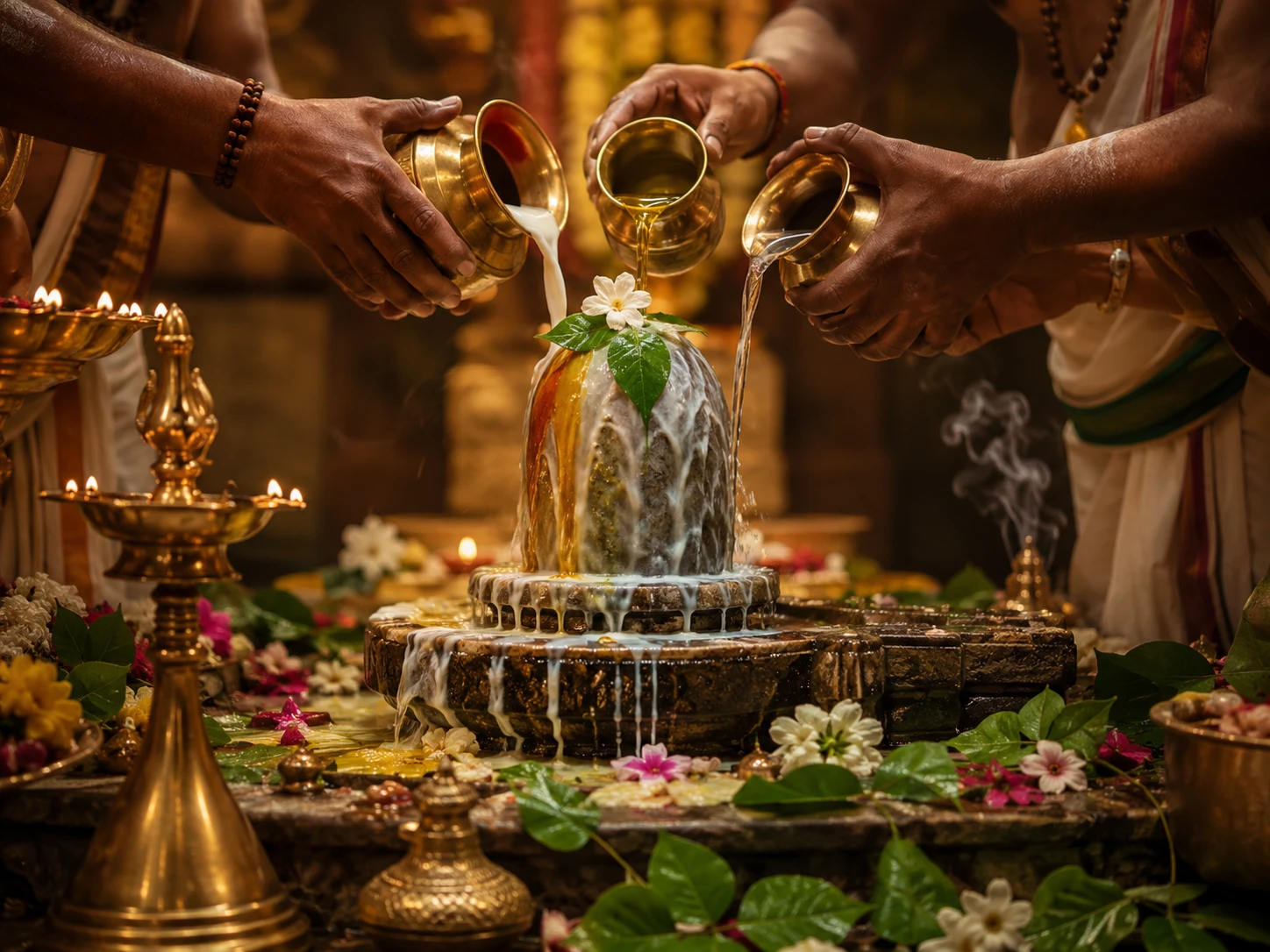
Abhisheka -- Why Hindus Bathe Their Gods
10 min read
Akshaya Tritiya -- The Day Nothing Given Away Runs Out
12 min readThe same translation error that turned '33 Koti' into '33 crore' in Hinduism also happened in Buddhism. The Chinese translation of Buddhist texts rendered 'Sapta Koti Buddha' (7 Supreme Buddhas) as '7 Crore Buddhas.' The…
Deities AvatarsCommunity Reflections
🕉️
Be the first to share your reflection.