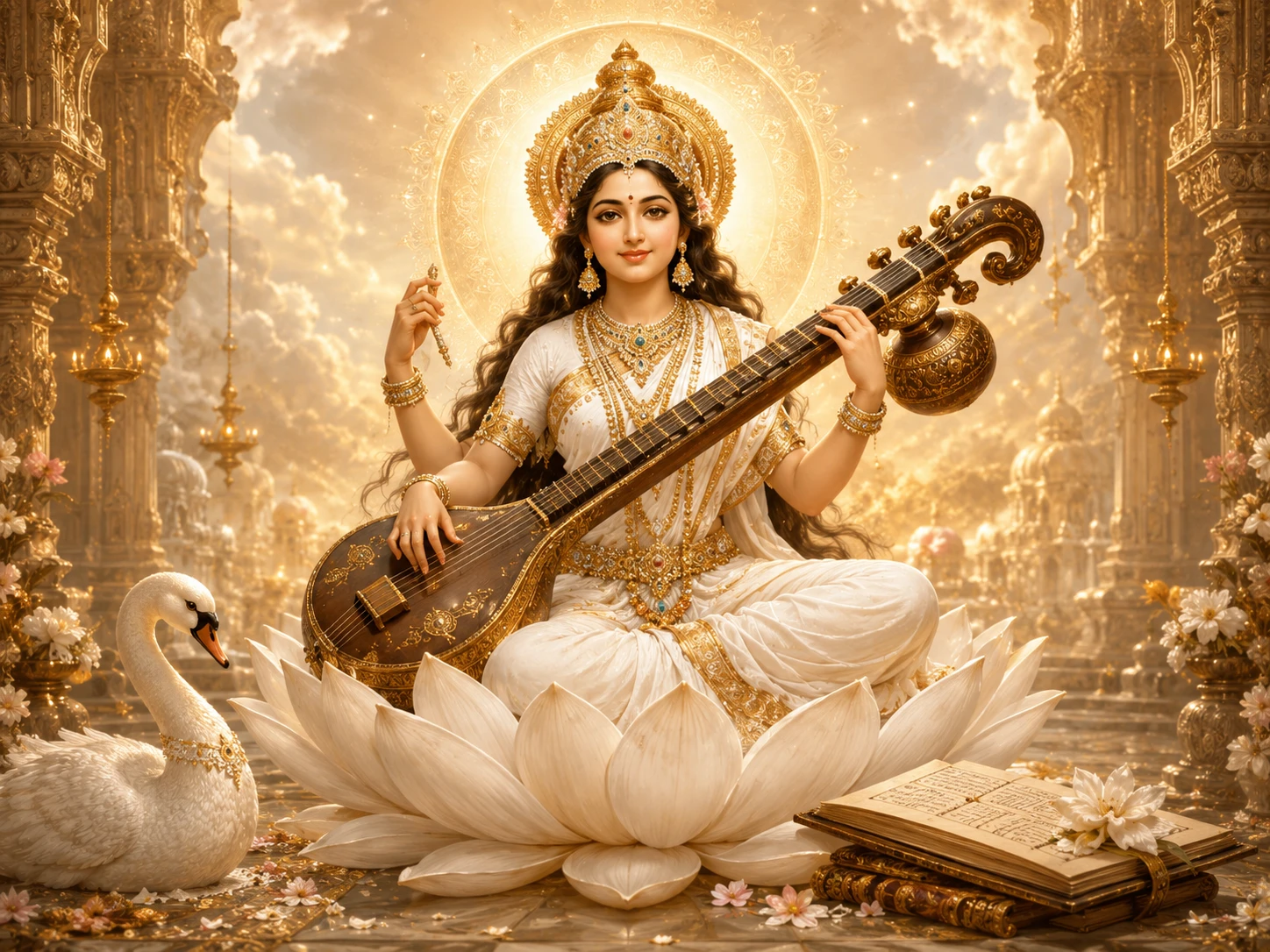
Saraswati -- Goddess of Knowledge, Music, and the Flowing Stream of Consciousness
सरस्वती -- विद्या, संगीत और चेतना की प्रवाहमयी देवी
In the Hindu pantheon, power is expected. Vishnu carries a discus that can slice through galaxies. Shiva holds a trident that destroyed Tripura. Durga rides a lion into battle with eighteen arms full of celestial weapons. But Saraswati -- the goddess who arguably influences human life more directly than any of them -- sits quietly on a white lotus, playing a veena.
That is the most radical statement in Hindu iconography. It says that the ultimate power is not destruction, not preservation, not even creation. It is knowledge. It is the capacity to learn, to speak, to create art, to compose music, to distinguish truth from illusion. Saraswati's weapon is a string instrument. Her army is composed of books. Her battlefield is the human mind.
Every year on Basant Panchami, roughly 300 million students across India place their textbooks, notebooks, pens, and musical instruments at the feet of Saraswati's murti. From the CBSE board exam students in Delhi to the IIT-JEE aspirants in Kota to the NEET coaching centres in Hyderabad to the Carnatic music academies of Chennai -- they all pause and acknowledge that their ability to learn is not self-generated. It is a gift. And the giver has a name.
If you have ever sat in an exam hall and whispered a prayer before turning over the question paper, you were -- whether you knew it or not -- invoking Saraswati.
या कुन्देन्दुतुषारहारधवला या शुभ्रवस्त्रावृता या वीणावरदण्डमण्डितकरा या श्वेतपद्मासना। या ब्रह्माच्युतशंकरप्रभृतिभिर्देवैः सदा पूजिता सा मां पातु सरस्वती भगवती निःशेषजाड्यापहा॥
yā kundendutuṣārahāradhavalā yā śubhravastrāvṛtā yā vīṇāvaradaṇḍamaṇḍitakarā yā śvetapadmāsanā | yā brahmācyutaśaṃkaraprabhṛtibhirdevaiḥ sadā pūjitā sā māṃ pātu sarasvatī bhagavatī niḥśeṣajāḍyāpahā ||
She who is as white as the jasmine flower, the moon, and snow, draped in spotless white garments; whose hands are adorned with the veena and the boon-granting staff, seated upon a white lotus; who is eternally worshipped by Brahma, Vishnu (Achyuta), Shiva (Shankara), and all the gods -- may that Goddess Saraswati, the Bhagavati who completely removes all dullness and ignorance, protect me.
— Saraswati Vandana Stotram (attributed to Sage Agastya), Verse 1
The name Saraswati is one of the oldest divine names in the Indian tradition, and its root meaning -- 'she who flows' (from the Sanskrit saras, meaning 'pool' or 'flowing water') -- reveals something fundamental about how ancient Indians understood knowledge.
Knowledge, for the Vedic rishis, was not a static possession. It was a river. It flowed. It moved. It could be dammed, diverted, polluted, or allowed to run clean and free. This is not metaphorical decoration -- there literally was a Saraswati River, one of the most important rivers mentioned in the Rig Veda, along which the earliest Vedic civilisation flourished. The river dried up (geological evidence points to tectonic shifts and the capture of its tributaries by the Yamuna and Sutlej around 1900 BCE), but the name survived as the name of the goddess. The geological death of the Saraswati River and the theological birth of the Goddess Saraswati are one of the most fascinating transitions in Indian religious history.
In the Rig Veda -- the oldest surviving text of Hindu civilisation, composed between approximately 1500-1200 BCE -- Saraswati appears primarily as a river goddess. She is praised as 'best of mothers, best of rivers, best of goddesses' (ambitame naditame devitame sarasvati -- Rig Veda 2.41.16). She is associated with purification, fertility, and the sustenance of life. But even in these early hymns, a metaphorical dimension is present: Saraswati purifies not just the body but the mind. She is the river that washes away ignorance.
By the time of the Brahmanas (roughly 900-700 BCE), the transition is well underway. Saraswati is increasingly associated with Vak (speech), and in the Shatapatha Brahmana, she is identified with Vak Devi -- the goddess of sacred speech. This makes profound theological sense: speech is the technology by which knowledge flows from one mind to another. Without speech, all knowledge would die with its discoverer. Saraswati-as-river and Saraswati-as-speech are the same metaphor viewed from different angles: she is the medium through which the most precious substance in the universe -- consciousness, understanding, wisdom -- moves.
By the Puranic period (roughly 300 BCE to 500 CE), Saraswati is fully established as the Goddess of Knowledge, Music, Arts, and Learning. She is the consort of Brahma, the creator -- a pairing that makes logical sense. Creation without knowledge is chaos. Brahma creates, but Saraswati gives that creation meaning, language, music, and the capacity to be understood.
Saraswati's iconography is among the most precisely structured in the Hindu tradition. Every element has a specific meaning, and understanding these symbols is understanding the theology of knowledge itself.
The Veena: Saraswati is the only major Hindu deity whose primary attribute is a musical instrument. The veena represents the harmony of knowledge -- the idea that true understanding is not merely the accumulation of facts but the ability to see how all things are connected, like notes in a raga. The veena also represents mastery: to play the veena requires years of dedicated practice (sadhana). Knowledge, Saraswati is telling you, is not a download. It is a discipline.
The Book (Pustaka): In her other hand, Saraswati holds the Vedas, often depicted as a palm-leaf manuscript or a bound book. This is the accumulated knowledge of civilisation -- written, preserved, passed down. If the veena represents living, experiential knowledge (vidya as practice), the book represents systematic, recorded knowledge (vidya as shastra).
The Rosary (Akshamala): The crystal or rudraksha rosary represents japa -- the repetitive practice of mantra. This is knowledge as meditation, as spiritual discipline. The akshamala connects Saraswati to the contemplative tradition, reminding us that knowledge is not only intellectual but also spiritual.
The White Lotus (Shveta Padma): Saraswati sits on a white lotus -- not the pink lotus of Lakshmi or the blue lotus of Vishnu, but specifically white. White is the colour of sattva guna -- purity, truth, clarity. The lotus itself grows from mud but remains unstained, symbolising how knowledge allows you to exist in the messy world without being corrupted by it.
The Swan (Hamsa): Saraswati's vahana (vehicle) is the hamsa -- the sacred swan or goose. In Hindu tradition, the hamsa possesses a legendary ability: neera-kshira viveka, the power to separate milk from water when the two are mixed. This is the most powerful symbol associated with Saraswati -- the ability to distinguish truth from falsehood, essence from appearance, the real from the merely plausible. In an era of social media misinformation, deepfakes, and WhatsApp forwards, the hamsa is arguably the most relevant mythological animal alive.
The White Garments: Unlike Lakshmi, who is draped in red and gold, Saraswati wears simple white. This is a deliberate theological contrast. Lakshmi represents material prosperity; Saraswati represents knowledge. The white garments say: knowledge does not need ornamentation. It is sufficient unto itself. If you have ever noticed that the best professors, the most brilliant scientists, the deepest thinkers tend to dress simply -- Saraswati has been saying this for three thousand years.
The Absence of Gold: This is perhaps the most remarkable aspect of Saraswati's iconography. She wears no gold. She has no crown. Among the Tridevi -- Saraswati, Lakshmi, and Parvati -- she is the only one depicted without royal finery. This is not accidental. It is the central theological claim of Saraswati worship: knowledge and wealth are fundamentally different kinds of power, and the pursuit of one often comes at the expense of the other. As the famous saying goes: 'Saraswati and Lakshmi do not live in the same house.' The IIT topper surviving on Maggi in his Kota hostel room understands this instinctively.
शुक्लां ब्रह्मविचारसारपरमामाद्यां जगद्व्यापिनीं वीणापुस्तकधारिणीमभयदां जाड्यान्धकारापहाम्। हस्ते स्फटिकमालिकां विदधतीं पद्मासने संस्थिताम् वन्दे तां परमेश्वरीं भगवतीं बुद्धिप्रदां शारदाम्॥
śuklāṃ brahmavicārasāraparamāmādyāṃ jagadvyāpinīṃ vīṇāpustakadhāriṇīmabhayadāṃ jāḍyāndhakārāpahām | haste sphaṭikamālikāṃ vidadhatīṃ padmāsane saṃsthitām vande tāṃ parameśvarīṃ bhagavatīṃ buddhipradāṃ śāradām ||
I bow to that Supreme Goddess Sharada (Saraswati), who is luminously white, who is the essence and pinnacle of the contemplation of Brahman, the primordial one who pervades the universe; who holds the veena and the book, who grants fearlessness and dispels the darkness of dullness; who bears a crystal rosary in her hand and is established on a lotus seat -- I venerate that Parameshvari, the Bhagavati who bestows intelligence.
— Saraswati Vandana Stotram (attributed to Sage Agastya), Verse 2
The relationship between Saraswati and the lost Saraswati River is one of the most compelling intersections of geology, archaeology, and theology in Indian civilisation.
The Rig Veda mentions the Saraswati River over seventy times -- more than any other river. In Rig Veda 7.95.2, she is described as flowing from the mountains to the sea (giribhya a samudrat), a mighty stream that surpasses all other rivers. The Nadistuti Sukta (Rig Veda 10.75) lists the rivers of the Vedic landscape from east to west, and Saraswati occupies a position between the Yamuna and the Sutlej -- exactly where satellite imagery and geological surveys have identified the paleochannel of a now-dry river system running through modern-day Haryana, Rajasthan, and Gujarat.
ISRO's satellite data and the work of geologists like V.M.K. Puri and B.C. Verma have mapped this paleochannel extensively. The river, now identified with the seasonal Ghaggar-Hakra system, was once a perennial glacier-fed stream that supported the westernmost sites of the Harappan civilisation (Kalibangan, Banawali, Rakhigarhi, Dholavira). When the river dried up -- due to a combination of tectonic uplift that diverted the Yamuna eastward and the Sutlej westward, and possibly climate change around 2000-1900 BCE -- the civilisation along its banks either migrated or declined.
The theological evolution mirrors the geological history. When the physical river was alive and mighty, Saraswati was a river goddess. As the river diminished and eventually vanished, Saraswati's identity shifted from the physical to the metaphysical -- from a goddess of water to a goddess of the flowing stream of knowledge. It is as if the civilisation, watching its greatest river die, decided that what truly flows -- what cannot be dammed, diverted, or destroyed -- is not water, but wisdom.
The Archaeological Survey of India and the Government of India have attempted to trace the ancient Saraswati's course, and the Saraswati Heritage Project was launched for this purpose. Whether the paleochannel is definitively the Vedic Saraswati remains debated among historians and geologists, but the weight of evidence -- literary, geological, and archaeological -- is substantial.
Saraswati worship is not a Puranic afterthought. It is woven into the daily rhythms and major festivals of Indian life in ways that most Indians participate in without consciously recognising as Saraswati-related.
Basant Panchami (Vasant Panchami) is the principal festival of Saraswati, celebrated on the fifth day of the bright half of Magha (January-February). In North India, it marks the onset of spring, and yellow -- the colour of mustard fields in bloom across Punjab, Haryana, and UP -- becomes the ritual colour of the day. Students place their books, instruments, and tools of learning at Saraswati's feet. In Bengal, Saraswati Puja is one of the most important festivals of the year, celebrated with particular fervour in schools, colleges, and universities. Kolkata's Saraswati Puja pandals are second only to Durga Puja in the city's festival calendar. Students wear white, offer pushpanjali, and -- in a tradition that would horrify exam-obsessed parents -- deliberately refrain from studying on this one day.
Ayudha Puja during Navaratri (specifically Vijayadashami) involves placing tools, instruments, and vehicles at the feet of the divine. For musicians, dancers, and artists, this is explicitly a Saraswati ritual -- instruments are adorned with flowers and sandalwood, and the artist does not touch the instrument again until the ritual period ends. In South India, the last three days of Navaratri are explicitly structured around the Tridevi: Day 7 for Saraswati, Day 8 for Lakshmi, Day 9 for Durga. The Vidyarambham ceremony on Vijayadashami -- where young children are formally initiated into learning by writing their first letters in a tray of rice -- is one of the most beautiful rituals in the Indian tradition, and it is entirely a Saraswati rite.
Aksharabhyasa (in South India) or Vidyarambham is the ceremony where a child, typically between three and five years old, writes their first letter under the guidance of a priest or an elder. In Kerala, this happens at Saraswati temples on Vijayadashami, and the queues at temples like Panachikkad and Thunchan Parambu stretch for kilometres. The child writes 'Hari Sri Ganapathaye Namah' in a tray of rice grains -- a moment that marks the formal beginning of a lifetime of learning under Saraswati's grace.
Even the most casual Indian practices echo Saraswati. Touching a book that has fallen to the floor to your forehead before picking it up -- that is Saraswati worship. Never sitting on a book or stepping on one -- that is Saraswati reverence. The instinctive respect Indians show towards teachers (guru-dakshina, touching feet, calling teachers 'Ma'am' or 'Sir' with genuine reverence) is rooted in the same soil. In this tradition, knowledge is sacred, and its carriers are to be honoured as manifestations of the divine.
Saraswati's theological position is more complex than 'goddess of knowledge' might suggest. She occupies at least four distinct roles across Hindu theology, and understanding these layers reveals the sophistication of the tradition.
First, she is Vak Devi -- the Goddess of Speech. In the Rig Veda (10.125), the Devi Sukta (also called Vak Sukta) describes a goddess who declares: 'I move with the Rudras and the Vasus, I wander with the Adityas and the Vishvadevas. I support both Mitra and Varuna, I support Indra and Agni, I support the two Ashvins.' This cosmic speech-deity, who enables all the other gods to function, is later identified with Saraswati. The implication is staggering: without speech -- without the ability to name, to communicate, to transmit -- none of the other divine functions (creation, preservation, destruction) can operate. Saraswati is not merely important; she is prerequisite.
Second, she is Gayatri -- identified with the most sacred mantra of the Hindu tradition, the Gayatri Mantra. The Gayatri meter itself (three lines of eight syllables each) is considered a manifestation of Saraswati. When a Brahmin boy is initiated via the Upanayana ceremony and receives the Gayatri Mantra, he is, in effect, being placed under Saraswati's direct care.
Third, she is Sharada -- the autumn form, worshipped particularly in Kashmir, where the ancient Sharada temple (now in Pakistan-administered Kashmir, in the Neelum Valley) was one of the greatest centres of learning in the subcontinent, comparable to Nalanda and Takshashila. The Sharada script, ancestor of many North Indian scripts, derives its name from this tradition. When Adi Shankaracharya is said to have visited the Sharada Pitha and placed his arguments before the goddess, this was not devotional symbolism -- it was a scholar submitting his work for the highest possible review.
Fourth, she is Mahavidya -- the Great Knowledge. In some Shakta traditions (particularly in the Lalita Sahasranama and certain Devi Bhagavata passages), Saraswati is not merely a consort of Brahma but an independent cosmic principle -- Vidya Shakti, the power of knowledge that makes all creation comprehensible. She is not subordinate to any male deity but is herself a fundamental force of the universe.
These are not competing identities but nested ones, like the layers of a raga. The base note is Vak -- speech. Above that is Vidya -- knowledge. Above that is Jnana -- wisdom. And at the top, transcending all categories, is Brahmavidya -- the knowledge of Brahman, the ultimate reality. Saraswati presides over all four levels.
Saraswati's presence extends far beyond India's borders, revealing the deep currents of Hindu cultural influence across Asia.
In Japan, she is Benzaiten (a phonetic adaptation of the Sanskrit Vag-Ishvari, 'goddess of speech'), one of the Seven Lucky Gods of Japanese folk religion. Benzaiten carries a biwa (Japanese lute), directly descended from Saraswati's veena, and is the patron goddess of music, eloquence, water, and everything that flows. She arrived in Japan via Chinese Buddhism around the 6th century CE, and temples dedicated to her can be found across the country, including the famous Enoshima shrine near Kamakura. The idea that a Vedic river goddess from the Indian subcontinent became one of Japan's most beloved deities -- separated by six thousand kilometres and two thousand years -- is a testament to the power of the concept she embodies.
In Myanmar (Burma), she is Thuyathadi. In Thailand, she is Surasawadee. In Bali (Indonesia), where Hinduism survives as the majority religion, Saraswati Puja is celebrated with a full-day holiday called Hari Raya Saraswati, during which all books and written materials are blessed and Balinese Hindus refrain from reading or writing -- a reverential pause in honour of the goddess who makes literacy possible. In Cambodia, the Angkor-era temples include depictions of Saraswati, and her presence in Southeast Asian iconography spans over a millennium.
In Tibet, she is Yangchenma (dByangs-can-ma), the goddess of music and learning in Tibetan Buddhism, depicted with the same veena and the same white lotus. The concept of Saraswati as the goddess of knowledge was absorbed into Mahayana Buddhism and travelled along the Silk Road to East Asia.
The global footprint of Saraswati tells you something important: the idea that knowledge is divine -- that learning is sacred, that wisdom is the highest attainment -- is not parochial to Hindu India. It resonated with every culture it touched. The Japanese, the Thai, the Balinese, the Tibetans all independently recognised in Saraswati something they already felt but had not yet named.
Saraswati Across the Tridevi -- Knowledge, Wealth, and Power
| Aspect | Saraswati | Lakshmi | Parvati |
|---|---|---|---|
| Domain | Knowledge, Speech, Music, Arts | Wealth, Prosperity, Fortune | Power, Devotion, Fertility |
| Consort | Brahma (Creator) | Vishnu (Preserver) | Shiva (Destroyer) |
| Colour | White (Sattva -- purity, truth) | Red and Gold (Rajas -- desire, activity) | Red or Gold (Rajas/Tamas -- power, will) |
| Vahana | Hamsa (Swan -- discrimination) | Uluka (Owl -- patience in darkness) or Gaja (Elephant -- royalty) | Simha (Lion -- fearless power) or Nandi (Bull -- dharma) |
| Primary Symbol | Veena (harmonised knowledge) | Lotus (abundance from unseen roots) | Trishula (transformative force) |
| Festival | Basant Panchami, Navaratri Day 7 | Diwali, Navaratri Day 8, Sharad Purnima | Navaratri Day 9, Karva Chauth, Teej |
| Theological Function | Makes creation comprehensible | Sustains creation materially | Empowers and protects creation |
| Key Teaching | Knowledge does not need adornment | Wealth must circulate (Lakshmi never stays where she is hoarded) | Power must be tempered by love |
| Global Parallel | Benzaiten (Japan), Athena (Greece) | Fortuna (Rome), Tyche (Greece) | Isis (Egypt), Freya (Norse) |
The Tridevi parallels the Trimurti: Brahma-Saraswati for creation and knowledge, Vishnu-Lakshmi for sustenance and prosperity, Shiva-Parvati for transformation and power. Each goddess is not subordinate to her consort but is his Shakti -- the active, dynamic force without which he cannot function.
The Indian supercomputer PARAM Saraswati, installed at IIT Guwahati, is named after the goddess -- making it literally a machine of knowledge bearing the name of the Goddess of Knowledge. India's largest educational television channel, Gyan Darshan, operated by IGNOU, broadcasts from studios in New Delhi that were inaugurated on Basant Panchami. The National Knowledge Commission, set up in 2005 by the Indian government, chose the hamsa -- Saraswati's swan -- as part of its logo. And if you look at the seal of most Indian universities, from BHU to JNU to IIT Madras, you will find either a veena, a swan, or a lotus somewhere in the design -- all Saraswati symbols, embedded so deeply into the architecture of Indian education that they have become invisible.
For the UPSC aspirant grinding through polity notes in a cramped PG accommodation in Old Rajinder Nagar, Saraswati is not an abstraction. She is the hope that the twelve hours a day spent staring at Laxmikanth will lead somewhere. For the twelve-year-old learning her first raga in a Carnatic music class in Mylapore, Saraswati is the shakti that makes the sa-ri-ga-ma progression feel like unlocking a secret language. For the PhD student at JNU defending a thesis at 2 AM against a hostile panel, Saraswati is the clarity that arrives when everything else has failed.
Saraswati is not a distant or esoteric deity. She is invoked every time someone sits down to learn. Every time a musician tunes an instrument. Every time a writer stares at a blank page and waits for words. Every time a programmer debugs code at 3 AM, running on chai and stubbornness. Every time a grandmother teaches her granddaughter to read -- tracing letters in the air with a wrinkled finger, passing the river of knowledge from one generation to the next.
The veena is still playing. The swan is still separating milk from water. And somewhere in Kota, a seventeen-year-old is whispering the Saraswati Vandana before opening his JEE mock test -- because three thousand years of civilisation have taught him that knowledge is not earned alone. It is received. And the one who gives it has white garments, a veena, and no gold at all.
Chant the Saraswati Vandana
Begin your study session or creative work with the Saraswati Vandana, Ya Kundendu -- the most recited Sanskrit prayer for knowledge and clarity. It is on Eternal Raga with its meaning.
Tags
Eternal Raga · शाश्वत राग
Institutional voice — scholarly articles on Sanatan Dharma
Deepen Your Understanding
अपनी समझ और गहरी करें
deities avatars
Lakshmi -- Beyond Wealth, the Goddess Who Refuses to Stay
India lights 300 million diyas on Diwali night for a goddess whose central teaching is that wealth is not meant to be hoarded. Lakshmi is the most worshipped and most misunderstood deity in Hinduism -- she represents not money but the flow of abundance, and the moment you try to trap her, she leaves.
deities avatars
Parvati -- Shakti, Wife, Mother, and the Woman Who Moved a Mountain God
She is the daughter of the Himalayas who performed tapas so intense that even Shiva -- the god who burned Kamadeva to ash for daring to disturb his meditation -- was compelled to open his eyes. Parvati is Hinduism's most complete feminine archetype: lover, mother, warrior, philosopher, and the literal other half of god.
deities avatars
Devi Swaroopa -- Forms of the Goddess
She is Durga on the battlefield and Annapurna in the kitchen. She is Kali at the cremation ground and Lakshmi in the boardroom. She is Saraswati at the university and Parvati in the family. The Hindu Goddess is not one deity with accessories -- she is the entire spectrum of feminine power, from terrifying to tender, from cosmic to domestic. Understanding her forms is understanding the universe itself.
deities avatars
Lalita Tripurasundari -- The Supreme Goddess Who Is Beautiful in All Three Worlds
She holds a sugarcane bow and flower arrows -- weapons made not of metal but of desire, beauty, and attraction. Lalita Tripurasundari is Hinduism's most philosophically sophisticated goddess, the Supreme Reality in feminine form, worshipped through the Sri Vidya tradition that has been called the PhD of Hindu spiritual practice.
tantra mantra yantra
Dasha Mahavidya -- Ten Wisdom Goddesses Who Map the Entire Universe
One holds her own severed head. Another is an ugly old widow. A third paralyses enemies by seizing their tongues. The Dasha Mahavidya are not comfortable goddesses. They are the ten dimensions of reality that most religions are too afraid to acknowledge -- from transcendent beauty to terrifying destruction, from cosmic abundance to abject poverty. Together, they form the most complete map of feminine divinity ever conceived.
rituals traditions
Vasant Panchami -- Spring Arrives Through the Goddess of Knowledge
Forty days before spring actually arrives on the ground, Vasant Panchami announces it in advance. The day belongs to Saraswati, goddess of learning, music, and speech, but it also carries a four-year-old's first written letter in Odisha, a kite string in Punjab, and the martyrdom of a Sikh boy remembered on the very same date. One festival, one goddess, and a surprising number of things happening at once.
The Indian supercomputer PARAM Saraswati, installed at IIT Guwahati, is named after the goddess -- making it literally a machine of knowledge bearing the name of the Goddess of Knowledge. India's largest educational tele…
More in Deities & Avatars
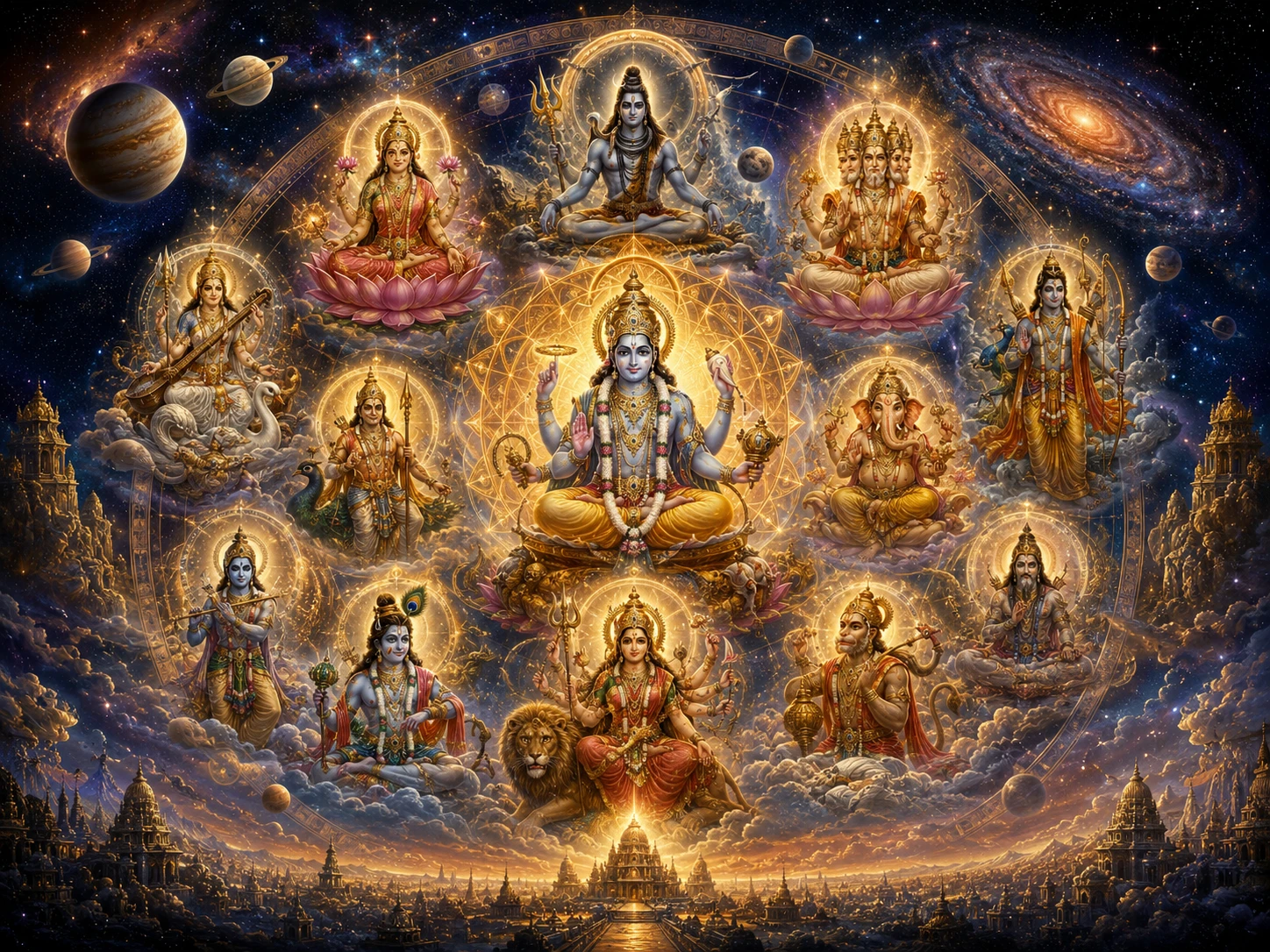
33 Koti Devata -- Why Hinduism Has 33 Types of Gods, Not 33 Crore
13 min read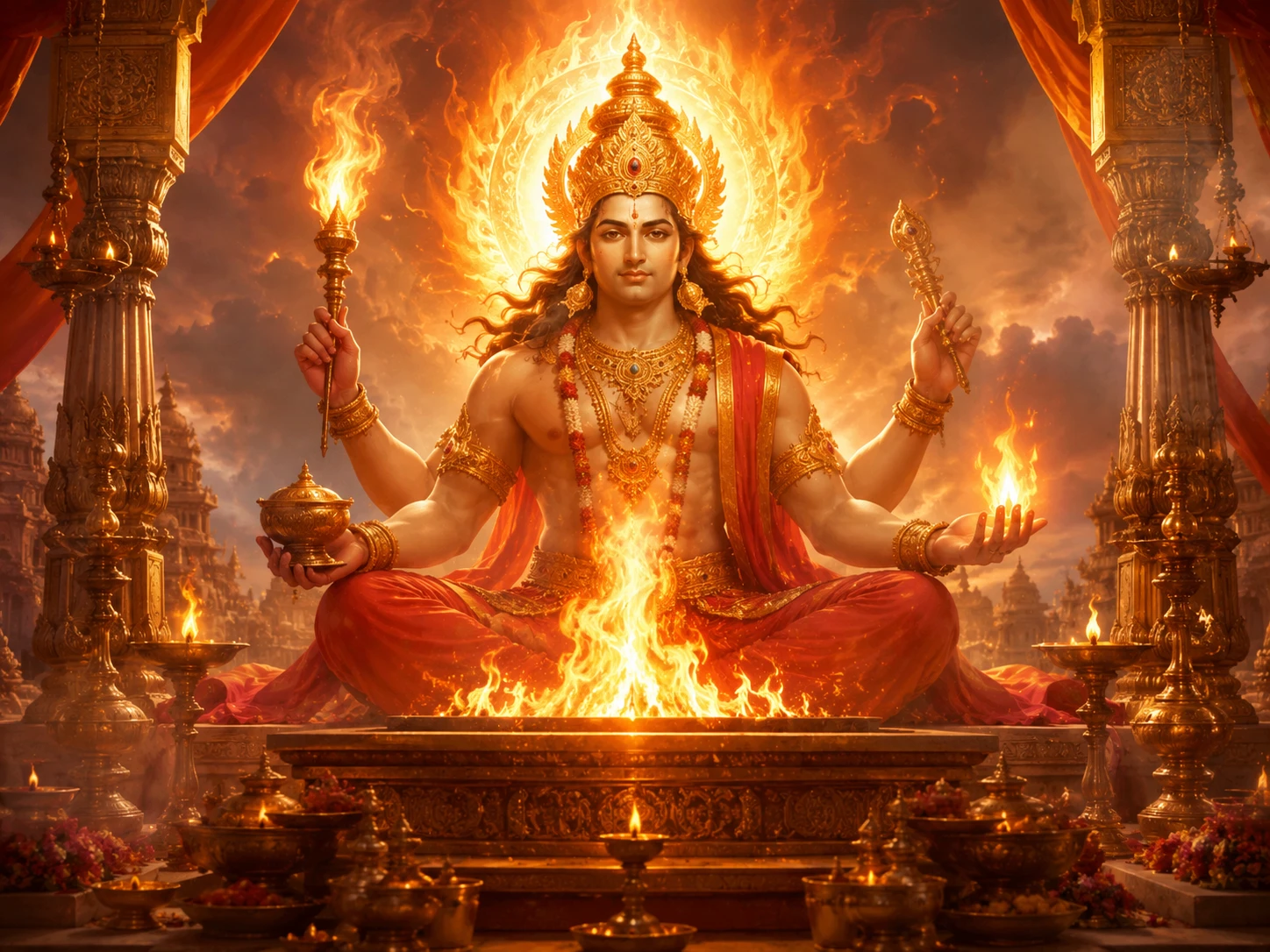
Agni -- The Fire God
19 min read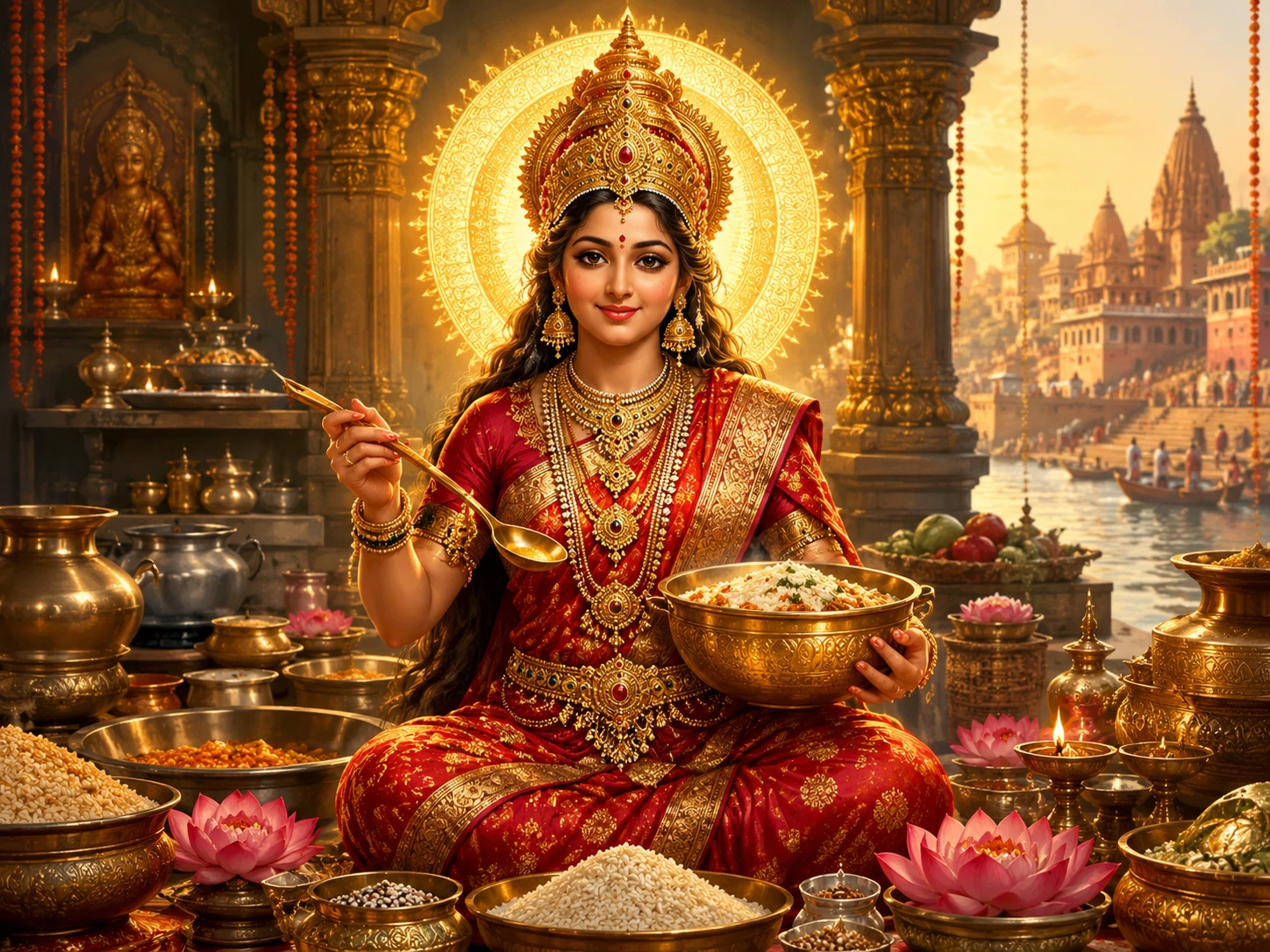
Annapurna -- Goddess of Food
19 min readThe same translation error that turned '33 Koti' into '33 crore' in Hinduism also happened in Buddhism. The Chinese translation of Buddhist texts rendered 'Sapta Koti Buddha' (7 Supreme Buddhas) as '7 Crore Buddhas.' The…
Deities AvatarsCommunity Reflections
🕉️
Be the first to share your reflection.