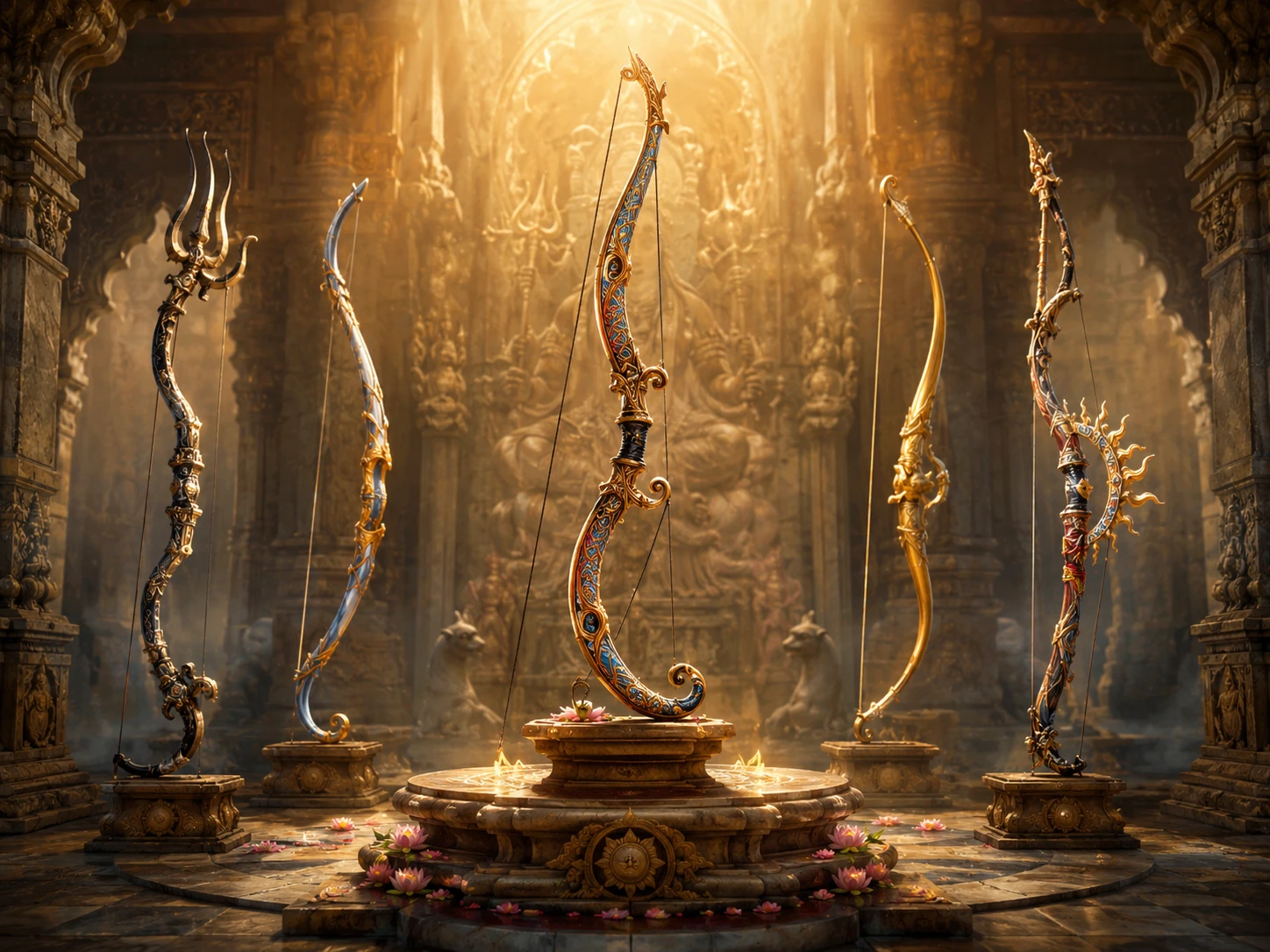
The Celestial Bows -- Pinaka, Gandiva, Sharanga, Vijaya and the Sacred Art of Dhanurvidya
दिव्य धनुष -- पिनाक, गाण्डीव, शारंग, विजय और धनुर्विद्या की पवित्र कला
In the entire sweep of Hindu mythology, no weapon category carries the symbolic weight of the bow. The bow is not merely a tool of war -- it is a metaphor for the spiritual journey itself. The archer must find perfect stillness within (the grip), channel focused energy through a taut medium (the string), and release with precise intention toward a target (the arrow's flight). This is why Dhanurvidya -- the science of archery -- was considered not just a martial art but a spiritual discipline in ancient India.
The great bows of mythology were not ordinary weapons. They were cosmic instruments, each forged by divine smiths, each carrying the energy of the deity it was associated with, each choosing its wielder as much as the wielder chose it. When Rama lifts and breaks Shiva's Pinaka at Sita's Swayamvara, he is not merely demonstrating physical strength -- he is proving that he carries within himself the divine authority to wield Shiva's own power.
Five bows stand above all others in the mythological canon. Each has a creation story, a lineage of bearers, a moment of supreme glory, and a deeper symbolic meaning that speaks to us even today.
The Five Celestial Bows
| Bow | धनुष | Creator | Primary Bearer | Origin Story | Greatest Moment |
|---|---|---|---|---|---|
| Pinaka | पिनाक | Vishwakarma | Shiva, then Rama (at Swayamvara) | Forged by Vishwakarma for Shiva. Used by Shiva to destroy Tripura (three demonic cities). Later given to King Janaka's lineage. | Rama lifts and breaks it at Sita's Swayamvara, proving his divine worth. The snap echoed across the three worlds. |
| Sharanga | शारंग | Vishwakarma | Vishnu, then Parashurama, then Rama | Forged by Vishwakarma for Vishnu. Considered the equal of Pinaka. Passed from Vishnu to Richika to Jamadagni to Parashurama. | Parashurama challenges Rama after Pinaka breaks. Rama strings Sharanga effortlessly, proving mastery over both Shiva's and Vishnu's bows. |
| Gandiva | गाण्डीव | Brahma | Brahma to Prajapati to Soma to Varuna to Agni to Arjuna | Created by Brahma. Passed through gods for thousands of years before Agni gifted it to Arjuna during the Khandava Vana burning. Had 108 divine strings. | Fired the devastating arrow barrage at Kurukshetra. Never failed Arjuna in 18 days of war. Returned to Varuna after Krishna's departure. |
| Vijaya | विजय | Vishwakarma | Indra to Parashurama to Karna | Created by Vishwakarma for Indra. Given to Parashurama as his guru dakshina. Parashurama gave it to Karna, his favourite student. | Karna wielded it on the 17th day of Kurukshetra. With Vijaya in hand, even Arjuna's Gandiva could not overpower him -- only Karna's chariot wheel sinking decided the outcome. |
| Kodanda | कोदण्ड | Vishwakarma | Rama | Rama's personal battle bow used throughout the Ramayana (distinct from Pinaka which he broke). Accompanied him through vanvas, Lanka war, and his entire life. | Used to kill Ravana. The final arrow (Brahmastra on an arrow shaft, guided by Vayu and Agni) pierced Ravana's navel where amrita sustained his life. |
Vishwakarma, the divine architect and smith, crafted most of these bows -- making him ancient India's original weapons engineer. His role is parallel to Hephaestus in Greek mythology.
गाण्डीवं धनुराग्र्यं मे वासवो ज्यामनुत्तमाम्। अक्षय्यौ च महाबाहो दिव्यौ शरवरौ मम॥
gaandivam dhanur aagryam me vaasavo jyaam anuttamaam akshayau ca mahabaaho divyau sharavarau mama
Gandiva is my supreme bow, Indra gave me the incomparable bowstring, and I possess two divine inexhaustible quivers, O mighty-armed one.
— Mahabharata, Virata Parva 44.14 (Arjuna reveals his identity)
Gandiva -- The Bow That Sang in Battle
Of all the celestial bows, Gandiva holds a special place in the Indian imagination. It was not merely a weapon; it had a personality. The Mahabharata describes its twang (tankara) as being so powerful that it terrified enemy armies before a single arrow was released. When Arjuna drew the bowstring to his ear and released, the sound was said to resemble divine thunder -- an auditory weapon in itself.
Gandiva had 108 celestial strings. If one broke in battle, the next would instantly appear. It was accompanied by two akshaya (inexhaustible) quivers that would never run out of arrows -- a perpetual supply system that no earthly armoury could match.
But Gandiva's most poignant moment comes not in war but in its aftermath. After Krishna's departure from the mortal world and the Pandavas' decision to undertake their final journey (Mahaprasthanika Parva), Arjuna must return Gandiva to Agni/Varuna. The bow that defined him for decades, that sang with him through eighteen days of apocalyptic war, that was essentially part of his identity -- he gives it back. It is one of the most moving moments of detachment (vairagya) in all of Hindu literature. The weapon was never his; it was entrusted to him for a purpose, and when that purpose was fulfilled, he let it go.
For a young officer at the Indian Military Academy in Dehradun, this is perhaps the deepest lesson the mythology of weapons offers: a true warrior is not defined by what he wields but by his willingness to lay it down.
Dhanurvidya (the science of archery) was one of the 18 traditional Vidyas (knowledge systems) of ancient India. The Dhanurveda, attributed to Vishwamitra, is a full Upaveda dedicated to martial science. India's Dronacharya Award for outstanding sports coaches is named after the greatest archery teacher in mythology.
Focus Like an Archer -- Try Meditation
Arjuna's legendary focus -- seeing only the eye of the bird when Drona tested his students -- comes from the same meditative stillness available to you. Begin with the Steady Gaze dharana on Eternal Raga.
Eternal Raga · शाश्वत राग
Institutional voice — scholarly articles on Sanatan Dharma
Deepen Your Understanding
अपनी समझ और गहरी करें
divine arsenal
Astra vs Shastra -- The Two Classes of Weapons in Hindu Warfare
One is hurled with mantras and divine invocation. The other is wielded by hand and muscle. Understanding the fundamental difference between Astra and Shastra unlocks the entire weapons philosophy of ancient India.
divine arsenal
The Arrows That Changed Destiny -- Famous Banas of Hindu Mythology
In Hindu mythology, a single arrow could end a war, kill an immortal, or alter the fate of an entire civilisation. From the Brahmastra arrow that killed Ravana to the Anjalikastra that felled Karna -- every arrow carried a story within its flight.
deities avatars
Dashavatara -- Why Vishnu Comes Back Ten Times
Fish, tortoise, boar, half-lion, dwarf, axe-warrior, prince, cowherd, enlightened teacher, future horseman. The ten avatars of Vishnu are not random folklore. Read them in sequence and you get something startling -- a narrative that mirrors evolutionary biology, tracks the rise and fall of political systems, and argues that God does not sit above history but enters it, gets dirty, and does the work. The Dashavatara is Hinduism's answer to the question every civilisation asks: why does the world keep breaking, and who fixes it?
deities avatars
Who is Shiva?
He is the ash-smeared ascetic who is also the ideal husband. The destroyer of the universe who is called 'The Auspicious One.' The god of death who drank poison to save all life. He sits in meditation on a Himalayan peak, and simultaneously dances the cosmos into existence and annihilation. No deity in Hinduism contains more contradictions -- and no deity resolves them more completely. This is not a mythology explainer. This is an attempt to stand at the foot of the mountain and look up.
deities avatars
Krishna Leela -- Why God Chose to Play
He stole butter, broke pots, lied to his mother's face, danced with married women under the full moon, and lifted an entire mountain on his little finger. The Bhagavata Purana's Tenth Skandha -- the most popular 4,000 verses in all of Hindu literature -- is not a biography. It is a theological argument that the Supreme Being's highest expression is not creation, destruction, or cosmic governance. It is play. Krishna Leela is the radical idea that God's truest nature is joy.
divine arsenal
The Celestial Chariots -- Pushpaka Vimana, Arjuna's Ratha, and the Flying Machines of Hindu Mythology
Ravana's Pushpaka Vimana could fly across oceans and read its owner's mind. Arjuna's chariot bore Hanuman on its flag and was driven by God himself. These were not fairy tale carriages -- they may be literary encodings of technologies that ancient India actually possessed.
Dhanurvidya (the science of archery) was one of the 18 traditional Vidyas (knowledge systems) of ancient India. The Dhanurveda, attributed to Vishwamitra, is a full Upaveda dedicated to martial science. India's Dronachar…
More in Divine Arsenal
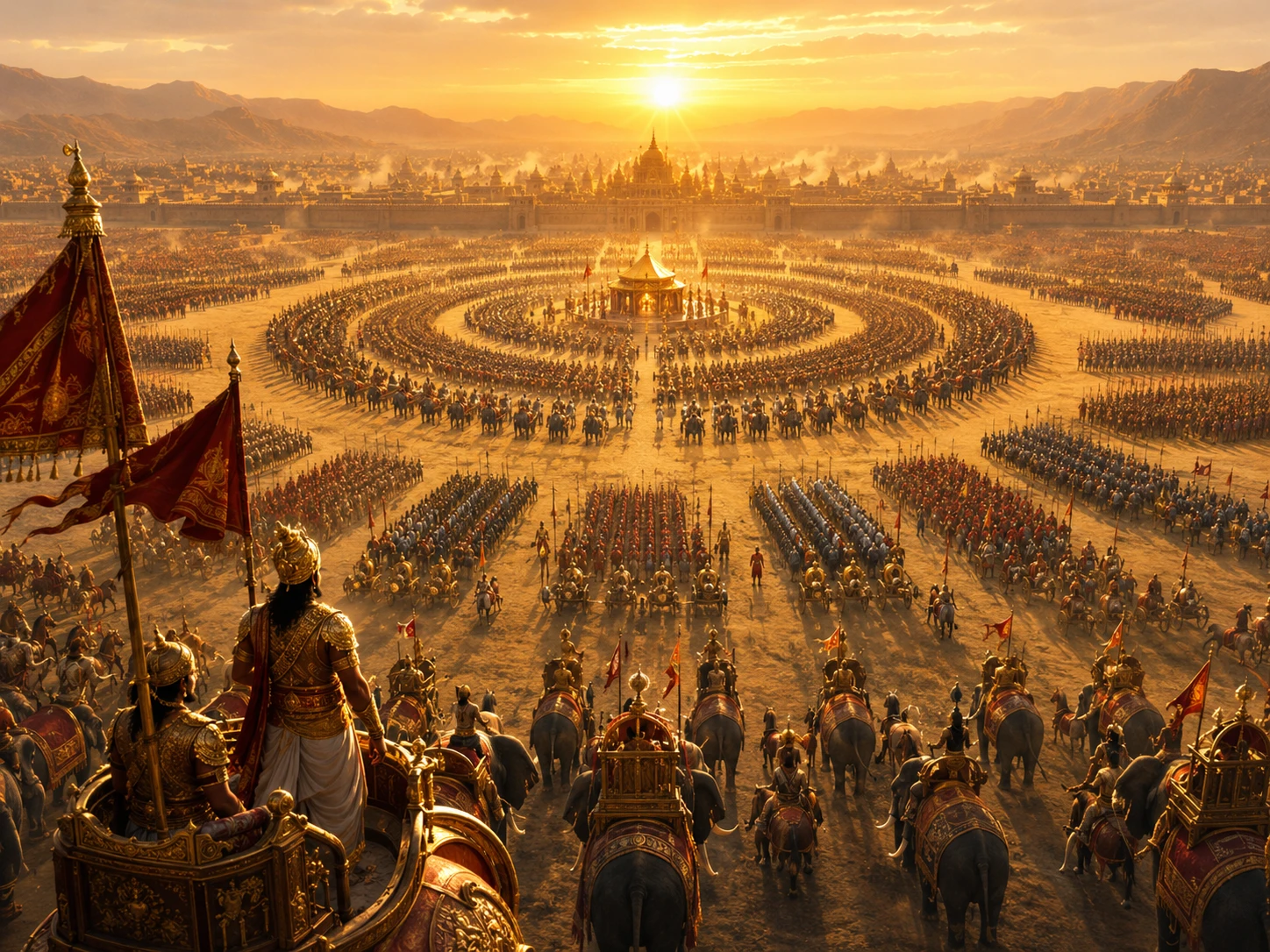
Akshauhini -- The Epic Army Structure Where Every Digit Sums to 18
14 min read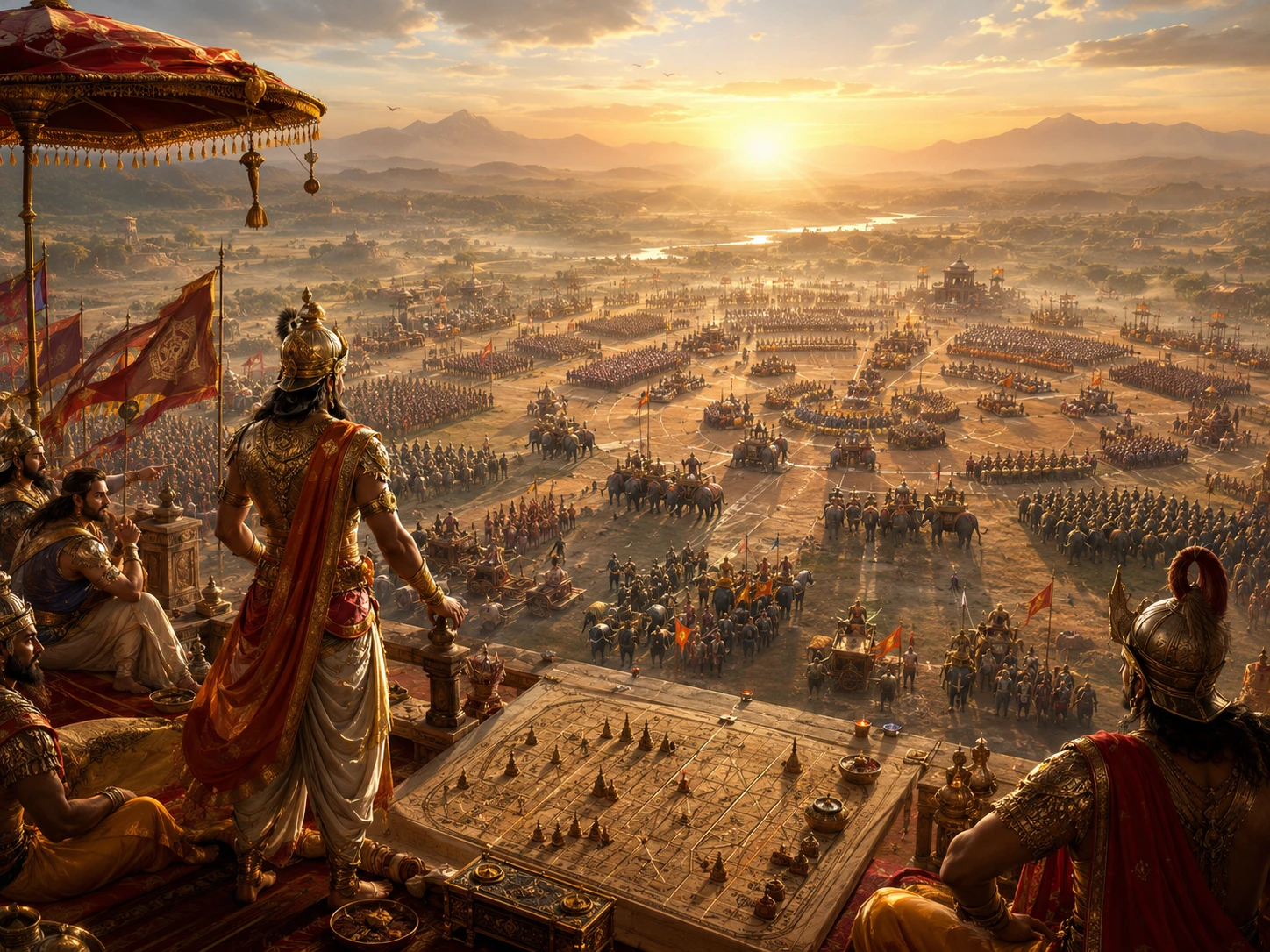
Ancient Indian Martial Arts -- Kalaripayattu to Malla-Yuddha
14 min read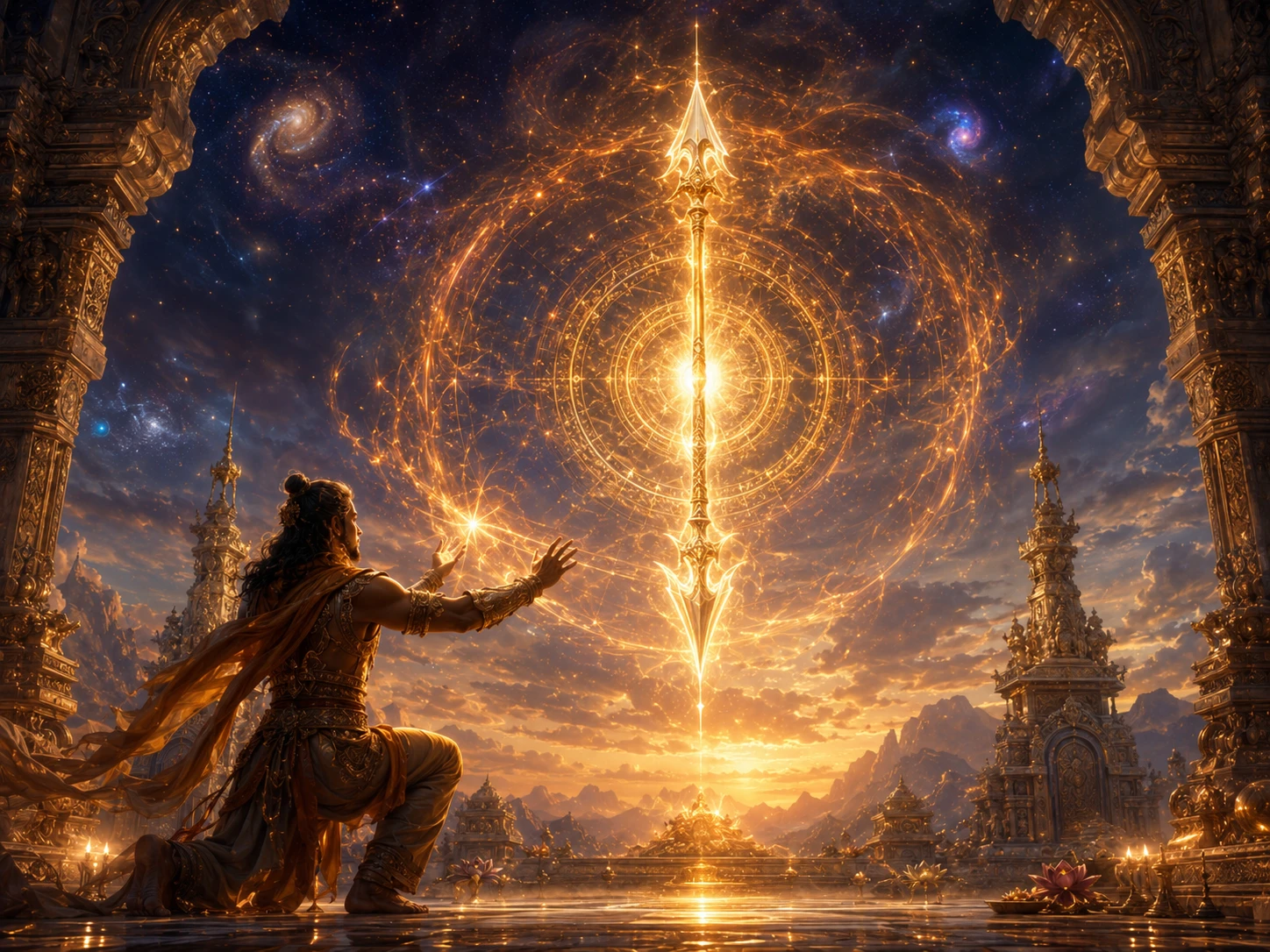
Astra Invocation and Withdrawal -- The Ritual of Weapons
16 min readThe same translation error that turned '33 Koti' into '33 crore' in Hinduism also happened in Buddhism. The Chinese translation of Buddhist texts rendered 'Sapta Koti Buddha' (7 Supreme Buddhas) as '7 Crore Buddhas.' The…
Deities AvatarsCommunity Reflections
🕉️
Be the first to share your reflection.