Holi and Holika Dahan -- The Night a Child's Faith Burned an Empire
होली और होलिका दहन -- वह रात जब एक बालक के विश्वास ने साम्राज्य जला दिया
Holi is not a random festival of colour-throwing. It is the morning-after celebration of one of the most dramatic stories in all of Hindu scripture -- a story about a father who tried to murder his own son because the son worshipped the wrong god, a demoness aunt who sat in fire with her nephew in her lap, a divine intervention that inverted every safety guarantee, and a half-lion half-man avatar who emerged from a pillar to enforce cosmic justice at twilight on a threshold. Holika Dahan -- the bonfire on the night before Holi -- commemorates the single most important moment in this narrative: the instant when faith proved fireproof and power proved combustible.
The story is told in the Bhagavata Purana, Seventh Canto (Skandha), and in the Vishnu Purana. It begins with Hiranyakashipu, the elder brother of Hiranyaksha, both born as the cursed gatekeepers of Vishnu (Jaya and Vijaya, as described in the Third Skandha of the Bhagavata Purana). After Vishnu killed Hiranyaksha in his Varaha (boar) avatar, Hiranyakashipu was consumed by rage and a desire for vengeance. He performed severe tapas in the Himalayas until Brahma appeared and granted him a boon.
The boon Hiranyakashipu extracted was one of the most carefully crafted immunity clauses in all of mythology. He could not be killed by man or beast, by deva or asura, by any being created by Brahma. Not inside or outside. Not by day or by night. Not on the earth or in the sky. Not by any weapon. He could not die in any conceivable circumstance -- or so he believed. Armed with this boon, he conquered the three worlds, displaced Indra, and demanded that all beings worship only him. The name Hiranyakashipu itself means 'golden bed/golden garment' -- a man defined by his material obsession.
But his own son, Prahlad, born while his mother Kayadhu lived in the ashram of Sage Narada during Hiranyakashipu's absence, had absorbed transcendental devotion to Vishnu even in the womb. When Hiranyakashipu discovered that his son worshipped his mortal enemy, he was enraged beyond reason. He ordered Prahlad thrown off a cliff, trampled by elephants, poisoned, starved, attacked by serpents, and thrown into the sea. Every attempt failed. Vishnu protected Prahlad each time.
श्रवणं कीर्तनं विष्णोः स्मरणं पादसेवनम्। अर्चनं वन्दनं दास्यं सख्यमात्मनिवेदनम्॥
śravaṇaṃ kīrtanaṃ viṣṇoḥ smaraṇaṃ pādasevanam | arcanaṃ vandanaṃ dāsyaṃ sakhyamātmanivedanam ||
Hearing about Vishnu, chanting His names, remembering Him, serving His lotus feet, offering worship, prayers, servitude, friendship, and complete surrender of the self -- these nine forms of devotion are the true path of spiritual life.
— Bhagavata Purana, Skandha 7, Adhyaya 5, Shloka 23 (Prahlad's teaching on Navadha Bhakti)
The Holika episode is the climactic attempt. Hiranyakashipu's sister Holika possessed a boon -- a cloak or shawl that made her immune to fire. The condition, which Holika either did not know or chose to ignore, was that the boon worked only when she entered fire alone. Hiranyakashipu devised the plan: Holika would sit in a raging bonfire with Prahlad in her lap. The fire-proof aunt would survive; the devotee-child would burn.
Holika agreed. The pyre was lit. Prahlad, unafraid, chanted the names of Vishnu. And then the inversion happened. The divine cloak flew from Holika and covered Prahlad. Or, in another version, the boon simply failed because it was deployed with malicious intent. Holika burned to ash. Prahlad emerged unscathed. The fire that was supposed to kill the devotee killed the instrument of tyranny instead.
This is the moment that Holika Dahan commemorates. On the night before Holi, across North India, East India, Nepal, and parts of South India, communities gather around massive bonfires. The pyre is typically built over weeks from collected wood, dried leaves, and cow dung cakes. An effigy of Holika is sometimes placed at the centre. As the fire roars, people circle it, throw offerings of coconut, grain, and new harvest stalks into the flames, and shout 'Holi hai! Holi hai!' The fire consumes the old, the negative, the ego -- and what rises from the ashes the next morning is colour, joy, and communal celebration.
The Narasimha denouement follows the Holika episode in the Bhagavata Purana. When Hiranyakashipu demands to know where Vishnu is, Prahlad answers: everywhere. 'Is he in this pillar?' sneers the king, striking a pillar in his court. And from that pillar, at the junction of day and night (twilight), Vishnu emerges as Narasimha -- half-lion, half-man. Not human, not animal. Not created by Brahma. He drags Hiranyakashipu to the threshold of the palace (neither inside nor outside), places him on his lap (neither earth nor sky), and tears him apart with his claws (no weapon). Every clause of the boon is honoured. Every clause is defeated. The most carefully constructed legal immunity in mythological history is dismantled by a god who reads the fine print better than the petitioner.
The Narasimha episode is celebrated separately on Narasimha Jayanti, but its shadow falls across Holika Dahan. The bonfire is not merely Holika's funeral pyre. It is a preview of the cosmic justice that follows -- the assurance that no amount of power can protect adharma permanently.
The Colours of Holi -- Radha, Krishna, and the Morning After the Fire.
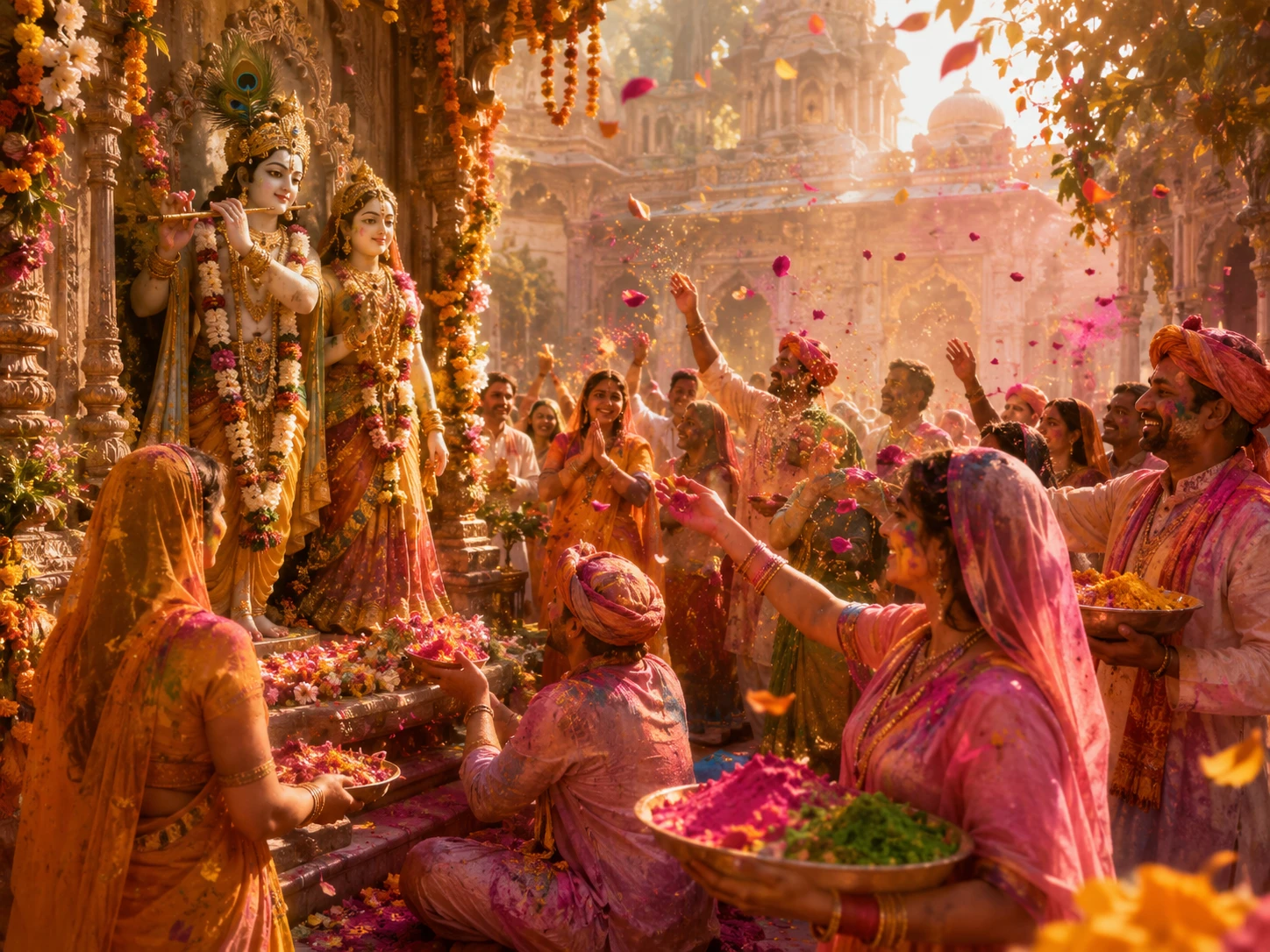
If Holika Dahan is the theological night, Holi is the devotional morning. The colours have a separate origin story, rooted in the Radha-Krishna tradition of Braj (Mathura-Vrindavan region). According to the Garg Samhita and Bhagavata Purana traditions, the young Krishna, dark-complexioned, was envious of the fair Radha's skin. His mother Yashoda playfully suggested he colour Radha's face with his own colours. Krishna did -- and the gopis joined in, and the entire village of Vrindavan erupted in a riot of colour and joy. This is the Lathmar Holi of Barsana and Nandgaon that survives today, where women 'beat' men with sticks and men respond with colour.
The colour-play (Rangwali Holi or Dhulandi) happens the morning after Holika Dahan. The theological sequence matters: first the burning of ego and evil (night), then the celebration of love and joy (morning). First Prahlad's faith, then Krishna's play. First renunciation, then celebration. The festival structure itself teaches that joy follows sacrifice.
Holi is also a harvest festival. The Bhavishya Purana links it to the destruction of the ogress Dhundha during King Raghu's reign, connecting the bonfire to an agricultural purification ritual marking the end of winter. The stalks of new rabi crop (wheat, barley, chickpea) are roasted in the Holika fire and eaten as prasad. Farmers offer gratitude to Agni for the harvest and pray for the coming kharif season.
In South India, the same night is called Kama Dahanam -- the burning of Kamadeva (the god of love) by Shiva's third eye. This connects to a separate Puranic narrative where Kamadeva disturbed Shiva's meditation to help the devas, and Shiva incinerated him. Kamadeva was later reborn as Pradyumna, son of Krishna. In rural Tamil Nadu, effigies of Kamadeva are burned and pantomimes performed.
Modern Holi has become India's most photogenic festival, celebrated from the lanes of Varanasi to tech campuses in Bangalore to diaspora gatherings in London and New York. The UPSC aspirant in Old Rajinder Nagar takes a break from revision. The IIT campus erupts in colours. Bollywood has made Holi songs a genre of their own -- from 'Rang Barse' to 'Balam Pichkari.' But beneath the Instagram filters and the organic gulaal marketing, the festival remains what it has been for millennia: a fire that burns the old world, and colours that paint the new one.
Holi Across India -- Regional Names, Legends, and Unique Traditions
| Region | Local Name | Primary Legend | Unique Tradition |
|---|---|---|---|
| Braj (UP) | Lathmar Holi | Radha-Krishna colour play | Women beat men with lathis in Barsana; men respond with colour |
| North India (general) | Holika Dahan + Dhulandi | Prahlad and Holika | Bonfire with effigies; colours next morning; thandai and gujiya |
| Bengal | Dol Yatra / Dol Purnima | Radha-Krishna swing festival | Swinging Radha-Krishna murtis; sandalwood paste instead of gulaal |
| Maharashtra | Shimga / Rangpanchami | Holika Dahan + local harvest | Colours on 5th day (Rangpanchami); Holi Paurnima bonfire |
| Tamil Nadu | Kama Dahanam | Shiva burning Kamadeva | Kamadeva effigies burned; pantomimes performed in villages |
| Gujarat | Holika Dahan + Dhuleti | Prahlad-Holika legend | Elaborate community bonfires; matka-phod (pot-breaking) competitions |
| Manipur | Yaosang | Syncretised with Vaishnava tradition | Thabal Chongba (moonlight folk dance); six-day festival |
| Punjab | Hola Mohalla (Sikh) | Martial tradition by Guru Gobind Singh | Mock battles, wrestling, martial arts displays at Anandpur Sahib |
Holi is also celebrated in Nepal (as a national holiday), Fiji, Trinidad, Guyana, Suriname, and other diaspora communities. The festival transcends Hindu religious boundaries -- Sikhs celebrate Hola Mohalla and many Muslim communities in North India participate in colour-play.
The Kathaka Grihya Sutras and Jaimini's Purva Mimamsa Sutras contain some of the earliest textual references to Holi-like spring rituals, pre-dating even the Prahlad-Holika Puranic narrative -- suggesting that the bonfire festival existed as an agricultural spring celebration before it was later connected to the Prahlad story. The Bhavishya Purana provides a separate origin connecting the bonfire to the destruction of the ogress Dhundha. Meanwhile, the sacred ash collected from the Holika Dahan pyre is treated as prasad -- people apply it to their foreheads, mix it with water to sprinkle in homes, and some rural communities use it medicinally. In Vrindavan, the Banke Bihari Temple celebrates Holi for a full week, and the Phoolon Ki Holi (Holi with flowers instead of colours) at the Gulal Kund in Braj is one of the most visually stunning religious ceremonies in India.
Celebrate Holi with Prahlada's Lord
Holika Dahan celebrates Prahlada's faith and Narasimha's protection. On the night of the bonfire, recite the Narasimha Stotram or the Narasimha Kavacham; both are on Eternal Raga with their meaning, alongside Krishna's hymns for the day of colours.
Tags
Eternal Raga · शाश्वत राग
Institutional voice — scholarly articles on Sanatan Dharma
Deepen Your Understanding
अपनी समझ और गहरी करें
rituals traditions
Havan Vidhi -- The Vedic Fire Ritual That Purifies Air, Mind, and Karma
Every major Hindu milestone -- birth, thread ceremony, wedding, housewarming, death -- involves fire. The havan is the oldest continuous ritual technology in Hinduism, dating to the Rig Veda. You pour ghee, herbs, and grains into a consecrated fire while chanting 'Svaha,' and Agni carries your offering to the gods. Modern science confirms: the smoke actually does purify the air. Here is the complete procedure.
rituals traditions
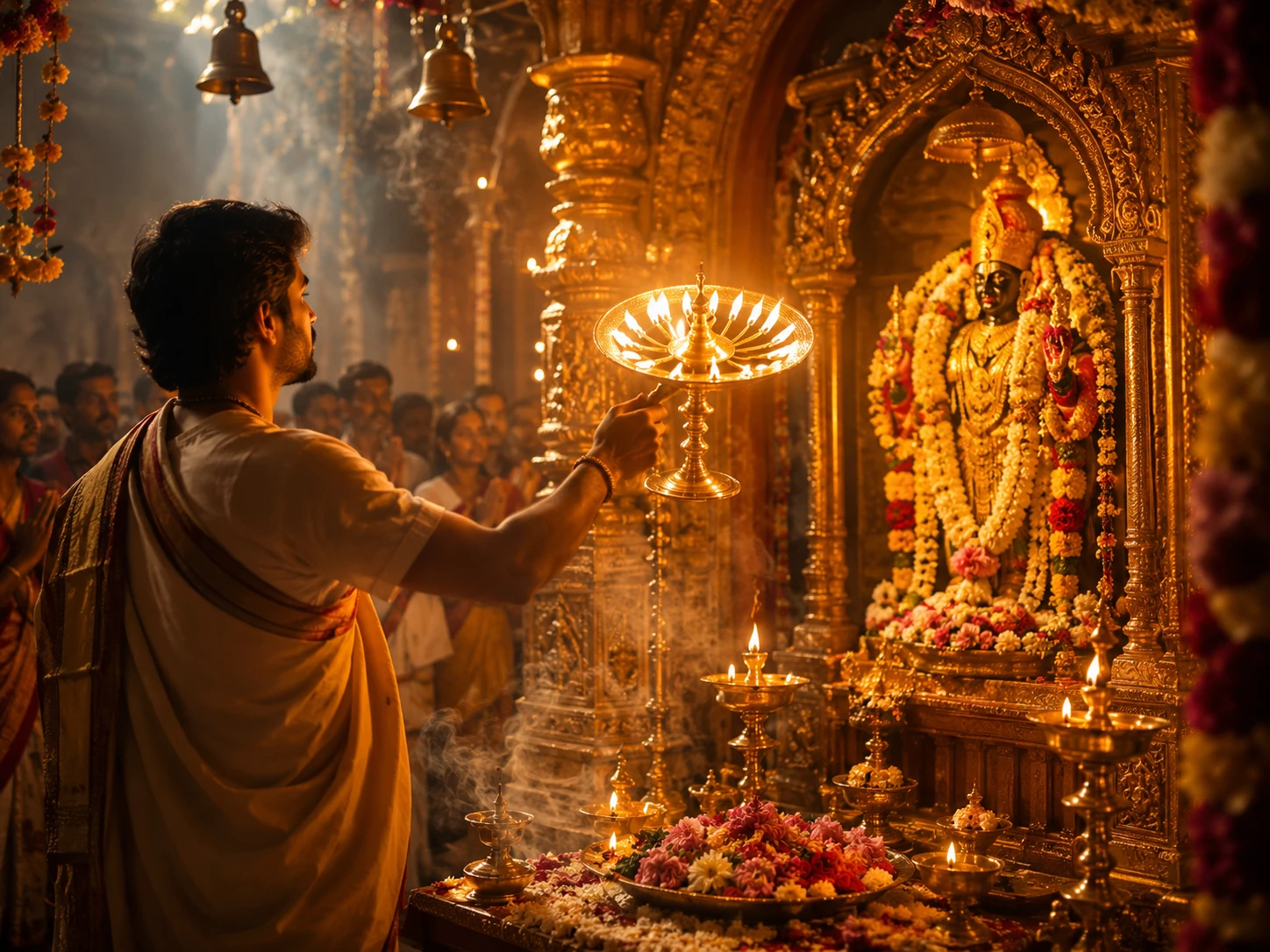
Aarti -- Why Hindus Circle Light Before God
Every evening, millions of flames are circled before millions of deities across India. The aarti is the single most recognisable act of Hindu worship -- yet most people performing it cannot explain why the light moves clockwise, why camphor is preferred, or why the flame is touched to the eyes afterward. The answer is older than temples, deeper than devotion, and more scientific than you would expect.
rituals traditions
The 16 Samskaras -- Rites of Passage from Womb to Pyre
Hinduism does not leave life to chance. From the moment a couple decides to conceive to the moment the body returns to the five elements, there are sixteen rituals -- samskaras -- designed to refine the human being at every critical transition. Think of them as firmware updates for the soul, installed at precisely the right moments.
rituals traditions
Puja at Home -- The Complete Beginner's Guide
You have a small mandir shelf in your apartment. A brass diya your mother gave you. A photo of a deity you feel drawn to. And absolutely no idea what to do next. This guide is for you -- the 22-year-old in Pune who just moved out, the NRI in New Jersey setting up a puja corner for the first time, the curious soul who wants to start but does not know where.
rituals traditions
Why Bells, Lamps, and Flowers -- The Sensory Engineering Behind Hindu Worship
Hindu worship is not random. Every bell, every lamp, every flower, every stick of incense, every drop of water addresses a specific sense, invokes a specific element, and produces a specific psychological effect. The puja is a sensory design system -- a five-element, five-sense immersive experience engineered three thousand years before UX designers existed. Here is the complete map.
rituals traditions
Temple Darshan Etiquette -- The Complete Protocol for Visiting a Hindu Temple
Most Hindus visit temples. Few know the correct sequence. There is a reason you remove shoes before entering, ring the bell at the threshold, worship Ganesha first, walk clockwise around the sanctum, accept prasad in the right hand, and never point your feet at the deity. Every rule has a Vedic, architectural, or psychological rationale. This is the complete user guide to Hindu temple darshan.
The Kathaka Grihya Sutras and Jaimini's Purva Mimamsa Sutras contain some of the earliest textual references to Holi-like spring rituals, pre-dating even the Prahlad-Holika Puranic narrative -- suggesting that the bonfir…
More in Rituals & Traditions
Aarti -- Why Hindus Circle Light Before God
13 min read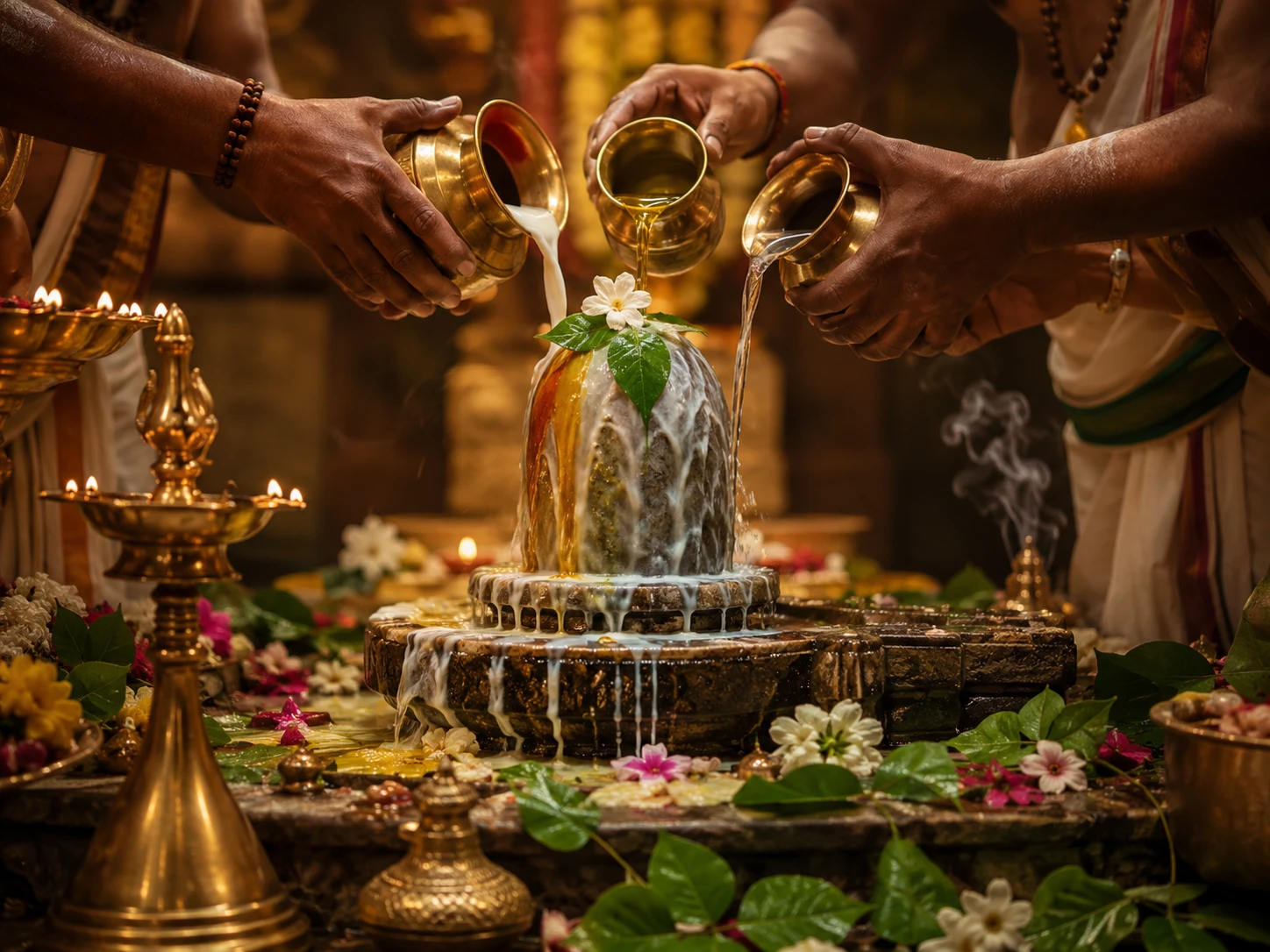
Abhisheka -- Why Hindus Bathe Their Gods
10 min read
Akshaya Tritiya -- The Day Nothing Given Away Runs Out
12 min readThe same translation error that turned '33 Koti' into '33 crore' in Hinduism also happened in Buddhism. The Chinese translation of Buddhist texts rendered 'Sapta Koti Buddha' (7 Supreme Buddhas) as '7 Crore Buddhas.' The…
Deities AvatarsCommunity Reflections
🕉️
Be the first to share your reflection.