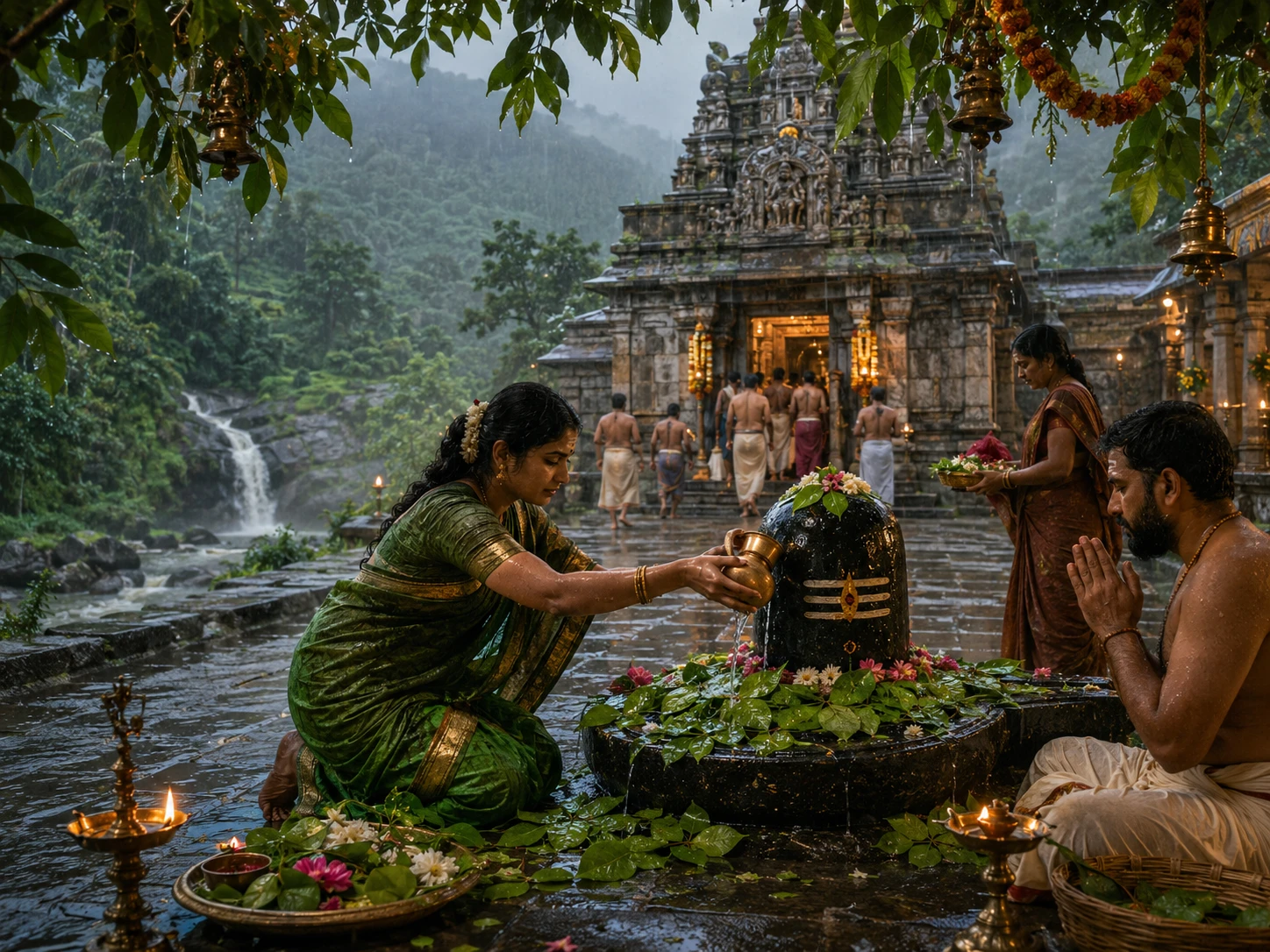
Shravan / Aadi -- The Holiest Month in the Hindu Calendar (And Why It Belongs to Shiva)
श्रावण / आदि -- हिन्दू कैलेण्डर का सबसे पवित्र मास (और ये शिव का क्यों)
Shravan (July-August) is the fifth month of the Hindu calendar and is universally considered the holiest month of the year -- a period when the cosmic energy is believed to be most conducive to spiritual practice, when the veil between the human and divine realms thins, and when the earth itself, drenched in monsoon rain, pulses with renewed life.
The month is sacred to Shiva in North India and to Devi (particularly Amman/mother goddess forms) in South India. This dual dedication reflects the monsoon's dual nature: it is both destructive (Shiva's Rudra aspect -- floods, storms, upheaval) and nurturing (Devi's maternal aspect -- the rain that feeds the crops, fills the rivers, and sustains all life).
In North India, Shravan Somvar (Monday fasting) is the most widely observed weekly Vrata of the month. Millions of Hindus -- particularly women praying for their husband's well-being and unmarried women praying for a good spouse -- fast every Monday of Shravan and visit Shiva temples for Abhisheka and darshan. The theological basis: Monday (Somvar) is Shiva's day (Soma = Moon, and Shiva wears the crescent moon on his head), and Shravan is Shiva's month. The combination creates four (sometimes five) Mondays of intensified Shiva worship.
The Kanwar Yatra is Shravan's most spectacular expression. Over 30 million Kanwariyas (pilgrims) -- predominantly young men dressed in saffron -- walk barefoot from their homes to Haridwar, Sultanganj, or other Ganga sites, fill decorated Kanwars (bamboo poles with two pots) with Ganga water, and carry them back to their local Shiva temples for Abhisheka. The yatra covers hundreds of kilometres and is one of the largest annual pilgrimages on earth. The UP and Uttarakhand governments build dedicated Kanwar lanes on national highways during Shravan.
Key festivals falling in Shravan include: Nag Panchami (worship of serpent deities on Shravan Shukla 5), Hariyali Teej (Parvati's reunion with Shiva, women's festival), Raksha Bandhan / Upakarma (Shravan Purnima), and in Maharashtra, the beginning of the Shravan month-long series of Mondays and Saturdays dedicated to Shiva and Hanuman respectively.
In South India, the corresponding month Aadi (mid-July to mid-August) is dedicated to the goddess. Aadi Pooram celebrates the birth of Andal (the only female Alvar saint in the Sri Vaishnava tradition). Aadi Perukku is a celebration of rivers and water -- families picnic near rivers, offer prayers, and celebrate the monsoon's gift of water to the land. Aadi is considered inauspicious for new ventures (especially marriages and housewarming), but intensely auspicious for Devi worship, charity, and spiritual practice.
The monsoon connection is not incidental. The tradition recognises that the rainy season forces people indoors, limits travel, and creates a natural period of withdrawal from worldly activity. This enforced inwardness is the perfect condition for intensified spiritual practice. The four-month Chaturmas period (beginning with Devshayani Ekadashi in Ashadha) formalises this: no weddings, no new businesses, no major celebrations. The energy that would go into external activity is redirected inward -- into Japa, Tapa, Vrata, and worship. Shravan is the peak of this inward turn.
ॐ नमः शिवाय
oṁ namaḥ śivāya
I bow to Shiva -- the Panchakshari (five-syllable) Mantra, the most chanted mantra during Shravan and the foundational mantra of Shaiva tradition.
— Sri Rudram, Taittiriya Samhita 4.5.8 (Namakam -- origin of Om Namah Shivaya)
Shravan (North) vs Aadi (South) -- One Monsoon, Two Traditions
| Aspect | पक्ष | Shravan (North India) | Aadi (South India) |
|---|---|---|---|
| Primary deity | प्रमुख देवता | Shiva | Devi (Amman) |
| Weekly fast | साप्ताहिक व्रत | Shravan Somvar (Monday) | Aadi Fridays in some traditions |
| Mega pilgrimage | महा तीर्थयात्रा | Kanwar Yatra (30M+ pilgrims) | Aadi Perukku (river celebrations) |
| Key festival | प्रमुख त्योहार | Nag Panchami, Hariyali Teej | Aadi Pooram (Andal birthday) |
| New ventures | नए उपक्रम | Mixed (some avoid, some don't) | Inauspicious (no weddings) |
| Climax | चरम | Shravan Purnima (Raksha Bandhan) | Aadi 18 (Aadi Perukku) |
| Mood | भाव | Intense Shiva devotion | Intense Devi devotion |
The Kanwar Yatra in Shravan is one of the largest annual pilgrimages on earth -- over 30 million pilgrims in 2023. UP and Uttarakhand deploy dedicated Kanwar lanes, medical camps, and security corridors on national highways. The economic impact on towns along the Kanwar route (Haridwar, Meerut, Muzaffarnagar) rivals major festivals.
The Kanwar Yatra has grown from a few thousand pilgrims in the 1990s to over 30 million by the 2020s -- making it one of the fastest-growing pilgrimages in the world. The UP government builds a dedicated 240-km Kanwar Marg from Haridwar to Delhi with separate lanes, water stations, medical posts, and CCTV surveillance. Google Maps provides real-time Kanwar route tracking during Shravan. The yatra's demographic is predominantly young men (18-35) from rural and semi-urban North India -- making it one of the few mass religious movements in India driven primarily by youth. Sociologists have noted that the Kanwar Yatra functions simultaneously as pilgrimage, fitness challenge, social bonding ritual, and assertion of Hindu identity.
Observe a Shravan Somvar Fast
On the next Monday in Shravan, keep a simple fast: skip grains, take only fruit and milk, visit a Shiva temple for abhisheka if you can, and chant 'Om Namah Shivaya' 1,008 times on a rudraksha mala. Four Mondays of Shravan fasting make a month-long discipline that the tradition values above months of ordinary practice. The mantra's page on Eternal Raga gives its meaning and how to chant it.
Eternal Raga · शाश्वत राग
Institutional voice — scholarly articles on Sanatan Dharma
Deepen Your Understanding
अपनी समझ और गहरी करें
rituals traditions
Abhisheka -- Why Hindus Bathe Their Gods
Every day in thousands of temples across India, deities made of stone, metal, and wood are bathed with milk, honey, curd, ghee, water, and a dozen other substances while Vedic hymns echo through the sanctum. Abhisheka is not symbolic cleansing -- the deity is not dirty. It is a technology of connection, where each liquid carries a specific energy, each mantra activates a specific dimension, and the devotee who watches or participates undergoes a transformation as real as the one happening to the murti.
rituals traditions
Vrata -- What a Hindu Vow Really Means (It Is Not Just Fasting)
Your mother kept Karva Chauth without water for sixteen hours. Your grandmother observed Ekadashi every fortnight without fail. Your colleague skips lunch on Tuesdays 'for Hanuman.' The world sees Hindu fasting as dietary restriction. The tradition sees it as something far more radical: Vrata is a voluntary, time-bound act of self-imposed discipline that rewires the relationship between desire and willpower. Fasting is the most visible expression. But the real Vrata happens inside.
rituals traditions
Ekadashi -- Why Hindus Fast on the 11th Day (And What the '11' Actually Means)
Twice every lunar month, millions of Hindus stop eating grains. Not as a diet. Not for health. Because the Padma Purana says that on the 11th day of the lunar fortnight, all sin takes refuge in grain -- and the person who abstains from grain on that day is freed from sin and drawn closer to Vishnu. The number 11 is not accidental: it represents the 10 senses plus the mind, and Ekadashi is the day you master all eleven. This is the most widely observed Vrata in the Hindu world -- and it maps almost perfectly onto modern intermittent fasting science.
rituals traditions
Nag Panchami -- The Festival of the Serpents
In the month of the rains, when snakes come out of flooded burrows, Hindus honour them instead of fearing them. What Nag Panchami is, the great serpents of Hindu tradition from Vasuki to Ananta, the story of the sage Astika, and how to keep the festival kindly to real snakes.
rituals traditions
Raksha Bandhan -- The Thread That Binds Protection to Love
On Shravan Purnima, a sister ties a thread on her brother's wrist. The brother promises protection. Sweets are exchanged. Gifts follow. This simple ritual -- Raksha Bandhan -- is one of India's most emotionally charged festivals. But its origins go far beyond sibling affection: Indrani tied the first Raksha thread on Indra before his battle with Vritra. Yami tied it on Yama. Draupadi tied a strip of her saree on Krishna's bleeding finger. The Rakhi is not a decorative bracelet. It is a covenant of protection sealed in thread, sanctified by love, and binding across lifetimes.
rituals traditions
Mahashivaratri -- The Great Night of Shiva
One night a year, the cosmos tilts toward Shiva. Temples stay open past midnight. Millions fast, chant, and keep vigil through the darkest night of the lunar month. The Shiva Purana says this is the night Shiva performed the Ananda Tandava -- the cosmic dance -- for the first time. It is also the night Shiva drank the Halahala poison to save creation. And the night Shiva married Parvati. Three origin stories. One night. The only Hindu festival that asks you to stay awake through the darkness rather than celebrate the light.
rituals traditions
Tirtha Yatra -- Why Hindus Travel to Get Closer to God
The word 'Tirtha' does not mean 'holy place.' It means 'crossing point' -- a ford where the river of worldly existence can be crossed to reach the far shore of liberation. Hindu pilgrimage is not tourism with a spiritual label. It is the deliberate journey to locations where the boundary between the material and the divine is believed to be thinnest -- where the crossing is easiest. From Kashi to Kailash, from Char Dham to Kumbh Mela, the tradition maps a sacred geography onto the physical landscape of the subcontinent, turning the act of travel itself into a spiritual practice.
The Kanwar Yatra has grown from a few thousand pilgrims in the 1990s to over 30 million by the 2020s -- making it one of the fastest-growing pilgrimages in the world. The UP government builds a dedicated 240-km Kanwar Ma…
More in Rituals & Traditions
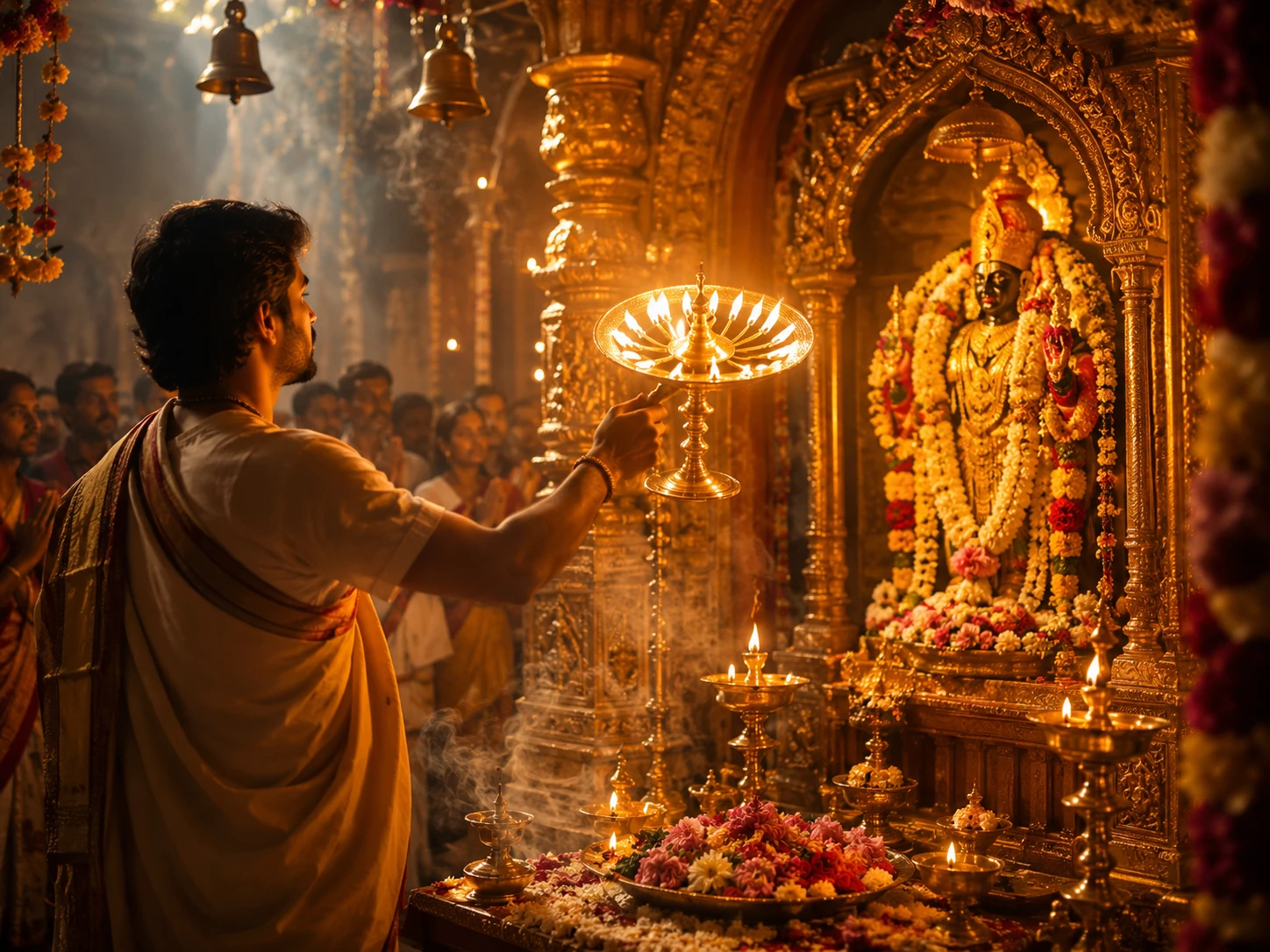
Aarti -- Why Hindus Circle Light Before God
13 min read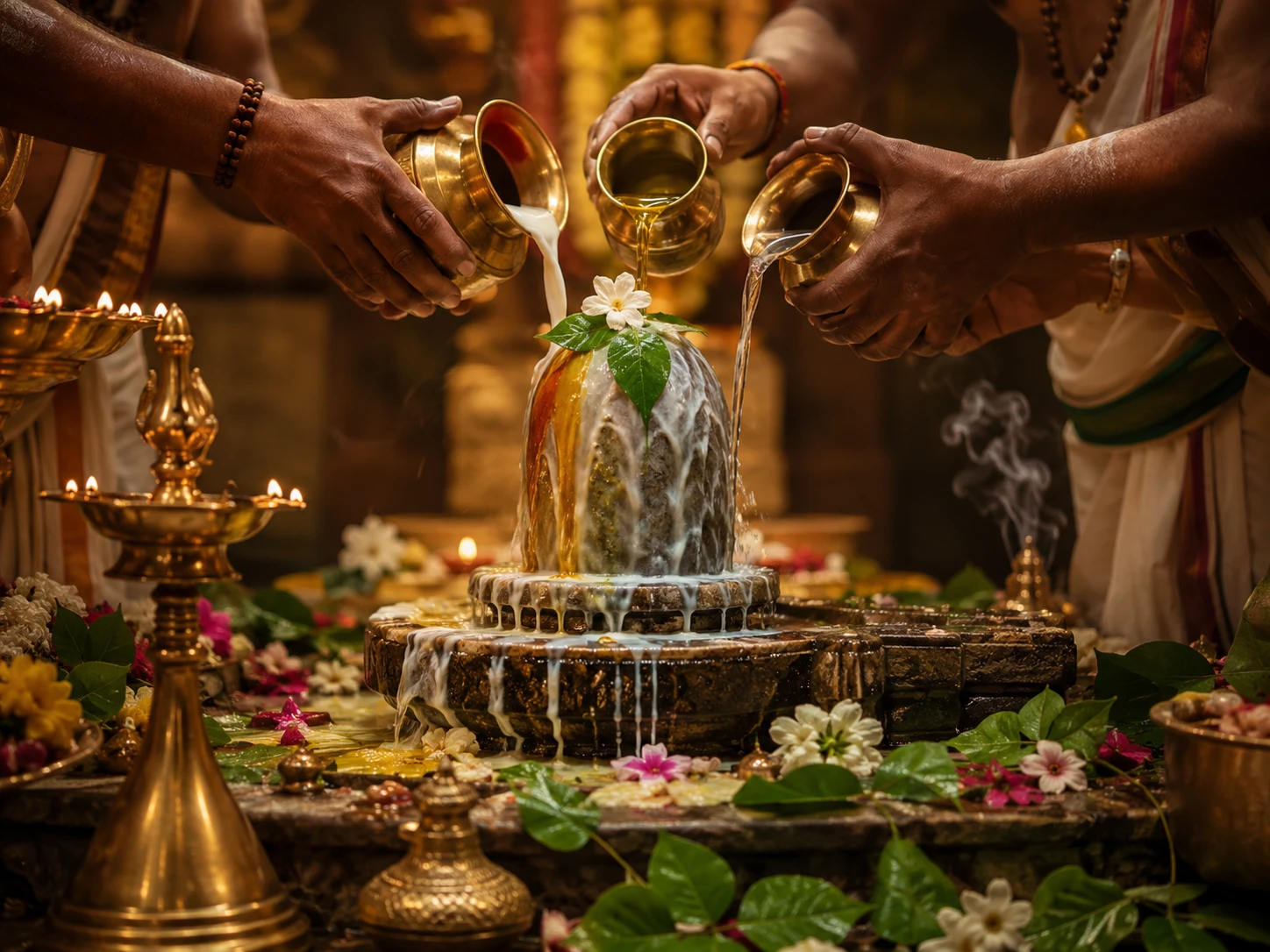
Abhisheka -- Why Hindus Bathe Their Gods
10 min read
Akshaya Tritiya -- The Day Nothing Given Away Runs Out
12 min readThe same translation error that turned '33 Koti' into '33 crore' in Hinduism also happened in Buddhism. The Chinese translation of Buddhist texts rendered 'Sapta Koti Buddha' (7 Supreme Buddhas) as '7 Crore Buddhas.' The…
Deities AvatarsCommunity Reflections
🕉️
Be the first to share your reflection.