Vrindavan -- The Forest Where Krishna Grew Up
वृन्दावन -- वह वन जहाँ श्रीकृष्ण बड़े हुए
Krishna was born in Mathura and carried across the Yamuna as a newborn to Gokula, where Nanda and Yashoda raised him. But Gokula soon became dangerous: one demon after another, sent by Kamsa, came for the child. The elders of the cowherds held a council, and the wise Upananda proposed that they leave for a forest he knew, rich in grass for the cattle, with sacred hills and fresh woods -- Vrindavan. They loaded their carts and moved, settling in a half-moon camp of wagons, and there Krishna and Balarama grew up herding calves.
The Bhagavata says that when the two boys saw Vrindavan, Govardhan and the sandy banks of the Yamuna, their joy was boundless. Much of what Hindus remember of Krishna's childhood -- the stealing of butter, the subduing of Kaliya, the lifting of Govardhan, the Rasa dance, the flute calling the gopis -- happens here, in the forest and pastures of Vraja.
वृन्दावनं गोवर्धनं यमुनापुलिनानि च । वीक्ष्यासीदुत्तमा प्रीती राममाधवयोर्नृप ॥
vṛndāvanaṃ govardhanaṃ yamunāpulināni ca | vīkṣyāsīduttamā prītī rāmamādhavayornṛpa ||
Seeing Vrindavan, Govardhan and the sandy banks of the Yamuna, Rama and Madhava were filled with the highest joy, O king.
— Srimad Bhagavata Purana 10.11.36
The name means "the forest of Vrinda", and Vrinda is another name of tulsi, the holy basil sacred to Vishnu: Vrindavan is the tulsi forest. Around it lies Braj or Vraja, the wider land of Krishna's youth, covering Mathura, Gokula, Govardhan, Barsana -- Radha's village -- Nandgaon and many smaller sites, each linked to an episode of his childhood.
The Vrindavan pilgrims see today is, in its present form, largely the work of the sixteenth century. Chaitanya Mahaprabhu of Bengal visited around 1515, and sent his followers to recover the sacred places of Krishna's life, many of them forgotten. Six of them, the Goswamis of Vrindavan -- among them the brothers Rupa and Sanatana -- settled there, identified the sites, wrote the theology of the Gaudiya tradition, and founded temples. Other traditions came too: Swami Haridas, the musician-saint, and the Vallabha and Nimbarka schools all made Vrindavan their centre.
Some Landmarks of Vrindavan and Braj
| Place | Associated with |
|---|---|
| Banke Bihari temple | The image of Krishna revealed to Swami Haridas; famous for curtains drawn briefly and often during darshan |
| Radha Raman temple | A self-manifested image of Krishna worshipped by the Gaudiya tradition since the sixteenth century |
| Govinda Dev temple | A great red sandstone temple built in 1590 under the patronage of Raja Man Singh of Amber |
| Nidhivan and Seva Kunj | Groves where, devotees believe, Radha and Krishna still meet at night |
| Keshi Ghat | A ghat on the Yamuna where Krishna is said to have killed the horse-demon Keshi |
| Govardhan, Barsana, Nandgaon | The hill Krishna lifted; Radha's village; Nanda's village -- all within Braj |
Many pilgrims walk the Braj parikrama, a circuit of the whole land of Krishna's childhood traditionally said to be eighty-four kos -- roughly 250 to 300 kilometres -- visiting the groves, ponds and villages along the way. A shorter circuit of Vrindavan town itself, around 10 kilometres, is walked daily by many residents.
For devotees, Vrindavan is more than a place on a map. In the theology of the Gaudiya and other Krishna traditions, the earthly Vrindavan is the reflection of an eternal Vrindavan, the realm where Krishna's play with his devotees never ends. That is why people go there not only to see where things happened but to feel that they are still happening -- in the kirtan that fills the temples, the cry of "Radhe Radhe" with which residents greet one another, and the festivals, above all Holi and Janmashtami, that draw enormous crowds. As the Bhagavata's two boys found on their first day, the joy of the place is the point.
Read how the cowherds came to Vrindavan
Srimad Bhagavata 10.11: the move from Gokula and Krishna's first days in Vrindavan, verse by verse.
Tags
Eternal Raga · शाश्वत राग
Institutional voice — scholarly articles on Sanatan Dharma
Deepen Your Understanding
अपनी समझ और गहरी करें
deities avatars
Krishna Leela -- Why God Chose to Play
He stole butter, broke pots, lied to his mother's face, danced with married women under the full moon, and lifted an entire mountain on his little finger. The Bhagavata Purana's Tenth Skandha -- the most popular 4,000 verses in all of Hindu literature -- is not a biography. It is a theological argument that the Supreme Being's highest expression is not creation, destruction, or cosmic governance. It is play. Krishna Leela is the radical idea that God's truest nature is joy.
deities avatars
Radha -- Krishna's Eternal Beloved and the Supreme Devotee Who Became Greater Than God
She is not mentioned by name in the Bhagavata Purana. She has no temple at the centre of Vrindavan. She did not marry Krishna. And yet -- in the devotional traditions of North India, in the poetry of Jayadeva, in the philosophy of Chaitanya, and in the hearts of millions who chant 'Radhe Radhe' -- she is considered superior to Krishna himself. That is the paradox and the power of Radha.
deities avatars
Yamuna as Goddess
The Yamuna is Krishna's river. She is the dark sister of the dawn-light Ganga, daughter of the sun, and twin of Yama the judge. Krishna was carried across her waters as an infant; he played on her banks in Vrindavan; he killed Kaliya in her depths; he lived his childhood in Mathura on her bend. For the Pushtimarg tradition she is the highest goddess. This is the river who knows what Ganga does not know.
rituals traditions
Govardhan Puja and Annakut -- The Day After Diwali
The day after Diwali, households shape a hill out of cow dung, temples pile up a mountain of food, and pilgrims walk twenty-one kilometres around a low ridge in Braj. Why: the story of the boy who held up Govardhan for seven days, and how the festival is kept today.
scriptural exegesis
The Rasa Lila -- What Krishna's Dance with the Gopis Means
On an autumn full-moon night, Krishna's flute called the women of Vraja into the forest, and he danced with all of them at once. The five chapters of the Bhagavata that tell the story, why the text itself raises the obvious objection, and how the tradition answers it.
sacred symbols
Tulasi -- The Only Plant in Hinduism That Gets Married to God
She has eight names. She gets a wedding ceremony. Vishnu refuses prasadam without her leaf. And she sits in the courtyard of 100 million Indian homes -- not as decoration but as a living deity. Tulasi is not a plant you worship. She is a goddess who chose to become a plant.
Many pilgrims walk the Braj parikrama, a circuit of the whole land of Krishna's childhood traditionally said to be eighty-four kos -- roughly 250 to 300 kilometres -- visiting the groves, ponds and villages along the way…
More in Rituals & Traditions
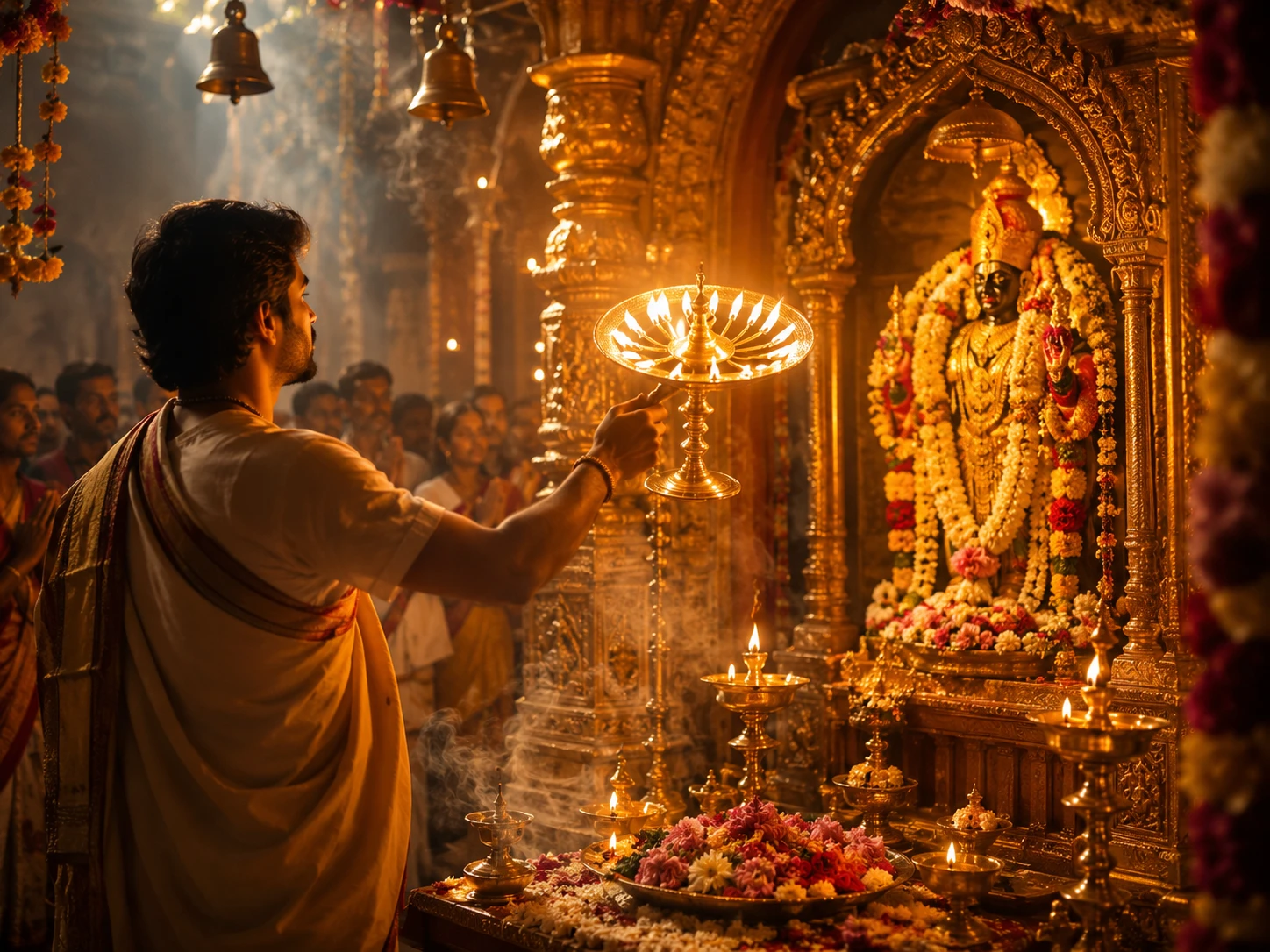
Aarti -- Why Hindus Circle Light Before God
13 min read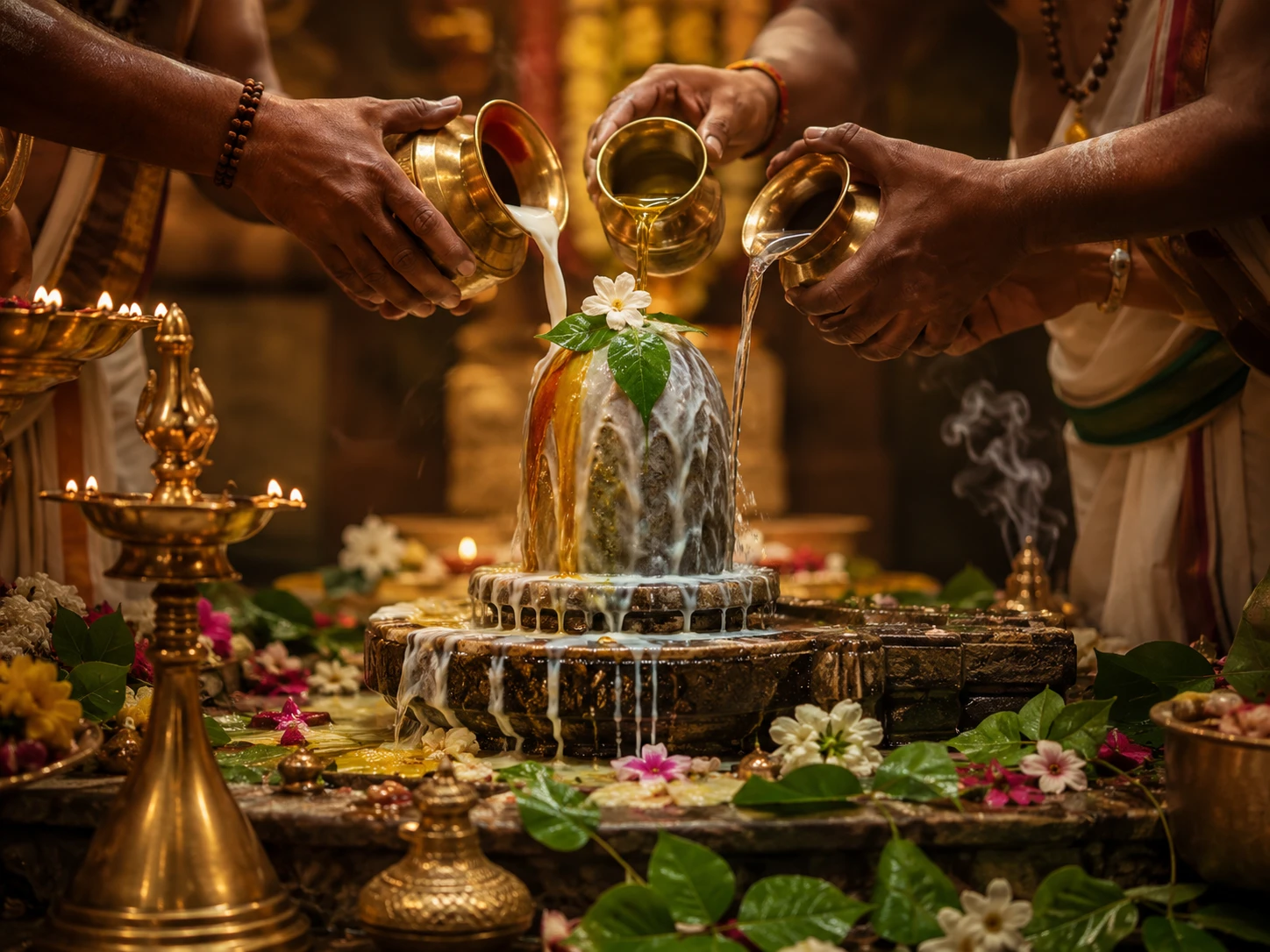
Abhisheka -- Why Hindus Bathe Their Gods
10 min read
Akshaya Tritiya -- The Day Nothing Given Away Runs Out
12 min readThe same translation error that turned '33 Koti' into '33 crore' in Hinduism also happened in Buddhism. The Chinese translation of Buddhist texts rendered 'Sapta Koti Buddha' (7 Supreme Buddhas) as '7 Crore Buddhas.' The…
Deities AvatarsCommunity Reflections
🕉️
Be the first to share your reflection.