Govardhan Puja and Annakut -- The Day After Diwali
गोवर्धन पूजा और अन्नकूट -- दीपावली का अगला दिन
In the cowherd village of Vraja, every year after the rains, the people prepared a great sacrifice to Indra, king of the gods and giver of rain. One year the boy Krishna asked his father Nanda why. Their living came from their cows, he said, and their cows lived on the grass of Govardhan, the hill beside the village; it was the hill and the cows that sustained them, and these were what they should honour. Persuaded, the villagers cooked the food meant for Indra, offered it to Govardhan, fed the brahmins and the cows, and walked around the hill in procession.
Indra was enraged. He sent a storm on Vraja -- rain, hail and wind for seven days -- to drown it. The people and their cattle ran to Krishna, and Krishna lifted Govardhan with one hand, as easily as a child lifts a mushroom, and held it over them as an umbrella. For seven days he stood without moving while all of Vraja sheltered beneath the hill.
इत्युक्त्वैकेन हस्तेन कृत्वा गोवर्धनाचलम् । दधार लीलया विष्णुश्छत्राकमिव बालकः ॥
ityuktvaikena hastena kṛtvā govardhanācalam | dadhāra līlayā viṣṇuśchatrākamiva bālakaḥ ||
Having said this, Krishna -- Vishnu himself -- lifted the hill of Govardhan with one hand and held it up playfully, as a child holds up a mushroom.
— Srimad Bhagavata Purana 10.25.19
When the storm ended and the sky cleared, Indra came, his pride broken, and asked forgiveness -- the hymn he offered is preserved in the Garga Samhita -- and the divine cow Surabhi bathed Krishna in milk, naming him Govinda. That is the story Govardhan Puja remembers. It falls on Kartik Shukla Pratipada, the first day of the bright fortnight of Kartik, the day after Diwali.
The festival's other name is Annakut, "mountain of food". Temples, above all the Krishna temples of Braj and the Pushtimarg shrine of Shrinathji at Nathdwara -- whose deity is Krishna with his arm raised to hold the hill -- prepare dozens or even hundreds of dishes and arrange them in a heap before the deity, re-enacting the feast once offered to the hill. Afterwards the food is shared out as prasad, often to whole neighbourhoods.
How Govardhan Puja Is Kept
| Practice | What it involves |
|---|---|
| Govardhan in the courtyard | A small hill, often in the shape of a reclining figure, is made of cow dung, decorated with flowers and grass, worshipped with lamps and circled by the family |
| Annakut | Many dishes are cooked and offered to Krishna in a heap, then shared as prasad |
| Worship of cows | Cows and bullocks are bathed, decorated and fed, and given a day's rest |
| Govardhan parikrama | Pilgrims walk around the Govardhan ridge near Mathura, about 21 km (seven kos); some do it in prostrations |
| Indra's hymn | Some recite the stotra Indra offered Krishna after the storm (Garga Samhita, Giriraja Khanda 4) |
क्षुत्तृड्व्यथां सुखापेक्षां हित्वा तैर्व्रजवासिभिः । वीक्ष्यमाणो दधाराद्रिं सप्ताहं नाचलत् पदात् ॥
kṣuttṛḍvyathāṃ sukhāpekṣāṃ hitvā tairvrajavāsibhiḥ | vīkṣyamāṇo dadhārādriṃ saptāhaṃ nācalat padāt ||
Setting aside hunger and thirst and any thought of his own comfort, watched by the people of Vraja, he held up the mountain for seven days without moving from the spot.
— Srimad Bhagavata Purana 10.25.23
The same day carries other names across India. In Gujarat it is Bestu Varas, the start of the new year in the Vikram calendar used there. In Maharashtra and Karnataka it is Bali Pratipada, when the demon-king Bali, sent to the netherworld by Vishnu's Vamana avatar, is allowed to return for a day to visit his people.
The story has a sharp point. Krishna does not reject worship; he redirects it -- from a distant god honoured out of fear to the hill, the cows and the people that actually sustain the village. Many readers have found in it a theology of gratitude for the land and its creatures. And Indra's place in the story is instructive too: the king of the gods is not destroyed but humbled, and his apology is accepted. The festival keeps both lessons. The mountain of food is offered and then shared, and the hill that sheltered Vraja is still walked around barefoot by the people who come to thank it.
Recite Indra's hymn for Govardhan Puja
The stotra Indra offered Krishna after the storm, from the Garga Samhita, with meaning.
Tags
Eternal Raga · शाश्वत राग
Institutional voice — scholarly articles on Sanatan Dharma
Deepen Your Understanding
अपनी समझ और गहरी करें
scriptural exegesis
The Govardhana Episode -- The Day Vrindavan Stopped Worshipping Indra
A seven-year-old boy convinces his village to skip the annual rain-god ceremony and worship the local hill instead. The rain-god retaliates with a flood. The boy lifts the hill on one finger for seven days. Behind the lila sits one of the Bhagavata's sharpest theological arguments -- about who actually deserves your puja.
rituals traditions
Diwali -- Five Days of Light
Diwali is not one night of firecrackers. It is a five-day arc from Dhanteras to Bhai Dooj, layering wealth, ancestors, Lakshmi, community, and sibling bonds into a single liturgical sequence. Its origins span Rama's return, Krishna's Narakasura victory, Jain Mahavira's nirvana, and Sikh Bandi Chhor Divas -- making it the most theologically layered festival in the Indian calendar.
sacred symbols
Gau -- Why the Cow Holds the Place She Does in Hindu Life
The cow is not sacred in Hindu thought because she is mystical. She is sacred because she sustains -- with milk, with labour, with the soil-fed continuity of an agricultural civilisation. From Rigvedic verses calling her sinless and inviolate, to Krishna's life as a cowherd, to the dairy farmer in Anand who still sleeps in the shed at calving time -- the same thread runs through.
rituals traditions
Annadana -- Why Feeding Is the Highest Form of Charity in Hindu Tradition
The Taittiriya Upanishad declares: 'Do not turn away anyone who comes for food.' The Mahabharata ranks Annadana above all other forms of giving. The Sikh Langar feeds 100,000 people daily at the Golden Temple alone. The Akshaya Patra Foundation, inspired by ISKCON, serves mid-day meals to 2 million schoolchildren every day. In a civilisation that equates food with Brahman (Annam Brahma), feeding another person is not charity -- it is worship.
deities avatars
Krishna Leela -- Why God Chose to Play
He stole butter, broke pots, lied to his mother's face, danced with married women under the full moon, and lifted an entire mountain on his little finger. The Bhagavata Purana's Tenth Skandha -- the most popular 4,000 verses in all of Hindu literature -- is not a biography. It is a theological argument that the Supreme Being's highest expression is not creation, destruction, or cosmic governance. It is play. Krishna Leela is the radical idea that God's truest nature is joy.
rituals traditions
Vrindavan -- The Forest Where Krishna Grew Up
A forest of tulsi on the bank of the Yamuna, where the cowherds moved to escape danger and Krishna spent his childhood. How the Bhagavata describes Vrindavan, how the town was rediscovered in the sixteenth century, and what pilgrims go to find there today.
The same day carries other names across India. In Gujarat it is Bestu Varas, the start of the new year in the Vikram calendar used there. In Maharashtra and Karnataka it is Bali Pratipada, when the demon-king Bali, sent …
More in Rituals & Traditions
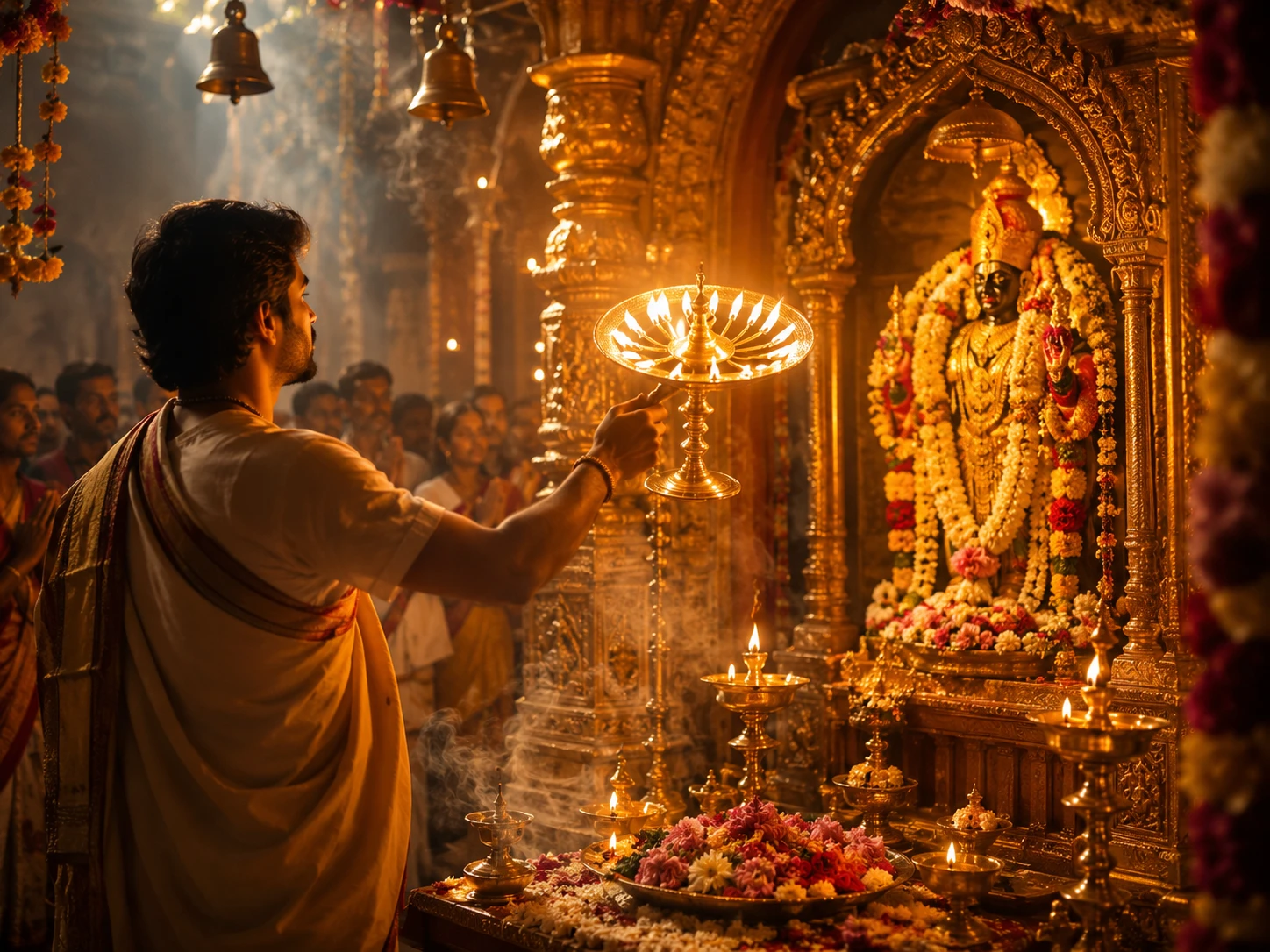
Aarti -- Why Hindus Circle Light Before God
13 min read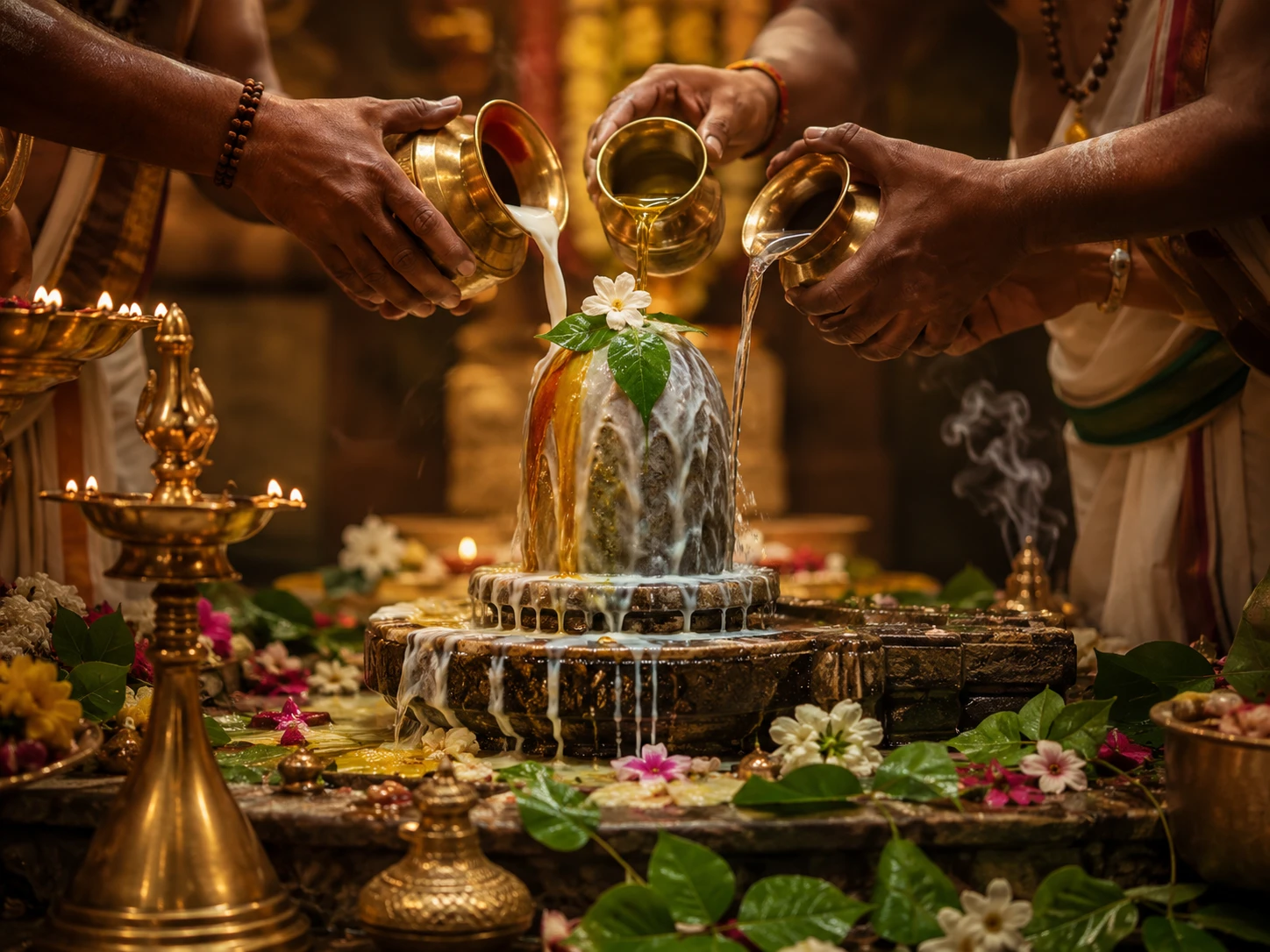
Abhisheka -- Why Hindus Bathe Their Gods
10 min read
Akshaya Tritiya -- The Day Nothing Given Away Runs Out
12 min readThe same translation error that turned '33 Koti' into '33 crore' in Hinduism also happened in Buddhism. The Chinese translation of Buddhist texts rendered 'Sapta Koti Buddha' (7 Supreme Buddhas) as '7 Crore Buddhas.' The…
Deities AvatarsCommunity Reflections
🕉️
Be the first to share your reflection.