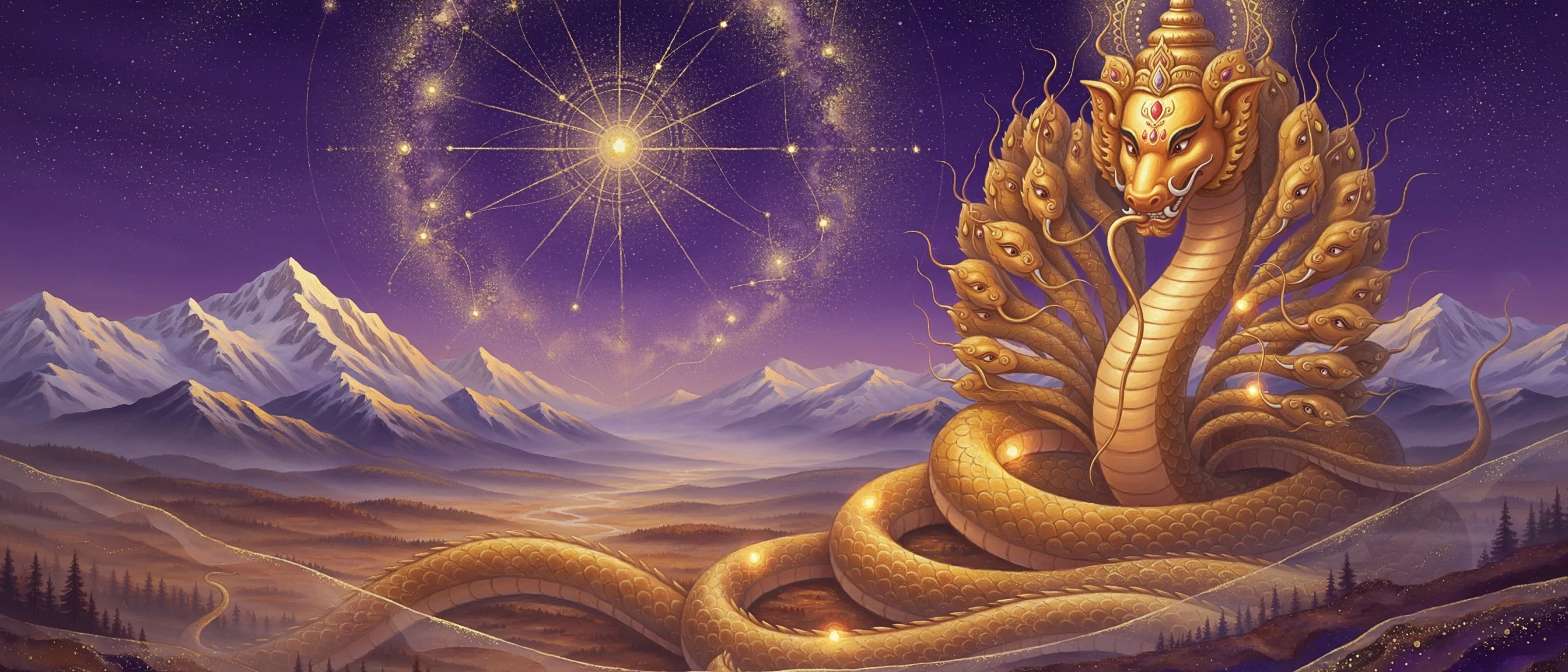
Skandha 8 maps the cosmos in careful geographic and astronomical detail. It surveys the seven dvipas ringing Jambudvipa — Krauncha, Shaka, and Pushkara among them — before turning skyward: the sun's yearly course, the mechanics of his chariot, and the orbits of the moon and planets, all organized around the Shishumara, a great wheel-shaped constellation with the pole star at its tail. The text then descends, first into the seven Patalas below the earth — Atala through Patala, home to King Bali (bound but honored by Vishnu) and to Lord Ananta, the thousand-headed serpent who bears the world — and then further still, into a systematic catalogue of twenty-eight hells, each with its own name and the specific sin that sends a soul there. Having mapped the cosmos from sky to underworld, the skandha closes on solid devotional ground: a practical manual of Devi-worship, specifying which tithis, weekdays, lunar mansions, and months call for which offerings, closed with a hymn in her praise.
Chapters
Why it matters today
This skandha's transition from abstract cosmology straight into a practical worship calendar is characteristic of how Puranic literature treats cosmic knowledge and devotional practice as continuous rather than separate registers — knowing the structure of the universe and knowing how to worship within it are presented as two parts of the same teaching, not different kinds of knowledge.