Mangala Gauri Temple
मंगला गौरी मंदिर
The auspicious Devī who presides over the city of the ancestors
Gaya, Bihar, India
Maṅgalā GaurīAlso known as: Mangala Gauri Mata, Sarvamangala, Sarvamangala Devi, Gaya Mangala, Mangala Gauri Devi
युग
Pre-medieval Devī shrine at Pitṛ-tīrtha Gaya; canonical Pīṭha attestation by 8th, 12th c.; current temple structure substantially 17th, 18th c. with continuing renovation under hereditary Gayāwāl Pandā administration and modern trust arrangements
वास्तुकला
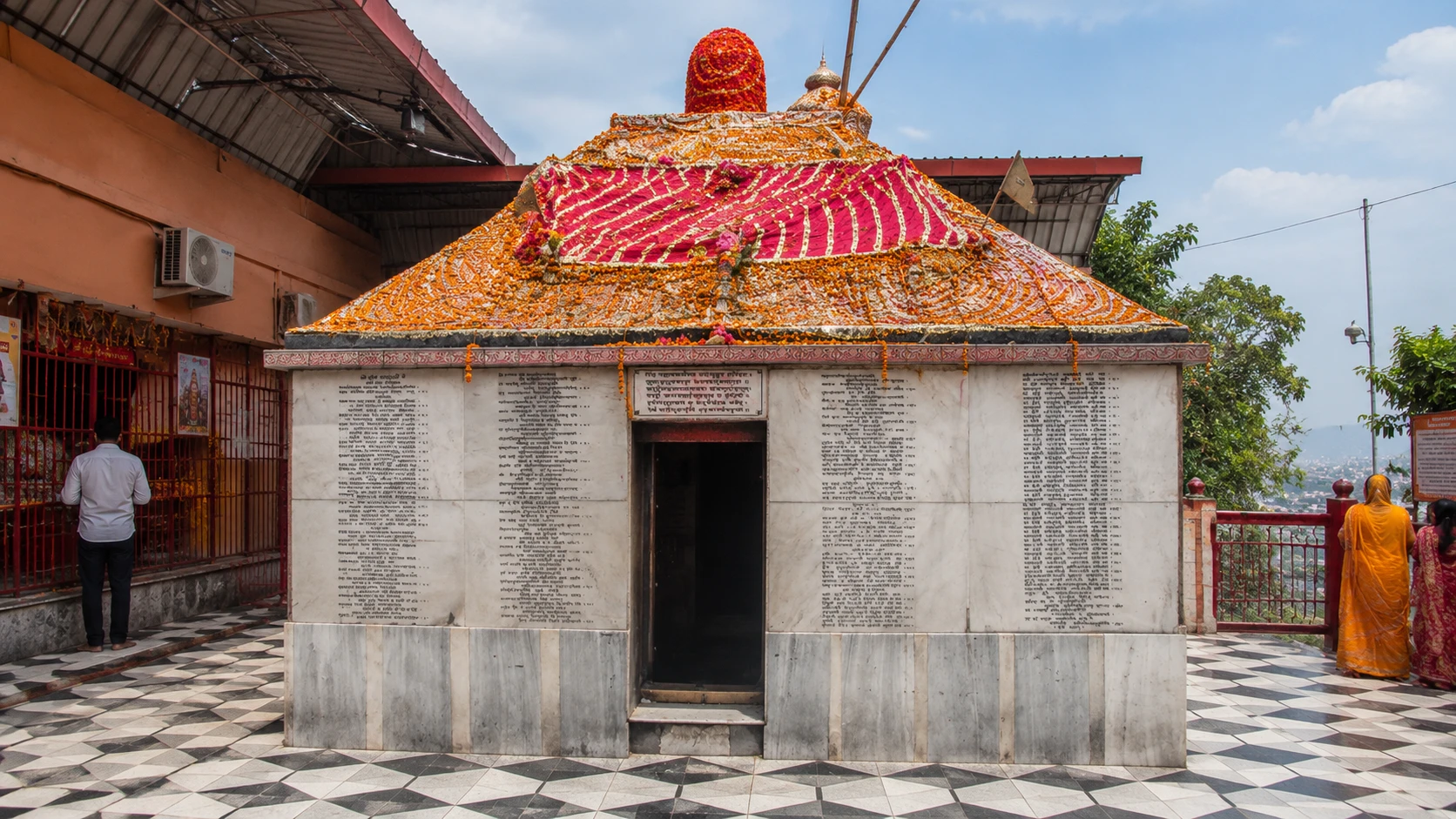
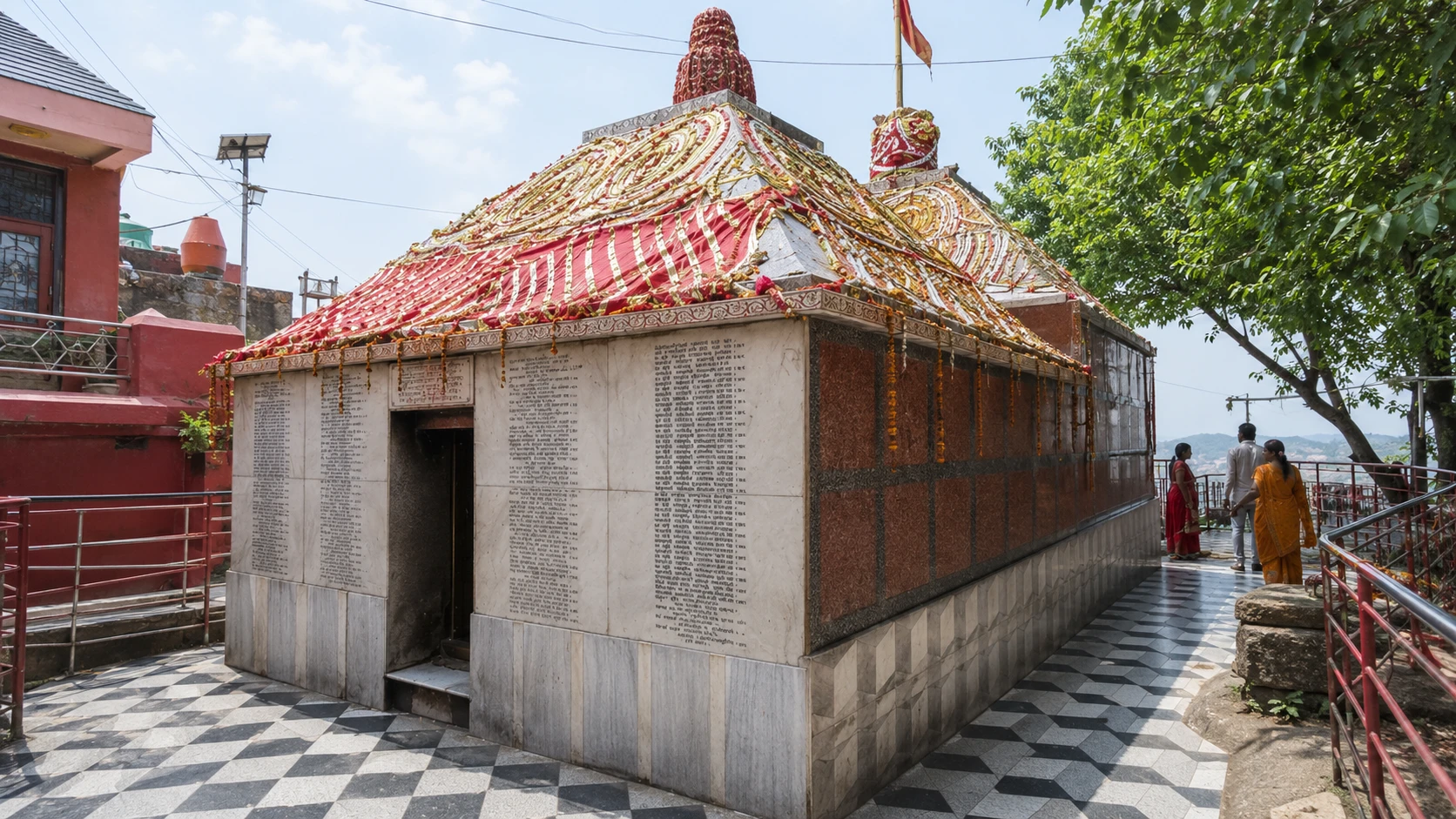
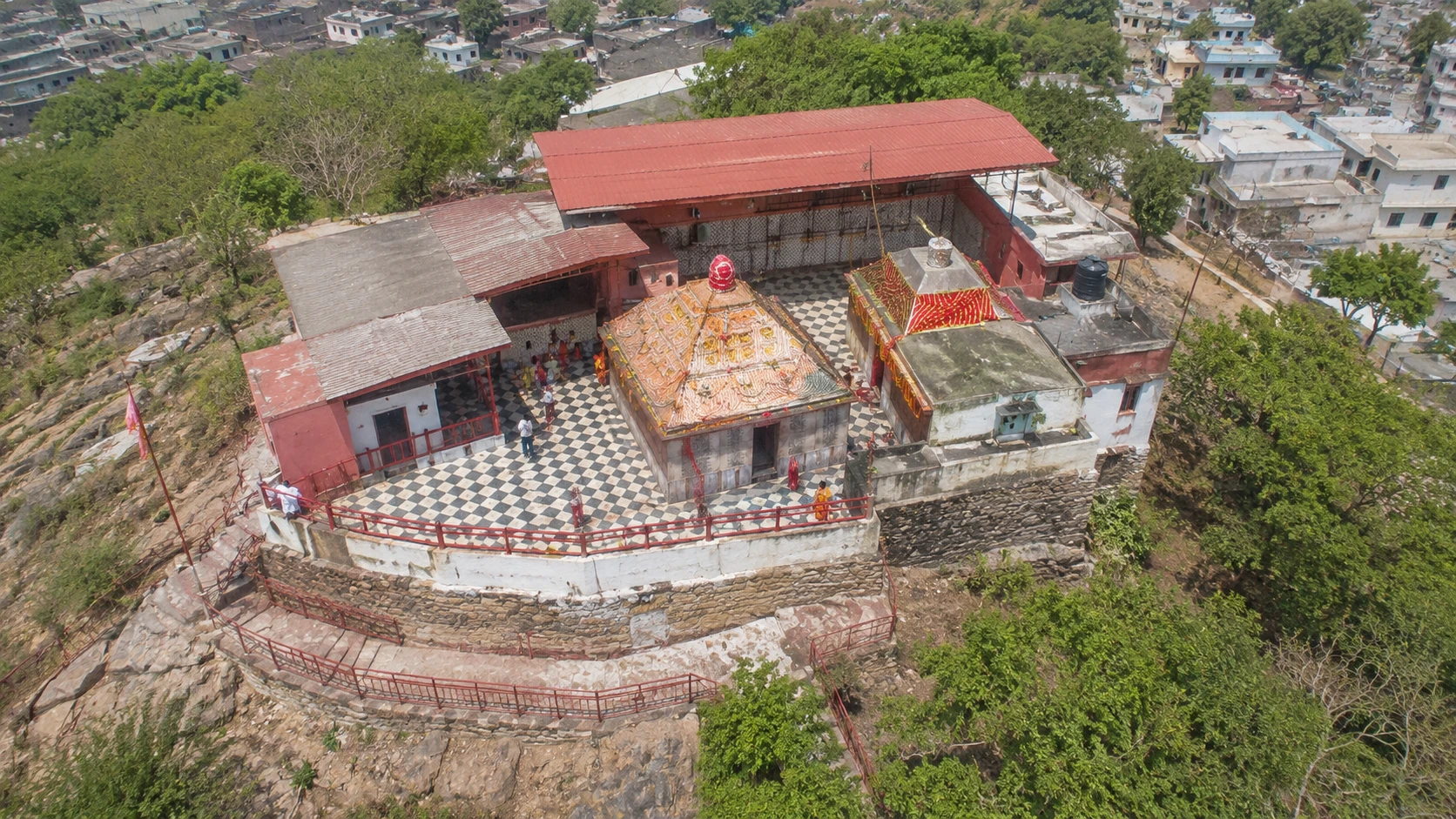
Compact North Indian (Nāgara) tradition in hilltop temple form; stepped approach via stone staircases from the base of Maṅgalagaurī Hill; modest scale typical of the regional hilltop Devī shrine architecture of Bihar and eastern Uttar Pradesh
खुला
05:00 – 21:00
आरती
05:30 · 08:00 · 12:00 · 18:00 · 20:30
विशेष
During Pitṛ-Pakṣa Mela (16-day annual gathering for ancestor rituals in Bhādra Kṛṣṇa pakṣa, typically September, October), the temple operates extended hours and coordinates darshan timing with the Pitṛ-tarpaṇa ritual circuit; the Maṅgalā Gaurī Vrat Tuesdays of Śrāvaṇa (July, August) bring substantial regional women-pilgrim flow with extended morning aarti programmes
पवित्र कथा · पवित्र कथा
Gaya is the city of the dead. Across the subcontinent's sacred geography, no place has carried the weight of ancestor-ritual as completely as Gaya carries it, the Pitṛ-tarpaṇa, the Piṇḍa-dāna, the offering of cooked rice-balls to release departed souls from intermediate states, is performed here by Hindus from every region, every caste, every generation, in a tradition documented continuously to the Mahābhārata era. Visnu's foot rests at Vishnupad Mandir at the centre of the old city, and his footprint is the seal of release for the ancestors who receive offerings here. But on the hill that rises above Gaya's eastern edge, a different presence presides, the Devī Maṅgalā Gaurī, the auspicious fair-one, whose body-piece fell here when Viṣṇu cut Satī. Tradition holds that Satī's breast, stana, sometimes the right specifically, fell on Maṅgalagaurī Hill, and the Pīṭha that arose at the site became the Devī-pole of Gaya's entire Pitṛ-tarpaṇa geography. If Vishnupad is the seal of release, Maṅgalā Gaurī is the Mother who watches over the ones who come to perform release for their dead. Her hilltop shrine looks down on the Phalgu River, the Vishnupad temple, the Akṣaya-vaṭa tree, the dozens of subsidiary tīrtha-spots that constitute the Gaya Pitṛ-tarpaṇa circuit. The breast-attribution gives her a second theological standing, distinct but resonant: the Devī Maṅgalā Gaurī is the patron of marital wellbeing across northern India, and married women observe the Maṅgalā Gaurī Vrat on Tuesdays of Śrāvaṇa for the husband's longevity and the marriage's flourishing. So two pilgrimage flows converge at this single shrine, the predominantly male Pitṛ-Pakṣa flow performing rites for ancestors, and the predominantly female Maṅgalā Gaurī Vrat flow seeking blessing for the living marriage. The two streams cross in the courtyard, and both find their ground in the Mother whose breast sanctified the hill.
Sacred Designationपवित्र पदनाम
Shakti Peeth
शरीर का अंग: Breast (Stana, sometimes specifically the right breast)
शक्ति: Maṅgalā Gaurī (also enumerated as Sarvamaṅgalā)
भैरव: Sarvānanda
Sacred Origin Storyपवित्र उत्पत्ति कथा
Source: Devī Bhāgavata Purāṇa, Skandha VII (canonical 51-Pīṭha enumeration); Kālikā Purāṇa, Chapters 18 and 60, 62 (52-list, breast body-part attribution); Pīṭhanirṇaya; Ashtadasha Shakti Pīṭha Stotram attributed to Ādi Śaṅkarācārya (Gayāyāṁ Maṅgalagaurī, position 16); Vāyu Purāṇa, Gayā Māhātmya (regional Sthala Purāṇa); Mahābhārata, Vana Parva (early reference to Gaya's Pitṛ-tarpaṇa standing)
Gaya's standing as the principal Pitṛ-tīrtha of the Hindu world predates the Pīṭha narrative, the Mahābhārata's Vana Parva and the Vāyu Purāṇa's Gayā Māhātmya both attest to Gaya's role in Piṇḍa-dāna for departed ancestors, in a framework anchored to Viṣṇu's foot pressed on the demon Gayāsura.
The mythological cycle runs: Gayāsura was an asura whose tapas-merit made him so pure that any contact with his body purified the contactor; this disrupted the cosmic balance because the impure had no place to deposit impurity.
The gods asked Gayāsura to lie down for a yajña, and Viṣṇu pressed his foot on Gayāsura's chest to keep him still; Gayāsura accepted the burden in exchange for the boon that Pitṛ-tarpaṇa performed on his body would forever release the ancestors of the performer. The site became Pitṛ-tīrtha Gaya, the city where the dead are released.
Into this older sacred geography the Pīṭha narrative arrived: when Viṣṇu cut Satī's body to release Śiva from grief, the stana, the breast, sometimes specifically the right, fell on the hill at Gaya's eastern edge, sanctifying it as a Shakti Pīṭha.
The Devī arose as Maṅgalā Gaurī, the auspicious fair-one, and her hilltop presence consecrated the Devī-pole of Gaya's Pitṛ-tīrtha framework. From that point Gaya has been doubly held, by the Vaiṣṇava seal-of-release at Vishnupad and by the Shākta witness-of-release at Maṅgalā Gaurī.
The pilgrimage tradition has accommodated both: pilgrims arriving for Piṇḍa-dāna almost universally complete darshan at Maṅgalā Gaurī after performing rites at Vishnupad and the subsidiary tīrtha-spots, treating the Devī as the maternal recipient of the rite's spiritual fruit.
उद्धृत स्रोत:
- Devī Bhāgavata Purāṇa, Skandha VII (canonical 51-Pīṭha enumeration)
- Kālikā Purāṇa, Chapters 18 and 60, 62 (52-list tradition; breast body-part attribution)
- Pīṭhanirṇaya (Tantric pīṭha-enumeration treatise)
- Ashtadasha Shakti Pīṭha Stotram attributed to Ādi Śaṅkarācārya (Gayāyāṁ Maṅgalagaurī, position 16)
- Vāyu Purāṇa, Gayā Māhātmya (regional Sthala Purāṇa of Gaya; principal source for Gayāsura cycle and Pitṛ-tarpaṇa theology)
- Mahābhārata, Vana Parva (early reference to Gaya's Pitṛ-tarpaṇa standing)
- Sircar, D. C., 'The Śākta Pīṭhas' (Motilal Banarsidass, 1948; revised 1973)
- Vidyarthi, L. P., 'The Sacred Complex in Hindu Gaya' (Asia Publishing House, 1961), foundational ethnographic-religious study of Gaya's Pitṛ-tīrtha tradition
- Knipe, David M., 'Sapindīkaraṇa: The Hindu Rite of Entry into Heaven' (in 'Religious Encounters with Death', Penn State University Press, 1977), Pitṛ-tarpaṇa theology
अन्य परंपराएँ · अन्य परंपराएँ
Sarvamaṅgalā / Adi-Shakta tradition (Tantric Pīṭha enumeration)
Certain Tantric Pīṭha enumerations and regional Bengali Shākta traditions name the Devī at Gaya not as Maṅgalā Gaurī but as Sarvamaṅgalā, the Devī of all auspicious things, identified more closely with the Adi-Shakti pre-cosmic Mother-form than with the marital-domestic Pārvatī-aspect that the Maṅgalā Gaurī name foregrounds.
On this reading, the Devī at Gaya is theologically more proximate to Kāmākhyā (Kamarupa) and Tarapith (Birbhum) than to the marital Gauri-aspect Devīs of northern India, and the Pitṛ-tīrtha embedding is read through a Tantric framework in which the Devī's stana-Pīṭha receives the impurities released by the dead.
This reading is supported by the proximity of Gaya to the major Bengali Shākta centres (Kāmākhyā ~700 km east, Tarapith ~450 km east) and by the documented influence of Bengali Tantric pilgrimage on Gaya's medieval-period devotional ecology.
Pre-Pīṭha Pitṛ-tīrtha continuity (scholarly view)
Modern scholarship treats the Maṅgalā Gaurī shrine as the integration of an older Devī-presence at Pitṛ-tīrtha Gaya into the canonical Pīṭha framework. The Mahābhārata's Vana Parva references to Gaya as Pitṛ-tarpaṇa site predate the textual horizon of the Pīṭha narrative by an undetermined period, and archaeological-architectural evidence suggests continuous Devī worship on Maṅgalagaurī Hill predating the canonical Pīṭha embedding.
On this view, the Pīṭha narrative did not arrive at an empty hilltop; it integrated an existing Devī-presence, possibly a regional Mother-goddess presiding over the local Pitṛ-tarpaṇa tradition, into the pan-Indian framework that gave Gaya's sacred geography a unified theological grammar.
विद्वत संदर्भ
Maṅgalā Gaurī occupies a unique structural position parallel to and distinct from Viśālākṣī at Kashi. Both are 'soteriologically-anchoring' Pīṭhas, Pīṭhas whose presence does not merely sanctify a place but grounds an entire theological category. At Kashi, Viśālākṣī's earring at Maṇikarṇikā Ghāṭ anchors the Mokṣapurī tradition (dying at Kashi grants liberation). At Gaya, Maṅgalā Gaurī's breast on the hilltop anchors the Pitṛ-tīrtha tradition (Piṇḍa-dāna at Gaya releases the ancestors). The two shrines are functionally paired across the sacred geography of eastern India, Kashi the city of liberation for the dying, Gaya the city of release for the dead. Pilgrims who have completed cremation rites at Kashi often proceed to Gaya for Piṇḍa-dāna for the same deceased relative; the two cities together constitute the principal Hindu architecture of death-and-release. The dual Pīṭha presence (Viśālākṣī at Kashi, Maṅgalā Gaurī at Gaya) anchors this architecture theologically. The Gaya shrine also occupies a second structural position distinct from Kashi: it is the iconic origin shrine of the Maṅgalā Gaurī Vrat tradition observed by married Hindu women across northern India on Tuesdays of Śrāvaṇa. This makes Maṅgalā Gaurī one of the very few Pīṭha-Devīs whose name is borne by a pan-Indian women's vrat tradition, a structural position shared only with a small handful of other Devī forms (Tulasī, Vaṭa-Sāvitrī, Karva Chauth). The convergence of the Pitṛ-tīrtha theological standing and the marital-vrat-origin standing makes Maṅgalā Gaurī's shrine theologically unusually rich. L. P. Vidyarthi's 'The Sacred Complex in Hindu Gaya' (1961) and David Knipe's work on Sapindīkaraṇa rites (1977 onwards) both treat the Maṅgalā Gaurī presence within Gaya's Pitṛ-tīrtha framework; Diana Eck (2012) treats the Kashi-Gaya pairing as one of the principal axes of Hindu sacred geography.
Historyइतिहास
Gaya's historical depth as a Hindu sacred site significantly predates the textual horizon of the Pīṭha narrative. The Mahābhārata's Vana Parva contains explicit references to Gaya as a place for Pitṛ-tarpaṇa, placing the city's standing as ancestor-ritual centre to at least the late first millennium BCE (the period of Mahābhārata textual composition).
The Vāyu Purāṇa's Gayā Māhātmya, compiled in the early-to-mid first millennium CE, formalized the Gayāsura cycle and the Piṇḍa-dāna theology that anchors the city. The site also sits within striking distance (12 km) of Bodh Gaya, where the Buddha attained enlightenment under the Bodhi tree in approximately the 5th century BCE, for the first millennium of the Common Era, Gaya was a doubly-sacred city, with the Hindu Pitṛ-tīrtha tradition and the Buddhist enlightenment-site tradition flourishing in proximity, and the cross-religious pilgrim ecology between them substantially active.
Canonical attestation of Maṅgalā Gaurī as a Pīṭha within this older sacred-geographical frame occurs through the Devī Bhāgavata, Kālikā Purāṇa, and Ashtadasha Stotram traditions by the 8th, 12th centuries CE. The Pāla dynasty (8th, 12th c.), under whose rule Gaya sat for several centuries, patronized both Hindu and Buddhist institutional life, the Pālas were Buddhists by personal practice but extended substantial royal patronage to Hindu shrines including those of Gaya.
The Pāla period thus saw simultaneous flourishing of the Pitṛ-tīrtha tradition (centred on Vishnupad), the Maṅgalā Gaurī Devī shrine, and the major Buddhist establishments at Bodh Gaya, Nalanda and Vikramashila. The post-Pāla period brought sequential rule under the Senas (12th c.), the Delhi Sultanate (13th, 16th c.) and the Mughals (16th, 18th c.).
Unlike Kashi, Mathura and Vrindavan, Gaya's Hindu institutional life was less politically targeted during the Mughal period, the Pitṛ-tarpaṇa tradition was sustained continuously, with the Gayāwāl Pandā hereditary priestly families maintaining the ritual infrastructure across the political transitions.
The 17th-century Mughal-era saw renovation and consolidation of the Vishnupad temple under Maratha-supported patronage (Ahilyabai Holkar's 1787 reconstruction of Vishnupad parallels her Kashi Vishwanath reconstruction of 1777); Maṅgalā Gaurī temple infrastructure was similarly renovated through the 18th and 19th centuries under combined Pandā-administration and regional patronage.
The modern era has seen sustained Pitṛ-Pakṣa Mela coordination by the Bihar State Tourism Development Corporation, with the 16-day annual gathering for ancestor rituals (Bhādra Kṛṣṇa pakṣa, typically September, October) drawing several hundred thousand to over a million pilgrims depending on the year.
The Gaya International Airport (operational from 2002) and substantial Gaya railway connectivity have enabled the cross-Buddhist-Hindu pilgrimage ecology to expand significantly in recent decades.
Historical Timelineऐतिहासिक कालक्रम
Establishment of Gaya as the principal Pitṛ-tarpaṇa site of the Hindu world. The Mahābhārata's Vana Parva references Gaya as a place where ancestor-rituals release departed souls, placing the city's standing in this regard to at least the late first millennium BCE. The Vāyu Purāṇa's Gayā Māhātmya, compiled in the early-to-mid first millennium CE, formalized the Gayāsura mythological cycle and the Piṇḍa-dāna theology that grounds the city's role. By the early centuries CE, Gaya was a recognized pan-Indian Pitṛ-tīrtha drawing pilgrims from across the subcontinent for ancestor-ritual observances.
Canonical formalization of Maṅgalā Gaurī within the pan-Indian Shakti Pīṭha network through textualization in the Devī Bhāgavata Purāṇa (Skandha VII), Kālikā Purāṇa (Chapters 18, 60, 62), the Pīṭhanirṇaya, and the Ashtadasha Shakti Pīṭha Stotram attributed to Ādi Śaṅkarācārya (Gayāyāṁ Maṅgalagaurī, position 16). The Pīṭha narrative integrated the existing Devī-presence at Gaya, already established within the older Pitṛ-tīrtha framework, into the pan-Indian canonical network. The body-part attribution (stana / breast, sometimes specifically the right) is documented across all primary canonical sources with minor recension variability on lateral specification.
The Gaya position in the Ashtadasha Stotram (position 16, Gayāyāṁ Maṅgalagaurī) is uncontested across all major recensions including the Adi Shankara, Karnataka, and Gujarati variants. The body-part attribution shows minor manuscript variability, most sources give 'stana' (breast) without lateral specification, while the Kālikā Purāṇa and some Pīṭhanirṇaya manuscripts specify the right breast (dakṣiṇa-stana). The Bhairava attribution as Sarvānanda is the canonical reading; a regional Bengali Tantric tradition names Gayānanda instead, but Sarvānanda is the dominant attestation.
Sustained Pāla dynasty patronage of Gaya's shrine ecology. The Pāla rulers (Gopāla through Madanapāla, c. 750, 1162 CE) were Buddhists by personal practice but extended substantial royal patronage to Hindu institutions across their territory; Gaya's combined Hindu Pitṛ-tīrtha (Vishnupad), Devī-Pīṭha (Maṅgalā Gaurī), and Buddhist enlightenment-site (Bodh Gaya, ~12 km away) ecology flourished simultaneously under this patronage framework. The Pāla period was particularly significant for the consolidation of Gaya's pilgrim ecology as a cross-tradition sacred site, with substantial pilgrim flow from Bengal, Bihar, and the broader eastern subcontinent.
Continuous operation of Gaya's Pitṛ-tarpaṇa tradition through the Delhi Sultanate and early Mughal periods. Unlike Kashi, Mathura and Vrindavan, which experienced major Mughal-era temple-destruction events, Gaya's Hindu institutional life was less politically targeted, with the Pitṛ-tīrtha tradition sustained continuously through the period. The Gayāwāl Pandā hereditary priestly families, whose lineage is traceable to the pre-medieval period and whose role formalized substantially during the Sultanate-era, maintained the ritual infrastructure across the political transitions. The Maṅgalā Gaurī shrine and the broader Pitṛ-tīrtha ecology survived without the structural destruction inflicted on more politically prominent Hindu sites.
Gaya's relative preservation through the Mughal era is well-documented in modern scholarship (Vidyarthi 1961; Eaton 2000). The principal factors were geographic (Gaya is inland on the Phalgu, less politically visible than the Yamuna and Ganga axis cities) and ritual (the Pitṛ-tarpaṇa tradition was understood by Mughal-era administrators as a family-religious observance rather than a politically symbolic institution, and thus less subject to targeted disruption). The Maṅgalā Gaurī shrine specifically benefited from this broader pattern of relative continuity at Gaya, in contrast to the more catastrophic disruptions at Kashi (1669 Vishwanath destruction) and Mathura (Keshava Deo destruction).
Reconstruction and consolidation of the Vishnupad temple at Gaya under the patronage of Ahilyabai Holkar of the Holkar dynasty of the Maratha confederacy. Ahilyabai's 1787 reconstruction of Vishnupad, the principal Pitṛ-tarpaṇa shrine of Gaya, parallels her 1777 reconstruction of Kashi Vishwanath, and her patronage extended substantially to the surrounding shrines of the Gaya ecology including renovation work at Maṅgalā Gaurī. The Holkar-period interventions consolidated the post-Mughal-era institutional revival of Gaya's Pitṛ-tīrtha infrastructure and the Devī-Pīṭha embedded within it, providing the architectural foundation for the temple's modern configuration.
Modern formalization of the Pitṛ-Pakṣa Mela as a state-coordinated 16-day annual gathering for ancestor rituals. The Mela, anchored on the dark fortnight of Bhādra (typically September, October) and culminating on Mahālayā Amāvāsyā, has long-established roots in regional pilgrimage tradition but was substantially expanded in scale, logistics and state coordination through the late 20th and early 21st centuries. The Bihar State Tourism Development Corporation now coordinates Mela infrastructure including the Phalgu River ritual-bathing arrangements, the Pind-Vedi platforms for Piṇḍa-dāna performance, sanitation, security and pilgrim-shelter networks. Mela pilgrim flow regularly crosses several hundred thousand to over a million across the 16-day cycle, with peak days drawing concentrated participation at Maṅgalā Gaurī alongside the Vishnupad complex. The opening of Gaya International Airport (2002) and improvements to the Patna-Gaya rail and road corridor have enabled the cross-Buddhist-Hindu pilgrim ecology to expand significantly.
The Pitṛ-Pakṣa Mela pilgrim numbers reflect order-of-magnitude reporting from state and press sources; exact figures vary substantially year-on-year with the monsoon timing, the alignment of the lunar calendar with the working week, and security-related factors. The figure is provided as scale-indicator rather than precise count. The growth of the Mela as a state-coordinated event since the 1990s parallels broader patterns of state-temple coordination across Indian sacred sites in the same period.
What You'll Seeदर्शन में
The garbhagriha of the Maṅgalā Gaurī Mandir is a compact hilltop shrine, a single stone chamber atop Maṅgalagaurī Hill, the walls darkened by centuries of lamp-soot and ghee-smoke from continuous ritual use, the doorway low and worn by the passage of millions of pilgrims.
The Devī herself is enshrined in murti form: a sculpted stone image, depicting the goddess in her Maṅgalā Gaurī aspect, typically seated, four-armed, holding the standard Devī attributes (varada-mudrā and abhaya-mudrā in the lower hands; a triśūla and a pātra in the upper, with regional iconographic variation).
The murti is draped through the day in a red sari and ornamented with substantial gold and silver jewellery; the breast-Pīṭha attribution is theologically encoded in the daily adornment, with specific jewellery items (the maṅgala-sūtra, the chest-ornament daśakaṇṭhī) carrying particular liturgical weight.
Subsidiary murtis in the garbhagriha include the Bhairava Sarvānanda (small stone image to the Devī's left), Gaṇeśa at the threshold, and the regional companion Devīs (small forms of Kālī, Sarasvatī, Lakṣmī) arrayed around the principal image.
The temple structure is compact stone architecture in the regional eastern-Indian Nāgara tradition, with a low shikhara surmounted by a small kalaśa, modest in scale, consistent with the Bihar regional temple-style rather than the grand shikhara complexes of more open temple sites.
The approach to the shrine is by stone staircase ascending Maṅgalagaurī Hill from the base, roughly 200 steps to the temple level, with several small subsidiary shrines (a Hanumān shrine, a Śiva-liṅga shrine, a Kṣetrapāla shrine) distributed along the climb.
From the temple courtyard the view opens across Gaya, the Vishnupad Mandir complex visible at the city's centre, the Phalgu River winding past the principal ghats, the Akṣaya-vaṭa tree visible to the south, and on clear days the silhouette of the Bodhi-vihāra of Bodh Gaya 12 kilometres beyond.
The visual coherence of Gaya's combined sacred geography is most legible from the Maṅgalā Gaurī courtyard, the hilltop position makes the shrine the visual witness of the entire Pitṛ-tīrtha ecology over which she presides.
Distinctive Practicesविशिष्ट परंपराएँ
Piṇḍa-dāna-Coordinated Devī Darshan
पिण्ड-दान-समन्वित देवी दर्शन
Year-round, with peak intensity during Pitṛ-Pakṣa Mela (16-day cycle in Bhādra Kṛṣṇa pakṣa, typically September, October)
Pilgrims completing Piṇḍa-dāna at Gaya almost universally close the ritual sequence with darshan at Maṅgalā Gaurī. The corpus-distinctive sequence runs: arrival at Gaya and ritual bath in the Phalgu River; darshan and Piṇḍa-dāna at Vishnupad Mandir on the principal Pind-Vedi; circuit-Piṇḍa-dāna at the subsidiary tīrtha-spots (the Akṣaya-vaṭa, the Brahmayoni Hill, the Pretashilā tīrtha, and others, typically 12 to 54 sites depending on the depth of observance); and culminating darshan at Maṅgalā Gaurī on the hilltop. The Devī is treated as the maternal recipient of the rite's spiritual fruit, the Pitṛ-tarpaṇa releases the ancestors through Viṣṇu's seal, but Maṅgalā Gaurī receives the pilgrim's own completion. Pilgrims commonly offer at the Devī's feet a small portion of the consecrated material used in the Piṇḍa-dāna (a fragment of the cooked rice-ball, a small quantity of the consecrated black sesame, sometimes a remnant of the kuśa-grass used in the offering). The Gayāwāl Pandā hereditary priestly families coordinate both the Vishnupad ritual circuit and the Maṅgalā Gaurī closing-darshan, making the two devotional flows administratively unified.
The Pitṛ-tarpaṇa rite is structurally Vaiṣṇava, Viṣṇu's foot on Gayāsura is the seal that releases the ancestors, but the rite's completion in the devotional grammar of pilgrimage requires the maternal witness. The releasing of the ancestors is the work of the rite; the receiving of the pilgrim's own spiritual fruit is the work of the Mother. Maṅgalā Gaurī closes the cycle because the Pīṭha-Devī is the witness of all release in the cosmic body that Gaya's Pīṭha-fragment is part of. Without darshan at the Devī, the Piṇḍa-dāna releases the ancestors but does not release the pilgrim from the ritual responsibility, the closing-darshan is the moment in which the pilgrim hands the fruit of the rite to the Mother and is, in turn, witnessed by her.
Maṅgalā Gaurī Vrat
मंगला गौरी व्रत
Tuesdays of the lunar month of Śrāvaṇa (typically July, August); observed continuously through Śrāvaṇa with culmination on the Maṅgalā Gaurī Pūrṇimā
The Maṅgalā Gaurī Vrat is a pan-Indian observance kept by married Hindu women on the Tuesdays of Śrāvaṇa for the husband's longevity, the marriage's flourishing, and the welfare of children. The vrat is named for this very Devī; the Gaya shrine is its iconic devotional origin point. The observance involves a Tuesday-by-Tuesday cycle through Śrāvaṇa: predawn ritual bath, daylong fast (some traditions permit fruit and milk; others strict only-water observance), evening Devī-puja with the lighting of sixteen lamps representing the sixteen ornaments (ṣoḍaśa-śṛṅgāra) of the auspicious married woman, offering of red flowers, ghee and grains at the Devī's image, recitation of the Maṅgalā Gaurī Vrat Kathā (the traditional story of Princess Sundari who observed the vrat and was blessed with marital wellbeing after early widowhood), and concluding distribution of prasad. Pilgrims who travel to Gaya specifically for the vrat perform the full observance at the Maṅgalā Gaurī temple, with the priests guiding the liturgy; women who cannot travel observe the vrat in their hometowns invoking the Devī of the Gaya shrine. The body-part-thematic dimension is structurally explicit: the breast-Pīṭha presides over marital wellbeing, fertility, and the welfare of the marriage as a corpus-distinctive expression of the kuṇḍala→eye→kajal pattern observed at Vishalakshi, here in its breast→nourishment→marital-care register.
The Maṅgalā Gaurī Vrat encodes the Devī's role as the protector of the marriage-as-cosmos. The breast-Pīṭha attribution is theologically rich: the breast in Indian symbolic vocabulary is the seat of nourishment, of motherhood, of the relationship between caregiver and dependent, and by extension of the entire architecture of household-wellbeing that the married woman traditionally administers. Maṅgalā Gaurī as Pīṭha-Devī of this attribution becomes the divine guarantor of that architecture. The pan-Indian observance of the vrat, practiced in households from Kashmir to Kerala, from Gujarat to Assam, reflects the universality of the protection sought; the iconic Gaya shrine is the geographical anchor point of a tradition whose ritual practice has long since dispersed across the subcontinent.
Mahālayā Amāvāsyā Dawn Darshan
महालया अमावस्या प्रभात दर्शन
Annually on the new-moon day of Bhādra (concluding day of the 16-day Pitṛ-Pakṣa cycle, typically late September, early October)
Mahālayā Amāvāsyā, the new-moon day on which the 16-day Pitṛ-Pakṣa cycle concludes, is the single most charged day in Gaya's annual ritual calendar. On this day all departed ancestors are believed to return briefly to the earthly realm to receive the offerings made during the preceding fortnight, before the boundary between worlds closes again until the next year's Pitṛ-Pakṣa. The Gaya observance unfolds across the night and the predawn: pilgrims gather at the Phalgu River through the night, perform the closing Piṇḍa-dāna in the hour before sunrise, bathe in the river at the moment of dawn, and then climb Maṅgalagaurī Hill for the dawn darshan with the Devī. The dawn-darshan at Mahālayā Amāvāsyā draws the largest single-day pilgrim flow of the year to the shrine, pilgrims who would not otherwise come specifically for the Devī come on this day because the Mother's dawn-witnessing closes the entire annual cycle of ancestor-release. The atmosphere is distinct from any other day: the night-long wakefulness, the river bath in the predawn cool, the climb to the hilltop as the eastern sky lightens, and the convergence of thousands of pilgrims at the temple courtyard at sunrise together constitute one of the most-cited religious experiences in Bihar's ritual year.
Mahālayā closes the Pitṛ-Pakṣa cycle theologically: the ancestors' brief earthly visit ends, the boundary closes, and the work of release for that year is complete. Maṅgalā Gaurī's dawn-witnessing seals the cycle. The Devī has watched over the entire 16-day intensification of the Pitṛ-tarpaṇa rite; on Mahālayā dawn she witnesses the cycle's completion and the pilgrim's release from the ritual responsibility. The body-part-thematic resonance is implicit: the dawn-Mother (Maṅgalā Gaurī as the auspicious dawn-fair-one) witnesses the closing of the rite that the ancestors needed; the pilgrim is released into the new day having completed the obligation, and the Mother's gaze is the seal of that release.
Did You Know?क्या आप जानते हैं?
Maṅgalā Gaurī at Gaya and Viśālākṣī at Kashi together constitute the principal Hindu architecture of death-and-release, Vishalakshi's earring at Maṇikarṇikā anchors the Mokṣapurī tradition (dying at Kashi grants liberation); Maṅgalā Gaurī's breast on Maṅgalagaurī Hill anchors the Pitṛ-tīrtha tradition (Piṇḍa-dāna at Gaya releases the ancestors). The two cities are functionally paired across eastern Indian sacred geography, Kashi the city of release for the dying, Gaya the city of release for the dead, and the two Pīṭhas are the Devī-anchors of this twin theological architecture. Pilgrims who have completed cremation rites at Kashi frequently proceed to Gaya for Piṇḍa-dāna for the same deceased relative; the two shrines together constitute one of the most theologically integrated cross-shrine pairings in Indian sacred geography.
Eck, 'India: A Sacred Geography' (2012); Vidyarthi, 'The Sacred Complex in Hindu Gaya' (1961); Eck, 'Banaras: City of Light' (1982)
Maṅgalā Gaurī is the only Shakti Pīṭha-Devī whose name is borne by a pan-Indian women's vrat tradition observed across northern India on Tuesdays of Śrāvaṇa for the husband's longevity and the marriage's flourishing. The vrat, practiced in households from Kashmir to Kerala, from Gujarat to Assam, has its iconic devotional origin at the Gaya shrine; the Devī's name and the vrat's name are the same. A small handful of other Devī forms anchor pan-Indian women's vrat traditions (Vaṭa-Sāvitrī for Sāvitrī, Karva Chauth for the broader Devī-form), but Maṅgalā Gaurī is the only one of these whose anchor is a specific Shakti Pīṭha shrine.
Pintchman, 'Guests at God's Wedding' (2005); Wadley, 'Hindu Women's Family and Household Rites' (1980); regional Maṅgalā Gaurī Vrat Kathā tradition
The Gayāwāl Pandā hereditary priestly families constitute the institutional infrastructure of Gaya's Pitṛ-tarpaṇa tradition, a lineage of priestly families with documented continuity to the pre-medieval period and a formalized administrative role that survived intact across the Pāla, Sena, Sultanate, Mughal, and British colonial periods. The Pandā families maintain genealogical records of pilgrim-families who have performed Piṇḍa-dāna at Gaya, sometimes going back many generations, a pilgrim arriving at Gaya can in principle look up the records of their ancestors' previous Piṇḍa-dāna visits and continue an unbroken family line of ancestor-ritual observance at the same shrine. The Pandā role coordinates both the Vishnupad ritual circuit and the Maṅgalā Gaurī closing-darshan, making the priestly administration of Gaya's Pitṛ-tīrtha-Devī-Pīṭha pair institutionally unified.
Vidyarthi, 'The Sacred Complex in Hindu Gaya' (1961), foundational study of the Gayāwāl Pandā tradition
Gaya sits 12 kilometres from Bodh Gaya, where the Buddha attained enlightenment under the Bodhi tree in approximately the 5th century BCE. For over 2000 years the two sites have flourished simultaneously, the Hindu Pitṛ-tīrtha tradition centred on Vishnupad and Maṅgalā Gaurī, the Buddhist enlightenment-pilgrimage tradition centred on the Mahabodhi temple, and the cross-tradition pilgrim ecology between them remains substantially active in the modern era. The Pāla dynasty (8th, 12th c.) provided patronage to both traditions simultaneously, and the Gaya International Airport (operational from 2002) was built largely to serve Buddhist international pilgrims arriving for Bodh Gaya, with Hindu pilgrim flow to Gaya benefiting from the same infrastructure.
Eck, 'India: A Sacred Geography' (2012); Asher, 'The Art of Eastern India, 300, 800' (1980); Sanderson, 'The Śaiva Age' (2009)
The Gayāsura mythological cycle, in which Viṣṇu pressed his foot on the demon Gayāsura's chest to keep him still during a yajña, with the boon that Pitṛ-tarpaṇa performed on his body would forever release the ancestors, is the unique theological grounding that makes Gaya the only place in Hindu sacred geography where ancestor-rituals are held to release the ancestors permanently rather than only generating temporary merit. The cycle is documented in the Vāyu Purāṇa's Gayā Māhātmya and is the theological basis for the Piṇḍa-dāna tradition that flows through Vishnupad, the subsidiary tīrtha-spots, and closes at Maṅgalā Gaurī.
Vāyu Purāṇa, Gayā Māhātmya; Vidyarthi, 'The Sacred Complex in Hindu Gaya' (1961); Knipe, 'Sapindīkaraṇa' (1977)
Visitor Accessप्रवेश जानकारी
The shrine is open to all pilgrims regardless of background. Photography and videography are strictly prohibited inside the sanctum (garbhagriha) and the inner mandapa; phones should be carried switched off or deposited at the cloak counter at the temple entrance. Footwear is removed at the designated counter at the base of the hilltop staircase or at the temple-level entrance. The hilltop approach requires climbing approximately 200 stone steps; pilgrims with limited mobility may find the climb challenging, particularly during peak Mela period. The shrine operates from approximately 05:00 to 21:00 with five canonical aarti times; the most charged single moment of the year is the Mahālayā Amāvāsyā dawn darshan (concluding day of Pitṛ-Pakṣa Mela).
आध्यात्मिक आधार
The photography prohibition reflects the standard sanctum-photography policy of major Shakti Pīṭhas and is consistent with the broader Gaya temple-ecology convention (Vishnupad also prohibits photography in the inner sanctum). The compact scale of the garbhagriha makes photography practically disruptive of the worship-rhythm at the shrine. The sanctity of the ongoing Piṇḍa-dāna ritual coordination, which weaves through the entire Gaya pilgrim circuit, also calls for restraint in image-capture, particularly at moments when pilgrims are completing ancestor-rituals.
समकालीन संदर्भ
The Bihar State Tourism Development Corporation coordinates Pitṛ-Pakṣa Mela infrastructure annually, with substantial pilgrim flow management measures across the 16-day cycle. The Gayāwāl Pandā hereditary priestly families remain the principal ritual administrators of the shrine and the broader Pitṛ-tarpaṇa circuit. There are no caste, gender or sectarian access restrictions in modern practice. During Pitṛ-Pakṣa Mela peak days, queue durations can extend substantially and crowd-management measures are implemented across the hilltop approach and the temple precinct.
व्यावहारिक मार्गदर्शन
For pilgrims combining Maṅgalā Gaurī darshan with full Piṇḍa-dāna ritual at Gaya, plan a 2, 3 day visit with the first day at Vishnupad and the principal Pind-Vedi, the second day at the subsidiary tīrtha-spots (Akṣaya-vaṭa, Brahmayoni Hill, Pretashilā), and the third-day closing-darshan at Maṅgalā Gaurī. The full circuit requires a Gayāwāl Pandā for ritual coordination, arrange in advance through reputable pandā-family contacts rather than ghat-side touts. For pilgrims visiting for the Maṅgalā Gaurī Vrat (Śrāvaṇa Tuesdays), one day at the temple is sufficient. Avoid the Pitṛ-Pakṣa Mela period (Bhādra Kṛṣṇa pakṣa) unless prepared for substantial crowds and limited accommodation availability. Modest dress; head covering customary at the sanctum. Allow at least 90 minutes for the hilltop climb and darshan; longer during peak hours.
Festivalsत्योहार
Pitṛ-Pakṣa Mela (concluding on Mahālayā Amāvāsyā)
पितृ-पक्ष मेला (महालया अमावस्या पर समापित)
Sep-Oct (Bhādra Kṛṣṇa pakṣa, 16 days)
The corpus-distinctive festival of this Pīṭha, the 16-day dark fortnight of Bhādra is observed across the Hindu world as Pitṛ-Pakṣa, the fortnight when departed ancestors are believed to receive offerings from their living descendants, and Gaya is the principal Pitṛ-tīrtha to which pilgrims travel for the most efficacious form of Piṇḍa-dāna. The Mela cycle proceeds from the first day of Bhādra Kṛṣṇa pakṣa through Mahālayā Amāvāsyā (the closing new-moon day), with peak observance on Sapt-Aṣṭamī, Navamī, and the closing Mahālayā. Maṅgalā Gaurī receives substantial pilgrim flow across the entire 16-day cycle as pilgrims complete the Vishnupad-and-subsidiary-tīrtha ritual circuit and close with darshan at her hilltop shrine. The Mahālayā dawn darshan is the year's single most-attended day at the temple; pilgrim flow across the 16-day Mela typically crosses several hundred thousand to over a million depending on the year. The Mela is the principal organizing event of Gaya's annual ritual calendar and the principal source of the shrine's regional and national pilgrim recognition.
Maṅgalā Gaurī Vrat (Tuesdays of Śrāvaṇa)
मंगला गौरी व्रत (श्रावण मंगलवार)
Jul-Aug (every Tuesday of Śrāvaṇa)
The Tuesdays of the lunar month of Śrāvaṇa are observed at Maṅgalā Gaurī by married Hindu women as the iconic devotional origin point of the pan-Indian Maṅgalā Gaurī Vrat tradition. Each Tuesday of Śrāvaṇa brings a substantial regional women-pilgrim flow to the temple, with the priests guiding extended morning aarti programmes and the vrat-observance ritual sequence. The closing Maṅgalā Gaurī Pūrṇimā (Śrāvaṇa full moon) is the most-attended single day of the Śrāvaṇa cycle. The body-part-thematic resonance, the breast-Pīṭha presiding over marital wellbeing and the welfare of the household, is structurally explicit in the vrat liturgy, which centres on the ṣoḍaśa-śṛṅgāra (sixteen ornaments of the auspicious married woman) and the Maṅgalā Gaurī Vrat Kathā.
Sharad Navrātri
शरद नवरात्र
Sep-Oct
The autumn Navrātri at Maṅgalā Gaurī follows immediately after the Pitṛ-Pakṣa Mela in the liturgical calendar, with the conclusion of Pitṛ-Pakṣa on Mahālayā Amāvāsyā transitioning directly into the first day of Navrātri. The nine nights are observed with full aarti liturgy, kanyā-pūjā observances on Aṣṭamī and Navamī, and the substantial Bihar regional pilgrim flow that comes to the shrine for the Devī cycle. The continuity between Pitṛ-Pakṣa (the ancestors return briefly to receive offerings) and Sharad Navrātri (the Devī's autumnal manifestation in fullness) is itself meaningful, the cycle moves from the closing of the obligation to the dead to the opening of the obligation to the divine feminine, with Maṅgalā Gaurī presiding over both transitions.
Chaitra Navrātri
चैत्र नवरात्र
Mar-Apr
The spring Navrātri at Maṅgalā Gaurī is observed through extended aarti schedules across the nine nights, with special bhog offerings on each tithi and substantial regional pilgrim flow from Bihar, eastern Uttar Pradesh, and the Bengali-speaking regions. The spring cycle is less heavily attended than Sharad Navrātri (which falls immediately after the Pitṛ-Pakṣa Mela and benefits from continuity of pilgrim presence) but is the canonical Chaitra observance at the shrine. The festival sits within the broader regional Navrātri ecology that includes parallel observances at the major Bihari Devī shrines.
Traditional Offeringsपारंपरिक अर्पण
प्राथमिक अर्पण
Red flowers, hibiscus, marigold, red roses
लाल पुष्प, गुड़हल, गेंदा, लाल गुलाब
पुष्प-माल्य; जपा-कुसुम
Red flowers are the canonical floral offering across the Shākta tradition. Hibiscus (japā-kusum) is particularly sacred to all Devī forms; the Devī Bhāgavata and other Shākta texts specify it as the preferred floral offering. At Maṅgalā Gaurī, the flowers are offered at the parapet area, placed before the murti by the priests, and sometimes incorporated into the day's adornment. The red colour resonates with the marital-auspicious symbolism that the Maṅgalā Gaurī Vrat tradition foregrounds, red is the colour of the sindoor, the bridal sari, and the Devī's own daily adornment.
Chunari (the red sacred cloth)
चुनरी
उत्तरीय
Chunari is the standard Devī offering at Shakti Pīṭhas, brought by pilgrims from outside and handed to the priests for placement at the Devī's feet or for incorporation into the daily shringar. At Maṅgalā Gaurī, where the daily adornment includes the red sari and substantial jewellery, chunari offerings are cycled into the shringar rotation. Many women observing the Maṅgalā Gaurī Vrat bring a specially-marked chunari to be offered on a Śrāvaṇa Tuesday and then taken home as prasad-cloth, sometimes used to wrap a household Devī-image or to be worn during subsequent vrat observances at home.
Coconut
नारियल
नारिकेल
Coconut, offered whole or broken before the sanctum, represents the egoic self surrendered to the Devī. The hard outer shell is the worldly persona; the meat and water within are the inner being; breaking the coconut at the shrine is the symbolic offering of the self in its layers. At Maṅgalā Gaurī specifically, coconut offerings carry additional resonance during the Pitṛ-Pakṣa Mela, pilgrims completing the Piṇḍa-dāna circuit often offer a coconut at the closing-darshan as the marker of the rite's completion, the broken coconut symbolizing the released ancestors and the pilgrim's released ritual responsibility.
Sindoor and Kumkum (vermilion offerings)
सिंदूर और कुंकुम
सिन्दूर; गोरोचना-तिलक
Sindoor and kumkum are applied at the parapet, on the chunari, and as tilak on the pilgrim's forehead. Sindoor at a Devī shrine carries the suhāg-blessing, the goddess's protection of marital wellbeing, and pilgrims (particularly women observing the Maṅgalā Gaurī Vrat) carry sindoor home for the household altar and for personal application. At Maṅgalā Gaurī the sindoor offering is particularly weighted because of the vrat tradition's centrality at this shrine, sindoor is itself one of the ṣoḍaśa-śṛṅgāra (sixteen ornaments of the auspicious married woman) that the vrat liturgy honours, and the consecrated sindoor returned as prasad carries the vrat's protective weight even when applied at home.
Akhand-Jyot ghee and wicks
अखंड-ज्योत हेतु घी और बत्तियाँ
अखण्ड-ज्योतिः घृत-वर्तिका
The shrine maintains a continuously-burning lamp (akhand jyot) in the mandapa, refilled in cycle by the priests. Pilgrims offer ghee and wicks to be added to this lamp. The donation supports the continuous burning of the akhand jyot, and the act symbolically associates the pilgrim's offering with the maintenance of light at the heart of Gaya's Devī-Pīṭha, the maternal light that has illuminated the closing of countless Pitṛ-tarpaṇa observances and countless Maṅgalā Gaurī Vrat cycles across the generations.
इस मंदिर की विशेषता
Ṣoḍaśa-Śṛṅgāra symbolic offering (the sixteen ornaments of the auspicious married woman)
षोडश-शृंगार प्रतीकात्मक अर्पण (सौभाग्यवती स्त्री के सोलह आभूषण)
The ṣoḍaśa-śṛṅgāra offering is corpus-distinctive to Maṅgalā Gaurī because of the centrality of the Vrat tradition at this shrine. The sixteen ornaments, sindoor, bindi, kajal, the maṅgala-sūtra, the bichhua (toe-rings), bangles, anklets, earrings, nose-ring, hair-flowers, the daśakaṇṭhī chest-ornament, the kammar-band, mehndi, the perfumed-oil, the red bridal sari and the betel-leaf cosmetic, represent the complete auspicious-married-woman configuration in the regional Hindu cultural vocabulary. Pilgrims observing the Maṅgalā Gaurī Vrat (especially during Śrāvaṇa) offer these items at the Devī's feet, sometimes as a complete ṣoḍaśa-set and sometimes as a symbolic selection. The priests place the offered items on the Devī's image and return them as prasad-items for the woman's own use. The body-part-thematic resonance, the breast-Pīṭha receiving the ornaments of the married woman, is structurally explicit.
Piṇḍa-dāna Remnant offering (the consecrated material brought from Vishnupad)
पिण्ड-दान अवशेष अर्पण (विष्णुपद से लाई गई पावनीकृत सामग्री)
The Piṇḍa-dāna remnant offering is structurally unique to Gaya's Pitṛ-tīrtha-Pīṭha pair. Pilgrims completing the Piṇḍa-dāna ritual circuit at Vishnupad and the subsidiary tīrtha-spots bring to Maṅgalā Gaurī a small consecrated portion of the material used in the ritual, typically a fragment of one of the cooked rice-balls, a small quantity of the consecrated black sesame, sometimes a remnant of the kuśa-grass woven into the offering. The Pandā guides the placement of the remnant at the Devī's feet as the corpus-distinctive closing offering: what was offered to the ancestors is then offered to the Mother, completing the cosmic circulation of the rite. The Devī is held to receive the rite's spiritual fruit through this offering, which is therefore not returned as prasad but absorbed into the temple's ritual ecology. The body-part-thematic resonance, the breast-Pīṭha (the seat of nourishment) receiving the nourishment-offering that was first given to the ancestors, closes the rite's symbolic logic completely.
Offerings may be brought from outside or purchased at vendor counters at the base of Maṅgalagaurī Hill. The Pitṛ-Pakṣa Mela period brings a substantially expanded vendor presence, and pilgrims should verify the source of prasad-items and ritual materials, items sold by ghat-side or hilltop-approach touts may not be temple-consecrated even when sold as such. The ṣoḍaśa-śṛṅgāra and Piṇḍa-dāna remnant offerings should be coordinated through a Gayāwāl Pandā rather than improvised, the closing-offering ritual sequence has specific liturgical requirements that the Pandā families administer.
How to Reachकैसे पहुँचें
Gaya is well-connected to the rail, road and air networks of eastern India. By air, Gaya International Airport (GAY) at Manpur, 9 km from the city centre, has limited domestic connectivity and regular international Buddhist-pilgrim routes (Bangkok, Yangon, Colombo, Hanoi, Singapore, built primarily to serve the Bodh Gaya pilgrim flow, which benefits Maṅgalā Gaurī pilgrims as well); Patna Jay Prakash Narayan International Airport (PAT), 105 km, offers broader domestic and international connectivity.
By rail, Gaya Junction (GAYA) is a major Eastern Railway junction on the Delhi-Howrah mainline with extensive long-distance connectivity (Rajdhani, Vande Bharat, Shatabdi and major mainline trains); the station is 4 km from the temple precinct, with pre-arranged taxis and cycle-rickshaws available at the station exit.
By road, Gaya is on National Highway 19 (the Delhi-Kolkata axis) and well-connected to Patna (105 km, 2, 3 hours), Varanasi (230 km, 5, 6 hours), Kolkata (475 km, 10 hours by road or 7 hours by Vande Bharat) and Ranchi (200 km, 4, 5 hours). Bihar State Road Transport Corporation (BSRTC) and private operators run regular bus services from all these cities.
Within Gaya, the base of Maṅgalagaurī Hill is approachable by cycle-rickshaw or auto-rickshaw from the railway station or city centre; the final climb to the temple is on foot via stone staircase (approximately 200 steps).
During Pitṛ-Pakṣa Mela period, road traffic on all approach corridors increases dramatically and pilgrims arriving by vehicle should plan for extended transit times.
Plan Your Visitयात्रा की योजना
🌤 सर्वोत्तम मौसम
October through March offers the most agreeable weather, cool, dry, and clear, with the Phalgu River valley at its visually striking winter aspect. April through June bring hot, dry pre-monsoon conditions; the monsoon months (July-September) bring substantial heat and humidity, with the Phalgu running fuller. The major festival seasons, Maṅgalā Gaurī Vrat in Śrāvaṇa (Jul-Aug), Pitṛ-Pakṣa Mela in Bhādra Kṛṣṇa pakṣa (Sept-Oct), Navrātri (Mar-Apr and Sept-Oct), bring extraordinary pilgrim flow and either the peak experience or the period to avoid depending on visitor purpose.
👘 पहनावे का नियम
Modest, traditional attire is expected, for women, sarees, salwar-kameez or full-length skirts with covered shoulders; for men, kurta-pyjama or full-length trousers with a shirt. Comfortable walking footwear is essential for the hilltop climb (footwear is then removed at the temple's designated counter). Head covering is customary at the sanctum, particularly during morning aartis and the Maṅgalā Gaurī Vrat observance; chunnis are commonly carried by women pilgrims.
📱 फोन और फोटोग्राफी
Mobile phones must be deposited at the cloak counter before entering the inner mandapa, or carried in switched-off state. Photography and videography are strictly prohibited within the sanctum and the inner mandapa; signage is posted at the sanctum entrance and enforcement is active. Photography is permitted in the outer hilltop courtyard, on the stone staircase approach, and at the views across Gaya. The ongoing Piṇḍa-dāna ritual activity at Vishnupad and the subsidiary tīrtha-spots should be approached with restraint in image-capture, many of these rites are family-private observances even when conducted in public spaces.
🏨 आवास
Gaya offers a substantial accommodation inventory across price tiers, heritage and mid-range hotels in the Gaya railway station area and along the city's principal corridors, dharamshala accommodation operated by various trusts for budget pilgrims, and Buddhist monastery-affiliated guesthouses (particularly for those combining Maṅgalā Gaurī darshan with a Bodh Gaya visit). The Bihar State Tourism Development Corporation operates guesthouses including the Siddhartha Vihar at Gaya. During Pitṛ-Pakṣa Mela peak (16-day window in Bhādra), accommodation across the city tends to be fully occupied and pilgrim-shelter networks operated by the state administration provide overflow capacity; advance booking 6, 8 weeks in advance is essential for Mela-period visits. For Maṅgalā Gaurī Vrat Tuesdays of Śrāvaṇa, booking 2, 3 weeks in advance is typically sufficient.
Sacred Soundsपवित्र ध्वनि
Ashtadasha Shakti Pīṭha Stotram (attributed to Ādi Śaṅkarācārya; names Gayāyāṁ Maṅgalagaurī at position 16 in the eighteen-shrine canonical sequence)
stotram
Maṅgalā Gaurī Vrat Kathā, the traditional liturgical story of Princess Sundarī who observed the vrat after early widowhood and was blessed with marital wellbeing; recited by married Hindu women on the Tuesdays of Śrāvaṇa and at the Gaya shrine throughout the year
katha
Durgā Saptaśatī / Devī Māhātmya Pāṭha (the 700-verse Shākta liturgy from the Mārkaṇḍeya Purāṇa)
path
Pitṛ Sūktam (Ṛgveda 10.15, the canonical Vedic hymn to the ancestors; recited as part of the Piṇḍa-dāna liturgical sequence at Gaya and at any Hindu Pitṛ-tarpaṇa observance)
vedic_chant
Śrī Vidyā Tri-Bīja (Om Aim Hrīṁ Śrīm), the three-seed Devī mantra suitable for non-initiated recitation; the Pañcadaśākṣarī and longer Śrī Vidyā mantras require initiation and are not published
mantra
क्या आप जानते हैं? · Did You Know?
वही अनुवाद त्रुटि जिसने हिन्दू धर्म में '33 कोटि' को '33 करोड़' बनाया, बौद्ध धर्म में भी हुई। बौद्ध ग्रन्थों के चीनी अनुवाद ने 'सप्त कोटि बुद्ध' (7 श्रेष्ठ बुद्ध) का अनुवाद '7 करोड़ बुद्ध' कर दिया। तिब्बती अनुवाद ने सही किया: 7 प्रकार, 7 करोड़ नहीं। एक संस्कृत शब्द, दो प्रमुख विश्व धर्मों में गलत पढ़ा गया, ने दो एकसमान भ्रम स्वतन्त्र रूप से उत्पन्न किए।
Related Contentसंबंधित सामग्री
Related Scriptures
Related Temples
Vishalakshi Temple
विशालाक्षी मंदिर
Varanasi, Uttar Pradesh
Kashi Vishwanath
काशी विश्वनाथ
Varanasi, Uttar Pradesh
Lanka Shankari Temple
लंका शंकरी मन्दिर
Trincomalee, Eastern Province
Chamundeshwari
चामुण्डेश्वरी
Mysore, Karnataka
Mahalakshmi Kolhapur
महालक्ष्मी कोल्हापुर
Kolhapur, Maharashtra
Avanti (Harasiddhi Mata)
अवंती शक्तिपीठ
Ujjain, Madhya Pradesh
Kamakhya Temple
कामाख्या मंदिर
Guwahati, Assam
Jwala Devi
ज्वाला देवी
Jwalamukhi, Himachal Pradesh
Mookambika (Kollur)
मूकाम्बिका मंदिर
Kollur, Karnataka
Ambaji
अंबाजी
Ambaji, Gujarat
Tarapith
तारापीठ
Tarapith, West Bengal
Vaishno Devi
वैष्णो देवी
Katra, Jammu and Kashmir
Vindhyavasini
विंध्यवासिनी
Vindhyachal, Uttar Pradesh
Community Reflections
🕉️
Be the first to share your reflection.