
Ayushya -- The Vedic Prayer for a Hundred Autumns
आयुष्य -- सौ शरदों की वैदिक प्रार्थना
Ayush Homam is a real, still-performed Vedic fire ritual, commissioned by families most often around a child's early years, before an Upanayanam, or during recovery from serious illness, in which a purohit invokes long life over the person the homam is performed for. At its centre sits a verse family members will recognize even without knowing Sanskrit: ayurdehi prajam dehi rayasposham cha dehi me, balam tejascha me dehi jivema sharadah shatam, grant me life, grant me progeny, grant me nourishing prosperity, grant me strength and radiance, may we live a hundred autumns. What this piece needs to say plainly, before anything else, is that there is no single Rig Vedic hymn with a fixed mandala and number called the Ayushya Sukta, the way there is a Purusha Sukta at Rig Veda 10.90 or a Manyu Sukta at Rig Veda 10.83-84. What purohits and liturgical compilers call Ayushya Sukta today is a gathered set of longevity-themed verses, drawn from across the Rig Veda, the Yajur Veda, and the Atharva Veda, assembled for the specific purpose of the homam rather than transmitted as one continuous hymn from one place in the Vedic canon. This is worth stating clearly rather than smoothing over, because it is the honest answer to where this prayer comes from.
What is solidly attested is the formula at the prayer's centre. Sharadah shatam, a hundred autumns, functions in Vedic literature as the standard measure of a complete human life, appearing as a recurring closing refrain across multiple Atharva Vedic longevity verses and echoed directly in the second verse of the Isha Upanishad, which counsels performing one's actions while wishing to live a full hundred years. The prayer is not asking for extraordinary or supernatural lifespan; a hundred years is presented, consistently across these texts, as the natural full measure a human being is entitled to hope for. Around this formula, the verses used in Ayush Homam call on a specific roster of deities, each responsible for one component of a complete life: Agni is asked to grant ayus, life itself; Soma, pushti, nourishment; Surya, drishti, clear vision; Vayu, prana, the breath. The Ashwini twins, the physician-deities of the Rig Veda, are asked to remove disease, and Dhanvantari, the deity of healing and Ayurveda, is asked to grant supreme health. Tryambaka, the three-eyed form of Shiva, is asked for protection from untimely death, language that echoes, without duplicating, the far more widely known Mahamrityunjaya Mantra of Rig Veda 7.59.12. The Ayushya verses are a shorter, more occasion-specific companion to that mantra rather than a substitute for it; a family reciting both at a homam is not repeating itself, but invoking the same protective concern from two different points in the Vedic corpus.
Ayush Homam survives today as a live, bookable ritual across South India in particular, most commonly performed for children, either as a standalone ceremony in the early years or folded into the run-up to Upanayanam, the sacred thread ceremony, and separately performed for adults recovering from serious illness or surgery. It does not carry the fixed, universal timing of one of the sixteen classical samskaras; a family is not expected to perform it on a specific birthday the way Upanayanam has a prescribed age range. It is closer to an occasional rite, taken up when a family specifically wants to mark or reinforce a wish for long life, rather than a milestone every Hindu child passes through. Because the verses draw on multiple deities rather than one, the homam is also compatible with a household's existing Ishta Devata worship; a family devoted to Vishnu or to Devi does not need to treat Ayush Homam as belonging to a rival tradition, since the ritual's request, long life and health, sits underneath sectarian lines rather than inside them. What survives from the Vedic period, in other words, is not a single named hymn but a purpose, held together by a formula three thousand years old and still spoken over children today.
The figure of a hundred years, so central to the Ayushya verses, still surfaces in ordinary Indian speech. When an elder blesses a younger person with shatayu bhava, may you have a hundred years of life, or when a birthday guest wishes someone sau saal ki zindagi, a hundred years of life, they are extending, usually without knowing the specific verse, the same sharadah shatam formula that closes Vedic longevity prayers and opens the Isha Upanishad. The number a modern Indian family reaches for instinctively when wishing someone a long life is not an arbitrary round figure. It is the Vedic definition of a complete human lifespan, still doing quiet work in everyday language more than three thousand years after the formula was first composed.
Recite the Ayushya Verses on a Birthday or for Recovery
The Ayushya Suktam is on Eternal Raga with its meaning. Recite it over a child on their birthday, before upanayanam, or over a family member recovering from illness. Its verses call on Agni, Soma, Surya, Vayu, the Ashvins, Dhanvantari and Tryambaka in turn, each asked to grant one part of a complete, healthy life.
Tags
Eternal Raga · शाश्वत राग
Institutional voice — scholarly articles on Sanatan Dharma
Deepen Your Understanding
अपनी समझ और गहरी करें
deities avatars
Ashwini Kumaras -- The Divine Physicians
The Ashwini Kumaras are the Vedic twin deities of medicine, the physicians of the gods, and the horse-headed sons of Surya who race the sky before dawn in a golden chariot. They restored the youth of sage Chyavana and gave Hindu tradition its famous tonic Chyavanprash. In the Mahabharata, they father Nakula and Sahadeva. The Rigveda dedicates 57 hymns to them. This is the dual theology of healing as brotherhood.
deities avatars
Dhanvantari -- The Divine Physician of Ayurveda
Dhanvantari rose from the churning ocean holding a pot of nectar, and Hindu tradition has called him the physician of the gods ever since. He is a Vishnu avatar, the patron of Ayurveda, and the figure behind the surgical lineage that produced the Sushruta Samhita. His four arms hold a conch, a discus, a jar of amrita, and a leech once used to draw infected blood from a wound. Every year, two days before Diwali, India worships him as Dhanteras.
tantra mantra yantra
Mahamrityunjaya Mantra -- Conquering Death
A 16-year-old boy clings to a Shiva Linga as the god of death throws a noose around his neck. Shiva emerges from the Linga, kicks Yama in the chest, and declares the boy immortal. That boy is Markandeya. That mantra is the Mahamrityunjaya. It appears in the Rig Veda, the Yajur Veda, and the Atharva Veda -- the only healing mantra attested in three of the four Vedas. It is chanted in ICU corridors, before surgeries, at bedsides, and in cremation grounds. This is not a mantra about avoiding death. It is a mantra about not being afraid of it.
rituals traditions
Upanayana -- The Sacred Thread That Makes You 'Twice-Born'
A boy sits before a sacred fire. A guru whispers the Gayatri Mantra into his ear for the first time. A three-stranded cotton thread is draped over his left shoulder and under his right arm. From this moment, he is Dvija -- 'twice-born.' His first birth was biological; this one is spiritual. The Upanayana is not a quaint coming-of-age ceremony. It is the formal initiation into the world of Vedic knowledge, the beginning of the Brahmacharya Ashrama, and one of the sixteen Samskaras that the tradition considers essential for a complete human life.
rituals traditions
The 16 Samskaras -- Rites of Passage from Womb to Pyre
Hinduism does not leave life to chance. From the moment a couple decides to conceive to the moment the body returns to the five elements, there are sixteen rituals -- samskaras -- designed to refine the human being at every critical transition. Think of them as firmware updates for the soul, installed at precisely the right moments.
vedic sciences
Ayurveda -- The 3,000-Year-Old Science That Knows Your Body Type Before You Do
Long before personalised medicine became a Silicon Valley buzzword, the Charaka Samhita classified every human being into one of seven constitutional types based on three biological forces -- Vata, Pitta, and Kapha. Modern genomic studies at CSIR-IGIB have found that these ancient types correlate with distinct gene expression profiles. Ayurveda did not guess. It observed.
The figure of a hundred years, so central to the Ayushya verses, still surfaces in ordinary Indian speech. When an elder blesses a younger person with shatayu bhava, may you have a hundred years of life, or when a birthd…
More in Deities & Avatars
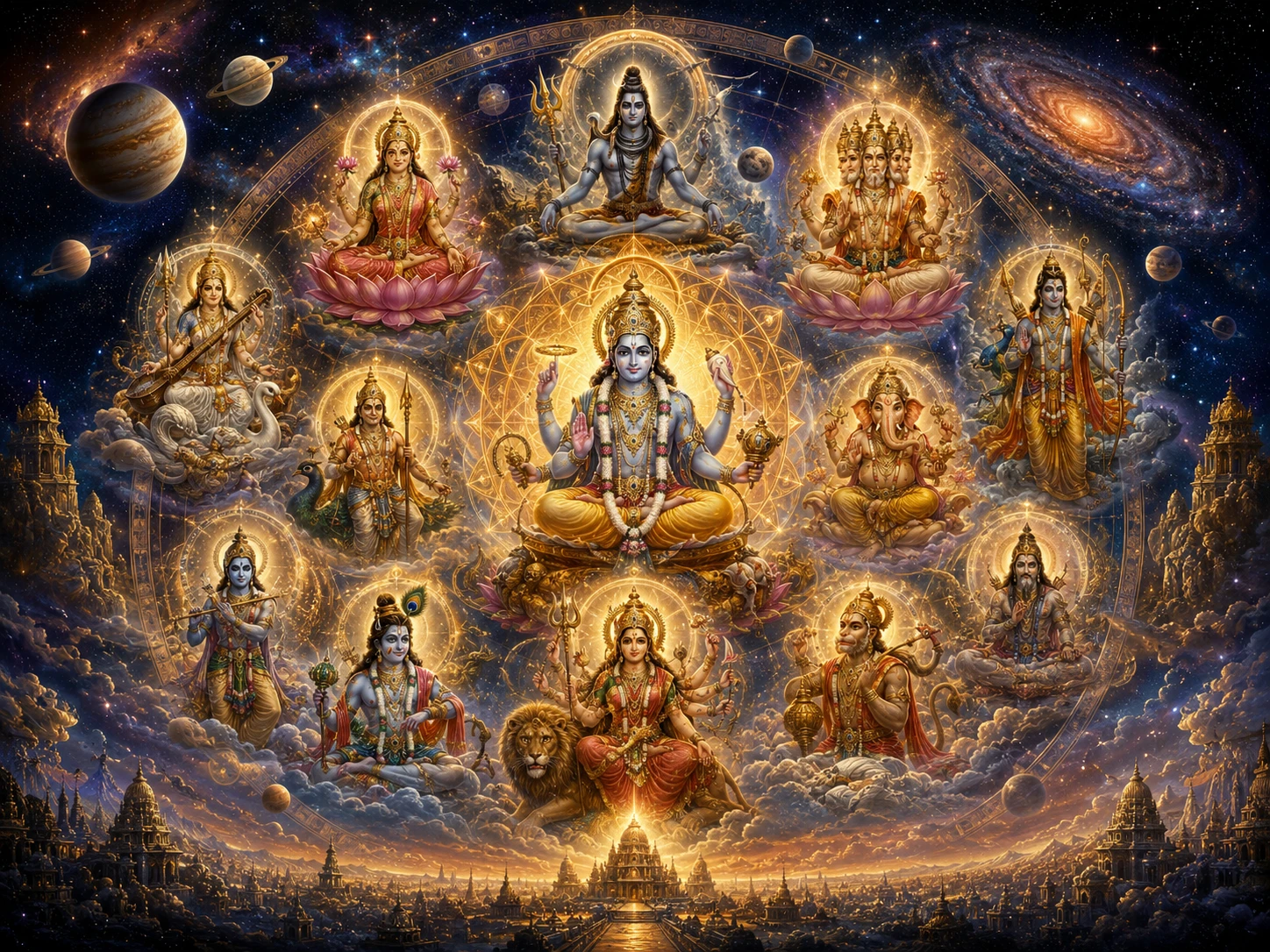
33 Koti Devata -- Why Hinduism Has 33 Types of Gods, Not 33 Crore
13 min read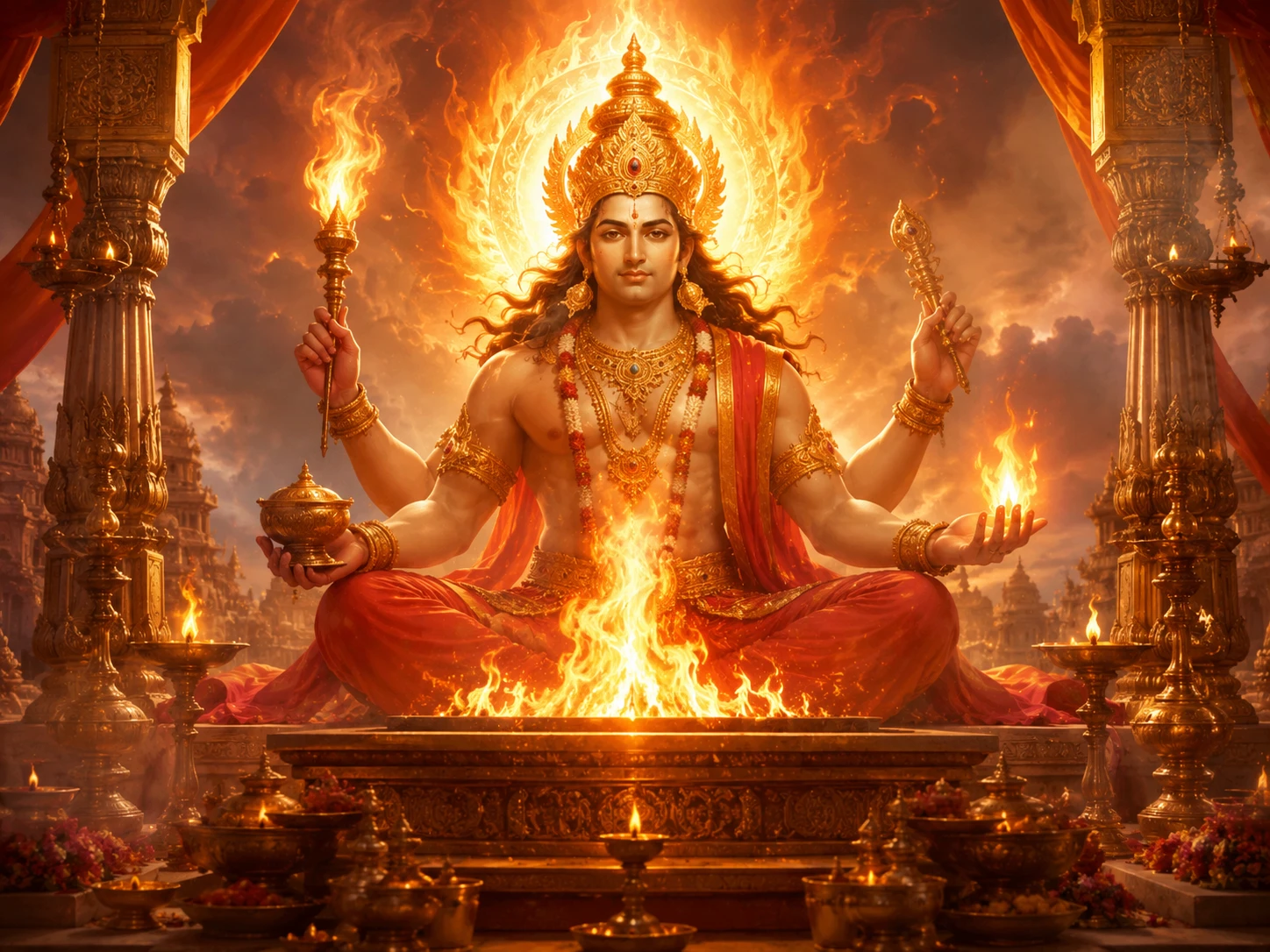
Agni -- The Fire God
19 min read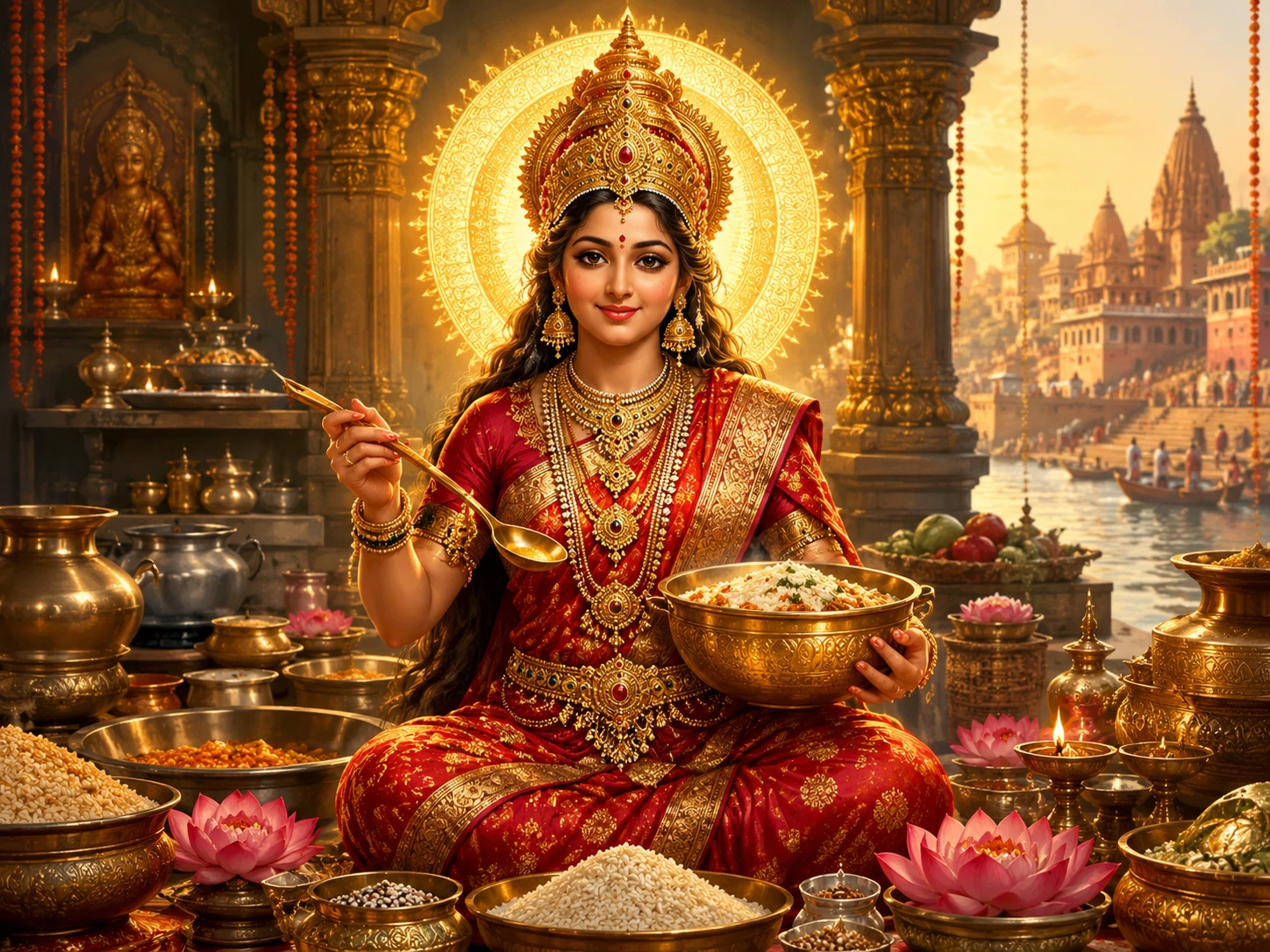
Annapurna -- Goddess of Food
19 min readThe same translation error that turned '33 Koti' into '33 crore' in Hinduism also happened in Buddhism. The Chinese translation of Buddhist texts rendered 'Sapta Koti Buddha' (7 Supreme Buddhas) as '7 Crore Buddhas.' The…
Deities AvatarsCommunity Reflections
🕉️
Be the first to share your reflection.