Daksha's Yagna and Sati -- Why Daksha Hated Shiva
दक्ष यज्ञ और सती -- दक्ष शिव से क्यों नफ़रत करता था
To understand why Daksha hated Shiva, you must first understand who Daksha was and what Shiva represented to him.
Daksha was a Prajapati -- one of the primordial creator-beings assigned by Brahma to populate and organise the cosmos. He was establishment incarnate: powerful, rule-following, protocol-obsessed, deeply invested in the Vedic ritual order, and proud of his status in the celestial hierarchy. He was the father of numerous daughters, many of whom were married to prominent Devas and sages. Daksha's universe ran on rank, ritual, and respect for authority.
Shiva was the opposite of everything Daksha valued. He lived in cremation grounds, smeared with ash. His companions were ghosts, goblins, and serpents. He wore animal skins instead of silk. He had no palace, no army, no treasury. He did not attend celestial assemblies. He meditated alone on a frozen mountain. He was the ultimate outsider -- a god who looked like a vagabond, a supreme being who refused to behave like one.
When Daksha's favourite daughter Sati fell in love with Shiva and insisted on marrying him, Daksha was humiliated. In his eyes, Sati -- a princess of the cosmic elite -- was marrying a homeless ascetic covered in funeral ash. He consented reluctantly, but the resentment festered.
The breaking point came at a gathering of the gods. The Shiva Purana and Bhagavata Purana (Skandha 4, Chapters 2-7) record that at an assembly where Daksha entered, all present rose in respect -- except Shiva, who remained seated in meditation. Daksha interpreted this as deliberate disrespect. In some versions, Shiva was simply absorbed in dhyana and did not notice Daksha's entrance. In others, Shiva did not rise because a father-in-law does not outrank a supreme deity. Either way, the insult lodged in Daksha's heart and never left.
This is the psychology that powered the catastrophe: Daksha's hatred of Shiva was not theological. It was personal. It was the rage of a powerful, protocol-driven patriarch who could not accept that his daughter chose someone who did not play by the rules of polite society. Every Indian family that has fought over an 'unsuitable' match -- caste, class, profession, appearance -- recognises this dynamic instantly.
शरीरं त्वमहं देवि दैवाद्गृहमुपागता। नाहं तवापत्यकुलात्सात्या तेन विवासिता॥
śarīraṃ tvam ahaṃ devi daivād gṛham upāgatā | nāhaṃ tavāpatyakulāt sātyā tena vivāsitā ||
This body of mine I received from you, O Daksha. But I will not carry it now that it has been connected to your lineage that insulted my Lord. I disown this body born of you.
— Srimad Bhagavata Purana, Skandha 4, Adhyaya 4 (Sati's declaration before entering the fire)
The Yagna, the Fire, and the Destruction
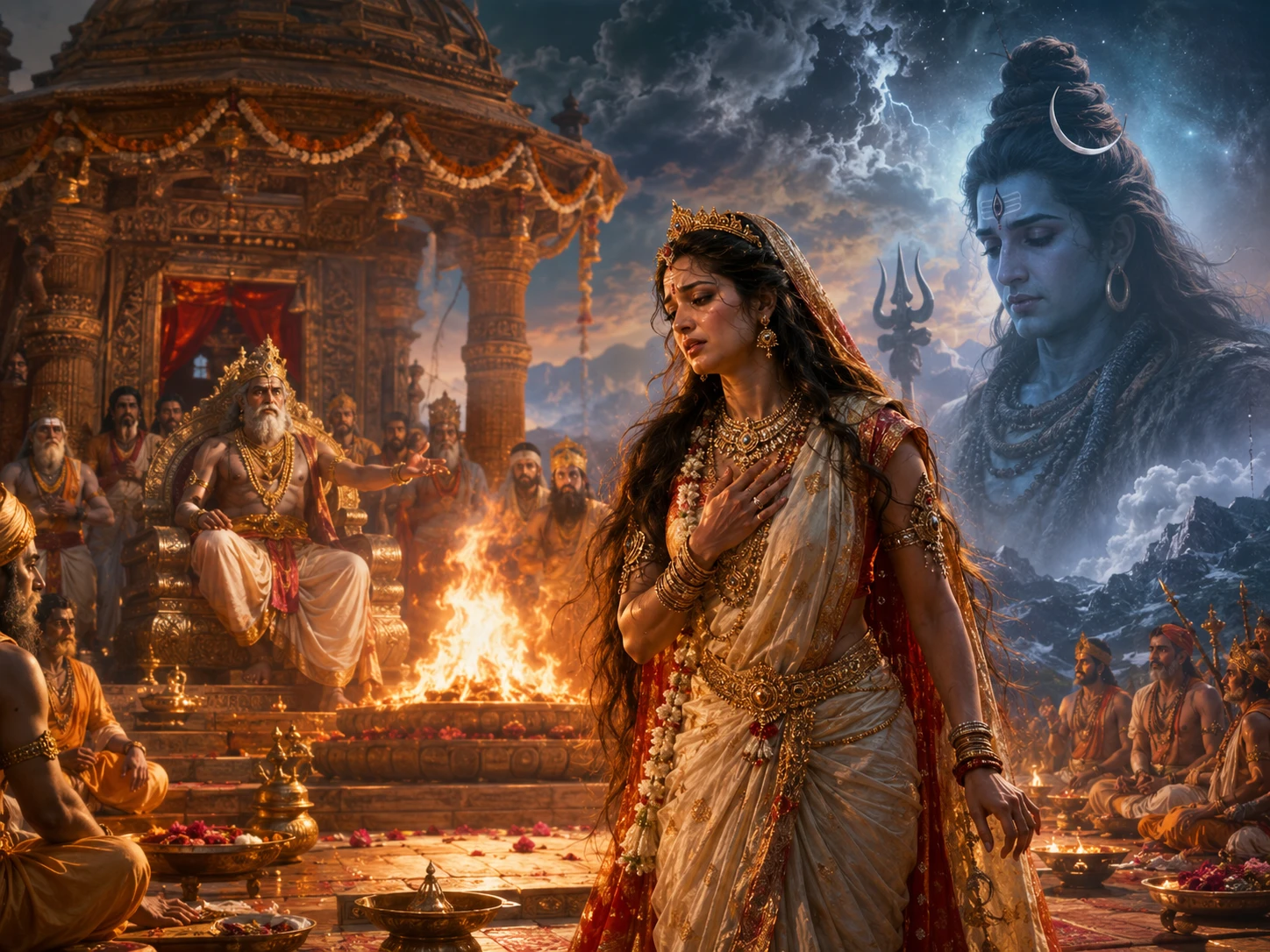
Daksha organised a massive yajna -- the Brihaspati Sava -- and invited every god, sage, and celestial being in the universe. The invitation list was comprehensive and conspicuous in exactly one omission: Shiva was not invited. Sati, despite not receiving an invitation, decided to attend her father's yajna. Shiva warned her. He knew what awaited. But Sati insisted -- she could not believe her own father would humiliate her in public.
She was wrong. When Sati arrived at the yajna, Daksha ignored her. When she looked for an offering portion set aside for Shiva (as was customary for all major deities), there was none. And then, before the assembled gods, Daksha publicly denounced Shiva -- calling him a cremation-ground dweller, an ash-smeared vagabond, unworthy of respect, unworthy of sacrifice, unworthy of his daughter.
Sati's response was not a breakdown. It was a declaration. She addressed Daksha with the fierce clarity of a woman whose love has been publicly desecrated. The Bhagavata Purana records her words: she disowns her body because it came from Daksha, and she will not carry flesh connected to a man who insults Mahadeva. Then she sat in yogic posture, invoked her inner agni (fire), and immolated herself in the sacrificial flames.
The yajna fire that was supposed to feed the gods consumed the host's daughter instead. The cosmic irony was complete.
When the news reached Shiva, his grief transformed into the most terrifying rage in all of Hindu mythology. He tore a dreadlock from his head and struck it against the ground. From it arose Virabhadra -- a fearsome warrior with a thousand arms, three burning eyes, and a garland of skulls. With him came Bhadrakali, an equally ferocious feminine force.
Virabhadra descended upon Daksha's yajna like a storm. He destroyed the sacrificial altar. He defeated the assembled gods who tried to stop him. He pulled out Bhaga's eyes (because Bhaga had winked approvingly when Daksha insulted Shiva). He knocked out Pushan's teeth (because Pushan had smiled at the insult). And he beheaded Daksha.
The destruction was so total that the assembled deities begged Shiva for mercy. Shiva, his rage spent, agreed to restore the yajna and revive Daksha -- but Daksha's head could not be found (it had been thrown into the fire). A goat's head was placed on Daksha's body instead. The resurrected Daksha, humbled and goat-headed, finally recognised Shiva's supremacy and completed the yajna with proper offerings to Mahadeva.
The Shakti Peethas -- When Shiva Carried Sati's Body
But the story does not end with Daksha's humiliation. Shiva, inconsolable, picked up Sati's charred body and began the Tandava -- the cosmic dance of destruction. He wandered the universe carrying her corpse, his grief threatening to annihilate all of creation. To stop the destruction, Vishnu used his Sudarshana Chakra to cut Sati's body into pieces (51 in most traditions, 52 in some). Wherever a piece fell to earth, a Shakti Peetha arose -- a sacred site where the Goddess is worshipped in her most primal form.
The 51 Shakti Peethas are spread across the Indian subcontinent and beyond -- from Kamakhya in Assam (where the yoni fell) to Hinglaj in Balochistan (where the crown fell) to Jessoreswari in Bangladesh. Each Peetha has a presiding Shakti form and an accompanying Bhairava (Shiva) form. Together, they form a sacred geography that maps the Goddess's body onto the land itself.
Sati would be reborn as Parvati -- the daughter of Himavan, the mountain king -- and would win Shiva back through her own tapasya. The love story that began with Daksha's opposition would be completed through Parvati's perseverance. The cycle of destruction and renewal that defines Shiva's theology is enacted in this narrative: love is lost, the world burns, the pieces fall, and from those pieces, new life grows.
Daksha vs Shiva -- The Clash of Worldviews
| Dimension | Daksha (Establishment) | Shiva (Outsider) |
|---|---|---|
| Identity | Prajapati; cosmic bureaucrat; Brahma's mind-born son | Mahadeva; beyond creation; self-existent (Swayambhu) |
| Abode | Celestial court; palatial, hierarchical | Kailash / cremation grounds; no fixed address |
| Appearance | Regal; silk; ornaments; proper | Ash-smeared; animal skins; serpents; matted hair |
| Companions | Devas, sages, Prajapatis | Ghosts (bhutas), ganas, Nandi, serpents |
| Values | Ritual order; hierarchy; protocol; respectability | Meditation; detachment; equality; dissolution |
| View of Power | Comes from position and ancestry | Comes from tapasya and self-realisation |
| Reaction to Conflict | Exclusion; public humiliation; passive aggression | Silence, then total destruction; forgiveness after justice |
| Modern Parallel | Corporate hierarchy; 'proper' families; caste/class gatekeeping | Artist/entrepreneur who breaks conventions; the 'unsuitable boy' |
The Daksha-Shiva conflict is not good vs evil. It is order vs freedom, protocol vs authenticity, respectability vs truth. The tradition ultimately sides with Shiva -- but gives Daksha his head back.
The 51 Shakti Peethas form one of the largest pilgrimage circuits in Hinduism, spread across India, Bangladesh, Pakistan, Nepal, Sri Lanka, and Tibet. Kamakhya Temple in Guwahati (Assam), where Sati's yoni is said to have fallen, is one of the most powerful Tantric sites in the world. During the annual Ambubachi Mela, the temple closes for three days to mark the Goddess's menstruation -- making it one of the only major religious sites on earth that celebrates the menstrual cycle as sacred rather than impure. Over 2.5 million pilgrims attend annually.
Invoke the Goddess -- Devi Stuti
Sati's sacrifice gave rise to the Shakti Peethas. Honour the Goddess with the Ya Devi Sarvabhuteshu hymn from the Devi Mahatmya, which salutes her as present in every being. It is on Eternal Raga with its meaning.
Tags
Eternal Raga · शाश्वत राग
Institutional voice — scholarly articles on Sanatan Dharma
Deepen Your Understanding
अपनी समझ और गहरी करें
scriptural exegesis
Ravana Lifts Kailash -- How the Demon King Became Shiva's Greatest Devotee
A ten-headed king tries to uproot God's mountain. God presses it back with his little toe. The king, crushed and trapped, sings for a thousand years -- and the hymn he composes becomes one of the most powerful devotional poems in Sanskrit. The Ravananugraha episode is where arrogance meets devotion, and the result is the Shiva Tandav Stotram.
deities avatars
Who is Shiva?
He is the ash-smeared ascetic who is also the ideal husband. The destroyer of the universe who is called 'The Auspicious One.' The god of death who drank poison to save all life. He sits in meditation on a Himalayan peak, and simultaneously dances the cosmos into existence and annihilation. No deity in Hinduism contains more contradictions -- and no deity resolves them more completely. This is not a mythology explainer. This is an attempt to stand at the foot of the mountain and look up.
deities avatars
Nine Forms of Shiva -- The Many Faces of Mahadeva
He is the silent teacher under a banyan tree and the screaming destroyer on a battlefield. He is half-woman and half-man. He drank the poison that would have ended the universe and his throat turned blue. Nine scripturally-attested forms of Shiva -- from Nataraja to Rudra -- and why each one exists.
deities avatars
Devi Swaroopa -- Forms of the Goddess
She is Durga on the battlefield and Annapurna in the kitchen. She is Kali at the cremation ground and Lakshmi in the boardroom. She is Saraswati at the university and Parvati in the family. The Hindu Goddess is not one deity with accessories -- she is the entire spectrum of feminine power, from terrifying to tender, from cosmic to domestic. Understanding her forms is understanding the universe itself.
deities avatars
Kali -- The Fierce Mother Who Devours Time Itself
Black-skinned, wild-haired, wearing a garland of fifty severed heads and a skirt of severed arms, standing on Shiva's chest with her tongue extended in shock -- Kali is the most misunderstood deity in Hinduism and the most theologically radical. She is not a demon. She is not 'dark energy.' She is Time in feminine form, the cosmic mother who destroys everything so that everything can be reborn. Ramakrishna called her 'Ma.' Millions still do.
deities avatars
Ardhanarishvara -- The Half-Male, Half-Female Form of Shiva
Split exactly down the centre. Right half: matted hair, serpent, drum, trident, ash-smeared skin. Left half: silk, flowers, kohl-lined eye, curved breast, jewelled anklet. One body. Two genders. Zero contradiction. Ardhanarishvara is the most radical statement on gender in any world mythology -- 5,000 years before the modern conversation began. This is not inclusion as a concession. This is divine completeness as a first principle.
The 51 Shakti Peethas form one of the largest pilgrimage circuits in Hinduism, spread across India, Bangladesh, Pakistan, Nepal, Sri Lanka, and Tibet. Kamakhya Temple in Guwahati (Assam), where Sati's yoni is said to hav…
More in Deities & Avatars
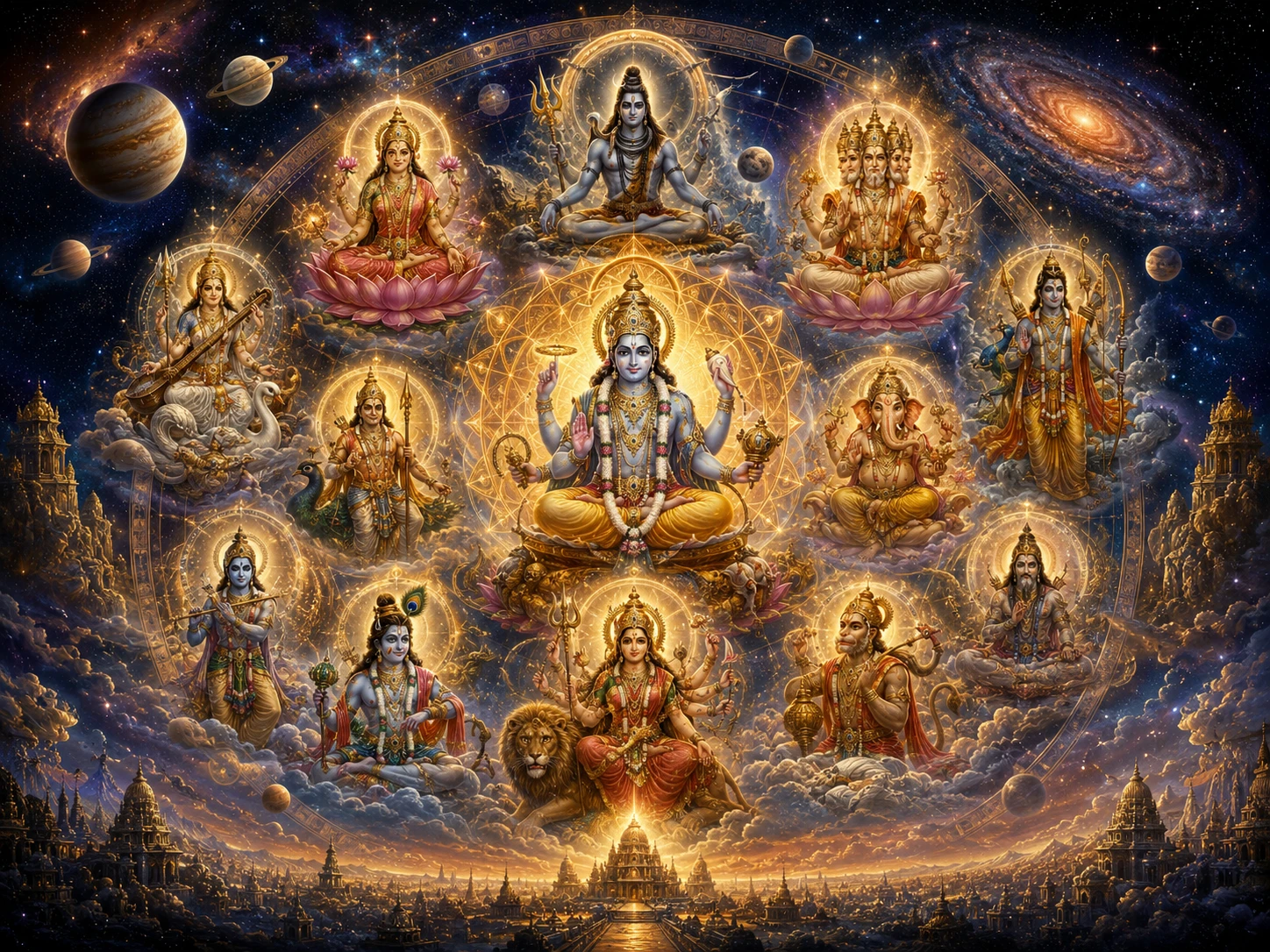
33 Koti Devata -- Why Hinduism Has 33 Types of Gods, Not 33 Crore
13 min read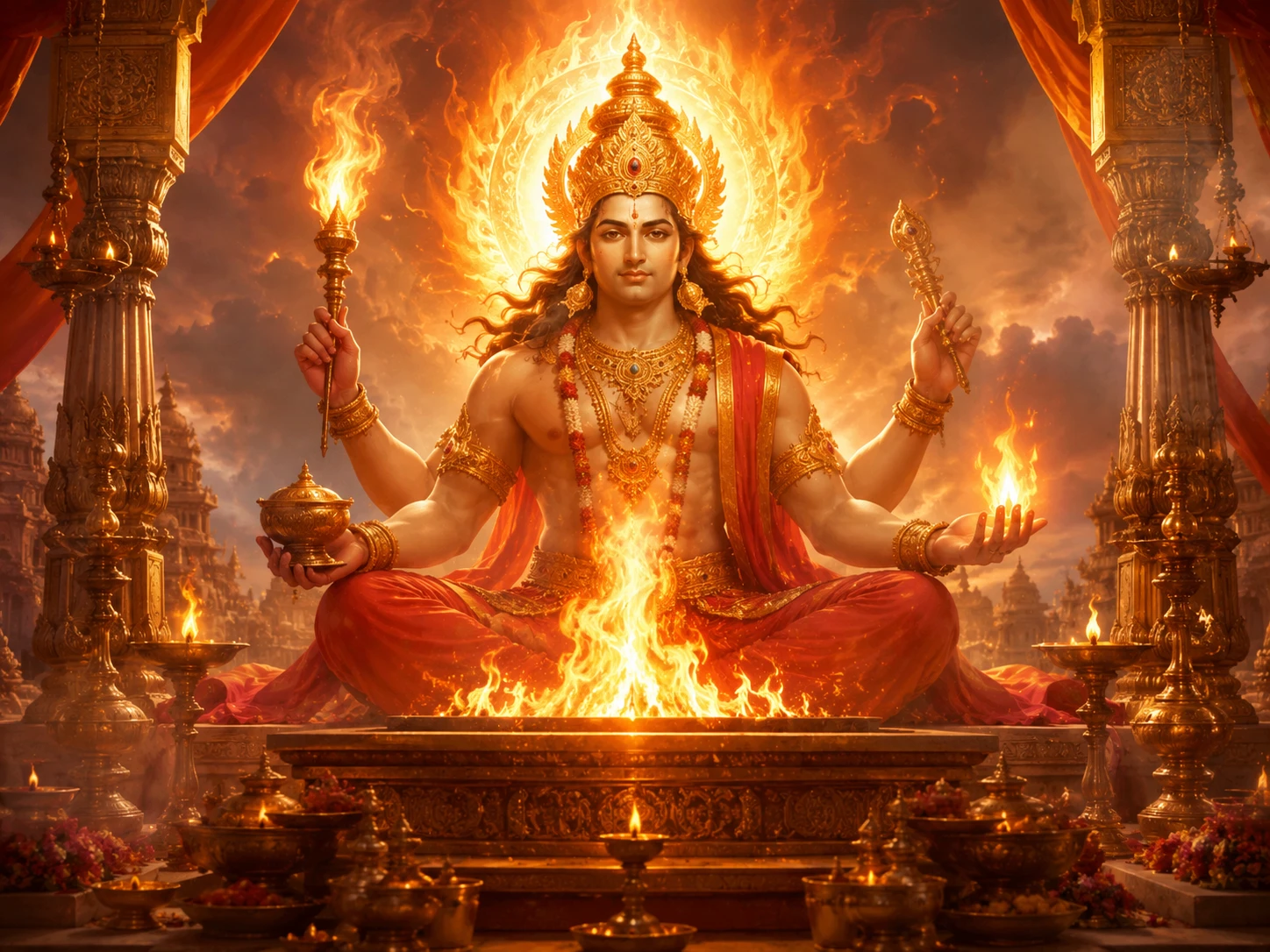
Agni -- The Fire God
19 min read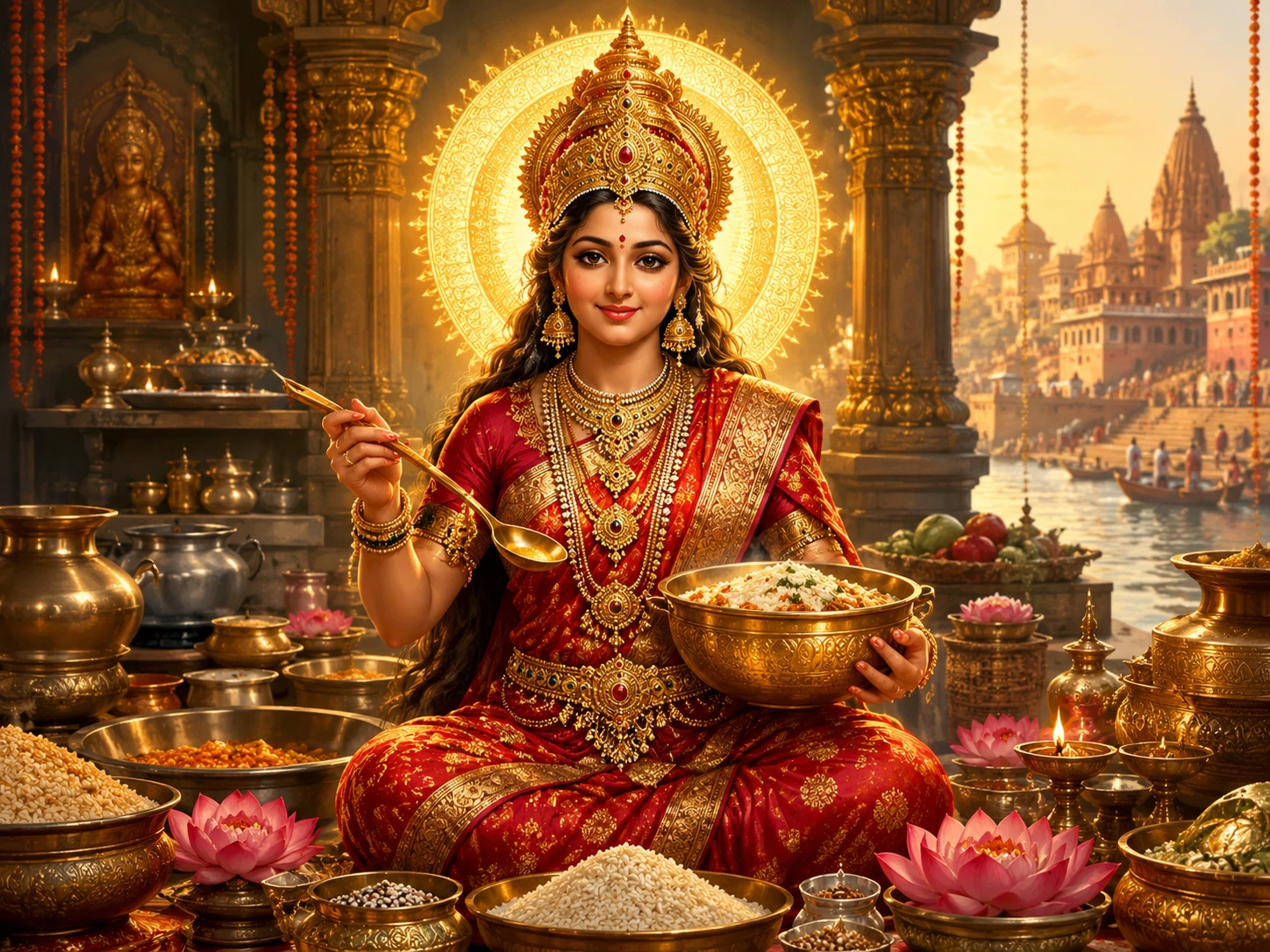
Annapurna -- Goddess of Food
19 min readThe same translation error that turned '33 Koti' into '33 crore' in Hinduism also happened in Buddhism. The Chinese translation of Buddhist texts rendered 'Sapta Koti Buddha' (7 Supreme Buddhas) as '7 Crore Buddhas.' The…
Deities AvatarsCommunity Reflections
🕉️
Be the first to share your reflection.