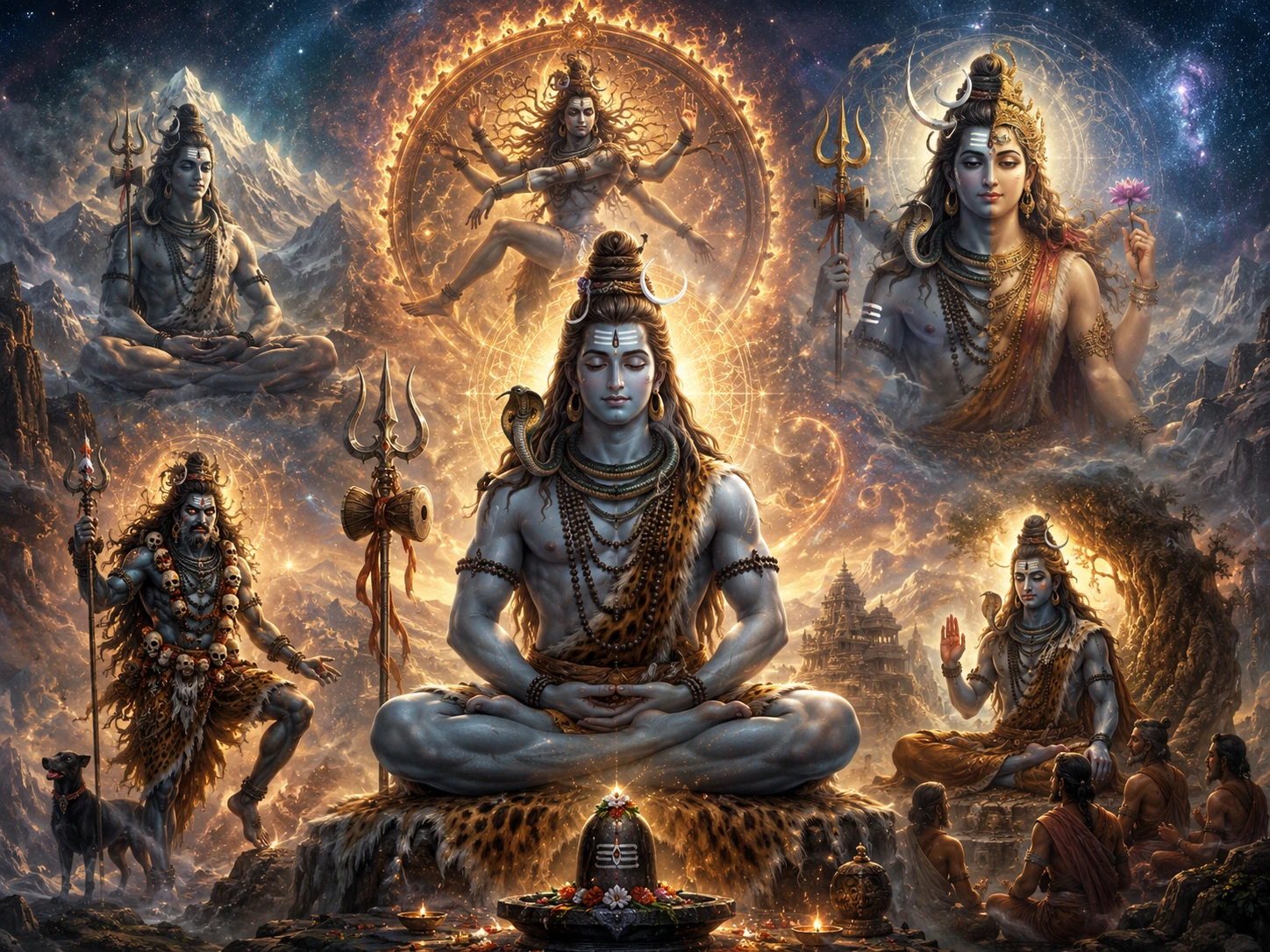
Nine Forms of Shiva -- The Many Faces of Mahadeva
शिव के नौ रूप -- महादेव के अनेक चेहरे
There is no deity in Hinduism -- or arguably in any world religion -- who contains as many contradictions within a single identity as Shiva. He is the supreme ascetic who never opens his eyes, and the cosmic dancer whose Tandava shakes the universe. He is the loving husband who carries his wife as half his own body, and the terrifying Bhairava who wanders cremation grounds with skulls around his neck. He smears himself with ash from funeral pyres, yet he is worshipped as the most auspicious (Shiva literally means 'the auspicious one').
This is not confusion. This is completeness.
Unlike Vishnu, whose ten avatars appear sequentially across cosmic ages, Shiva's forms exist simultaneously. They are not incarnations in different bodies but facets of the same infinite consciousness -- like light passing through a prism and splitting into colours. Each form reveals a different aspect of what it means to be the Absolute: creator and destroyer, teacher and warrior, lover and renunciant, protector and liberator.
This article maps nine major scripturally-attested forms of Shiva, grounded in Puranic and Agamic sources. Not Instagram numerology. Not social media inventions. The real forms, the real stories, the real temples, and the real philosophy behind why Mahadeva needs nine faces to show you one truth.
नमस्ते अस्तु भगवन् विश्वेश्वराय महादेवाय त्र्यम्बकाय त्रिपुरान्तकाय त्रिकालाग्निकालाय कालाग्निरुद्राय नीलकण्ठाय मृत्युञ्जयाय सर्वेश्वराय सदाशिवाय श्रीमन्महादेवाय नमः॥
namaste astu bhagavan viśveśvarāya mahādevāya tryambakāya tripurāntakāya trikālāgnikālāya kālāgnirudrāya nīlakaṇṭhāya mṛtyuñjayāya sarveśvarāya sadāśivāya śrīmanmahādevāya namaḥ ||
Salutations to you, O Lord of the Universe, O Mahadeva, O Three-eyed One, O Destroyer of Tripura, O Fire of the three times, O Rudra who is the fire of dissolution, O Blue-throated One, O Conqueror of Death, O Lord of all, O eternal Shiva -- salutations to the glorious Mahadeva.
— Shiva Mahimna Stotram (Pushpadanta), Verse 1 -- Invocatory Prayer
Notice how a single invocation names six distinct identities -- Vishveshvara, Tryambaka, Tripurantaka, Kalaagni Rudra, Neelkantha, Mrityunjaya. This is not poetic excess. Each name points to a specific form with its own story, iconography, temple tradition, and philosophical meaning. The prayer is itself a compressed map of Shiva's forms.
Let us now walk through nine of these forms -- not as a random list, but as a spectrum from the most serene to the most fierce, from the teacher to the destroyer, from silence to cosmic roar.
1. Dakshinamurti -- The Silent Teacher
Under a banyan tree at the foot of Mount Meru, a young guru sits facing south. His right hand is raised in Chin Mudra -- thumb and index finger touching to form the circle of knowledge. Four aged sages -- Sanaka, Sanandana, Sanatana, and Sanatkumara -- sit before him. No word is spoken. In that silence, all doubts dissolve.
This is Dakshinamurti (literally 'one who faces south'), and he is Shiva as the Adi Guru -- the first teacher. While all other gurus teach through speech, Dakshinamurti teaches through silence. His very presence transmits the knowledge of Brahman.
Adi Shankaracharya's Dakshinamurti Stotram is the definitive philosophical text on this form. In it, Shankara explains that the entire universe is like a reflection in a mirror -- appearing real but being only a projection of consciousness. Dakshinamurti is the one who sees through this illusion.
For any student -- whether in a classroom in Kota or a lecture hall at IIT Bombay -- Dakshinamurti represents the ideal: a teacher so profound that his silence teaches more than any textbook. The next time you are in a temple in Tamil Nadu, look for the Dakshinamurti niche on the southern wall of the sanctum. He is always there -- the quiet genius of the Hindu temple, overlooked by most visitors rushing to the main deity.
Key temple: Dakshinamurti shrine in every major Shiva temple in Tamil Nadu. Dedicated temples at Alangudi and in the Brihadeshwara complex, Thanjavur. Source texts: Shiva Purana (Vidyeshvara Samhita), Dakshinamurti Stotram (Adi Shankaracharya).
2. Nataraja -- The Cosmic Dancer
If Dakshinamurti is Shiva in stillness, Nataraja is Shiva in motion. The Nataraja form -- Shiva performing the Ananda Tandava (dance of bliss) within a ring of cosmic fire -- is arguably the most recognizable Hindu icon in the world. A two-metre bronze Nataraja stands at CERN in Geneva, gifted by the Government of India, because physicists saw in this ancient image a perfect metaphor for the dance of subatomic particles.
The iconography is precise and loaded with meaning. His upper right hand holds a damaru (drum) -- the sound of creation. His upper left hand holds agni (fire) -- the force of dissolution. His lower right hand is raised in abhaya mudra -- 'fear not.' His lower left hand points downward to his raised left foot -- the gesture of liberation. His right foot crushes Apasmara, the dwarf demon of ignorance. The ring of fire (prabha mandala) represents samsara -- the cycle of existence.
The dance of Nataraja encodes the Pancha Kritya -- Shiva's five cosmic acts: creation (srishti), preservation (sthiti), destruction (samhara), concealment (tirobhava), and grace (anugraha). These five acts map directly to the five faces of Panchamukhi Shiva, creating a deep structural link between these two forms.
Chidambaram in Tamil Nadu is the spiritual home of Nataraja -- one of the Pancha Bhuta Sthalams representing the element of Akasha (space). The annual Natyanjali festival brings dancers from across India to perform at his feet.
Key temple: Nataraja Temple, Chidambaram (Akasha lingam). Source texts: Shaiva Agamas (Uttarakamika, Amshumadbheda), Koyil Puranam, Tevaram hymns, Thiruvasagam.
3. Ardhanarishvara -- The Half That Completes
The right half is Shiva -- matted hair, trident, drum, serpent, tiger skin. The left half is Parvati -- flowing hair, mirror, lotus, silk, jewellery. One body. Two principles. Complete.
Ardhanarishvara (ardha = half, nari = woman, ishvara = lord) is not simply Shiva with his wife. It is a radical philosophical statement: consciousness (Purusha) and energy (Prakriti) are not two things. They cannot exist apart. The universe arises only from their union. Separate them and nothing exists -- not creation, not thought, not love.
The Skanda Purana tells how Parvati asked Shiva to let her reside with him so completely that they share the same body, 'limb to limb.' The Linga Purana describes the form with Shiva making varada and abhaya mudras while holding a trishula and lotus. Archaeological evidence from the Kushan period (1st century CE) confirms this form has been worshipped for at least two thousand years.
For a culture obsessed with binaries -- masculine/feminine, logic/emotion, career/family -- Ardhanarishvara is the antidote. It says: the highest reality is not either/or. It is both/and. Every human being is Ardhanarishvara -- carrying within them both Shiva and Shakti, both stillness and dynamism, both analysis and intuition. No wonder the form has become a powerful symbol in contemporary gender discourse -- not because the ancients were 'woke,' but because they understood something about wholeness that modernity is still catching up with.
Key temple: Tiruchengode (Ardhanareeshwarar Temple, Tamil Nadu) -- one of the rare temples where this form is the main deity. Source texts: Linga Purana, Skanda Purana, Vishnudharmottara Purana, Matsya Purana, Shilparatna.
4. Neelkanth -- The Blue-Throated Saviour
During the Samudra Manthan (churning of the cosmic ocean), before any treasure emerged, the ocean released Halahala -- a poison so lethal it could destroy all three worlds. The gods panicked. The demons fled. The poison spread like a toxic cloud across existence.
Shiva drank it. All of it. But Parvati -- acting instantly -- pressed his throat to stop the poison from descending into his body. The poison stayed in his throat, turning it blue forever. From that day, Shiva became Neelkanth -- the Blue-Throated One.
The story is deceptively simple, but its philosophy runs deep. The poison represents the inevitable suffering that creation generates. Someone has to absorb it. The gods cannot -- they are too invested in pleasure. The demons will not -- they are too invested in power. Only Shiva -- the detached consciousness, the one who already lives in cremation grounds and wears ash -- can hold the poison without being destroyed by it.
For anyone who has ever absorbed a family's pain so the children do not have to feel it, or taken the blame at work so the team survives, or sat quietly through grief so others can function -- you know what it means to be Neelkanth. The throat turns blue. The poison does not kill you. But it marks you.
Key temple: Neelkanth Mahadev Temple, Rishikesh (near the confluence where the poison is said to have been consumed). Also, every Shiva murti with a blue-tinged throat references this form. Source texts: Bhagavata Purana (Canto 8, Ch. 7), Vishnu Purana, Shiva Purana (Rudra Samhita).
5. Panchamukhi -- The Five-Faced Absolute
Panchamukhi Shiva (five-faced Shiva), also called Sadashiva, is Shiva in his most theologically complete form. The five faces are not decorative. Each corresponds to one of Shiva's five cosmic activities (Pancha Kritya), one of the five elements, and one of the cardinal directions:
Sadyojata faces west, white in colour, associated with earth and the act of creation (srishti). Vamadeva faces north, red or saffron, associated with water and the act of preservation (sthiti). Aghora faces south, blue-black, associated with fire and the act of dissolution (samhara). Tatpurusha faces east, golden, associated with wind and the act of concealment (tirobhava). Ishana faces upward (or skyward), crystal-clear, associated with space (akasha) and the act of grace (anugraha).
The five faces are worshipped through the Panchakshari Mantra (Om Namah Shivaya) and the Panchabrahma mantras. In temple worship based on the Shaiva Agamas, it is this five-fold form that is being worshipped in every Shivalinga. The Mukhalinga -- a Shivalinga with carved faces -- makes this explicit. The famous Elephanta Caves near Mumbai display a magnificent three-faced representation (Trimurti) that is actually a partial rendering of Panchamukhi.
Key temple: Panchamukha Shiva Linga at Chandrashila Peak, Tunganath (Uttarakhand). Elephanta Caves, Mumbai. Isha Yoga Centre, Coimbatore (Adiyogi statue references this form). Source texts: Shiva Purana (Vidyeshvara Samhita), Linga Purana, Ajita Agama, Shaiva Agamas.
6. Pashupatinath -- The Lord of All Beings
Pashupati (Lord of creatures, or Lord of bound souls) is one of Shiva's oldest names -- it appears in the Atharva Veda and the Shvetashvatara Upanishad. 'Pashu' in this context does not mean 'animal' in the colloquial sense. It means 'bound soul' -- any being trapped in the bonds (pasha) of ignorance, karma, and maya. Shiva as Pashupati is the one who frees these bound souls.
This form is the foundation of the Pashupata school -- one of the oldest Shaiva traditions, predating even Shaiva Siddhanta. The Pashupata Sutras (attributed to Lakulisha) outline a fierce ascetic path focused on liberation through direct devotion to Shiva.
The Pashupatinath Temple in Kathmandu, Nepal -- a UNESCO World Heritage Site on the banks of the Bagmati River -- is the most sacred Shiva temple in the world for millions of devotees. Cremation ghats line the riverbank, and sadhus from across South Asia gather here, making it a living expression of Shiva's presence at the threshold of life and death.
Key temple: Pashupatinath Temple, Kathmandu (Nepal). Source texts: Atharva Veda, Shvetashvatara Upanishad 3.2, Pashupata Sutras.
7. Bhairava -- The Fierce Protector
Bhairava is where Shiva stops being gentle. The Shiva Purana (Shatrudra Samhita, Chapter 8) narrates the origin: Brahma's fifth head spoke arrogantly, claiming superiority over Shiva. Shiva emanated Bhairava, who severed Brahma's fifth head with his thumbnail. But the act of killing a Brahmin -- even an arrogant one -- carried a cosmic sin. The severed skull stuck to Bhairava's hand and became his begging bowl. He wandered for aeons performing penance, until the skull finally fell off at Varanasi -- the spot now known as Kapal Mochan ('liberator from the skull').
Bhairava is associated with the 52 Shakti Peethas, where he appears as Kshetrapalaka (guardian of the sacred field). There are eight principal Bhairavas (Ashta Bhairava), with Kaal Bhairava as the chief -- the terrifying form who guards the city of Varanasi itself. Tradition holds that no one can enter Kashi without Kaal Bhairava's permission.
In popular Indian culture, Bhairava is the deity invoked for protection from enemies, evil spirits, and untimely death. Auto-rickshaw drivers in Varanasi keep his image on their dashboards. Night-shift workers pray to him. He is the deity of those who live in the margins -- the dark hours, the dangerous streets, the spaces between worlds.
Key temple: Kaal Bhairav Temple, Varanasi. Also the Ashta Bhairav temples across India and Nepal. Source texts: Shiva Purana (Shatrudra Samhita, Ch. 8), Skanda Purana, Bhairava Agamas.
8. Mahakal -- The Lord of Time
Mahakal is Shiva as time itself -- not time as a clock measures it, but time as the force that creates, sustains, and ultimately devours everything. 'Maha' means great, 'Kala' means both time and death. Mahakal is the Great Time, the Great Death -- the reminder that nothing in the manifest universe, not even the gods, is permanent.
The Mahakaleshwar Jyotirlinga in Ujjain is one of the twelve Jyotirlingas and the only one that is Dakshinamukhi (south-facing) -- traditionally associated with tantric power and the dissolution of time-bound karma. The famous Bhasma Aarti performed here at 4 AM uses fresh ash from cremation grounds, applied to the Shivalinga -- a ritual that connects the worshipper directly to Shiva's mastery over death.
In the Mahabharata's Shanti Parva, Mahakal is described as the force before which even Brahma and Vishnu bow. This form strips away all comfort. There is no abhaya mudra here, no 'fear not.' Mahakal's message is starkly honest: time is running out for everything you love, everything you have built, everything you believe is permanent. The only thing that survives time is consciousness itself -- and that is Shiva.
Key temple: Mahakaleshwar Temple, Ujjain (Madhya Pradesh) -- one of 12 Jyotirlingas. Source texts: Shiva Purana (Kotirudra Samhita), Skanda Purana, Mahabharata (Shanti Parva).
9. Rudra -- The Howling Storm
Rudra is the oldest form of Shiva -- and the most primal. He appears in the Rig Veda (hymn 1.114 and 2.33) as a fierce, storm-associated deity who brings both disease and healing, destruction and renewal. The word 'Rudra' likely derives from 'rud' (to cry, to howl) -- he is the one who makes the cosmos weep and the one who wipes the tears.
The Sri Rudram (Namakam and Chamakam) from the Yajurveda's Taittiriya Samhita is the most sacred Vedic hymn dedicated to Shiva. It is chanted in every major Shiva temple during Rudrabhishekam -- the ritual bathing of the Shivalinga. The Rudram does not describe a gentle god. It invokes Shiva in terrifying forms -- as the lord of thieves, the lord of battlefields, the lord of forests, the lord of crossroads, the lord of armies. It then pivots and invokes him as the healer, the protector, the giver of food, the giver of wealth.
The Shatrudriya section of the Yajurveda lists hundreds of names and forms of Rudra, establishing that he is simultaneously the most ferocious and the most benevolent force in existence. This duality is not a contradiction -- it is the complete picture of reality. The same monsoon that floods your fields also fills your wells.
Ekadasha Rudra -- the eleven Rudras -- are invoked in Vedic ritual as aspects of this primal force. They are not eleven different gods but eleven vibrations of one terrifying, compassionate, unstoppable power.
Key temple: Every Shiva temple during Rudrabhishekam. Specifically, the 11 Rudra temples in Varanasi. Source texts: Rig Veda 1.114, 2.33. Yajurveda (Taittiriya Samhita) -- Sri Rudram. Shvetashvatara Upanishad 3.2.
Nine Forms of Shiva -- Master Reference
| Form | Core Aspect | Primary Source Text | Key Temple | What It Teaches |
|---|---|---|---|---|
| Dakshinamurti (दक्षिणामूर्ति) | Silent teacher. Adi Guru. | Shiva Purana, Dakshinamurti Stotram | Every Shiva temple's south wall (Tamil Nadu tradition) | The highest knowledge transmits in silence, not words. |
| Nataraja (नटराज) | Cosmic dancer. Pancha Kritya. | Shaiva Agamas, Tevaram, Thiruvasagam | Nataraja Temple, Chidambaram | Creation and destruction are one continuous dance. |
| Ardhanarishvara (अर्धनारीश्वर) | Union of masculine-feminine. Purusha-Prakriti. | Linga Purana, Skanda Purana, Vishnudharmottara Purana | Ardhanareeshwarar Temple, Tiruchengode | Wholeness requires both Shiva and Shakti. Neither is complete alone. |
| Neelkanth (नीलकण्ठ) | Absorber of poison. Sacrifice. | Bhagavata Purana (8.7), Vishnu Purana | Neelkanth Mahadev Temple, Rishikesh | True strength is absorbing suffering so others do not have to. |
| Panchamukhi / Sadashiva (पंचमुखी / सदाशिव) | Five-faced absolute. Five cosmic acts. | Shiva Purana, Linga Purana, Ajita Agama | Chandrashila, Tunganath; Elephanta Caves | Shiva is simultaneously creator, preserver, destroyer, concealer, and grace-giver. |
| Pashupatinath (पशुपतिनाथ) | Lord of bound souls. Liberator. | Atharva Veda, Shvetashvatara Upanishad 3.2 | Pashupatinath Temple, Kathmandu | Every being is a bound soul. Shiva's purpose is liberation. |
| Bhairava (भैरव) | Fierce protector. Guardian of Kashi. | Shiva Purana (Shatrudra Samhita, Ch. 8) | Kaal Bhairav Temple, Varanasi | Even righteous anger carries consequences. Penance purifies. |
| Mahakal (महाकाल) | Lord of time and death. | Shiva Purana (Kotirudra Samhita), Skanda Purana | Mahakaleshwar Temple, Ujjain (Jyotirlinga) | Nothing survives time except consciousness. Stop clinging. |
| Rudra (रुद्र) | Primal storm-god. Healer and destroyer. | Rig Veda 1.114, 2.33; Yajurveda Sri Rudram | Every temple during Rudrabhishekam. 11 Rudra temples, Varanasi. | The same force that destroys also heals. Duality is completeness. |
These nine forms are not the only Shiva manifestations -- Virabhadra (warrior born from Shiva's rage at Daksha's yajna), Tripurantaka (destroyer of the three demon cities), Kiratarjuniya (the hunter who tests Arjuna), and Lingodbhava (the infinite pillar of light) are also major forms with Puranic attestation. This article focuses on nine that span the full spectrum from serenity to ferocity.
A two-metre bronze statue of Nataraja stands at CERN in Geneva -- the European Organisation for Nuclear Research where the Higgs boson was discovered. The Indian government gifted it in 2004. Physicist Fritjof Capra had written in 'The Tao of Physics' (1975) that Shiva's cosmic dance is a perfect metaphor for the dance of subatomic particles -- matter constantly being created and destroyed. The plaque at CERN reads: 'Hundreds of years ago, Indian artists created visual images of dancing Shivas in a beautiful series of bronzes. In our time, physicists have used the most advanced technology to portray the patterns of the cosmic dance.' Meanwhile, closer to home, the 112-foot Adiyogi statue at Isha Yoga Centre in Coimbatore -- the world's largest bust sculpture, certified by Guinness -- depicts Shiva in the Panchamukhi-inspired Dhyana mudra, making ancient iconography a modern landmark.
यो देवानां प्रभवश्चोद्भवश्च विश्वाधिपो रुद्रो महर्षिः। हिरण्यगर्भं जनयामास पूर्वं स नो बुद्ध्या शुभया संयुनक्तु॥
yo devānāṃ prabhavaś codbhavaś ca viśvādhipo rudro maharṣiḥ | hiraṇyagarbhaṃ janayām āsa pūrvaṃ sa no buddhyā śubhayā saṃyunaktu ||
He who is the source and origin of the gods, the lord of the universe, Rudra the great seer, who created Hiranyagarbha (the golden cosmic egg) in the beginning -- may He endow us with auspicious intellect.
— Shvetashvatara Upanishad 3.4
Why Nine and Not One?
After walking through these nine forms, a question arises: why does Shiva need so many faces? Why not one consistent image, like a corporate logo?
Because reality is not one-dimensional. A father is simultaneously a protector (Pashupatinath), a teacher (Dakshinamurti), a partner (Ardhanarishvara), a healer (Neelkanth), and sometimes a disciplinarian who makes you uncomfortable (Bhairava). He does not switch between these roles sequentially. He holds them all, all the time. The moment you flatten him into just 'gentle dad' or just 'strict dad,' you lose him.
Shiva's nine forms are the same insight applied to the Absolute. The divine cannot be captured in a single image because no single image can contain infinity. You need the dancer and the stillness, the poison-drinker and the boon-giver, the five-faced theologian and the single-focused storm. Together, they approximate -- never fully reach -- the truth of Mahadeva.
This is also why Shiva is worshipped as Linga -- the aniconic, formless, limitless pillar. The Linga says: after you have seen all nine faces, remember that the real Shiva has no face at all.
Chant the Panchakshari Mantra
Om Namah Shivaya -- the five-syllable mantra that invokes all five faces of Shiva. Chant it 108 times on a mala. Its page on Eternal Raga gives the meaning of each syllable and how to chant it.
Tags
Eternal Raga · शाश्वत राग
Institutional voice — scholarly articles on Sanatan Dharma
Deepen Your Understanding
अपनी समझ और गहरी करें
deities avatars
Who is Shiva?
He is the ash-smeared ascetic who is also the ideal husband. The destroyer of the universe who is called 'The Auspicious One.' The god of death who drank poison to save all life. He sits in meditation on a Himalayan peak, and simultaneously dances the cosmos into existence and annihilation. No deity in Hinduism contains more contradictions -- and no deity resolves them more completely. This is not a mythology explainer. This is an attempt to stand at the foot of the mountain and look up.
deities avatars
Nataraja -- The Cosmic Dancer
One foot crushes a dwarf. The other is raised in liberation. A ring of fire frames the dance. A drum beats creation into existence. An open palm says 'do not fear.' This is Nataraja -- Shiva as the Lord of Dance -- and it is the single most replicated Indian bronze in the history of art. The physicists at CERN chose it to stand outside the world's largest particle accelerator. The Chola bronzesmiths of Tamil Nadu perfected it a thousand years ago. And every time a subatomic particle appears and disappears, the cosmic dance continues.
deities avatars
Bhairava -- Shiva's Fierce Form and the Guardian of Kashi
He carries a skull in one hand and a noose in another. His vahana is a dog -- the animal every other deity avoids. He wanders cremation grounds at midnight, ash-smeared and wild-eyed. He is also the Kotwal (police chief) of the oldest continuously inhabited city on earth -- Varanasi. This is Bhairava: the form Shiva took after cutting off Brahma's fifth head, the deity who turned his own sin into a pilgrimage, and the guardian that must be worshipped before you leave Kashi, or the city will not let you go.
deities avatars
Dakshinamurti -- The Silent Teacher Who Taught the Universe Through Silence
Under a banyan tree sits a young guru, surrounded by old disciples. He says nothing. They understand everything. This is Dakshinamurti -- Shiva as the original teacher -- and his image is the most profound statement on education in any civilisation: the highest knowledge cannot be spoken. It can only be transmitted through presence.
deities avatars
Ardhanarishvara -- The Half-Male, Half-Female Form of Shiva
Split exactly down the centre. Right half: matted hair, serpent, drum, trident, ash-smeared skin. Left half: silk, flowers, kohl-lined eye, curved breast, jewelled anklet. One body. Two genders. Zero contradiction. Ardhanarishvara is the most radical statement on gender in any world mythology -- 5,000 years before the modern conversation began. This is not inclusion as a concession. This is divine completeness as a first principle.
tantra mantra yantra
Mahamrityunjaya Mantra -- Conquering Death
A 16-year-old boy clings to a Shiva Linga as the god of death throws a noose around his neck. Shiva emerges from the Linga, kicks Yama in the chest, and declares the boy immortal. That boy is Markandeya. That mantra is the Mahamrityunjaya. It appears in the Rig Veda, the Yajur Veda, and the Atharva Veda -- the only healing mantra attested in three of the four Vedas. It is chanted in ICU corridors, before surgeries, at bedsides, and in cremation grounds. This is not a mantra about avoiding death. It is a mantra about not being afraid of it.
tantra mantra yantra
Om Namah Shivaya -- The Panchakshari Mantra
Five syllables. Three thousand years of continuous chanting. The most spoken mantra in Shaivism, extracted from the heart of the Vedas -- the eighth Anuvaka of the Sri Rudram in the Krishna Yajurveda. Na is earth. Ma is water. Shi is fire. Va is air. Ya is space. When you chant Om Namah Shivaya, you are not simply praying to a deity. You are vibrating the five elements that constitute your body, the universe, and the consciousness that witnesses both. This is how a mantra becomes a technology.
A two-metre bronze statue of Nataraja stands at CERN in Geneva -- the European Organisation for Nuclear Research where the Higgs boson was discovered. The Indian government gifted it in 2004. Physicist Fritjof Capra had …
More in Deities & Avatars
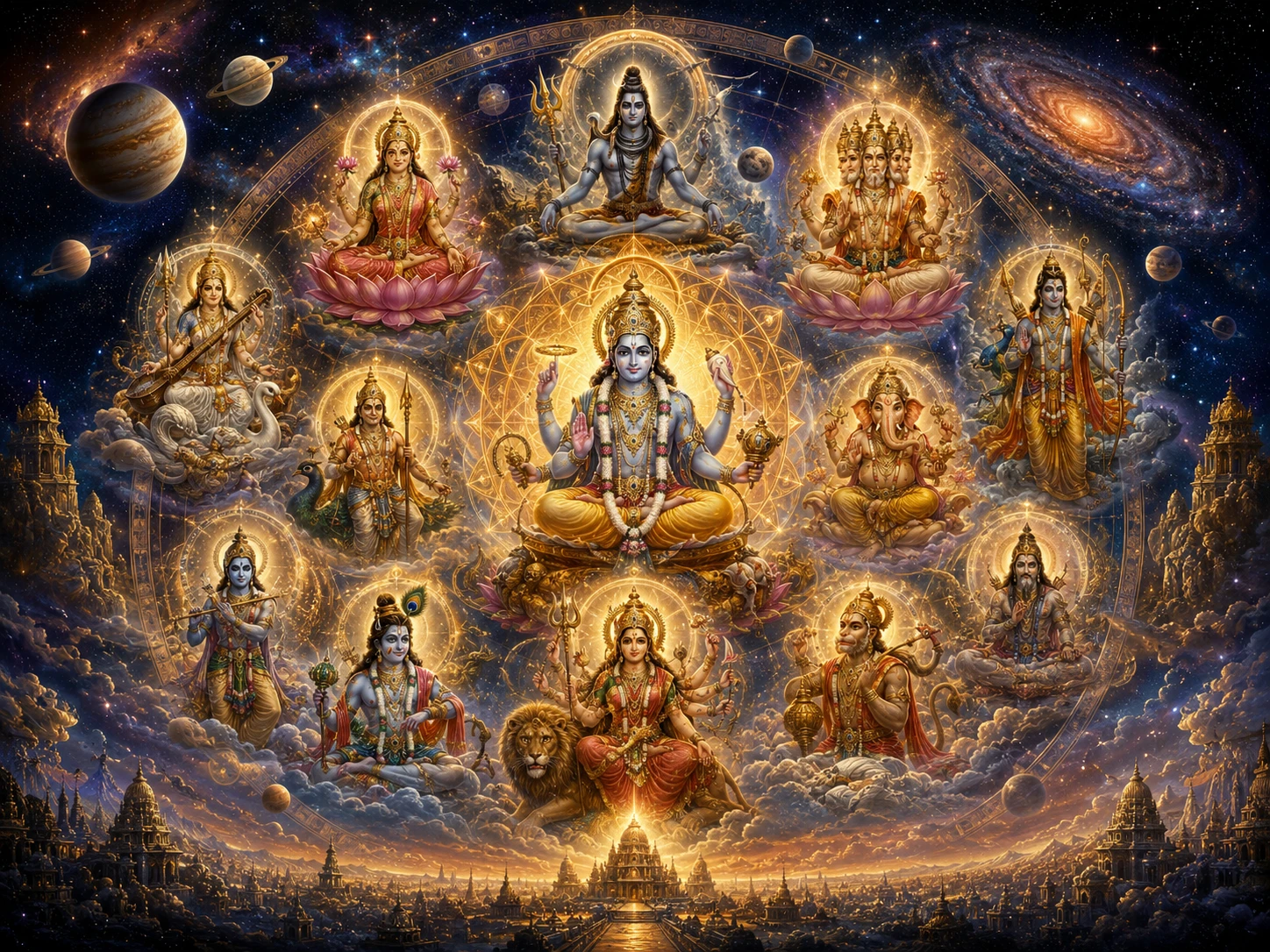
33 Koti Devata -- Why Hinduism Has 33 Types of Gods, Not 33 Crore
13 min read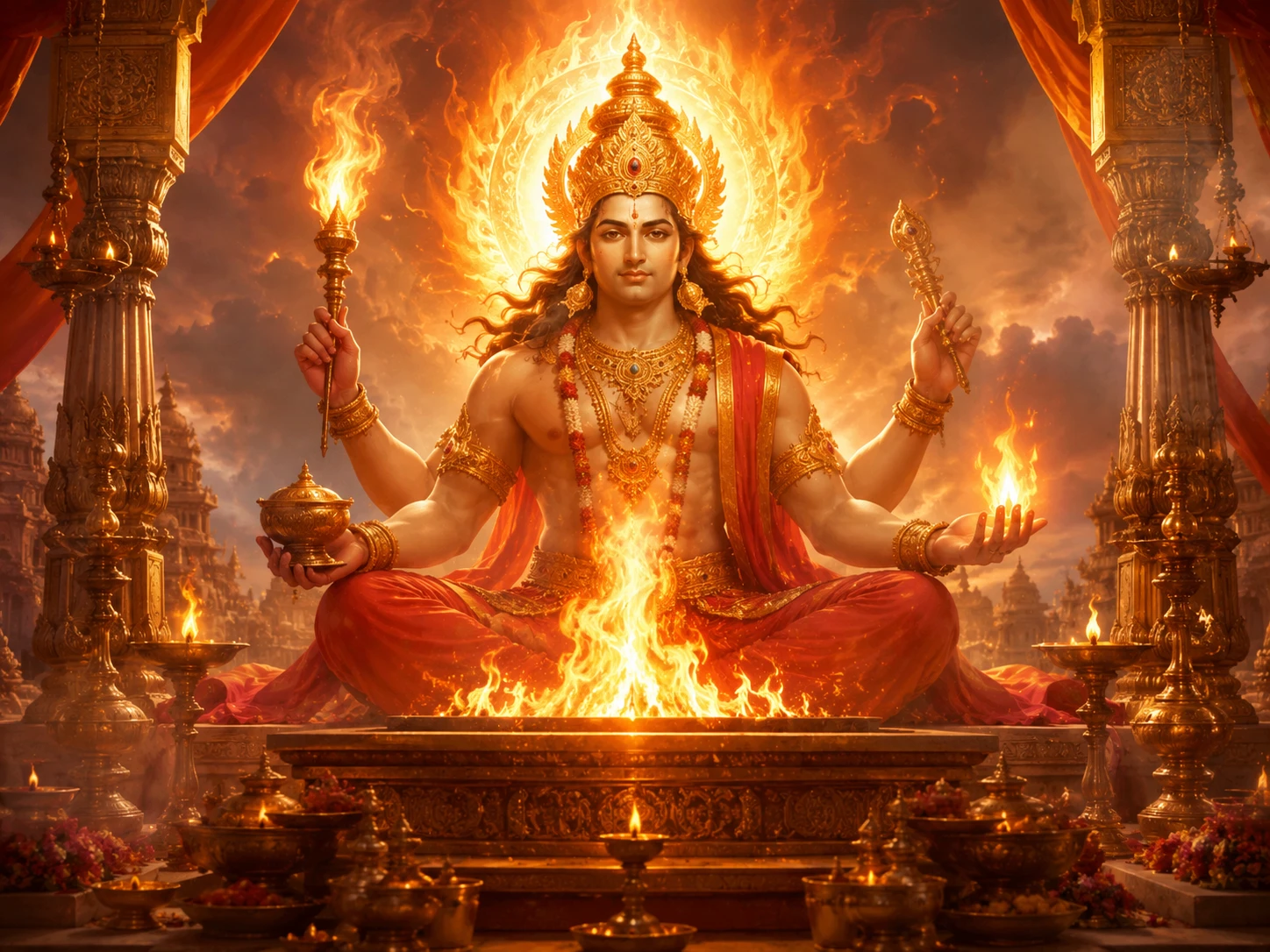
Agni -- The Fire God
19 min read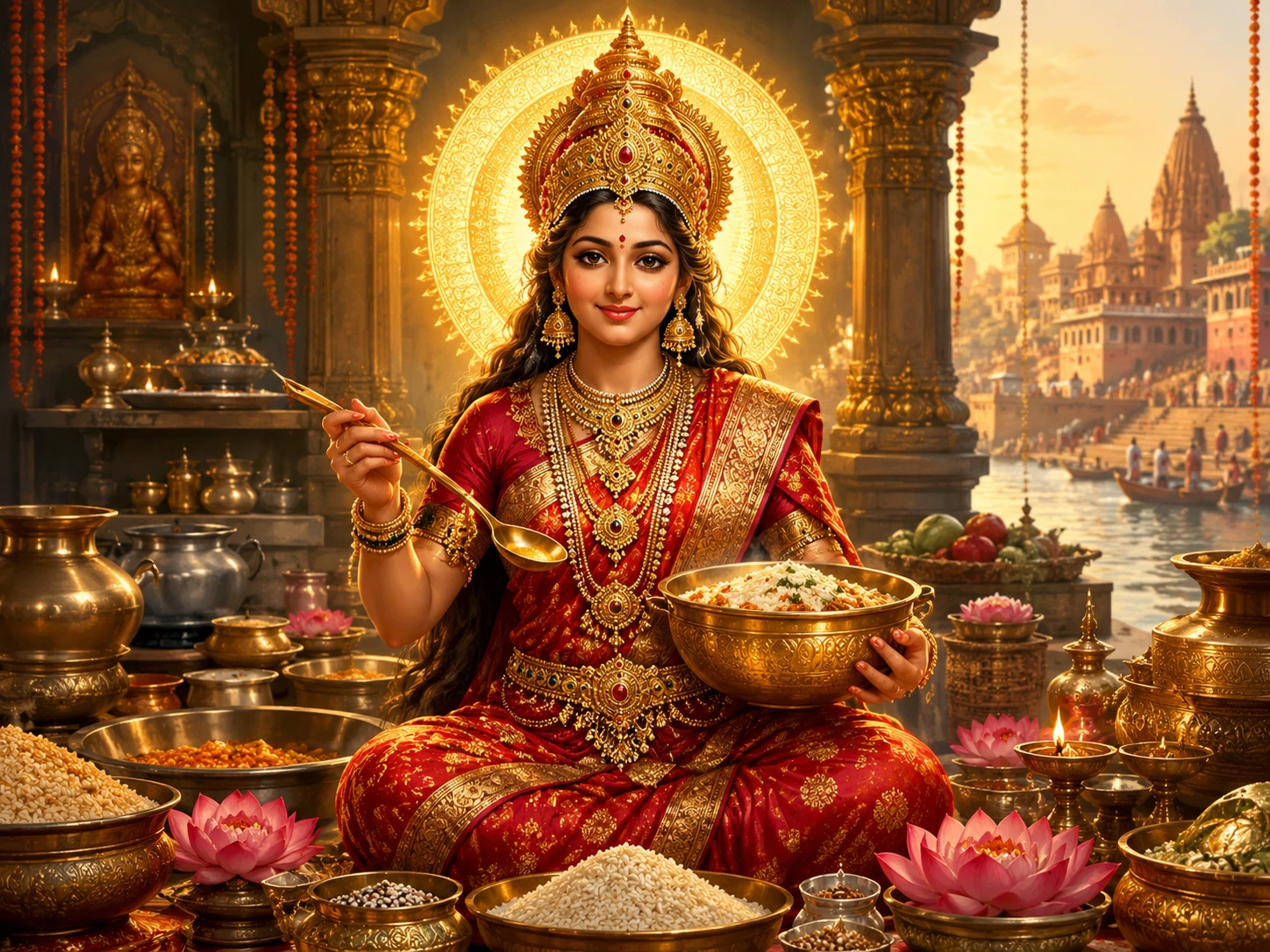
Annapurna -- Goddess of Food
19 min readThe same translation error that turned '33 Koti' into '33 crore' in Hinduism also happened in Buddhism. The Chinese translation of Buddhist texts rendered 'Sapta Koti Buddha' (7 Supreme Buddhas) as '7 Crore Buddhas.' The…
Deities AvatarsCommunity Reflections
🕉️
Be the first to share your reflection.