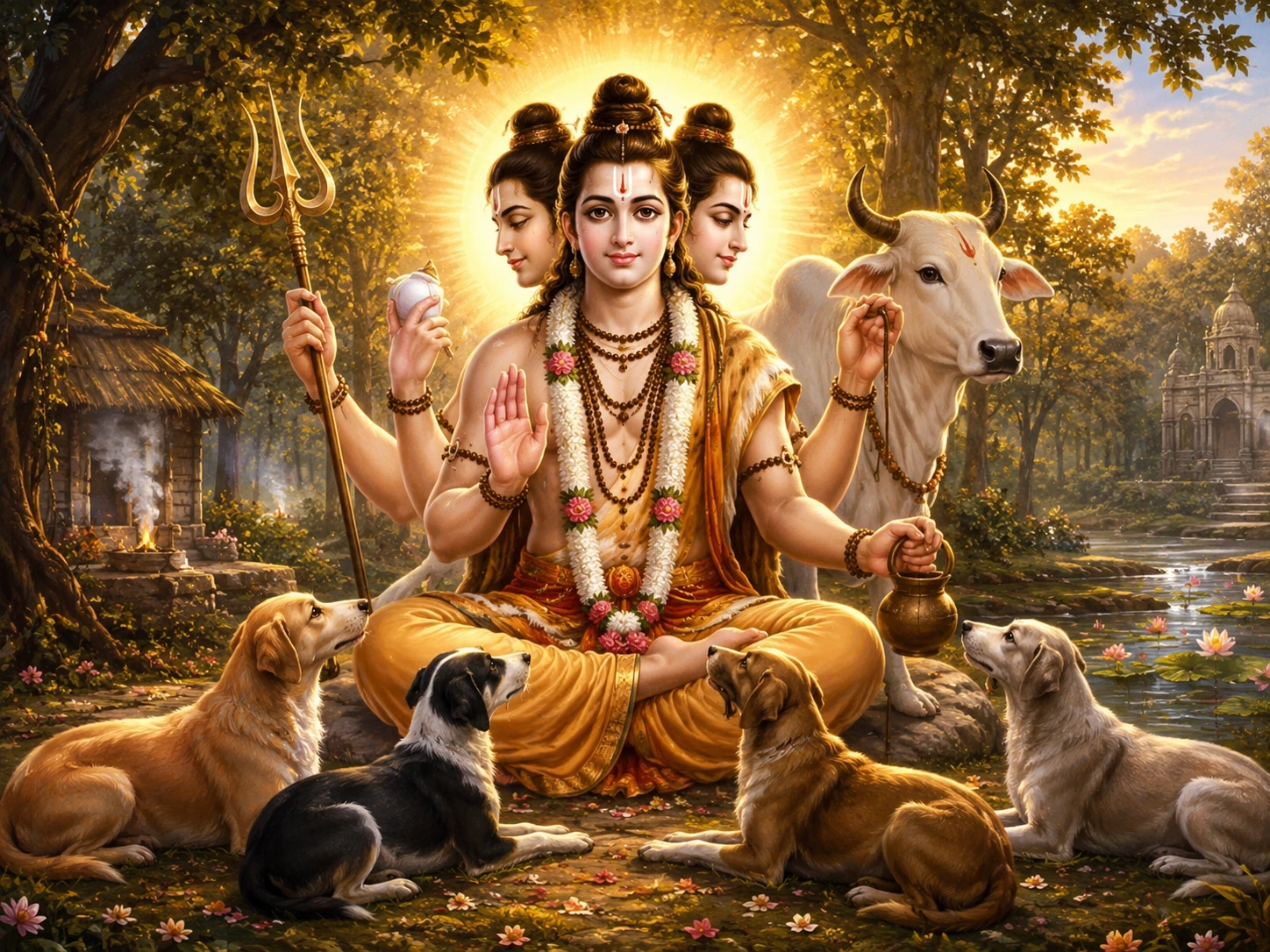
Dattatreya -- The Three-Headed Guru
दत्तात्रेय -- त्रिमूर्ति गुरु
At Ganagapur, a town on the confluence of the Bhima and Amarja rivers in Karnataka's Kalaburagi district, there is no grand gopuram and no queue of priests collecting donations. A small shrine holds a pair of padukas (wooden sandals), said to belong to Narasimha Saraswati, the sixteenth-century saint whom the Datta tradition remembers as Dattatreya's own incarnation. Every Thursday, thousands of devotees walk there from nearby Solapur, from distant Pune, from Hyderabad, from Bidar, carrying only a bag with a change of clothes and a small offering. They sleep on the stone floor. They bathe in the river. They eat whatever is served at the matha. And on Thursday morning they sit in front of those sandals and wait for something. What they are waiting for is the teaching of Dattatreya, the only deity in the Hindu pantheon who holds all three heads of the Trimurti on one body and carries nothing but a begging bowl. Datta has no weapon. Datta has no consort in the sanctum. Datta has four dogs, a cow, a staff, and a teaching that upends almost every assumption a visitor arrives with.
The birth story begins with a test of chastity. Anasuya, the wife of Rishi Atri, was celebrated in the three worlds for her pativrata dharma, the complete integrity of her marriage vow. The three gods Brahma, Vishnu, and Shiva, encouraged by Narada's report of her fame, decided to test her. They arrived at her ashram in the form of three brahmins and asked to be fed. Anasuya agreed, but the three insisted on one condition: she must serve them naked. It was a request that no married woman could refuse a guest and no married woman could fulfill. Anasuya calmly took water into her palm, sprinkled it over the three, and said that if her devotion to her husband was true, the three gods should become her infants. The three became babies on the floor of her kitchen. Anasuya nursed them. When their wives -- Saraswati, Lakshmi, and Parvati -- came looking for them, they had to request Anasuya to return the three to their original form. She did. The three gods offered her a boon. She asked that they be born as her son. Dattatreya, 'the one given by Atri to be a son,' was the result. The myth is repeated across Puranas with regional variation, but the core teaching is constant: the deity of deepest gurus is the son of the most faithful wife.
जटाधरं पाण्डुरङ्गं शूलहस्तं कृपानिधिम् । सर्वरोगहरं देवं दत्तात्रेयमहं भजे ॥१॥
jaṭādharaṃ pāṇḍuraṅgaṃ śūlahastaṃ kṛpānidhim | sarvarogaharaṃ devaṃ dattātreyamahaṃ bhaje ||1||
I worship Dattatreya, who wears matted locks, whose body is fair and shining, who holds the trident in his hand, who is a treasury of compassion, the god who takes away every disease of body and mind.
— Shri Dattatreya Stotram (Narada Purana), Verse 1, by Rishi Narada
The iconography of Dattatreya is read as theology by practitioners. The three heads represent Brahma, Vishnu, and Shiva -- the three aspects of the absolute as creator, preserver, and transformer. Six arms hold six objects: the japa mala and water pot of Brahma; the shankha and chakra of Vishnu; the damaru and trishula of Shiva. Four dogs stand at his feet, understood by one major strand of the tradition as the four Vedas -- Rig, Yajur, Sama, Atharva -- following the master in perfect obedience. The cow behind him is Kamadhenu, the wish-fulfilling earth, who carries within her all the beings the Vedas describe. The tree above him is usually the audumbara (Ficus racemosa), a fig species held sacred in the Datta lineage. The image is dense with readable symbolism. Unlike the aniconic Vitthala of Pandharpur, Datta is iconography-forward. Every element is explained, every object named, every posture argued for in the vast commentary literature of the Nath and Mahanubhava traditions. The deity is a teaching diagram with a body.
The most famous teaching of Dattatreya is recorded in the eleventh skandha of the Bhagavata Purana, in the dialogue known as the Uddhava Gita or Hamsa Gita. Uddhava, Krishna's friend and minister, asks for advice before the Lord's departure from the world. Krishna narrates what Dattatreya once told King Yadu: that he had twenty-four gurus, and every single one of them was a non-human teacher he encountered in ordinary life. The earth taught him patience. The wind taught him to move through the world without attachment. The sky taught him to remain the same despite the constant passage of forms within it. The fire taught him to burn pure regardless of what fuel was offered. The sea taught depth without display. A hunter with a pierced deer taught him focused attention. A bee collecting nectar from many flowers without stripping any flower taught him the ethics of consumption. A spider taught him that the web a being spins is its own extension. An insect larva trapped in a hornet's nest, watching the hornet every day, eventually became the hornet -- teaching Dattatreya that contemplation transforms the contemplator. The list goes on. The radical point of the Uddhava Gita is stated without philosophical hedging: the universe itself is the guru of anyone who can pay attention.
Eight of the Twenty-Four Gurus of Dattatreya
| Guru | Teaching |
|---|---|
| Earth / पृथ्वी | Bear whatever is placed upon you; stay still; keep giving. / जो कुछ तुम पर रखा जाए, सहन करो; स्थिर रहो; देते रहो। |
| Wind / वायु | Pass through every place without taking its smell with you. / हर जगह से बहो, पर उसकी गंध साथ मत ले जाओ। |
| Sky / आकाश | Clouds come and clouds go; you remain unmarked. / बादल आते-जाते रहते हैं; तुम पर निशान नहीं पड़ता। |
| Fire / अग्नि | Burn pure regardless of the fuel offered. / चाहे जो ईंधन मिले, शुद्ध होकर जलो। |
| Sea / समुद्र | Be deep without displaying your depth. / गहरे रहो, पर अपनी गहराई दिखाओ मत। |
| Bee / भ्रमर | Take essence from many sources without harming any. / कई स्रोतों से सार लो, पर किसी को नुक़सान मत पहुँचाओ। |
| Python / अजगर | Accept what comes without chasing. / जो मिले स्वीकार करो; दौड़कर पाने की कोशिश मत करो। |
| Child / शिशु | The mind free of yesterday is the mind at ease. / जिस मन पर कल का बोझ नहीं, वही सहज मन है। |
The full list of twenty-four is given in Bhagavata Purana 11.7-11.9. The remaining sixteen include the moon, sun, moth, elephant, deer, fish, honey collector, pigeon, hawk, ocean-dwelling fish, prostitute Pingala, arrow-maker, serpent, spider, and caterpillar-and-hornet.
The Nath sampradaya, founded by Matsyendranath and made famous by Gorakhnath in the tenth and eleventh centuries, considers Dattatreya the primordial guru of its lineage. Nath yogis trace their hatha yoga tradition, their pierced ears with the distinctive kundal rings, and their renunciant practice back to a line that begins with Adinath (Shiva) and passes through Dattatreya before reaching Matsyendra and Goraksha. The Nath texts, including the Avadhuta Upanishad and sections of the Hatha Yoga Pradipika, read Dattatreya not as a mythological figure but as a continuing presence who appears to serious aspirants in forests, at riversides, on mountain passes. A Nath sadhu camping on the banks of the Godavari near Tryambakeshwar during a Kumbh Mela will tell you, if you ask patiently, that Datta Maharaj walks among the pilgrims every day and that most people fail to see him because they are looking for someone in saffron robes and a beard. The one with the begging bowl at the edge of the crowd, who smiles and moves on, is often the deity himself.
The Guru Charitra, composed in Marathi by Saraswati Gangadhar in the fifteenth century, is to Maharashtra's Datta devotees what the Ramcharitmanas is to the Ram bhakts of the north. It has 52 chapters, and the Datta tradition prescribes the parayana -- a focused seven-day recitation of all 52 chapters -- as a complete spiritual discipline in itself. A devotee observes strict rules during the week: eat only one meal a day, sleep on the floor, speak only what is necessary, and read through the entire text at a steady pace. The Guru Charitra tells the life stories of Sripada Srivallabha and Narasimha Saraswati, the fourteenth and sixteenth-century saints whom the tradition identifies as Dattatreya himself. Even today, in towns across Maharashtra, Karnataka, and Goa, a family with a sick child or a financial crisis will schedule a Guru Charitra parayana, often engaging a local priest to read while the family listens. The text has been in continuous oral and ritual use for nearly six hundred years.
The Avadhuta Gita, attributed to Dattatreya himself, is the other foundational text of the tradition. It is short -- about 280 verses across eight chapters -- and its argument is uncompromising. An avadhuta is literally one who has shaken off (ava-dhu) all identification with body, mind, caste, family, ashrama, and scripture. The text proceeds by a single method: every verse insists that the self is already the supreme Brahman and that spiritual practice is therefore the reverse of what most practitioners imagine. There is nothing to become. There is only the recognition of what is already the case. Sample lines run: 'I am not the body, I am not the senses, I am not the mind; I am the supreme reality beyond time.' The text is read today in the Advaita Vedanta tradition alongside Shankara's Nirvana Shatkam, in the Nath tradition alongside Gorakhnath's Siddha Siddhanta Paddhati, and in the Datta sampradaya as the direct speech of the deity. Dattatreya in the Avadhuta Gita is not a god being worshipped. He is the voice of the aspirant already at the end of the spiritual discipline, turning around to speak to the one still on the path.
Datta Jayanti falls on the full moon of Margashirsha, usually in December. Across Maharashtra, Karnataka, Andhra Pradesh, Telangana, and Gujarat, devotees fast, light lamps, recite the Datta Stotram, and perform the shodashopachara puja. The shrines at Audumbar, Narsobachi Wadi, Ganagapur, Mahur, and Pithapuram see thousands of pilgrims. Audumbar in Maharashtra's Sangli district takes its name from the audumbara tree under which Narasimha Saraswati is said to have performed tapas; devotees sit under the same species of tree for Dhyana. Narsobachi Wadi, at the confluence of the Krishna and Panchganga, is the spot where Narasimha Saraswati is said to have established his padukas before his final disappearance into the Sahyadri forest. Mahur in Nanded district is considered the place where Anasuya gave birth to Datta. Pithapuram in Andhra Pradesh is the birthplace of Sripada Srivallabha, the fourteenth-century saint who is the first documented incarnation of Datta in the current cycle. These five places form the pancha-kshetra, the five-site pilgrimage circuit that a committed Datta devotee is expected to complete at least once.
The Datta lineage of saints is unusual in Hindu tradition for its density of documented incarnations. Sripada Srivallabha (c. 1320-1350) in Pithapuram is the first. Narasimha Saraswati (c. 1378-1458) in Karanja and later Ganagapur is the second. After a long gap, Manik Prabhu (1817-1865) of Humnabad in Karnataka, Akkalkot Swami Samarth (d. 1878), Sai Baba of Shirdi (d. 1918), Vasudevananda Saraswati Tembye Swami (1854-1914), and Shri Gajanan Maharaj of Shegaon (d. 1910) are all considered within the Datta tradition as either incarnations of Datta or direct vessels of his teaching. Saibaba of Shirdi, the most widely known internationally, is treated by many Datta devotees as a Datta incarnation, though the Shirdi tradition itself avoids the label. This density is not an accident. The Datta sampradaya holds that the deity continues to incarnate approximately once a century to renew the guru-lineage. A devotee in Bengaluru who visits the Shirdi temple every October is often in the same chain of practice as a Goa-based Nath sadhu who never leaves his ashram.
What does Dattatreya offer a person in 2026 who has never visited Ganagapur and has no immediate plan to? The tradition's answer is simple: the principle of the twenty-four gurus can be applied immediately. A junior analyst at a Gurgaon consulting firm who is frustrated by a difficult manager is being offered, if he can see it, a specific teaching: attention to the texture of hierarchical relationships. A medical intern doing a long shift in a Mumbai hospital is being taught by the patients she treats -- the bee at work among many flowers. A parent helping a child with JEE preparation is being taught patience by the slowness of conceptual consolidation. The Datta principle is that life is already arranging instruction. The spiritual task is not to escape ordinary life for a retreat, but to begin reading the teachers who are already present. A weekly practice of identifying the guru-of-the-week -- asking every Sunday, who taught me this week, and what was the lesson -- is the application of Dattatreya to modern urban Indian life. No initiation, no temple, no ashram trip required. Only attention.
Datta's relationship with the avadhuta figure of the wandering mendicant remains important for how the tradition understands authority. Datta is said to be seen, even today, in the form of a wandering beggar in the small towns of Maharashtra and Karnataka. A grihastha householder is enjoined never to refuse bhiksha (food offered at the door) to a wandering mendicant on a Thursday, because the beggar at the door could be Datta himself in disguise. This practice has clear social consequences. Across the Datta heartland, an informal but powerful network of support exists for the destitute and the wandering. The ethical hygiene of the tradition is thus not a matter of temple donation but of street-level recognition. The beggar is not a problem to be solved by government schemes. The beggar is a possibility that the deity is present. A Kolhapur grocer who serves every Thursday's bhiksha to anyone who asks is not doing charity in the Western sense. He is maintaining a two-way possibility -- that he is feeding a human being in need, and that he may simultaneously be hosting God.
Swami Samarth of Akkalkot, who lived in the small Solapur-district town of Akkalkot from about 1856 until his samadhi in 1878, is for many Datta devotees the most immediate access to the deity's continuing presence. His origins are deliberately unclear; he is said to have appeared suddenly near Kardaligavan in Karnataka and arrived in Akkalkot without history. He received everyone, regardless of caste, religion, or condition, and he spoke in cryptic epigrams that his attendants recorded. A common teaching attributed to him is 'Bhiu nakos, mi tujhya pathishi ahe' in Marathi -- 'Do not be afraid, I am standing behind you.' This line is written on the back wall of thousands of Maharashtrian homes and is often the last sentence read aloud at Datta satsangs. Akkalkot today is a town organized around the saint's samadhi. Devotees arrive by train from Pune, Solapur, and Hyderabad, stay for a day or two, and leave. The local language of the tradition is simple and anti-theatrical. Samarth did not perform miracles on demand, did not initiate anyone in formal ceremonies, and did not appoint a successor. The Datta Sampradaya's resistance to formal institutional structure is probably modeled on this.
The audumbara tree (Ficus racemosa), known in Marathi as umbar and in Hindi as gular, holds a central place in Datta worship. The tree is planted or found at every Datta shrine. Narasimha Saraswati is said to have sat for twelve years under an audumbara at the site now called Audumbar in Sangli district, and Sripada Srivallabha is believed to reside eternally under an audumbara at Pithapuram. Botanically the tree is unusual -- it flowers internally inside its figs and is pollinated only by a specific wasp species that lives inside the fruit. The Datta tradition reads this as a teaching: the real work happens inside, unseen by anyone, and the pollinator is a creature most human beings would overlook. The audumbara is not a decorative plant in Datta worship. It is read as Datta himself in vegetal form. Thursday pradakshina around the audumbara -- seven circumambulations, after which the devotee sits under the tree for at least fifteen minutes -- is a widespread practice that requires no temple, no priest, and no money. In urban Pune, devotees who cannot reach Narsobachi Wadi plant an audumbara sapling in their own courtyard. In apartment-dominated cities like Mumbai and Bengaluru, smaller Ficus species kept in pots serve as substitutes.
Datta Bavani, a 52-verse hymn in Gujarati by Rang Avadhut (1898-1968), is the most widely recited Datta text in Gujarat and western Maharashtra. Each verse ends with the refrain 'Jay Yogeshwar Datt Dayal' -- 'glory to the yoga-master Datta, who is full of compassion.' The text follows the older Guru Charitra in structure but is shorter, more accessible, and tuned for recitation by the common household rather than the scholar. A Gujarati pharmaceutical executive in Ahmedabad who recites Datta Bavani every morning before leaving for work is in the same practice-stream as a Marathi teacher in Pune who reads a chapter of Guru Charitra each Thursday. What Datta has done across these language communities is collapse the gap between the scholarly text and the home devotional. The sampradaya does not require literacy in Sanskrit. It does not require access to a pandit. It does not require a family priest. It requires a single weekly commitment and a repertoire of short texts that a child can learn before the age of ten. This accessibility is a deliberate inheritance from the Nath and avadhuta roots of the tradition, which always distrusted temple institutions. Datta remains, to this day, the Hindu deity who is most easily taken home.
The simplest way to begin a Datta practice at home on Thursday is to light a small oil lamp before sunset, place a picture of Dattatreya on a clean piece of cloth, and recite the Datta Stotram. The opening verse given earlier in this article is enough. Sit in silence for three minutes afterward. Then prepare a small plate of simple food -- a chapati, a little dal, some rice, a piece of jaggery -- and place it at the doorway as symbolic bhiksha. If a wandering mendicant arrives that day, the plate is already ready. If no one comes, the food is eaten by the family. On the third Thursday of the month, read one chapter of the Guru Charitra aloud, either alone or with the family. This rhythm, maintained for one year, is the Datta sadhana at its most basic. The tradition does not require more. What it does require is regularity. Dattatreya does not respond to grand gestures. He responds to the small practice kept for many years.
Recite the Datta Stotram on Thursday
Read the fourteen verses of the Datta Stotram aloud on Thursday evening before sunset, with an oil lamp lit and a small plate of food offered. Eternal Raga has the Dattatreya Ashtakam with its meaning, which can be recited the same way.
Tags
Eternal Raga · शाश्वत राग
Institutional voice — scholarly articles on Sanatan Dharma
Deepen Your Understanding
अपनी समझ और गहरी करें
deities avatars
Who is Shiva?
He is the ash-smeared ascetic who is also the ideal husband. The destroyer of the universe who is called 'The Auspicious One.' The god of death who drank poison to save all life. He sits in meditation on a Himalayan peak, and simultaneously dances the cosmos into existence and annihilation. No deity in Hinduism contains more contradictions -- and no deity resolves them more completely. This is not a mythology explainer. This is an attempt to stand at the foot of the mountain and look up.
deities avatars
Dashavatara -- Why Vishnu Comes Back Ten Times
Fish, tortoise, boar, half-lion, dwarf, axe-warrior, prince, cowherd, enlightened teacher, future horseman. The ten avatars of Vishnu are not random folklore. Read them in sequence and you get something startling -- a narrative that mirrors evolutionary biology, tracks the rise and fall of political systems, and argues that God does not sit above history but enters it, gets dirty, and does the work. The Dashavatara is Hinduism's answer to the question every civilisation asks: why does the world keep breaking, and who fixes it?
rituals traditions
Vrata -- What a Hindu Vow Really Means (It Is Not Just Fasting)
Your mother kept Karva Chauth without water for sixteen hours. Your grandmother observed Ekadashi every fortnight without fail. Your colleague skips lunch on Tuesdays 'for Hanuman.' The world sees Hindu fasting as dietary restriction. The tradition sees it as something far more radical: Vrata is a voluntary, time-bound act of self-imposed discipline that rewires the relationship between desire and willpower. Fasting is the most visible expression. But the real Vrata happens inside.
rituals traditions
Tirtha Yatra -- Why Hindus Travel to Get Closer to God
The word 'Tirtha' does not mean 'holy place.' It means 'crossing point' -- a ford where the river of worldly existence can be crossed to reach the far shore of liberation. Hindu pilgrimage is not tourism with a spiritual label. It is the deliberate journey to locations where the boundary between the material and the divine is believed to be thinnest -- where the crossing is easiest. From Kashi to Kailash, from Char Dham to Kumbh Mela, the tradition maps a sacred geography onto the physical landscape of the subcontinent, turning the act of travel itself into a spiritual practice.
rituals traditions
Guru Purnima -- The Full Moon of the Teacher
On the full moon of Ashadha, Hindus honour the guru -- and through every teacher, the sage Vyasa, who arranged the Vedas and composed the Mahabharata. Why the day is also called Vyasa Purnima, what the word guru means, and how the day is kept.
tantra mantra yantra
Mahamrityunjaya Mantra -- Conquering Death
A 16-year-old boy clings to a Shiva Linga as the god of death throws a noose around his neck. Shiva emerges from the Linga, kicks Yama in the chest, and declares the boy immortal. That boy is Markandeya. That mantra is the Mahamrityunjaya. It appears in the Rig Veda, the Yajur Veda, and the Atharva Veda -- the only healing mantra attested in three of the four Vedas. It is chanted in ICU corridors, before surgeries, at bedsides, and in cremation grounds. This is not a mantra about avoiding death. It is a mantra about not being afraid of it.
deities avatars
Nine Forms of Shiva -- The Many Faces of Mahadeva
He is the silent teacher under a banyan tree and the screaming destroyer on a battlefield. He is half-woman and half-man. He drank the poison that would have ended the universe and his throat turned blue. Nine scripturally-attested forms of Shiva -- from Nataraja to Rudra -- and why each one exists.
The Guru Charitra, composed in Marathi by Saraswati Gangadhar in the fifteenth century, is to Maharashtra's Datta devotees what the Ramcharitmanas is to the Ram bhakts of the north. It has 52 chapters, and the Datta trad…
More in Deities & Avatars
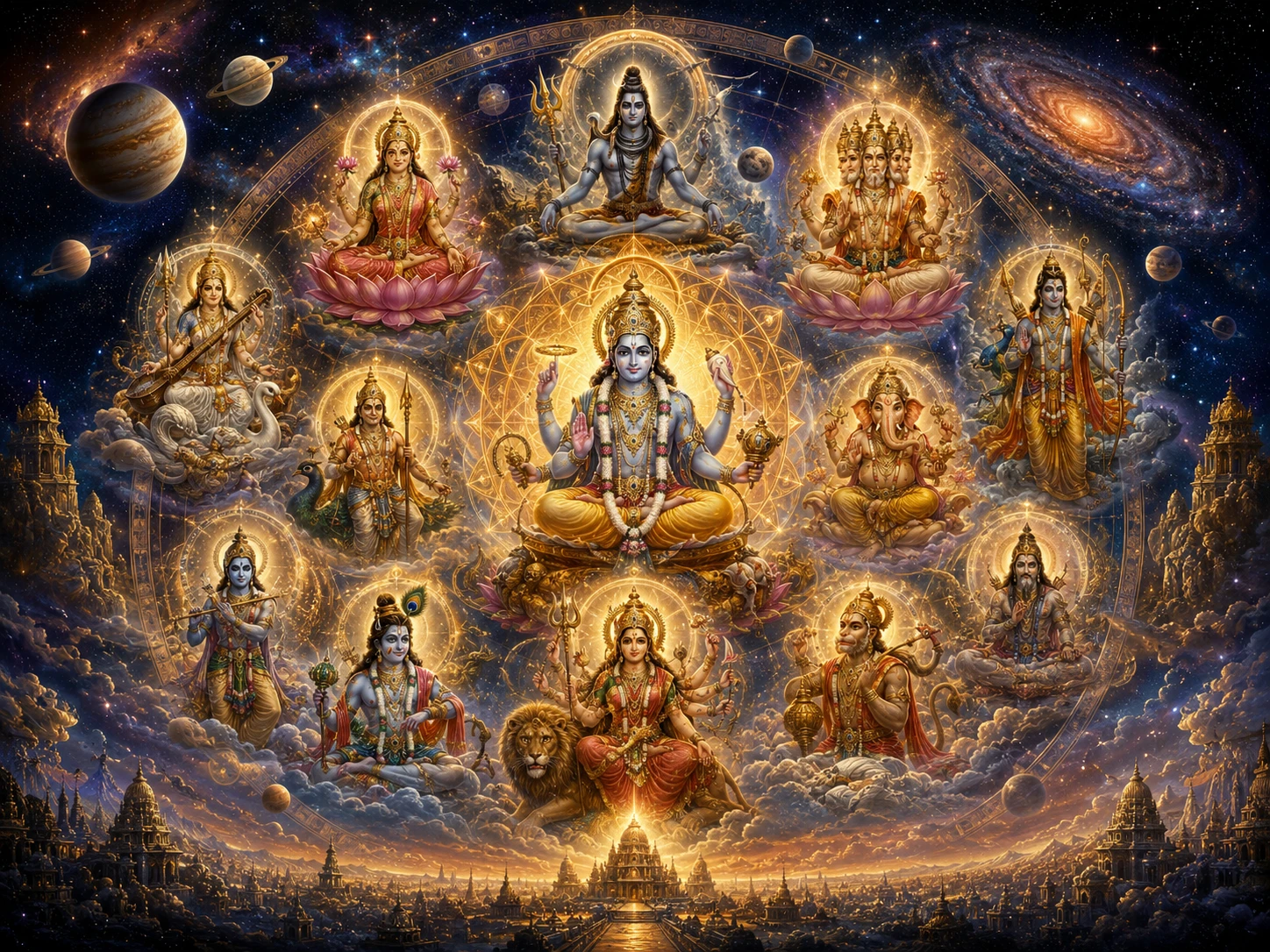
33 Koti Devata -- Why Hinduism Has 33 Types of Gods, Not 33 Crore
13 min read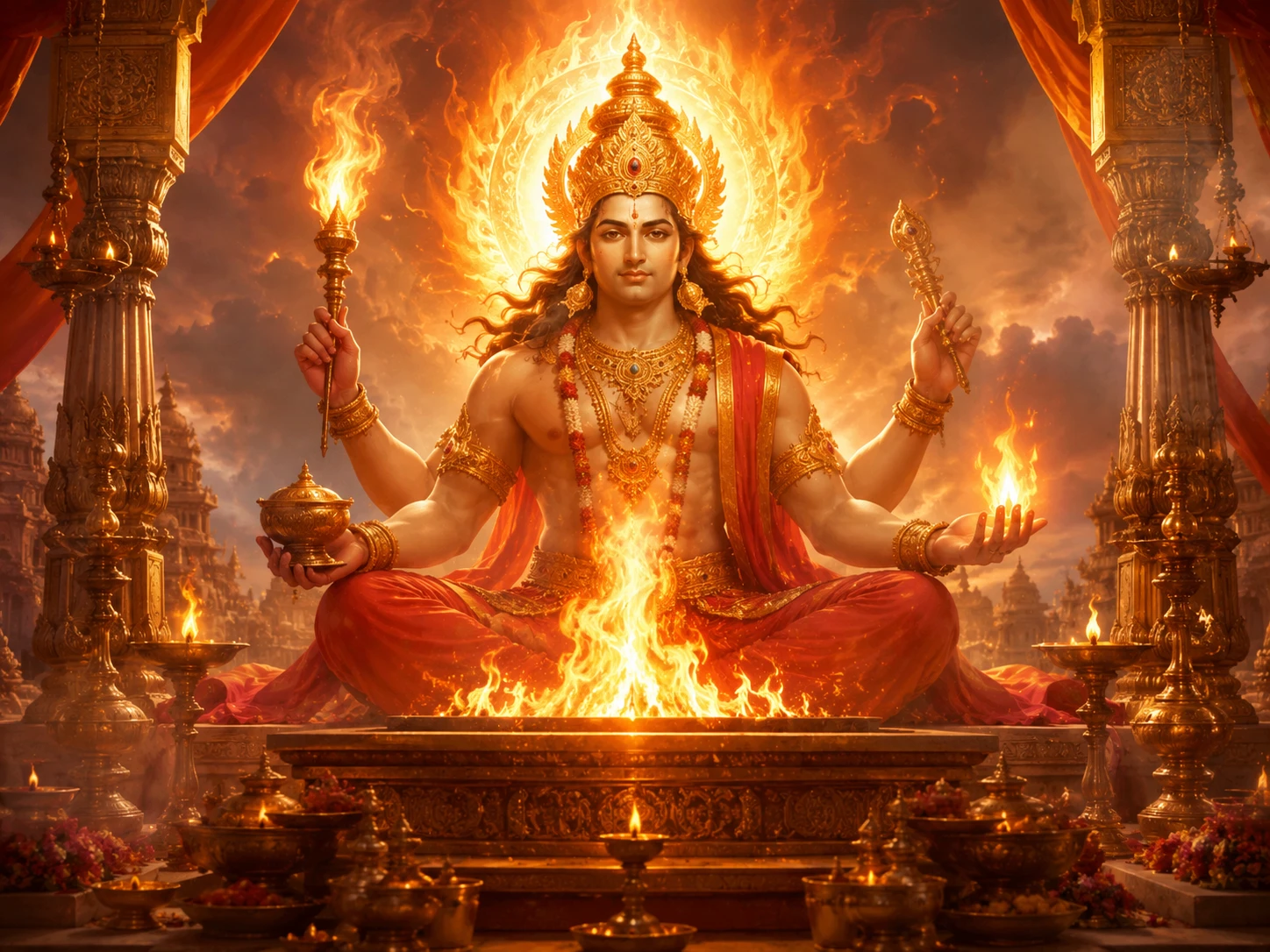
Agni -- The Fire God
19 min read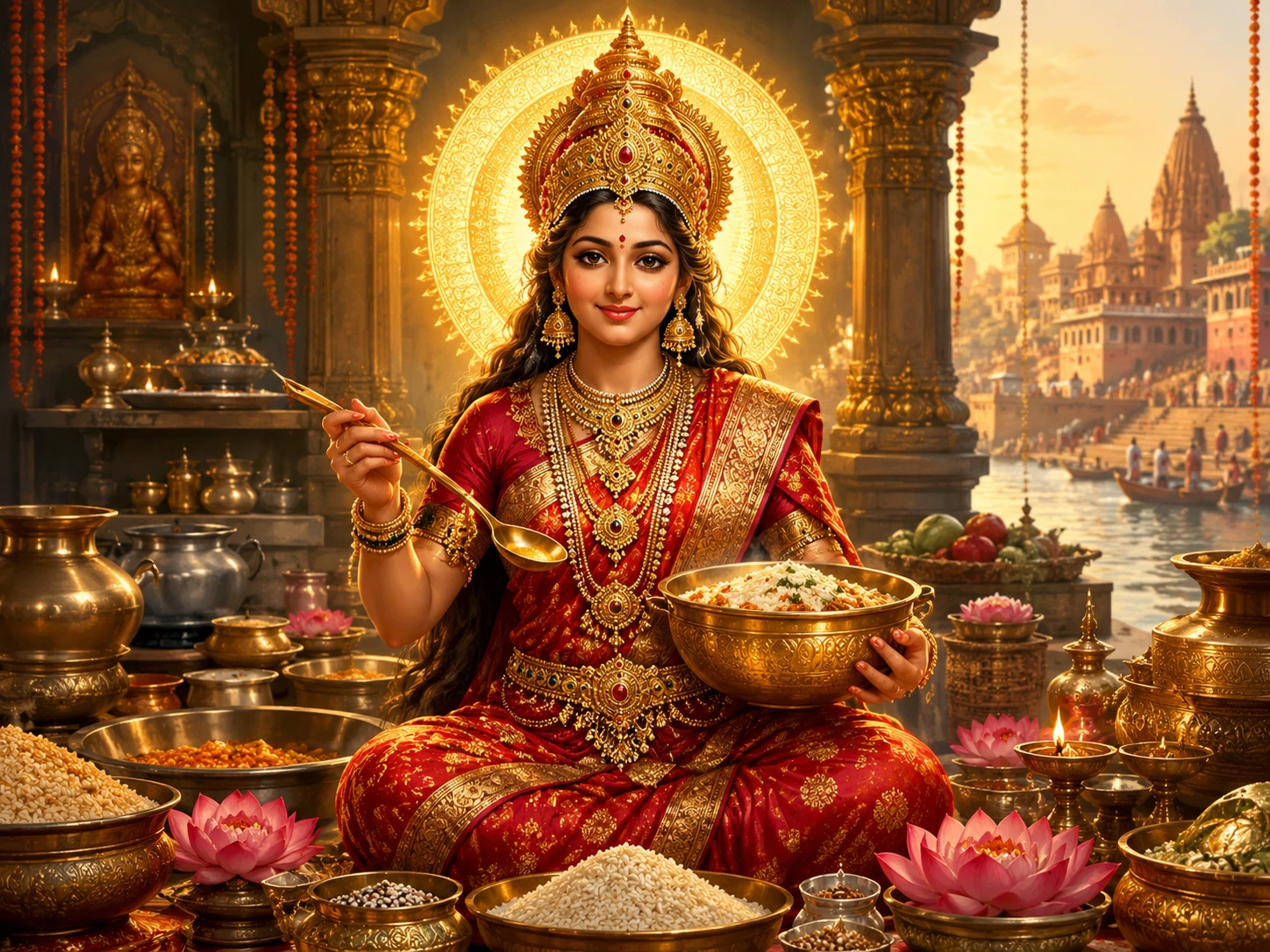
Annapurna -- Goddess of Food
19 min readThe same translation error that turned '33 Koti' into '33 crore' in Hinduism also happened in Buddhism. The Chinese translation of Buddhist texts rendered 'Sapta Koti Buddha' (7 Supreme Buddhas) as '7 Crore Buddhas.' The…
Deities AvatarsCommunity Reflections
🕉️
Be the first to share your reflection.