
Manyu -- The Rig Veda's God of Righteous Wrath
मन्यु -- ऋग्वेद के धर्मयुक्त क्रोध के देवता
Near the close of the Rig Veda's tenth mandala, two short hymns, 10.83 and 10.84, are addressed to a force the text calls Manyu. Every translator reaches for the same imperfect word: wrath, anger, fury, passion. None of these quite lands, because the hymns are not describing an emotion that overtakes a person against their will. They are addressing something the poet wants to invite in on purpose, before a fight he expects to be difficult. Manyu is invoked as vajrasayaka, wielder of a thunderbolt-like weapon, as svayambhu, self-born, as abhibhutyojah, overpowering in strength. He is asked to enter the petitioner's own body, to join with tapas, ascetic discipline, and to defeat amitra, hostility, vritra, obstruction, and dasyu, disorder. The distinction the hymn is drawing, consistently across both parts, is between force that has been given shape and direction and force that has not. Manyu is what a warrior needs at the exact moment before a battle he did not choose to avoid: not blind rage, but rage that has already been handed a target and a discipline.
The most theologically striking line in the entire Manyu Sukta occurs early in Rig Veda 10.83: manyur indro manyur evasa devo, manyur hota varuno jatavedah, Manyu is Indra, Manyu is the deity, Manyu is the invoking priest, Varuna, and Jataveda, the epithet the Rig Veda uses for Agni as the knower of all births. In four lines, the hymn declares Manyu identical to the god of battle and storm, to the god of cosmic order and oath, and to the god of sacrificial fire, three of the most important deities in the entire Rig Veda. The nineteenth and early twentieth-century Vedic scholar A. A. Macdonell, in his study of Vedic mythology, read the two Manyu hymns as originating in a specific way: as a personification of Indra's own fierce anger in battle, later elevated into a force capable of standing in for the anger latent within several deities at once, rather than a wholly independent god with an origin story of his own. Later Vedic interpreters such as Yaska, in the Nirukta, traced the word manyu to a root, man, capable of meaning to think, to be angry, or to strike, and read the hymn's Manyu specifically in the sense of anger, the force Yaska says is what actually drives warriors to fight for their people and to win the wealth that follows victory. Whether Manyu began as an independent deity or as an intensified aspect of Indra is a question the hymns themselves do not settle; what they do settle, in that single striking verse, is that by the time these hymns were composed, Manyu had become large enough in Vedic religious imagination to be named as the shared core beneath several major gods rather than a minor figure trailing behind them.
यस्ते मन्योऽविदद्वज्रसायक सह ओजः पुष्यति विश्वमानुषक् । साह्याम दासमार्यं त्वया युजा सहस्कृतेन सहसा सहस्वता ॥
yaste manyo'vidadvajrasāyaka saha ojaḥ puṣyati viśvamānuṣak | sāhyāma dāsamāryaṃ tvayā yujā sahaskṛtena sahasā sahasvatā ||
O Manyu, wielder of a thunderbolt-like weapon, may your strength nourish human courage everywhere. United with you, mighty and empowered by force, may we overcome every hostile power.
— Rig Veda 10.83.1, opening verse of the Manyu Sukta
One detail keeps the Manyu Sukta from reading as a simple celebration of aggression: the repeated pairing of manyu with tapas. Manyu is asked to act tapasa yuja, joined with tapas, ascetic discipline and self-restraint, not as raw appetite for violence but as a force bound to a practice of control. The hymn is not asking for a warrior who loses himself in rage; it is asking for a warrior whose fury has been trained, the way a blacksmith trains fire into a blade rather than letting it burn formlessly. This sits in an interesting position relative to a much later and far more widely read Hindu text, the Bhagavad Gita, where Krishna warns Arjuna that krodha, anger, is one of the gateways to ruin: from anger comes delusion, from delusion the loss of memory, from the loss of memory the destruction of reason, and from the destruction of reason a person is lost. The two texts are not in disagreement so much as addressing different moments and different genres. The Manyu Sukta is a ritual invocation composed for a warrior standing at the edge of an unavoidable fight, asking that his fury be given form and discipline before the battle begins. The Gita is a philosophical dialogue addressed to a person already destabilized by grief and doubt on the battlefield itself, warning against anger that has slipped its discipline and turned against clear judgment. Read together rather than against each other, the two texts describe the same danger from opposite sides: Manyu, controlled and directed, that the Rig Veda is willing to invoke as divine; krodha, uncontrolled and self-directed, that the Gita warns will destroy the person it possesses.
The Two Manyu Hymns: Rig Veda 10.83 and 10.84
| Hymn / सूक्त | Register / स्वर | Central Movement / केंद्रीय भाव |
|---|---|---|
| Rig Veda 10.83 (First Manyu Sukta) / ऋग्वेद १०.८३ (प्रथम मन्यु सूक्त) | Cosmic and declarative / ब्रह्मांडीय और घोषणात्मक | Addresses Manyu as an overpowering cosmic force, identifies him with Indra, Varuna, and Agni, and asks him to defeat hostile forces on the community's behalf. / मन्यु को एक अभिभूत करने वाली ब्रह्मांडीय शक्ति के रूप में संबोधित करता है, उन्हें इंद्र, वरुण, और अग्नि से पहचानता है, और समुदाय की ओर से विरोधी शक्तियों को हराने का निवेदन करता है। |
| Rig Veda 10.84 (Second Manyu Sukta) / ऋग्वेद १०.८४ (द्वितीय मन्यु सूक्त) | Personal and confessional / व्यक्तिगत और आत्म-स्वीकारात्मक | The speaker admits his own weakness and separation from good fortune, and asks Manyu to enter his own body specifically, rather than simply act on the world outside him. / वक्ता स्वयं की दुर्बलता और सौभाग्य से दूरी को स्वीकार करता है, और मन्यु से विशेष रूप से अपने ही शरीर में प्रवेश करने का निवेदन करता है, न कि केवल बाहरी संसार पर कार्य करने का। |
Read together, the two hymns move from Manyu as a shared cosmic force behind Indra, Varuna, and Agni to Manyu as something an individual petitioner needs inside his own body before he can act at all. The suktam recited today typically draws verses from both.
The verse identifying Manyu with Indra, Varuna, and the fire-deity Jataveda in a single breath is an early example of what scholars of comparative religion, following Max Muller, sometimes call henotheism: the practice, visible at several points across the Rig Veda, of addressing whichever deity is currently being invoked as though that deity contains or equals several other major gods at once, without denying the others' independent reality elsewhere in the text. The Manyu Sukta is one of the clearer cases of this pattern applied to an abstract force rather than to one of the Rig Veda's more prominent named deities like Indra or Agni themselves.
How much of the Manyu Sukta's contemporary use is old and how much is recent popular revival is not something this article can fully separate. What can be said with confidence is that Vedic ritual manuals continue to list the hymn among the recitations appropriate to certain homas, and that a number of present-day devotional and stotra websites describe the sukta as suitable recitation before an exam, a legal dispute, a difficult confrontation, or any contest where the reciter feels at a disadvantage, framing the hymn as a request for the courage to face odds rather than a request for victory as such. This popular framing is plausible and consistent with what the hymn's own verses ask for, but it should be read as a live, contemporary application rather than as a documented unbroken practice stretching back to the Vedic period in the way, for instance, the daily recitation of the Gayatri Mantra or the water verses of Rig Veda 10.9 can be shown to be. What is certain is the text itself: two thousand-plus-year-old verses that ask not for anger, but for a force strong enough to survive being angry without losing its aim.
Recite the Manyu Suktam Before a Difficult Contest
The Manyu Suktam is on Eternal Raga with its meaning. Recite it before an exam, a difficult negotiation, or any confrontation where courage and disciplined resolve matter more than force. The hymn asks for strength joined with tapas -- restraint -- not for anger let loose.
Tags
Eternal Raga · शाश्वत राग
Institutional voice — scholarly articles on Sanatan Dharma
Deepen Your Understanding
अपनी समझ और गहरी करें
deities avatars
Indra -- King of the Devas
Once, Indra was the king of the Hindu pantheon. About 250 hymns of the Rig Veda -- more than for any other deity -- praise him. He slays the dragon Vritra, rides the white elephant Airavata, rules the heaven of Svarga. Then something happens in the Puranic period, and Indra recedes. This is the story of the Hindu god who used to be first.
deities avatars
Hanuman -- The Perfect Devotee
He could lift mountains, leap oceans, and burn Lanka to the ground -- yet his greatest power was this: he never forgot whose work he was doing. Hanuman is not just a mythological hero. He is the operating system of selfless devotion that India still runs on.
deities avatars
Narasimha -- The Avatar Who Broke Every Rule to Keep His Word
Hiranyakashipu thought he had hacked the universe. His boon covered every loophole -- no man, no animal, no weapon, no time, no place could kill him. He forgot one thing: God is not bound by the categories God created. Narasimha -- half-man, half-lion, appearing at twilight on a threshold with bare claws -- is Hinduism's most terrifying avatar and its most precise legal argument. The message is not that tyranny will be punished. The message is that tyranny's own logic contains its destruction.
deities avatars
Durga -- The Warrior Goddess Who Cannot Be Defeated
When every male god in the Hindu pantheon failed to defeat the buffalo demon Mahishasura, they pooled their tejas -- their divine radiance and rage -- into a single being. What emerged was not another god. It was a goddess. And she succeeded where they could not. That is the origin story of Durga, and it rewrites every assumption about power.
scriptural exegesis
Gita Chapter 2 -- Sankhya Yoga: The Chapter That Changed Indian Philosophy Forever
Arjuna drops his bow. His hands shake. He tells Krishna he would rather beg for food than kill his teachers and cousins. Krishna's response in Chapter 2 is the philosophical backbone of the entire Gita -- covering the immortality of the soul, the ethics of action without attachment, and the portrait of the Sthitaprajna (the person of steady wisdom). This single chapter contains more quotable verses than most entire scriptures. 'Karmanye vadhikaraste' lives on WhatsApp statuses for a reason.
rituals traditions
Havan Vidhi -- The Vedic Fire Ritual That Purifies Air, Mind, and Karma
Every major Hindu milestone -- birth, thread ceremony, wedding, housewarming, death -- involves fire. The havan is the oldest continuous ritual technology in Hinduism, dating to the Rig Veda. You pour ghee, herbs, and grains into a consecrated fire while chanting 'Svaha,' and Agni carries your offering to the gods. Modern science confirms: the smoke actually does purify the air. Here is the complete procedure.
The verse identifying Manyu with Indra, Varuna, and the fire-deity Jataveda in a single breath is an early example of what scholars of comparative religion, following Max Muller, sometimes call henotheism: the practice, …
More in Deities & Avatars
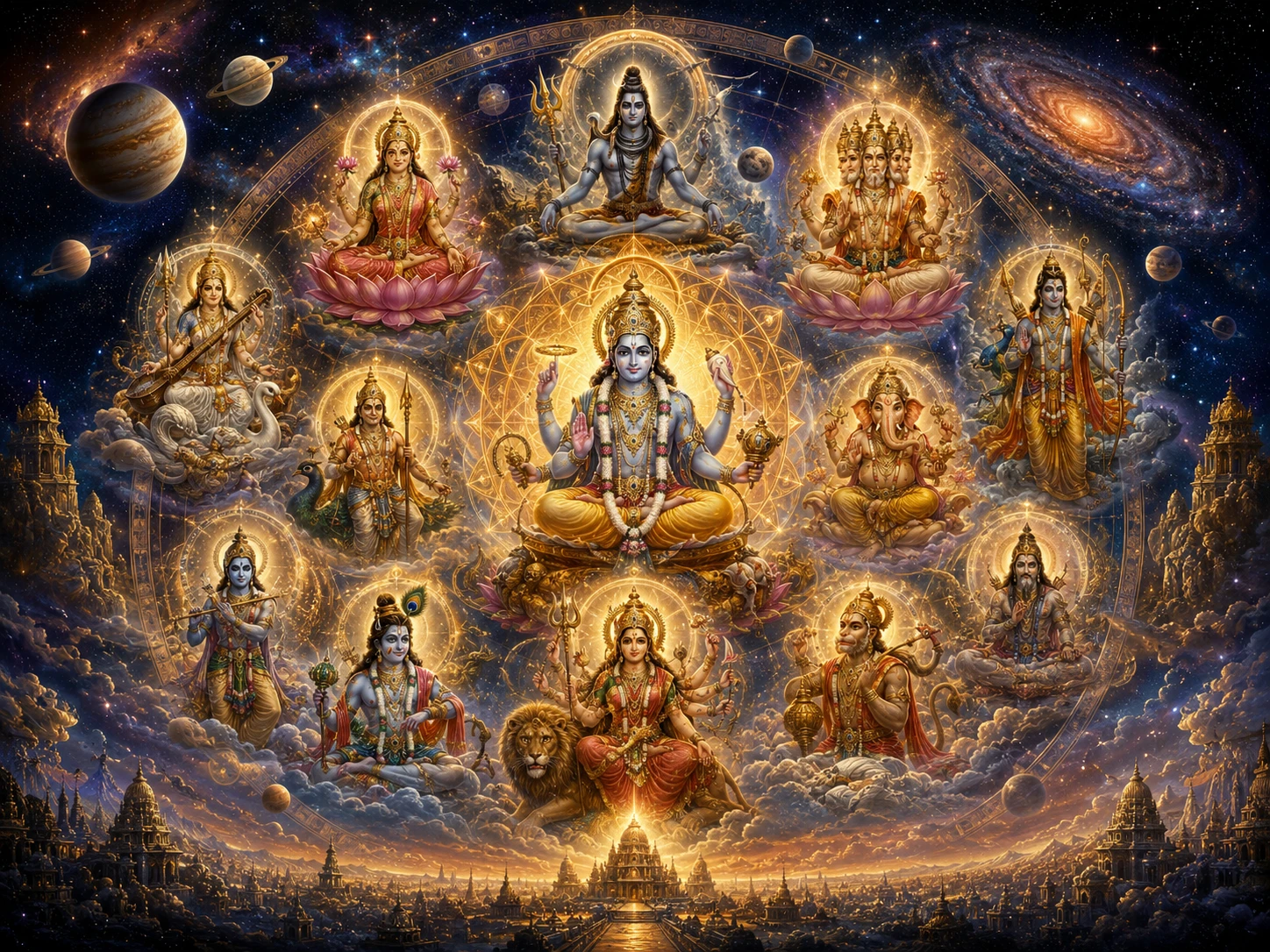
33 Koti Devata -- Why Hinduism Has 33 Types of Gods, Not 33 Crore
13 min read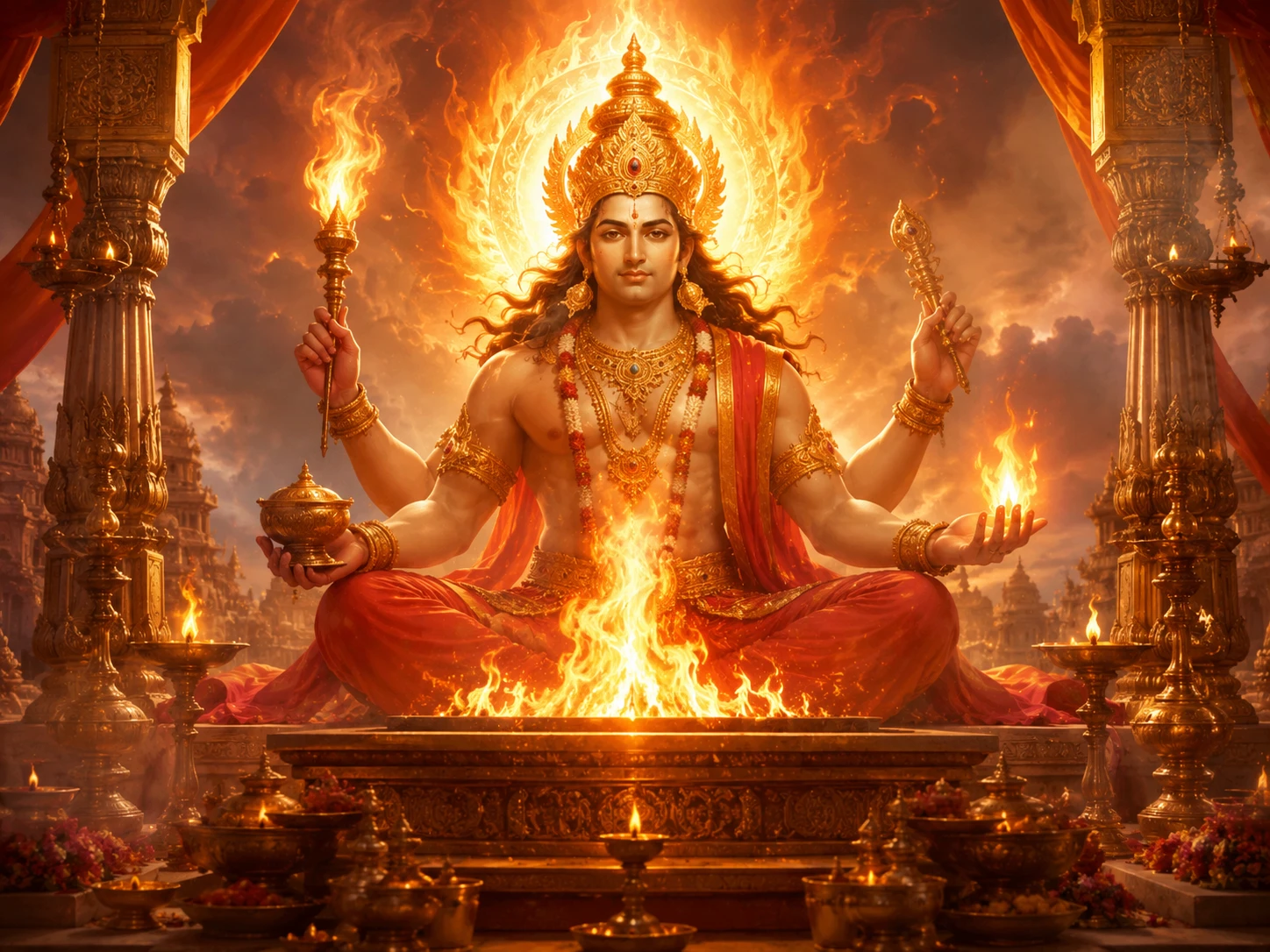
Agni -- The Fire God
19 min read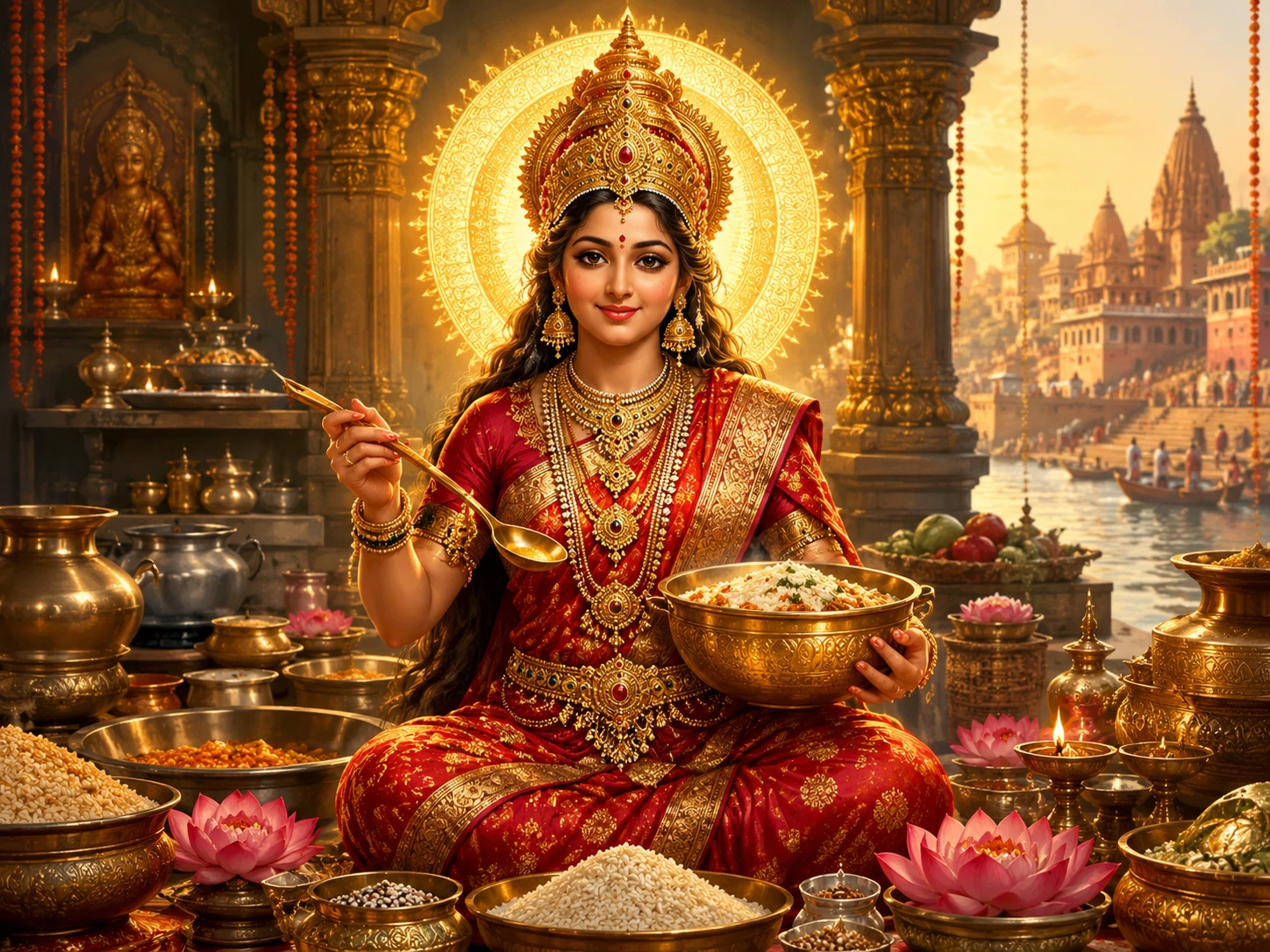
Annapurna -- Goddess of Food
19 min readThe same translation error that turned '33 Koti' into '33 crore' in Hinduism also happened in Buddhism. The Chinese translation of Buddhist texts rendered 'Sapta Koti Buddha' (7 Supreme Buddhas) as '7 Crore Buddhas.' The…
Deities AvatarsCommunity Reflections
🕉️
Be the first to share your reflection.