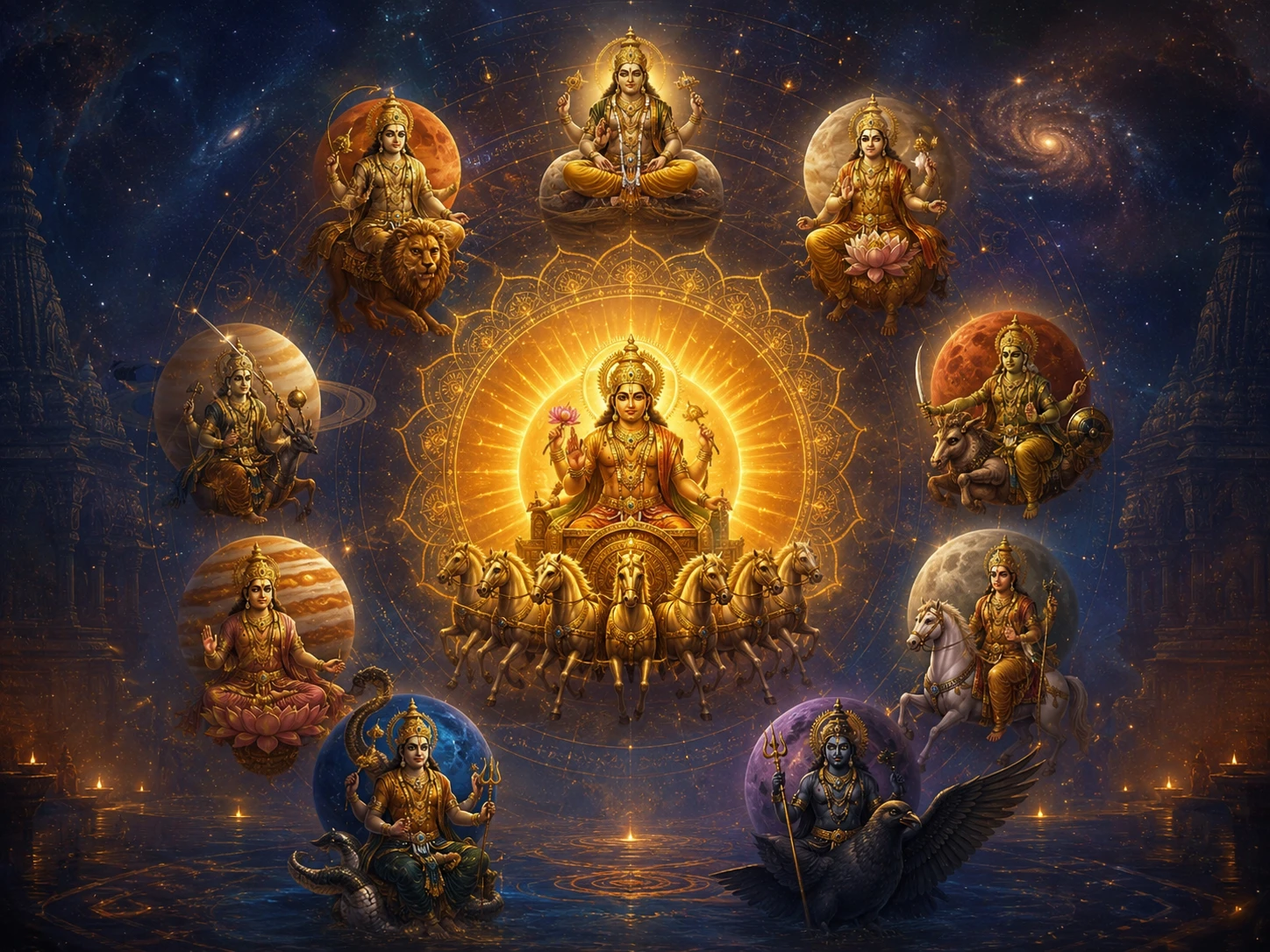
Navagraha -- The Nine Planetary Deities Who Govern Your Horoscope and Your Life
नवग्रह -- नौ ग्रह देवता जो तुम्हारी कुण्डली और जीवन संचालित करते हैं
In 2024, an estimated 70-80% of Indians consulted an astrologer or checked a panchanga (Hindu almanac) at least once. Not 70% of rural Indians. Not 70% of uneducated Indians. 70% of all Indians -- including IIT graduates, startup founders, Supreme Court lawyers, ISRO scientists, and Bollywood producers. The Navagraha system is not a fringe belief held by the superstitious few. It is the most widely practised theological framework in India, embedded in wedding planning, business decisions, naming ceremonies, property purchases, and even the timing of surgical operations.
The Navagraha ('nine seizers' -- nava = nine, graha = that which seizes or influences) are nine celestial bodies that, according to Vedic astrology (Jyotish Shastra), exert specific influences on human life based on their positions at the time of birth and their ongoing transits. They are: Surya (Sun), Chandra (Moon), Mangala (Mars), Budha (Mercury), Brihaspati/Guru (Jupiter), Shukra (Venus), Shani (Saturn), Rahu (North Lunar Node), and Ketu (South Lunar Node).
Note immediately: this is not the modern astronomical solar system. Rahu and Ketu are not physical bodies -- they are the mathematical points where the Moon's orbit intersects the ecliptic (the plane of Earth's orbit around the Sun). When the Moon is at Rahu or Ketu during a new moon or full moon, an eclipse occurs. The ancient Indian astronomers, who calculated eclipse timings with remarkable precision (as documented in the Surya Siddhanta), personified these mathematical intersection points as shadow planets -- invisible entities with enormous karmic influence.
This is important for intellectual honesty: the Navagraha system is not an astronomical model of the solar system. It is a theological-karmic framework that uses celestial bodies as symbols for cosmic forces that influence human destiny. Whether these influences are 'real' in the scientific sense is a matter of belief. What is undeniable is that the Navagraha framework has shaped Indian civilisation's decision-making patterns for over two thousand years, and continues to do so in ways that are measurable, observable, and economically significant.
For the software engineer in Hyderabad who will not join a new company during Shani's Sade Sati. For the Marwari businessman who begins every new venture on a Thursday (Guru-var, Jupiter's day) and never on a Saturday (Shani-var). For the Tamil Brahmin family that postpones a wedding by six months because the bride's horoscope shows Mangal Dosha (Mars affliction). The Navagraha are not abstract theology. They are the invisible operating system of Indian social life.
आदित्याय च सोमाय मङ्गलाय बुधाय च। गुरुशुक्रशनिभ्यश्च राहवे केतवे नमः॥
ādityāya ca somāya maṅgalāya budhāya ca | guruśukraśanibhyaśca rāhave ketave namaḥ ||
Salutations to Aditya (Sun), Soma (Moon), Mangala (Mars), Budha (Mercury), Guru (Jupiter), Shukra (Venus), Shani (Saturn), Rahu and Ketu.
— Navagraha Dhyana Shloka -- Navagraha Stotram (attributed to Vyasa)
The Nine Grahas -- Complete Reference
| Graha | Western Name | Day | Gemstone | Metal | Colour | Domain | Temple |
|---|---|---|---|---|---|---|---|
| Surya | Sun | Ravivaar (Sunday) | Ruby (Manikya) | Gold | Red/Copper | Soul, authority, father, government | Konark, Modhera, Deo |
| Chandra | Moon | Somvaar (Monday) | Pearl (Moti) | Silver | White | Mind, mother, emotions, water | Somnath (also Shiva) |
| Mangal | Mars | Mangalvaar (Tuesday) | Red Coral (Moonga) | Copper | Red | Courage, siblings, property, surgery | Vaitheeswaran Koil (TN) |
| Budha | Mercury | Budhvaar (Wednesday) | Emerald (Panna) | Bronze | Green | Intellect, speech, commerce, education | Tiruvenkadu (TN) |
| Guru/Brihaspati | Jupiter | Guruvaar (Thursday) | Yellow Sapphire (Pukhraj) | Gold | Yellow | Wisdom, children, dharma, expansion | Alangudi (TN) |
| Shukra | Venus | Shukravaar (Friday) | Diamond (Heera) | Silver | White/Pink | Love, marriage, luxury, art, beauty | Kanjanur (TN) |
| Shani | Saturn | Shanivaar (Saturday) | Blue Sapphire (Neelam) | Iron | Black/Blue | Karma, discipline, delay, suffering, justice | Shani Shingnapur (MH), Thirunallar (TN) |
| Rahu | N. Lunar Node | -- | Hessonite (Gomed) | Lead | Smoky | Obsession, foreign travel, technology, illusion | Thirunageswaram (TN) |
| Ketu | S. Lunar Node | -- | Cat's Eye (Lehsuniya) | -- | Grey/Smoky | Moksha, past lives, detachment, spirituality | Keezhperumpallam (TN) |
Tamil Nadu's Navagraha Temples (9 temples, each dedicated to one graha, scattered across the Cauvery delta) constitute the most complete surviving Navagraha pilgrimage circuit in India. Completing the circuit is believed to neutralise all planetary afflictions.
The mythology of Rahu and Ketu is one of the most dramatic origin stories in Hindu cosmology and directly connects to the Samudra Manthan narrative.
When the amrita (nectar of immortality) emerged from the churning of the ocean, Vishnu took the form of Mohini (the enchantress) to distribute it exclusively to the Devas. A demon named Svarbhanu disguised himself as a Deva and sat between the Sun and the Moon to receive the nectar. The moment the amrita touched his lips, the Sun and Moon recognised the impostor and alerted Vishnu, who immediately hurled his Sudarshana Chakra, severing Svarbhanu's head from his body. But the amrita had already touched his lips, making him immortal. The head became Rahu; the body became Ketu. Both became shadow planets -- immortal but incomplete, forever seeking wholeness.
Rahu eternally bears a grudge against the Sun and Moon for exposing his deception. When Rahu 'swallows' the Sun or Moon -- when the lunar nodes align with the luminaries -- an eclipse occurs. This is why eclipses are considered inauspicious in Vedic tradition: they represent the moment when deception temporarily triumphs over truth.
Shani (Saturn) has his own mythology, and it is arguably the most psychologically complex of any Navagraha deity. Shani is the son of Surya and Chhaya (Shadow). Even as a child, his gaze was so powerful that when he first looked at his father, Surya was afflicted. Shani represents karma -- not punishment, but consequence. His transits, particularly the dreaded Sade Sati (the seven-and-a-half-year period when Saturn transits through the 12th, 1st, and 2nd houses from the natal Moon), are periods of intense karmic reckoning. Shani does not create suffering; he reveals the suffering that was always there, hidden beneath comfort and complacency.
The Shani Shingnapur temple in Maharashtra's Ahmednagar district is one of the most extraordinary temples in India. The deity is a black stone (swayambhu -- self-manifested), worshipped in the open air with no roof and no sanctum. The village of Shani Shingnapur famously had no doors on any house or shop until recently -- the belief being that Shani's justice was so perfect that theft was impossible under his watch. While modern development has brought locks and doors, the theological principle remains: under Saturn's gaze, there is no escape from consequence.
The Navagraha system's influence on Indian economics is measurable. The gemstone industry (estimated at Rs 30,000-40,000 crore annually in India) is driven substantially by Jyotish recommendations -- people buy blue sapphires for Shani, rubies for Surya, emeralds for Budha based on astrological counsel. The puja services industry (online and offline) generates thousands of crores through Navagraha Shanti Pujas, Shani Dosh Nivaran, Rahu-Ketu Puja, and related rituals. The matchmaking industry (both traditional and app-based) relies heavily on Kundali matching (horoscope compatibility), which is fundamentally a Navagraha analysis.
For the parent who delays their child's naming ceremony by three days because the panchanga shows Rahu Kalam (the inauspicious period ruled by Rahu). For the real estate developer who schedules his building's bhoomi puja on a Thursday in the Guru Hora (Jupiter's hour). For the UPSC aspirant who wears a yellow sapphire on her right index finger on the advice of her family's jyotishi. The Navagraha are not ancient relics. They are India's most active theological consultants, employed -- consciously or unconsciously -- by virtually every Indian every day.
Each of the nine Grahas has a distinct personality, mythology, and domain of influence that makes the Navagraha system function not merely as an astrological framework but as a complete psychology of human experience.
Surya (Sun) governs atma (the soul), authority, father, government, and vitality. A strong Surya in the horoscope indicates leadership, confidence, and health. A weak or afflicted Surya can manifest as lack of self-esteem, troubled relationship with the father, or difficulty with authority figures. Surya's day is Sunday (Ravivaar), his colour is red/copper, and his gemstone is the ruby (manikya). The Gayatri Mantra is the most powerful Surya remedy.
Chandra (Moon) governs manas (mind), emotions, mother, public image, and fluids in the body. Chandra's influence on mental health is taken so seriously in the Jyotish tradition that the entire Dasha system (planetary period system that governs life phases) is calculated from the Moon's position. A strong Chandra indicates emotional stability, popularity, and a nurturing personality. A weak Chandra can manifest as anxiety, depression, mood swings, and troubled relationships with the mother. Monday (Somvaar) fasts are among the most commonly observed in North India -- primarily a Chandra remedy.
Mangal (Mars) governs courage, siblings, property, surgery, and the blood. Mangal Dosha -- an affliction caused by Mars occupying the 1st, 2nd, 4th, 7th, 8th, or 12th house from the ascendant or Moon -- is the single most consulted astrological factor in Indian matchmaking. An estimated 40-50% of horoscopes have some form of Mangal Dosha, and the remedies (marrying another Manglik, performing Kumbh Vivah -- symbolic marriage to a pot, or waiting until age 28 when the dosha is said to weaken) are practised by millions. The matrimonial sections of newspapers and apps still prominently feature 'Manglik/Non-Manglik' as a filter.
Budha (Mercury) governs intellect, speech, commerce, education, and analytical thinking. A strong Budha produces excellent communicators, traders, and scholars. Budha is the patron graha of students (which is why Wednesday -- Budhvaar -- is considered auspicious for starting educational ventures). In a culture that produces millions of engineers, doctors, and civil servants through competitive examinations, Budha's position in the horoscope is scrutinised with particular intensity by parents.
Guru/Brihaspati (Jupiter) is the most auspicious graha -- the great benefic. He governs wisdom, dharma, children, expansion, and the guru-shishya relationship. A strong Guru in the horoscope is considered the single best indicator of overall life success. Guru's transit through different houses (taking approximately one year per house, approximately 12 years for a complete cycle) is one of the most closely watched astrological events. When Guru enters a favourable house, astrologers advise starting new ventures, getting married, or having children. Thursday (Guruvaar) is the day of worship for Guru -- many devotees fast on Thursdays and wear yellow clothing.
Shukra (Venus) governs love, marriage, luxury, art, beauty, and the reproductive system. A strong Shukra produces artists, musicians, lovers of beauty, and materially prosperous individuals. Shukra is the guru of the Asuras (demons) -- Shukracharya -- which gives Venus a theologically complex position: the planet of beauty and pleasure is also the teacher of those who oppose the gods. This duality mirrors the human experience of desire: beautiful and potentially destructive, essential and potentially enslaving.
Shani (Saturn) is the most feared and simultaneously the most respected graha. He governs karma, discipline, delay, suffering, justice, servants, and the elderly. Shani's influence is slow (he takes approximately 30 years to complete one zodiacal cycle) but inexorable. The Sade Sati -- Shani's transit through the three houses around the natal Moon, lasting 7.5 years -- occurs approximately 2-3 times in an average lifespan and is associated with karmic reckoning: job losses, health issues, relationship breakdowns, financial difficulties. Crucially, the tradition does not view Sade Sati as punishment. It views it as the period when accumulated karma ripens and must be experienced. Shani is the teacher who gives you the exam you have been avoiding. The exam is hard. But passing it transforms you.
Rahu and Ketu -- the shadow planets, the severed head and body of the demon Svarbhanu -- represent the most psychologically modern concepts in the Navagraha system. Rahu governs obsession, foreign travel, technology, sudden fame, taboo-breaking, and insatiable desire. Ketu governs moksha, past-life karma, detachment, sudden loss, spiritual awakening, and the renunciation of material attachment. Rahu and Ketu are always exactly opposite each other in the zodiac (180 degrees apart), and their influence is complementary: Rahu pulls you toward worldly obsession, Ketu pulls you toward spiritual detachment. Together, they represent the human condition itself -- the constant oscillation between wanting everything and wanting nothing.
For the cognitive behavioural therapist who recognises in the Navagraha system a comprehensive personality typology: solar types (authoritative, father-identified), lunar types (emotional, mother-identified), martial types (aggressive, competitive), mercurial types (intellectual, communicative), Jupiterian types (expansive, ethical), Venusian types (aesthetic, pleasure-seeking), Saturnine types (disciplined, austere), Rahu types (obsessive, boundary-breaking), Ketu types (detached, mystical). Whether or not these planetary 'influences' are real in any causal sense, they function as a remarkably detailed map of human psychological diversity -- one that has been in continuous clinical use for over two thousand years.
The Navagraha system's most practical manifestation in modern India is the Panchanga -- the Hindu almanac that calculates auspicious and inauspicious times based on planetary positions, lunar phases, and stellar conjunctions.
Every morning, millions of Indians consult the Panchanga (or its digital equivalents -- apps like Drik Panchang and AstroSage have millions of downloads) before making decisions. The Panchanga provides five data points for each day: Tithi (lunar day), Vara (weekday), Nakshatra (lunar mansion), Yoga (a specific solar-lunar angular relationship), and Karana (half of a tithi). From these five elements, the Panchanga calculates Rahu Kalam (the 90-minute period each day ruled by Rahu, considered inauspicious for starting new activities), Yamaganda (ruled by Yama, inauspicious), Gulika (ruled by Shani's son, inauspicious), and Abhijit Muhurta (the most auspicious moment of the day, approximately at local noon).
The economic impact of the Panchanga system is enormous. Real estate transactions in South India are almost universally scheduled during shubh muhurta (auspicious times). Vehicle registrations, shop openings, and factory inaugurations follow Panchanga guidance. Even multinational corporations operating in India sometimes accommodate Panchanga-based timing -- an MNC's India office opening ceremony, if it involves Indian stakeholders, will frequently be scheduled at a Panchanga-approved muhurta.
Critics argue that the Navagraha system promotes fatalism and superstition. This is a legitimate concern. When a person refuses a life-saving surgery because the Panchanga says the day is inauspicious, or when a family rejects an otherwise suitable marriage alliance because of Mangal Dosha, the system can cause real harm. Hindu reform movements -- from Ram Mohan Roy to Periyar to modern rationalist organisations -- have challenged Navagraha-based practices as obstacles to social progress.
Defenders argue that the system, at its best, provides structure, psychological comfort, and a framework for decision-making in a world of overwhelming choice. When everything is available and every option is open, the Panchanga's 'wait until Thursday' advice functions like a constraint that paradoxically enables better decisions by reducing decision fatigue. Whether this is theology or time management is, perhaps, a distinction without a difference.
For the intellectual honest assessment: the Navagraha system is not scientifically validated as a predictive framework. No controlled study has demonstrated that planetary positions at birth reliably predict personality, career success, or relationship outcomes. At the same time, the system has functioned as a cultural technology for psychological categorisation, temporal structuring, and community decision-making for over two millennia. Its influence on Indian civilisation -- on architecture (Navagraha shrines in every temple), economics (gemstone and puja industries), social structure (Mangal Dosha matchmaking), and daily life (Rahu Kalam avoidance) -- is undeniable, regardless of its empirical validity.
The Navagraha ask no one to believe in them. They simply ask: have you considered that your life might be influenced by forces larger than your individual will? And to that question, even the most rigorous scientist must honestly answer: yes.
The Tamil Nadu Navagraha Temple circuit -- nine separate temples, each dedicated to one planetary deity, scattered across the Thanjavur and Kumbakonam districts -- is the only complete Navagraha pilgrimage circuit in India where each planet has its own dedicated temple. The circuit can be completed in a single day by car (the temples are within a 60 km radius). The Surya temple at Suryanar Koil, the Shani temple at Thirunallar, and the Guru temple at Alangudi are particularly famous. Meanwhile, every major Hindu temple in South India has a Navagraha shrine -- a platform with nine stone or metal figures arranged in a specific pattern (Surya always at the centre, facing east; no two grahas face each other -- because 'hostile' planets must not look at each other). Devotees circumambulate this shrine and offer specific items to each graha: wheat for Surya, rice for Chandra, lentils for Mangal, moong dal for Budha, chana dal for Guru, beans for Shukra, sesame for Shani, urad dal for Rahu, and horse gram for Ketu. This is Hindu theology expressed through a grocery list -- and it is practised daily by millions.
Chant the Navagraha Stotram
Invoke the blessings of all nine planetary deities with the Navagraha Stotram attributed to Vyasa -- a complete prayer addressing each graha in turn. It is on Eternal Raga with its meaning.
Eternal Raga · शाश्वत राग
Institutional voice — scholarly articles on Sanatan Dharma
Deepen Your Understanding
अपनी समझ और गहरी करें
deities avatars
Surya -- The Sun God Who Drives a Seven-Horse Chariot Across the Sky Every Day
He is the most visible god in Hinduism -- you can see him every morning. The Gayatri Mantra, the most sacred verse in the Vedas, is addressed to him. The Konark Sun Temple is shaped like his chariot. And every time you do Surya Namaskar in your yoga class, you are performing a 3,000-year-old sun worship ritual. Surya is the deity hiding in plain sight.
deities avatars
Surya's Family -- How One God Fathered Yama, Shani, the Ashwini Kumaras, and All of Humanity
Surya had two wives: Sanjana, who could not bear his radiance, and Chhaya, the shadow she left behind. From Sanjana came Yama (death), Yamuna (the river), Manu (humanity's ancestor), and the Ashwini Kumaras (divine physicians). From Chhaya came Shani (Saturn, karma's enforcer), Tapati (the river), and Savarni Manu (the next cosmic era's ruler). Same father. Two mothers. Ten children. And the entire human race.
vedic sciences
Jyotish Shastra -- The Vedic System of Astronomy and Astrology That India Never Stopped Using
Every year, millions of Indian marriages are fixed only after the kundali matches. ISRO times its satellite launches on muhurtas. JEE students wear navagraha rings. Real-estate agents check Rahu-Ketu transits before closing deals. Whether you believe in it or not, Jyotish Shastra -- the Vedic science of light, time, and celestial influence -- is the most actively practised ancient knowledge system in India today. It spans 9 Grahas, 12 Rashis, 27 Nakshatras, and 2,500 years of continuous mathematical and observational tradition. This article explains the system as the texts describe it -- not as a prediction engine, but as a framework for understanding time, cycles, and the relationship between the cosmos and human life.
vedic sciences
Kaal Ganana -- The Hindu Measure of Time
From a single blink of the eye (Nimesha) to one Day of Brahma (4.32 billion years) -- explore the complete cosmic time hierarchy of Hindu cosmology, anchored in Vishnu Purana 1.3, with its remarkable parallels to modern science.
deities avatars
Shani Dev -- The Slow One, Judge of Karma
The most feared of the nine planets, and perhaps the most misunderstood. Who Shani is in the Puranas -- the son of Surya and Chhaya, brother of Yama -- what Sade Sati really means, and why devotees say that Shani punishes only what is due and rewards patience more than anyone.
deities avatars
Rahu and Ketu -- How a Demon Lost His Body and Became the Enemy of Sun and Moon
During the distribution of the nectar of immortality, one demon disguised himself as a god and drank. Vishnu's Sudarshana Chakra severed his head -- but the amrit had already passed his throat. The head became Rahu. The body became Ketu. And their eternal grudge against the Sun and Moon who exposed them is why eclipses happen. At least, that is what the Puranas say.
tantra mantra yantra
Navagraha Yantras -- The Nine Planetary Magic Squares
Each of the nine Vedic planets has its own yantra -- a magic square where every row, column, and diagonal adds up to the same number. Sun's square sums to 15, Moon's to 18, Mars to 21, all the way to Ketu at 39. These are not superstition. They are India's oldest contribution to combinatorial mathematics -- and they still hang in millions of homes and temples as instruments of cosmic balance.
The Tamil Nadu Navagraha Temple circuit -- nine separate temples, each dedicated to one planetary deity, scattered across the Thanjavur and Kumbakonam districts -- is the only complete Navagraha pilgrimage circuit in Ind…
More in Deities & Avatars
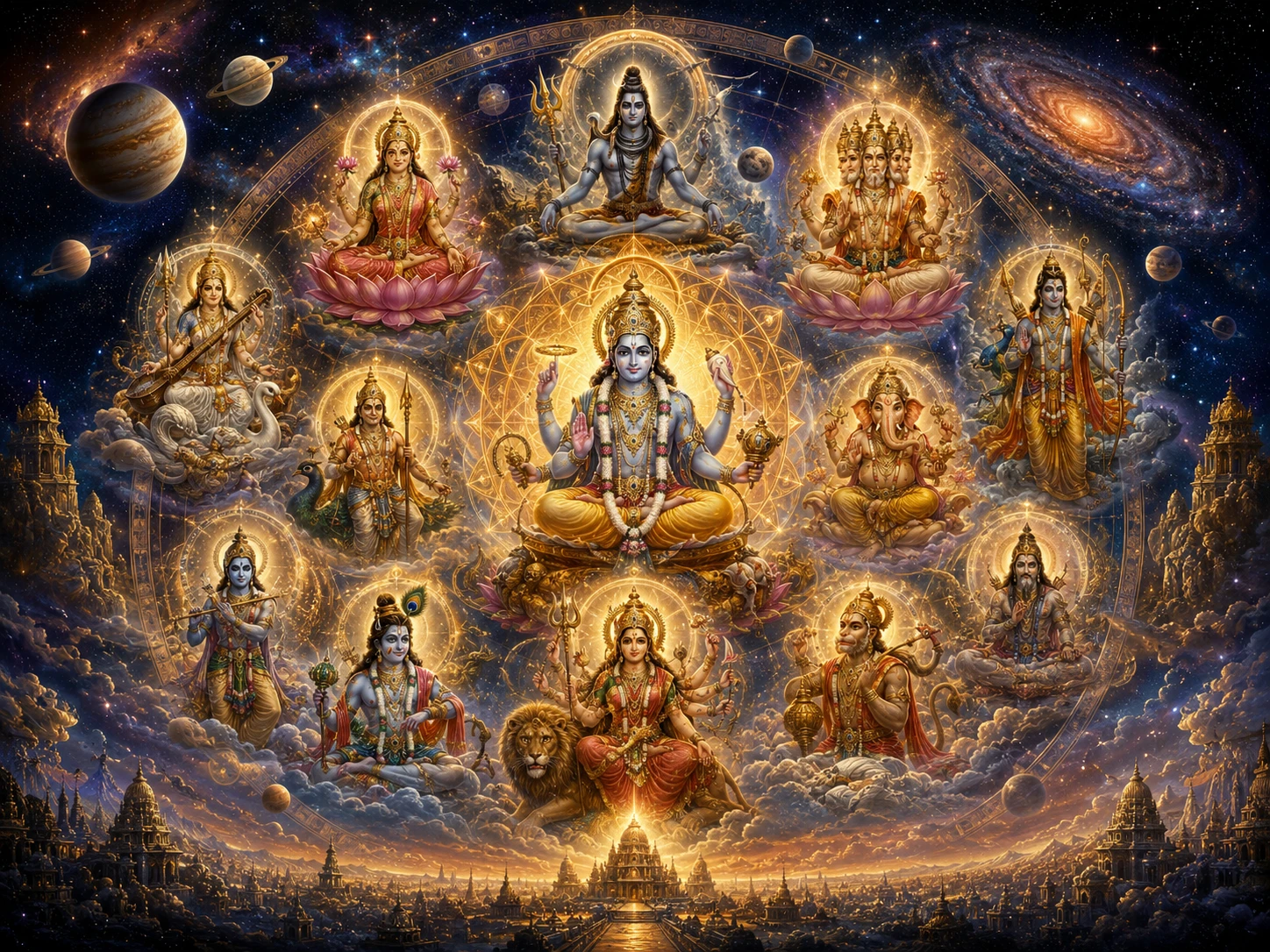
33 Koti Devata -- Why Hinduism Has 33 Types of Gods, Not 33 Crore
13 min read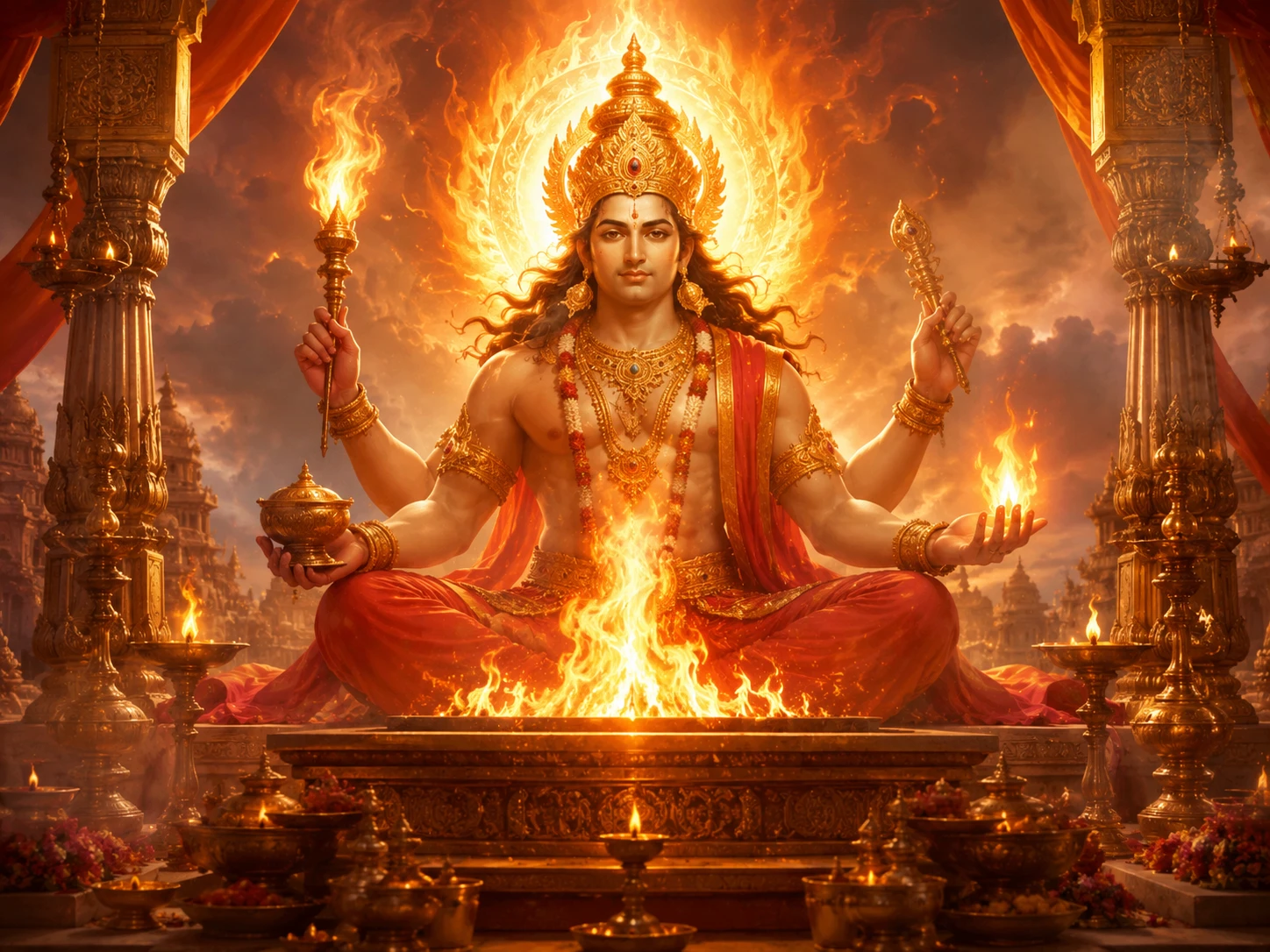
Agni -- The Fire God
19 min read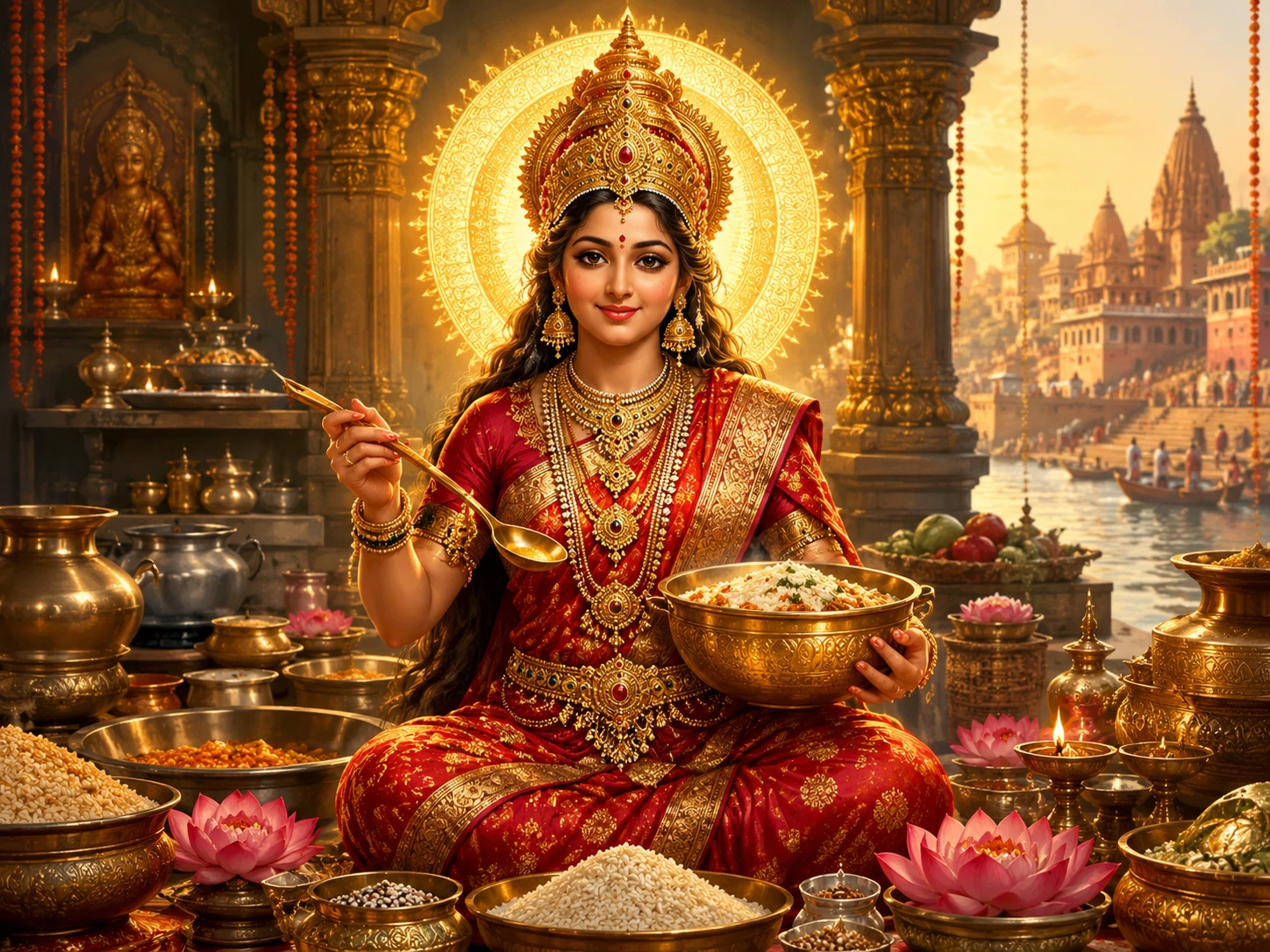
Annapurna -- Goddess of Food
19 min readThe same translation error that turned '33 Koti' into '33 crore' in Hinduism also happened in Buddhism. The Chinese translation of Buddhist texts rendered 'Sapta Koti Buddha' (7 Supreme Buddhas) as '7 Crore Buddhas.' The…
Deities AvatarsCommunity Reflections
🕉️
Be the first to share your reflection.