
Pavamana -- Soma in the Act of Being Purified
पवमान -- शुद्ध होते सोम का क्षण
The Rig Veda has ten mandalas, or books. Nine of them address a range of deities, chosen by the poet-families who compiled them, Indra here, Agni there, Ushas, the Ashwins, Varuna, dozens of others across thousands of hymns. The ninth mandala does something no other book of the Rig Veda does: all 114 of its hymns, without exception, are addressed to one thing, Soma Pavamana, the sacred plant-juice in the specific act of being pressed, filtered through sheep's wool, and readied for offering. Pavamana is not a separate deity invented alongside Soma. The word is a present participle, the purifying one, the flowing one, describing Soma at a precise ritual moment rather than naming a different god. When the tradition speaks of Pavamana, it means Soma caught mid-purification, the instant the stalks have been crushed and the raw juice runs clear through the filter, understood as sacred in its own right. An entire book of the oldest surviving Indian scripture is devoted to describing, celebrating, and theologically elaborating a few seconds of liquid straining through cloth. That fact alone says something about how seriously Vedic religion took the specific mechanics of its central sacrifice.
The ritual behind the hymns is described consistently across mandala nine: soma stalks, gathered and dried, are pressed between stones or with a mortar and pestle, and the resulting juice, described repeatedly as tawny or golden, is poured over a pavitra, a filter of sheep's wool stretched across a wooden frame. What runs through the filter is Pavamana, purifying itself and, in the process, purifying the person who will drink it or offer it. The filtered soma is then mixed with water and milk in large vessels, and portions are offered specifically to Indra, who in mandala nine's own language is repeatedly described as drinking Soma for strength before his battles with Vritra and other cosmic adversaries. The Pavamana Suktam recited today draws on this mandala's verses, including one striking line that names Soma Pavamana as janita, generator, of thoughts, of heaven and earth, and of Agni, Surya, Indra, and Vishnu themselves, placing the purifying Soma not merely alongside the major gods but, in this poetic register, prior to and generative of them. The same hymns describe Pavamana as punanah, purifying, advancing abhi vishva mridhah, against all conflicts and hostilities, as though the physical act of straining impurities out of a liquid were, at the level of the hymn's imagery, doing the same work in the world that a warrior does on a battlefield: clearing away what obstructs.
सोमः पवते जनिता मतीनां जनिता दिवो जनिता पृथिव्याः । जनिताग्नेर्जनिता सूर्यस्य जनितेन्द्रस्य जनितोत विष्णोः ॥
somaḥ pavate janitā matīnāṃ janitā divo janitā pṛthivyāḥ | janitāgnerjanitā sūryasya janitendrasya janitota viṣṇoḥ ||
Soma flows in purification, generator of thoughts, generator of heaven, generator of earth, generator of Agni, generator of Surya, generator of Indra, and generator too of Vishnu.
— Rig Veda 9.96.5, ninth mandala, Pavamana Suktam
The ninth mandala's structure sets it apart from the rest of the Rig Veda in a second, more technical way. Mandalas two through seven, the so-called family books, are each attributed to a specific rishi lineage: Gritsamada, Vishvamitra, Vamadeva, Atri, Bharadvaja, and Vasishtha respectively, and internally organized around those family identities. Mandala nine breaks that pattern entirely. It draws hymns from poets belonging to all of these families and more, gathered together not by lineage but by a shared ritual subject, and arranged internally by meter rather than by author: hymns in the Gayatri meter come first, followed by hymns in Jagati, then Trishtubh, and so on through the book. Scholars of Vedic literature read this as a functional decision rather than a stylistic one. Mandala nine appears to have been assembled as a working liturgical set, hymns pulled out of their poets' original family collections and regrouped by meter because different stages of the soma-pressing ritual called for different metrical patterns of chant. In other words, mandala nine cuts directly across the kinship structure that defines the rest of the Rig Veda, organized instead around what the ritual itself required moment to moment. No other mandala is built this way, and no other single ritual act in the entire Rig Veda receives a comparable volume of dedicated verse.
The exact botanical identity of the soma plant described across mandala nine remains an open scholarly question. The hymns describe its stalks, its tawny colour, and its being pressed and filtered in detail, but no surviving Vedic text names the plant in a way modern botany can match with certainty. Proposed candidates over the past century and a half have included species of Ephedra, the mushroom Amanita muscaria, the plant Peganum harmala, and various species in the Sarcostemma and Ceropegia genera, among others. No single identification commands scholarly consensus, and the honest answer, more than three thousand years after mandala nine was composed, is that the plant these 114 hymns celebrate in such physical detail has not been conclusively identified.
It is worth being precise about a common confusion. The Vedic Soma of mandala nine, the plant-juice purified as Pavamana and offered to Indra, is a different figure from Chandra, the moon god of later Puranic mythology, who is also sometimes called Soma and who acquired his own elaborate narrative involving twenty-seven wives, a curse from Daksha, and a waning-and-waxing cycle explained as the moon's punishment. The two figures are historically connected: Vedic literature does gradually associate the drink Soma with the moon, likely because the moon, waxing and waning, was read as itself being drunk and refilled the way the ritual vessel of soma juice was drained and replenished. By the time of the Puranas, Soma the plant-deity and Chandra the moon-deity had merged into a single identity in most tellings. But mandala nine itself, composed centuries before that fusion hardened into fixed myth, is not telling a moon story. Its Pavamana is a ritual liquid, celebrated for its taste, its colour, its capacity to nourish the gods and clear away obstruction, with no lunar narrative attached. Reading the ninth mandala's Pavamana hymns as though they were already about the moon god of the Puranas imports a later theology onto an earlier, more concrete religious concern: the correct, careful preparation of a sacred drink.
The theological move that gives Pavamana lasting significance beyond ritual antiquarianism is the one the closing verse of the Pavamana Suktam makes explicit: the physical act of straining impurity out of a liquid becomes, in the hymn's own logic, a working image for straining confusion out of a mind. The suktam states that whoever recites it with devotion receives antah shuddhi, inner purification, and manah shanti, peace of mind, by Soma's grace. This is not a later add-on but an extension already implicit in mandala nine's own vocabulary, where Pavamana is repeatedly described as advancing against mridhah, conflicts, using the same root that elsewhere in the Rig Veda describes military and social discord. A tradition that later develops entire schools of meditation built around watching the mind clear the way water clears through a filter, and that treats a purified inner state as the precondition for reliable spiritual perception, has an early, concrete ancestor in the ninth mandala's picture of soma juice running clean through wool. The metaphor was not imported from later philosophy into an old ritual text. It appears to run the other way: the ritual image came first, and later reflection on the mind's own need for clarity found, in Pavamana, an image already waiting.
Recite the Pavamana Suktam Before Homa or Meditation
The Pavamana Suktam is on Eternal Raga with its meaning. Recite it before homa, before Vedic study, or as a short purification before meditation. Its closing verse asks for inner clarity and peace of mind -- the same purification the hymn describes happening to the soma itself.
Tags
Eternal Raga · शाश्वत राग
Institutional voice — scholarly articles on Sanatan Dharma
Deepen Your Understanding
अपनी समझ और गहरी करें
deities avatars
Chandra Dev and His 27 Wives -- Why the Moon Waxes and Wanes
Chandra married all 27 daughters of Daksha -- one for each nakshatra in the zodiac. He was supposed to love them equally. He did not. His obsessive favouritism toward Rohini left the other 26 wives neglected. Their father cursed him to waste away and die. And that is why the moon shrinks for fifteen days every month -- and why the full moon and new moon exist at all.
rituals traditions
Havan Vidhi -- The Vedic Fire Ritual That Purifies Air, Mind, and Karma
Every major Hindu milestone -- birth, thread ceremony, wedding, housewarming, death -- involves fire. The havan is the oldest continuous ritual technology in Hinduism, dating to the Rig Veda. You pour ghee, herbs, and grains into a consecrated fire while chanting 'Svaha,' and Agni carries your offering to the gods. Modern science confirms: the smoke actually does purify the air. Here is the complete procedure.
rituals traditions
Panchamaha Yajnas -- The 5 Daily Duties Every Householder Owes
You owe five debts the moment you wake up: to knowledge, to the divine, to your ancestors, to all living beings, and to fellow humans. The Panchamaha Yajnas are not grand fire rituals -- they are five daily micro-acts that the tradition considers the minimum operating system of a responsible life. Skip them and you are, according to Manu, living as a thief.
scriptural exegesis
Nasadiya Sukta -- The Rigvedic Hymn That Questioned Creation Itself
Seven verses in the tenth mandala of the Rigveda. No cosmic egg, no deity speaking creation into being, no parted waters. Just a rishi asking, without flinching, where everything came from -- and whether even the overseer of creation in the highest heaven knows the answer.
deities avatars
Indra -- King of the Devas
Once, Indra was the king of the Hindu pantheon. About 250 hymns of the Rig Veda -- more than for any other deity -- praise him. He slays the dragon Vritra, rides the white elephant Airavata, rules the heaven of Svarga. Then something happens in the Puranic period, and Indra recedes. This is the story of the Hindu god who used to be first.
The exact botanical identity of the soma plant described across mandala nine remains an open scholarly question. The hymns describe its stalks, its tawny colour, and its being pressed and filtered in detail, but no survi…
More in Deities & Avatars
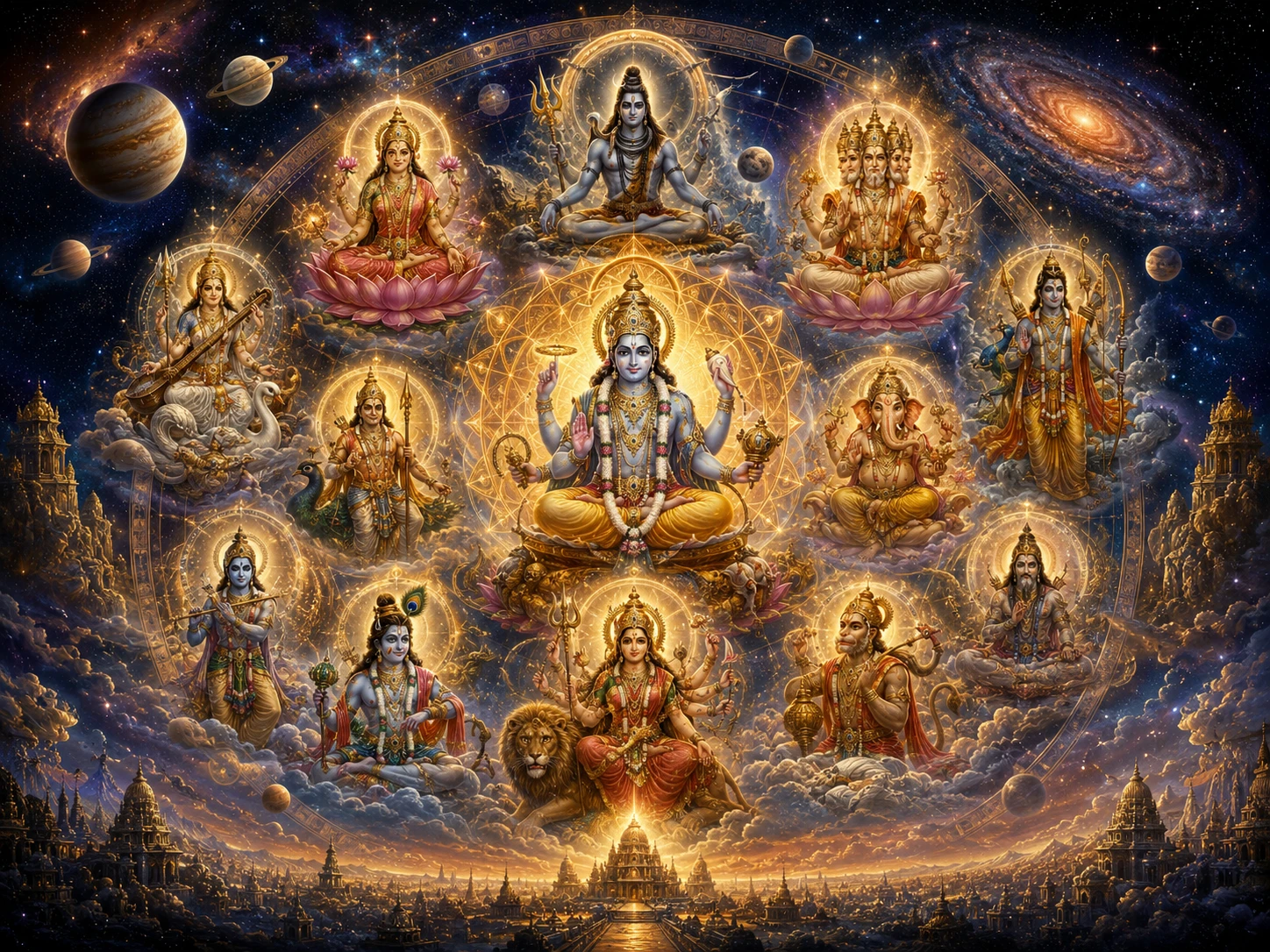
33 Koti Devata -- Why Hinduism Has 33 Types of Gods, Not 33 Crore
13 min read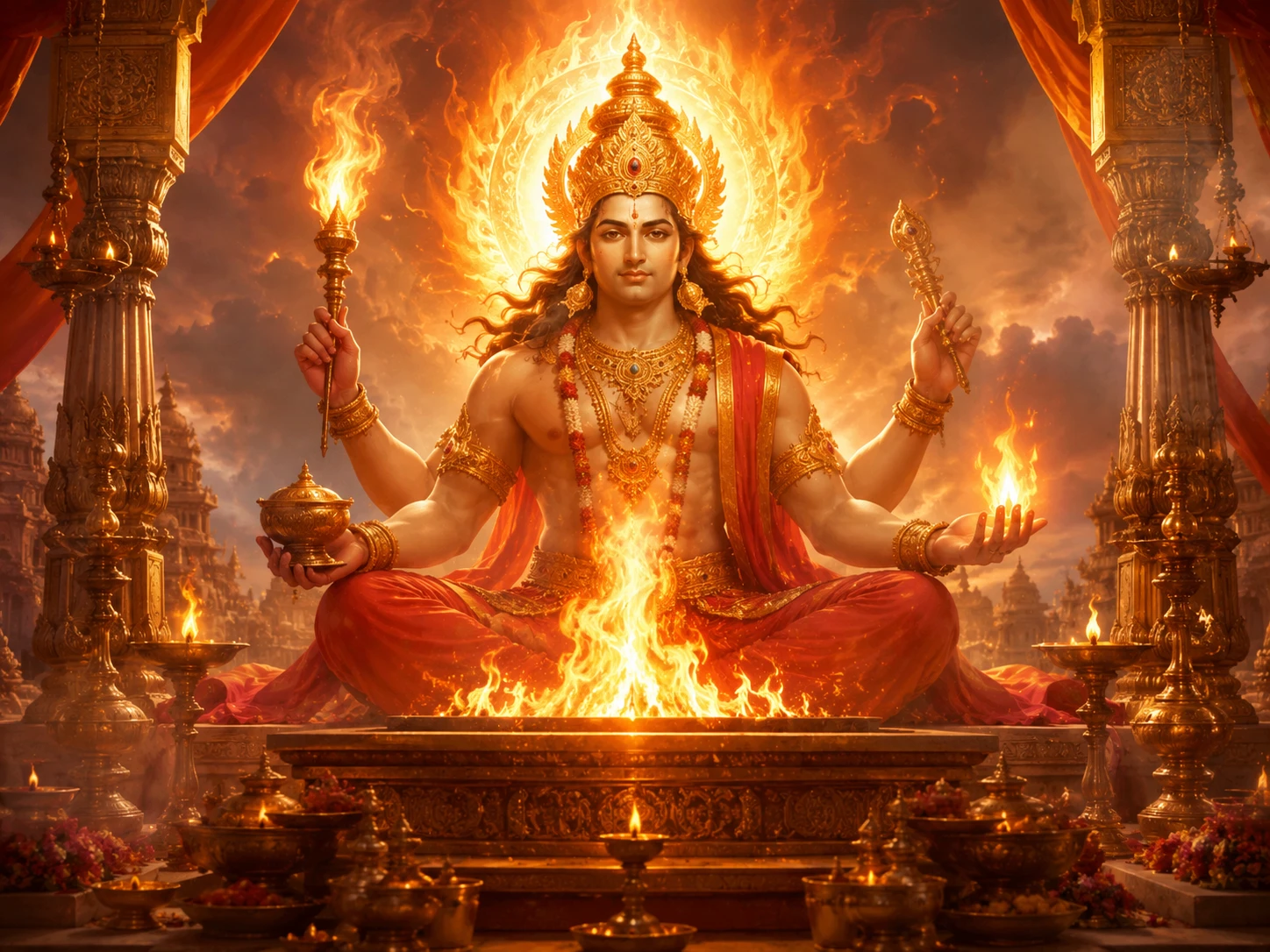
Agni -- The Fire God
19 min read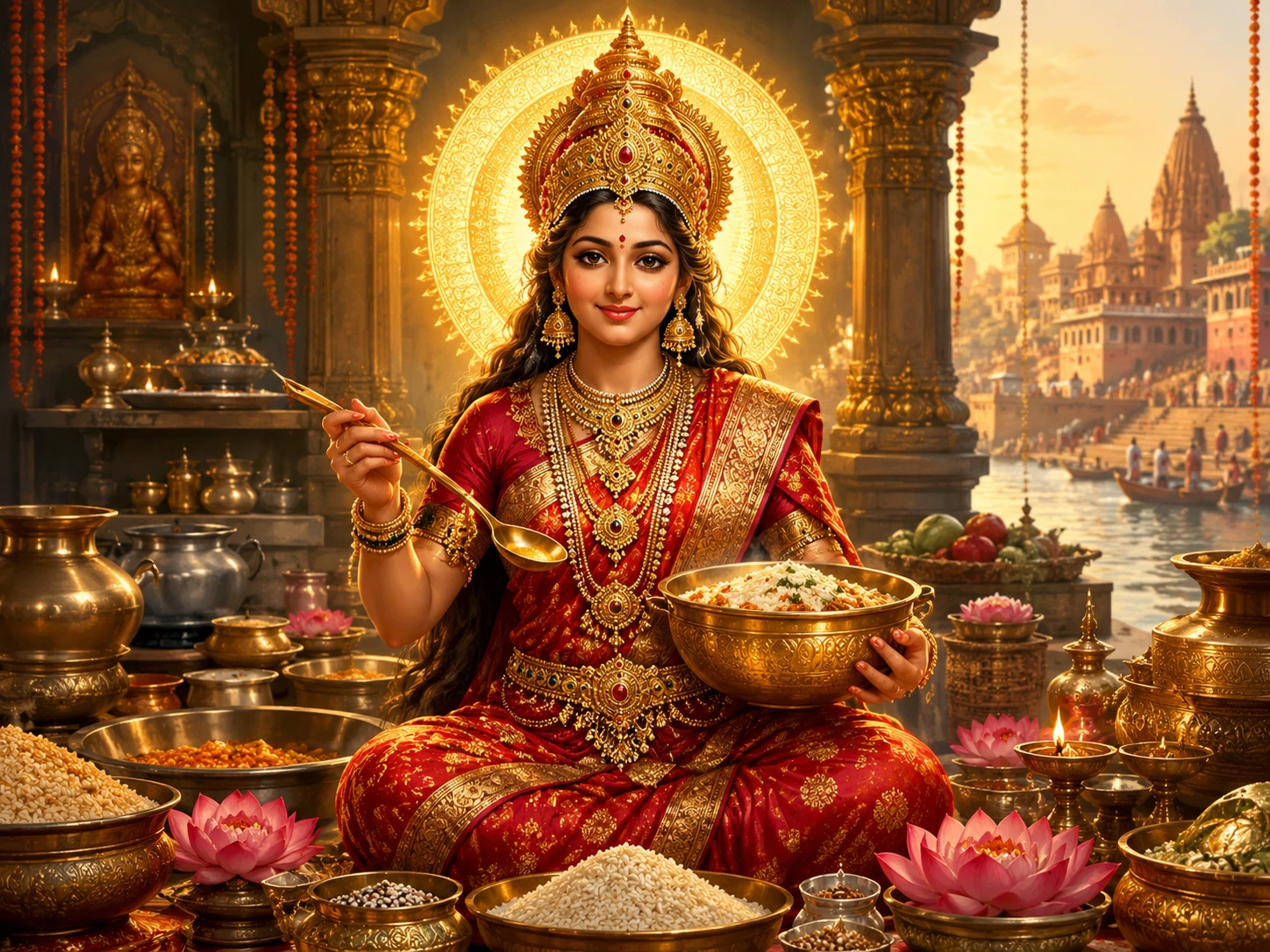
Annapurna -- Goddess of Food
19 min readThe same translation error that turned '33 Koti' into '33 crore' in Hinduism also happened in Buddhism. The Chinese translation of Buddhist texts rendered 'Sapta Koti Buddha' (7 Supreme Buddhas) as '7 Crore Buddhas.' The…
Deities AvatarsCommunity Reflections
🕉️
Be the first to share your reflection.