Panchayatana Puja -- Worshipping Five Deities as One
पंचायतन पूजा -- पाँच देवताओं की एक रूप में उपासना
In many traditional Hindu homes, the shrine holds not one image but five small stones arranged on a plate: a smooth egg-shaped stone for Shiva, a black fossil stone for Vishnu, a stone or metal emblem for the Goddess, a crystal for Surya and a reddish stone for Ganesha. One of them sits at the centre and the other four at the corners. This is the panchayatana, "the five abodes", and the daily worship offered to it is Panchayatana puja.
The practice belongs especially to the Smarta tradition -- Hindus who follow the smriti texts and the teaching of Vedanta without making one deity exclusive. Tradition credits Adi Shankaracharya with establishing or popularising it, which is why he is sometimes called shanmata-sthapaka, "the founder of the six-fold worship" (adding Kartikeya to the five). Whatever its exact origins, it became one of the most widespread forms of household worship in India.
The Five Deities and Their Stones
| Deity | Traditional emblem | Where it is traditionally found |
|---|---|---|
| Shiva | Banalinga -- a smooth, egg-shaped stone | The bed of the Narmada river |
| Vishnu | Shaligram -- a black ammonite fossil | The Gandaki river in Nepal |
| Devi (Shakti) | A stone with golden streaks (svarnamukhi), or a metal yantra or image | The Svarnamukhi river, among other sources |
| Surya | A crystal (sphatika) or sun-stone | Various; crystal is the usual choice |
| Ganesha | A red stone (shonabhadra) | The Son (Shona) river |
These are the traditional emblems; in practice families also use small images, and customs vary by region and lineage.
The arrangement expresses the idea behind it. Each worshipper places at the centre the deity they feel closest to, their ishta-devata, and arranges the other four around it in prescribed positions. A Shiva devotee puts the banalinga in the middle; a Vishnu devotee, the shaligram; and so on. All five are worshipped every day, with the same offerings, but the centre is a matter of personal devotion.
Behind this lies the Vedantic conviction that the many deities are forms of the one Brahman. No one need deny the others to love their own. The Gita gives the principle: whatever form a devotee wishes to worship with faith, the Lord makes that faith steady -- for all worship reaches the one.
यो यो यां यां तनुं भक्तः श्रद्धयार्चितुमिच्छति । तस्य तस्याचलां श्रद्धां तामेव विदधाम्यहम् ॥
yo yo yāṃ yāṃ tanuṃ bhaktaḥ śraddhayārcitumicchati | tasya tasyācalāṃ śraddhāṃ tāmeva vidadhāmyaham ||
Whatever form a devotee wishes to worship with faith, I make that very faith of his unshakeable.
— Bhagavad Gita 7.21
The same idea shaped temple architecture. A panchayatana temple has a main shrine at the centre of a platform and four smaller shrines at its corners, each for one of the other deities. Several of the great temples of north and central India, including the Lakshmana temple at Khajuraho, follow this plan.
The daily worship follows the ordinary steps of puja -- invocation, bathing (abhisheka) of the stones, offering of sandal paste, flowers, incense, lamp and food, and aarti -- often in the sixteen-step form, shodashopachara. Because the emblems are natural stones rather than consecrated images, families can keep and worship them at home without the elaborate rites a temple image requires, and many panchayatanas have been handed down for generations. It is a quiet way of holding together the whole of Hindu devotion on a single plate.
Read about the banalinga
The self-formed stone of Shiva from the Narmada, one of the five emblems of the panchayatana.
Tags
Eternal Raga · शाश्वत राग
Institutional voice — scholarly articles on Sanatan Dharma
Deepen Your Understanding
अपनी समझ और गहरी करें
sacred artefacts
Banalinga -- The Stone God Made Himself in a River Over Millions of Years
No sculptor shaped it. No temple priest consecrated it. The Banalinga is a smooth, egg-shaped stone that emerges from the bed of the Narmada River in central India -- formed by millions of years of water erosion into a shape that Hindus recognise as Shiva's aniconic emblem. It is called Svayambhu: self-born. It needs no prana pratishtha because divinity is already inside. In a tradition that fills temples with carved murtis and elaborate rituals, the Banalinga is a radical statement: God does not need human hands to manifest.
sacred artefacts
Shalagrama Shila -- The 140-Million-Year-Old Face of Vishnu
A black river stone from a Himalayan gorge in Nepal. A fossil of a creature that swam in an ocean that no longer exists. And yet, for over two thousand years, Hindus have recognised this stone as a direct, living manifestation of Vishnu -- not a symbol, not a representation, but the deity Himself. Science calls it an ammonite. Faith calls it God.
rituals traditions
Puja at Home -- The Complete Beginner's Guide
You have a small mandir shelf in your apartment. A brass diya your mother gave you. A photo of a deity you feel drawn to. And absolutely no idea what to do next. This guide is for you -- the 22-year-old in Pune who just moved out, the NRI in New Jersey setting up a puja corner for the first time, the curious soul who wants to start but does not know where.
philosophy darshana
Adi Shankaracharya -- The Teacher of Advaita
Born in a Kerala village, he left home as a boy, walked the length of India, wrote the classic commentaries of Advaita Vedanta, founded four monasteries at its four corners, and -- by tradition -- died at thirty-two. Who Adi Shankaracharya was and what he taught.
rituals traditions
Shodashopachara Puja -- The Sixteen-Step Protocol of Hindu Worship
When a Hindu temple priest performs puja, he is not improvising. He is executing a precise sixteen-step protocol called Shodashopachara -- literally 'sixteen offerings' -- that treats God as a royal guest arriving at your home. From invitation to farewell, each step has a specific action, material, mantra, and philosophical meaning. This is the complete user manual.
deities avatars
Surya -- The Sun God Who Drives a Seven-Horse Chariot Across the Sky Every Day
He is the most visible god in Hinduism -- you can see him every morning. The Gayatri Mantra, the most sacred verse in the Vedas, is addressed to him. The Konark Sun Temple is shaped like his chariot. And every time you do Surya Namaskar in your yoga class, you are performing a 3,000-year-old sun worship ritual. Surya is the deity hiding in plain sight.
The same idea shaped temple architecture. A panchayatana temple has a main shrine at the centre of a platform and four smaller shrines at its corners, each for one of the other deities. Several of the great temples of no…
More in Rituals & Traditions
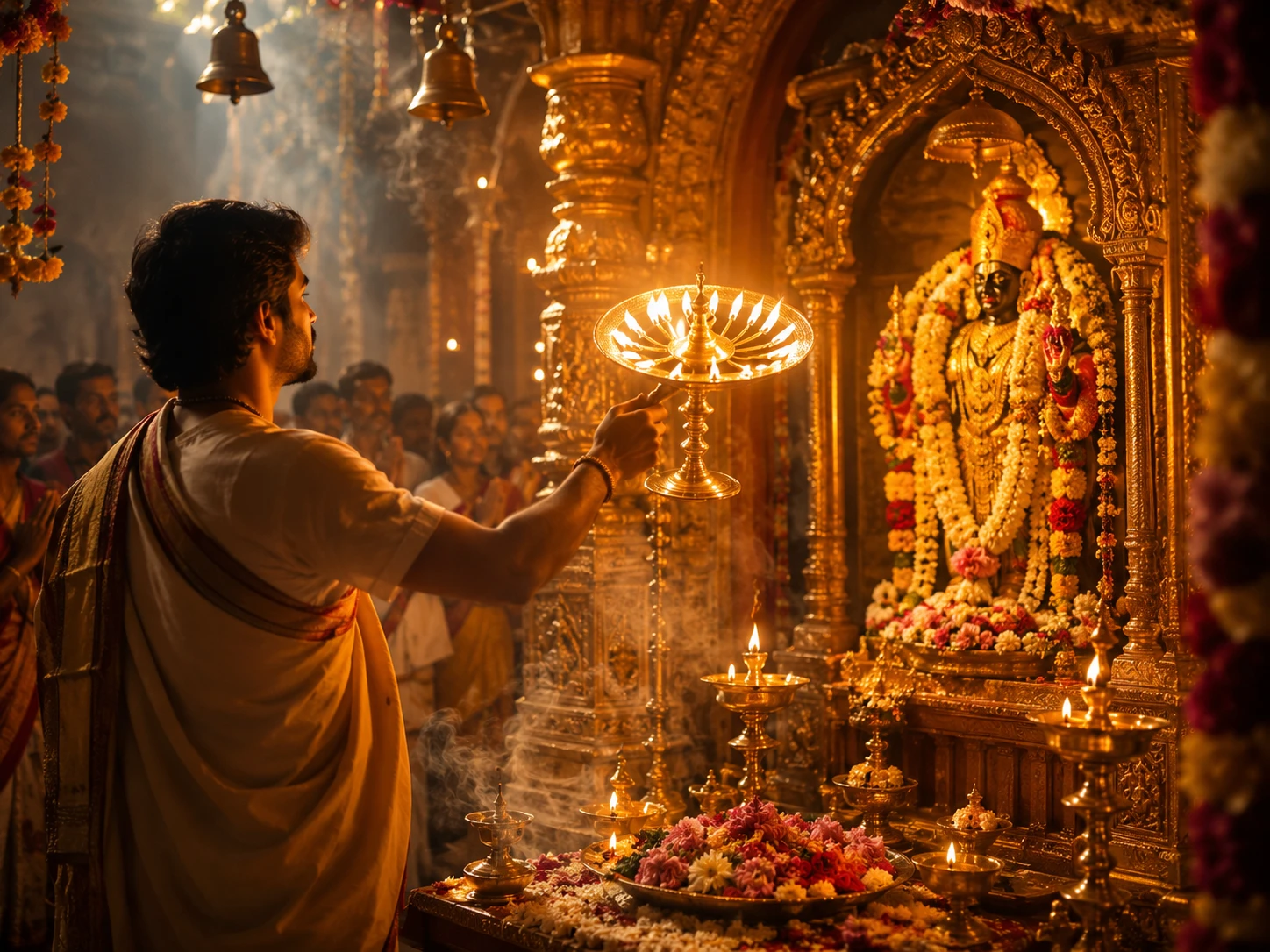
Aarti -- Why Hindus Circle Light Before God
13 min read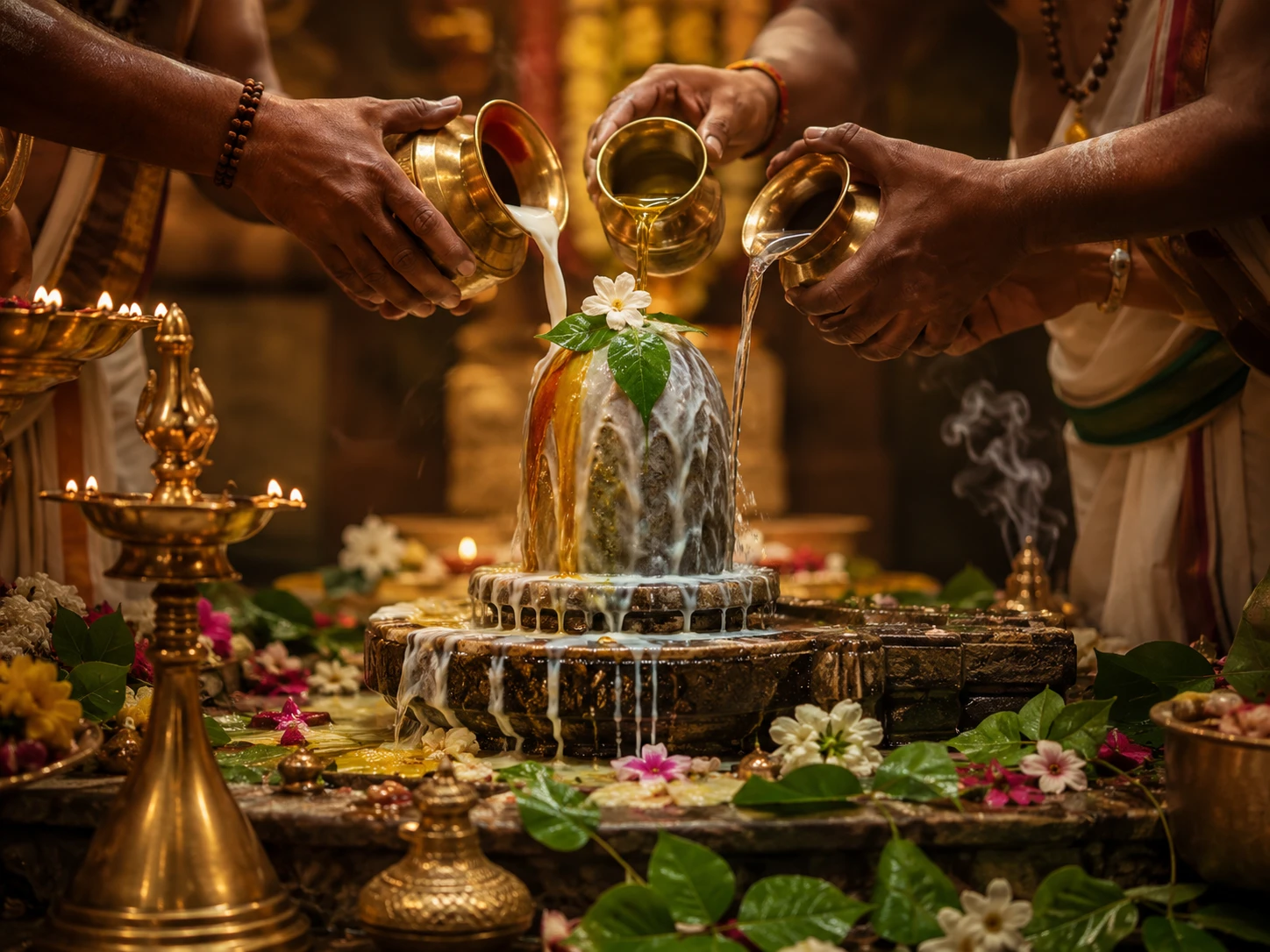
Abhisheka -- Why Hindus Bathe Their Gods
10 min read
Akshaya Tritiya -- The Day Nothing Given Away Runs Out
12 min readThe same translation error that turned '33 Koti' into '33 crore' in Hinduism also happened in Buddhism. The Chinese translation of Buddhist texts rendered 'Sapta Koti Buddha' (7 Supreme Buddhas) as '7 Crore Buddhas.' The…
Deities AvatarsCommunity Reflections
🕉️
Be the first to share your reflection.