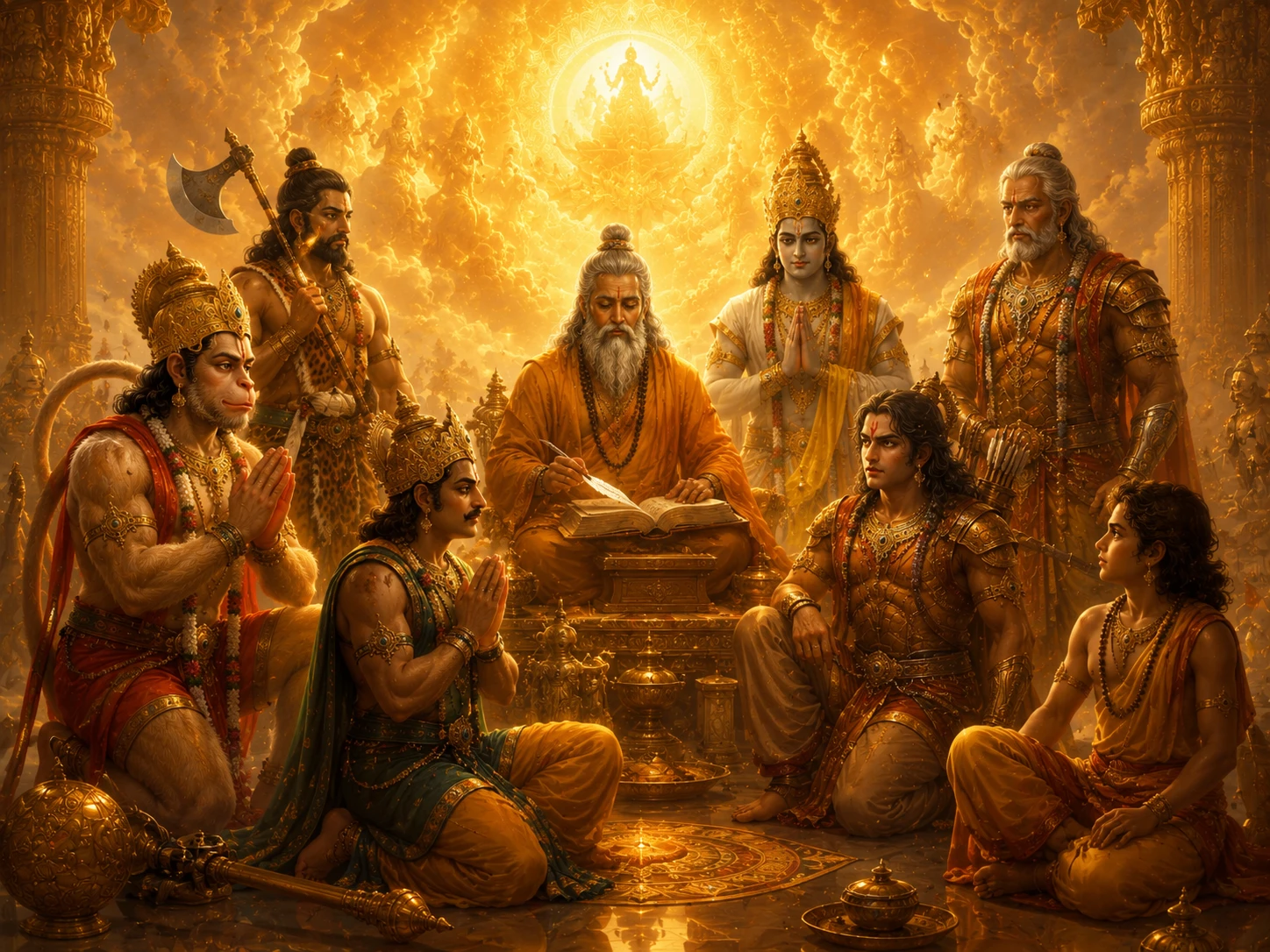
7 Chiranjeevis -- The Immortals of Hindu Tradition
सात चिरंजीवी -- हिन्दू परम्परा के अमर
In every mythology, there are stories of those who cannot die. Greek heroes seeking the golden apples of immortality. Chinese emperors swallowing mercury pills. Transhumanists in Silicon Valley uploading consciousness to the cloud. But Hindu tradition does something no other civilisation's mythology does -- it presents immortality as a spectrum. Some Chiranjeevis are blessed. Some are cursed. Some occupy a grey zone where the line between reward and punishment blurs entirely.
The word 'Chiranjeevi' comes from the Sanskrit 'chiram' (long) and 'jivi' (lived). It does not mean absolute immortality -- amaratva -- which belongs only to the divine. A Chiranjeevi lives for an entire kalpa (cosmic aeon), from one Satya Yuga to the next. They are present in this Kali Yuga, walking among us, visible or invisible, waiting for their roles in the cosmic endgame.
The canonical list names seven, with an eighth (Markandeya) added in many traditions. A well-known Sanskrit shloka from the Padma Purana names them explicitly and claims that remembering these eight immortals daily frees a person from disease and grants a hundred-year lifespan. The seven core names are: Ashwatthama, Bali, Vyasa, Hanuman, Vibhishana, Kripacharya, and Parashurama.
What makes the list extraordinary is its moral diversity. This is not a hall of fame. It includes a war criminal (Ashwatthama), a demon king who was more righteous than the gods (Mahabali), a sage who witnessed the dissolution of the universe (Markandeya), and a warrior-sage who massacred twenty-one generations of Kshatriyas (Parashurama). If UPSC asked 'Discuss the moral complexity of immortality in Hindu thought,' the Chiranjeevi list would be your entire answer.
अश्वत्थामा बलिर्व्यासो हनुमांश्च विभीषणः। कृपः परशुरामश्च सप्तैते चिरंजीविनः॥ सप्तैतान् संस्मरेन्नित्यं मार्कण्डेयमथाष्टमम्। जीवेद्वर्षशतं सोपि सर्वव्याधिविवर्जितः॥
aśvatthāmā balirvyāso hanumāṃśca vibhīṣaṇaḥ | kṛpaḥ paraśurāmaśca saptaite ciraṃjīvinaḥ || saptaitān saṃsmarennityaṃ mārkaṇḍeyamathāṣṭamam | jīvedvarṣaśataṃ sopi sarvavyādhivivarjitaḥ ||
Ashwatthama, Bali, Vyasa, Hanuman, Vibhishana, Kripacharya, and Parashurama -- these seven are the Chiranjeevis. One who remembers these seven daily, along with Markandeya as the eighth, shall live a hundred years free from all disease.
— Padma Purana 51.6-7
Ashwatthama is the most disturbing Chiranjeevi. The son of Guru Dronacharya, he fought on the Kaurava side in the Kurukshetra War. After the war, consumed by grief and rage at his father's death, he committed one of the most horrific acts in the Mahabharata: he attacked the sleeping Pandava camp at night and killed the five sons of Draupadi, mistaking them for the Pandavas. When confronted, he launched the Brahmastra -- the weapon of ultimate annihilation -- targeting the womb of Uttara, who carried the last heir of the Pandava lineage. Krishna intervened, saving the unborn Parikshit, but cursed Ashwatthama: the divine jewel (mani) was ripped from his forehead, and he was condemned to wander the earth for the entirety of Kali Yuga, his body covered with sores that would never heal, unable to communicate with or touch any living being. His immortality is a life sentence, not a gift.
Mahabali represents the opposite pole. A grandson of Prahlada, he was an Asura king so righteous that his rule brought a golden age. The Devas, alarmed at his power, asked Vishnu for help. Vishnu came as Vamana, a dwarf Brahmin, and asked Bali for three paces of land. Bali, despite his guru Shukracharya's warning, agreed. Vamana expanded to cosmic size, covering heaven with one step, earth with the second. For the third, Bali offered his own head. Vishnu, impressed by his devotion and generosity, pushed him to Patala Loka but granted him the boon of visiting his people once a year. That annual visit is celebrated as Onam in Kerala -- one of the largest harvest festivals in India, where Bali's portrait hangs in every home and the refrain is 'Maveli Nadu Vaneedum Kalam' -- when Bali ruled, all were equal.
Veda Vyasa -- Krishna Dvaipayana -- is perhaps the most consequential human being in Hindu literary history. He divided the Vedas into four (hence the name 'Vyasa,' the divider), composed the Mahabharata (the longest epic poem in any language, at roughly 100,000 verses), wrote the 18 Puranas, and authored the Brahma Sutras. Vaishnavites regard him as an avatar of Vishnu. His immortality is functional: the corpus of knowledge he compiled requires a consciousness vast enough to maintain it across ages.
Hanuman needs no introduction to any Indian, but his status as a Chiranjeevi deserves specific attention. He is not merely long-lived -- he is the most actively worshipped Chiranjeevi in India. Every Tuesday and Saturday, millions visit Hanuman temples. His immortality was granted by multiple divine boons: Brahma's protection from weapons, Indra's blessing that no thunderbolt could kill him, Surya's gift of knowledge. But the deepest reason for his immortality is stated in the Ramayana itself -- Rama told Hanuman that as long as the name of Rama is spoken on earth, Hanuman will live. Since Rama's name has never ceased to be chanted in India for thousands of years, Hanuman's immortality is, in a sense, powered by collective devotion.
Vibhishana, Ravana's youngest brother, chose dharma over blood. He defected to Rama's side during the Lanka war, was crowned king of Lanka after Ravana's fall, and was granted chiranjeevi status by Rama himself. His story is the definitive answer to 'what do you do when your family is wrong?' -- a question every NRI who has challenged regressive family traditions, every corporate whistleblower, every student who refused to cheat in an exam recognises.
Kripacharya is the quietest Chiranjeevi. The royal guru of both Pandavas and Kauravas, he survived the entire Kurukshetra War -- one of only three warriors on the Kaurava side to do so (along with Ashwatthama and Kritavarma). Krishna granted him immortality for his impartiality and adherence to dharma even while serving the losing side. He treated all his students as his own children, regardless of faction. In an India where coaching institute teachers are either worshipped or vilified, Kripacharya is the archetype of the teacher who teaches because it is right, not because it pays.
Parashurama -- Rama with the Axe -- is Vishnu's sixth avatar and the only Chiranjeevi who is simultaneously a divine incarnation. A Brahmin by birth and a warrior by fury, he annihilated twenty-one generations of Kshatriyas to avenge his father Jamadagni's murder. His is the story of righteous anger that goes too far -- a cautionary tale embedded inside a heroic one. He is worshipped in temple traditions along the Konkan coast, in coastal Karnataka and Kerala. The Parashurama Kshetra tradition credits him with reclaiming Kerala from the sea by throwing his axe from Gokarna.
Markandeya, the traditional eighth, won immortality through devotion to Shiva. Destined to die at age 16, he clung to the Shiva Linga as Yama's noose descended. Shiva emerged and kicked Yama away, declaring Markandeya would never age past 16. He is the sage who witnessed the pralaya -- the dissolution of the universe -- floating on a banyan leaf as a child while the cosmos collapsed around him. The Markandeya Purana, including the Devi Mahatmya (the foundational text of Shakti worship), is attributed to him.
The Seven Chiranjeevis (+ Markandeya) -- At a Glance
| Chiranjeevi | Epic/Purana | Boon or Curse? | Granted By | Core Virtue/Lesson | चिरंजीवी | महाकाव्य/पुराण | वरदान या शाप? | किसने दिया | मूल गुण/सीख |
|---|---|---|---|---|---|---|---|---|---|
| Ashwatthama | Mahabharata | Curse | Krishna | Immortality as punishment -- actions have eternal consequences | अश्वत्थामा | महाभारत | शाप | कृष्ण | अमरता दण्ड के रूप में -- कर्मों के शाश्वत परिणाम |
| Mahabali | Bhagavata Purana | Boon | Vishnu (Vamana) | Generosity and humility transcend Deva-Asura divide | महाबलि | भागवत पुराण | वरदान | विष्णु (वामन) | उदारता और विनम्रता देव-असुर भेद से परे |
| Vyasa | Mahabharata / Puranas | Boon | Divine mission | Knowledge preservation across cosmic ages | व्यास | महाभारत / पुराण | वरदान | दिव्य कार्य | ब्रह्माण्डीय युगों में ज्ञान-संरक्षण |
| Hanuman | Ramayana | Boon (multiple) | Brahma, Indra, Rama | Selfless devotion as the highest power | हनुमान | रामायण | वरदान (बहुविध) | ब्रह्मा, इन्द्र, राम | निःस्वार्थ भक्ति सर्वोच्च शक्ति |
| Vibhishana | Ramayana | Boon | Rama | Dharma over blood loyalty | विभीषण | रामायण | वरदान | राम | रक्त-सम्बन्ध पर धर्म |
| Kripacharya | Mahabharata | Boon | Krishna | Impartial duty regardless of outcome | कृपाचार्य | महाभारत | वरदान | कृष्ण | परिणाम-निरपेक्ष निष्पक्ष कर्तव्य |
| Parashurama | Multiple Puranas | Avatar status | Vishnu himself | Righteous anger and its limits | परशुराम | विविध पुराण | अवतार-पद | स्वयं विष्णु | धार्मिक क्रोध और उसकी सीमाएँ |
| Markandeya (8th) | Markandeya Purana | Boon | Shiva | Devotion conquers even Death | मार्कण्डेय (8वें) | मार्कण्डेय पुराण | वरदान | शिव | भक्ति मृत्यु को भी जीत लेती है |
Note: Chiranjeevi means 'long-lived for a kalpa,' not absolutely immortal (amaratva). Some traditions add Jambavan as a ninth. The core seven are consistent across all major texts.
Kerala's Onam festival -- one of India's largest state festivals -- celebrates the annual return of Chiranjeevi Mahabali to visit his people. The festival's flower carpet (Pookalam) tradition and Onam Sadya (feast served on banana leaves) honour a demon king who was more just than the gods. The Indian Army's Parachute Regiment uses 'Balidan' (sacrifice) as its motto, echoing the Chiranjeevi tradition of duty unto death and beyond. Parashurama temples along the Konkan coast (from Goa to Kerala) mark the 'Parashurama Kshetra' -- the land tradition says he reclaimed from the sea. The Chiranjeevi shloka is recited daily in Ayush Homams -- Vedic fire rituals performed for longevity -- across South India and the Gulf NRI diaspora.
The Chiranjeevi tradition carries a philosophical argument that most mythology lists miss: immortality is not the point. The Chiranjeevis are not living because they wanted to live forever. They are living because they have unfinished cosmic work. Ashwatthama is alive because his karma demands it. Hanuman is alive because devotion sustains him. Vyasa is alive because the knowledge he carries cannot be lost. Parashurama is alive because Kalki -- the final avatar of Vishnu -- will need a teacher.
This reframes the modern obsession with longevity. Silicon Valley dreams of living to 150 through cryogenics and NAD+ supplements. The Chiranjeevi framework asks: to what purpose? If your life does not serve dharma, if your consciousness does not carry knowledge worth preserving, if your presence does not protect the vulnerable -- then what is the point of extra years? Ashwatthama has had thousands of years, and every one of them is suffering.
The next time someone asks you to name the seven Chiranjeevis for a quiz, remember: you are not listing trivia. You are listing seven different answers to the question 'why should anyone live forever?' -- and at least one of those answers is 'they shouldn't.'
Chant Hanuman Chalisa -- Invoke the Living Chiranjeevi
Hanuman is the most accessible Chiranjeevi in the Kali Yuga. Begin a Hanuman Chalisa practice -- once daily, or every Tuesday and Saturday. It is on Eternal Raga with its meaning.
Tags
Eternal Raga · शाश्वत राग
Institutional voice — scholarly articles on Sanatan Dharma
Deepen Your Understanding
अपनी समझ और गहरी करें
scriptural exegesis
Ashwatthama and the Brahmashirsha -- The Night the War Refused to End
The war ended on Day 18 when Bhima shattered Duryodhana's thighs. The victory celebrations should have begun. Instead, that night, three Kaurava survivors -- Ashwatthama, Kripa, and Kritavarma -- entered the sleeping Pandava camp and slaughtered everyone inside. The five sons of Draupadi. Dhrishtadyumna. Shikhandin. Thousands of soldiers who believed the war was over. Then Ashwatthama launched the Brahmashirsha Astra at the unborn child in Uttara's womb -- Arjuna's grandson, the last heir of the Pandava line. Krishna saved the child and cursed Ashwatthama to wander the earth for 3,000 years in agony. He is still walking.
deities avatars
Hanuman -- The Perfect Devotee
He could lift mountains, leap oceans, and burn Lanka to the ground -- yet his greatest power was this: he never forgot whose work he was doing. Hanuman is not just a mythological hero. He is the operating system of selfless devotion that India still runs on.
scriptural exegesis
Pandavas in Hell -- The Shocking Finale of the Mahabharata
The Mahabharata does not end with victory. It ends with the heroes falling dead on a Himalayan climb, the villains seated in heaven, and the one righteous king demanding to be sent to hell. The Swargarohana Parva is the most unsettling, most philosophically radical, and most misunderstood finale in all of world literature.
scriptural exegesis
After Kurukshetra -- What Happened Next
The war ended. The Pandavas won. And then everything fell apart. Krishna's clan destroyed itself in a drunken brawl. Dwaraka sank into the sea. Arjuna's divine powers vanished. And the five brothers who fought the greatest war in history walked into the Himalayas to die. The Mahabharata's post-war chapters are darker, stranger, and more relevant than the war itself.
scriptural exegesis
Suryavanshi -- The Solar Dynasty from the First King to Rama
Rama was not the first king of Ayodhya. He was the 67th. Before him came Ikshvaku, who sneezed into existence from Manu's nostril. Then Harishchandra, who sold himself into slavery for truth. Then Sagara, whose 60,000 sons were burned to ash. Then Bhagiratha, who brought Ganga from heaven to redeem them. Then Raghu, who conquered the world. Then Dasharatha, who gave his life for a promise. This is the Solar Dynasty -- the longest unbroken royal lineage in any mythology on earth.
scriptural exegesis
Samudra Manthan -- When Gods and Demons Ran a Joint Venture and the Universe Almost Died
A cosmic ocean. A mountain for a churning rod. A serpent king for a rope. Gods on one end, demons on the other. And out came 14 treasures -- including wealth, beauty, medicine, immortality, and one poison so lethal it could end creation itself. The Samudra Manthan is not mythology. It is the original playbook for collaboration, crisis management, and how to handle it when your joint venture partner tries to cheat you.
Kerala's Onam festival -- one of India's largest state festivals -- celebrates the annual return of Chiranjeevi Mahabali to visit his people. The festival's flower carpet (Pookalam) tradition and Onam Sadya (feast served…
More in Scriptural Exegesis
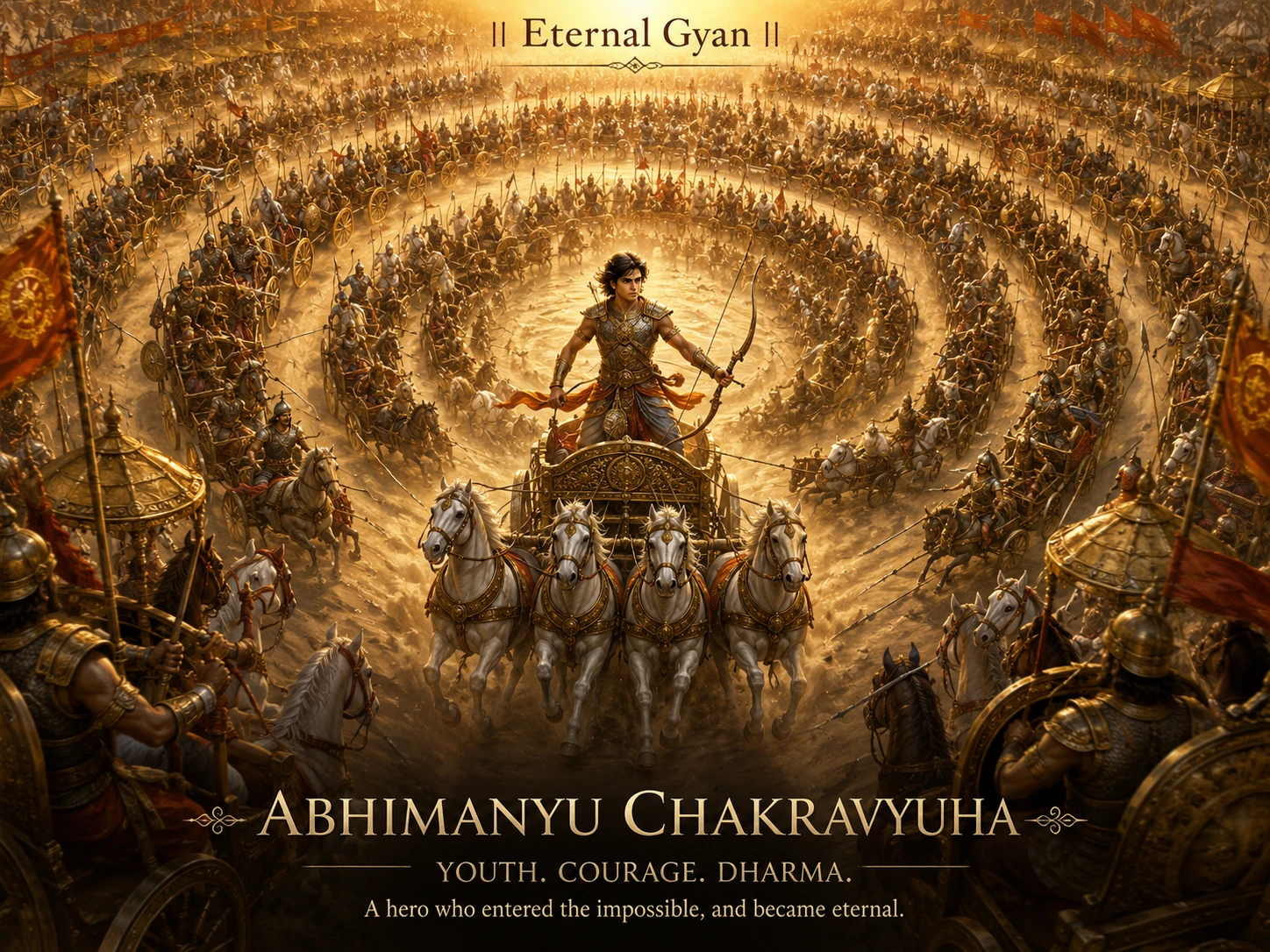
Abhimanyu and the Chakravyuha -- The Boy Who Knew How to Enter but Not How to Leave
14 min read
Adbhuta Ramayana -- The Ramayana Where Sita Becomes Kali
9 min read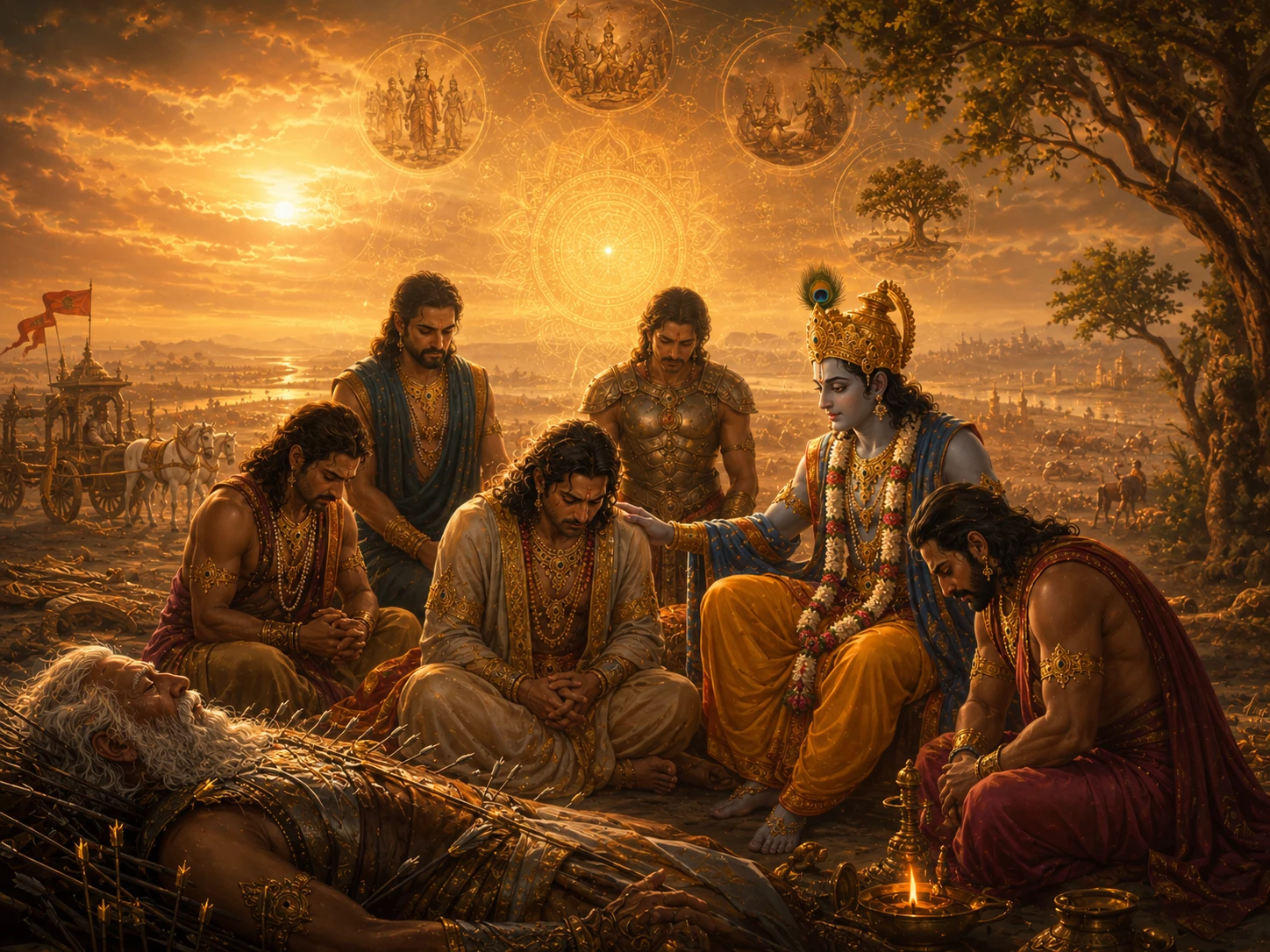
After Kurukshetra -- What Happened Next
14 min readThe same translation error that turned '33 Koti' into '33 crore' in Hinduism also happened in Buddhism. The Chinese translation of Buddhist texts rendered 'Sapta Koti Buddha' (7 Supreme Buddhas) as '7 Crore Buddhas.' The…
Deities AvatarsCommunity Reflections
🕉️
Be the first to share your reflection.