The 14 Manus -- Cosmic Reset Buttons of Hindu Time
14 मनु -- हिन्दू काल के ब्रह्माण्डीय रीसेट बटन
Introduction -- The Universe Has a Shift System
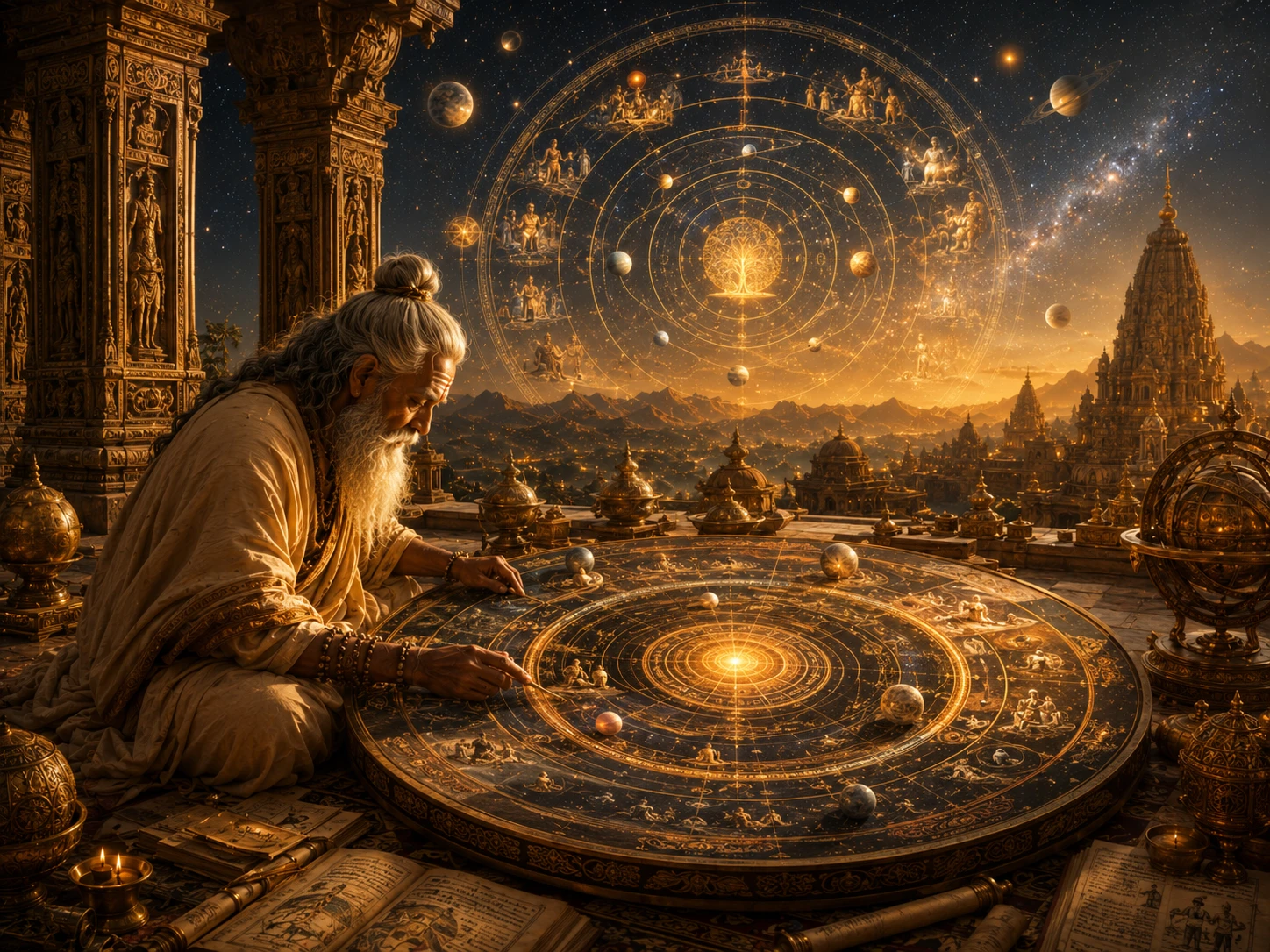
One day of Brahma -- called a Kalpa -- lasts 4.32 billion years. During this single day, the cosmos is created, populated, governed, and dissolved. But Brahma does not micromanage. He delegates the governance of each era to a Manu -- a cosmic administrator who serves as the father of humanity, the establisher of dharma, and the head of a complete divine bureaucracy including a specific Indra (king of gods), a set of Saptarishis (seven sages), and an avatar of Vishnu assigned to that era.
There are exactly fourteen Manus per Kalpa. Each Manu's reign is called a Manvantara, lasting 306.72 million years (71.42 Mahayugas of 4.32 million years each, plus transitional Sandhya periods). When one Manu's term ends, a partial dissolution (Naimittika Pralaya) occurs: the old team retires to higher lokas, and a fresh Manu takes charge with an entirely new divine cabinet.
We are currently in the 7th Manvantara, governed by Vaivasvata Manu -- the son of Surya and Sanjana, whom we met in the previous article on Surya's family tree. Seven Manus have served before him. Seven will serve after. The 8th Manu will be Savarni, son of Surya and Chhaya (Surya's shadow-wife), who is currently performing tapas on Mount Meru in preparation.
The Bhagavata Purana (Skanda 8, Adhyayas 1, 5, and 13) and the Vishnu Purana (Book 3) provide the most comprehensive lists. The verse at Bhagavata Purana 12.7.15 defines the six components of each Manvantara: the Manu, the Devatas, the Manu's sons, the Indra, the Saptarishis, and the Vishnu avatar.
For a corporate professional familiar with CXO rotations, board term limits, and management succession planning, the Manvantara system is the oldest documented governance succession framework in human intellectual history. Each Manu is essentially a CEO with a 306-million-year term, a divine board of directors (Saptarishis), a chairman emeritus (Vishnu avatar), and a complete C-suite (Indra, Devatas). The cosmos runs on institutional design, not ad hoc improvisation.
मन्वन्तरं मनुर्देवा मनुपुत्राः सुरेश्वराः। ऋषयोंऽशावताराश्च हरेः षड्विधमुच्यते॥
manvantaram manurdevaa manuputraah sureshvaraah rshayo amshaavataaraash cha hareh shadvvidham uchyate
A Manvantara is defined by six components: the Manu, the Devatas (gods), the Manu's sons, the Indra (king of gods), the Rishis (sages), and the Amsha-avatara (partial incarnation) of Hari (Vishnu).
— Bhagavata Purana, Skanda 12, Adhyaya 7, Shloka 15
The 14 Manus -- Complete Roster
| # | Manu | Father | Indra | Vishnu Avatar | Status |
|---|---|---|---|---|---|
| 1 | Svayambhuva | Brahma (self-born) | Yajna (himself) | Yajna | Completed |
| 2 | Svarochisha | Agni (Fire god) | Rochana | Vibhu | Completed |
| 3 | Uttama | Priyavrata (Manu 1's son) | Satyajit | Satyasena | Completed |
| 4 | Tamasa | Brother of Uttama | Trishikha | Hari | Completed |
| 5 | Raivata | Brother of Tamasa | Vibhu | Vaikuntha | Completed |
| 6 | Chakshusa | Son of Chakshu | Mantradruma | Ajita | Completed |
| 7 | Vaivasvata (CURRENT) | Surya + Sanjana | Purandara | Vamana | ACTIVE -- we are here |
| 8 | Savarni | Surya + Chhaya | Bali | Sarvabhauma | Awaiting -- tapas on Meru |
| 9 | Daksha-savarni | Varuna | Adbhuta | Rishabha | Future |
| 10 | Brahma-savarni | Upashloka | Shanti | Vishvaksena | Future |
| 11 | Dharma-savarni | Dharma | Vaidhrita | Dharmasetu | Future |
| 12 | Rudra-savarni | Rudra | Ritadhama | Sudhama | Future |
| 13 | Deva-savarni | Deva | Divaspati | Yogeshvara | Future |
| 14 | Indra-savarni | Indra | Shuchi | Brihadbhanu | Future |
Source: Bhagavata Purana, Skanda 8, Adhyayas 1, 5, 13; Vishnu Purana, Book 3; Srimad Bhagavatam 8.1.5,13. Names of Manus 1-9 are largely consistent across texts; Manus 10-14 show variations between Puranas. Each Manvantara = 306.72 million years. 14 Manvantaras = 1 Kalpa = 1 day of Brahma = 4.32 billion years.
14 Manvantaras of This Kalpa
One Kalpa = 14 Manvantaras = 4.32 Billion Years
Source: Śrīmad Bhāgavata Purāṇa, Skandha 8
The 7th Manu -- Why Vaivasvata Matters to Everyone Alive Today
Vaivasvata Manu is not just the current cosmic administrator. He is the direct ancestor of every human dynasty described in Hindu scripture. His ten sons include Ikshvaku (who founded the Suryavanshi/Solar Dynasty leading to Rama) and Ila (who, through a divine gender transformation, became the progenitor of the Chandravanshi/Lunar Dynasty leading to the Pandavas and Kauravas). Every king, every warrior, every sage descended from a human lineage in the Puranas traces back to Vaivasvata Manu.
The most famous episode of Vaivasvata Manu's career is the Great Flood. The Matsya Purana and Bhagavata Purana (Skanda 8) narrate how a tiny fish (Matsya, Vishnu's first avatar) appeared to Manu while he was performing tarpana in a river. The fish grew rapidly, and Manu kept transferring it to larger bodies of water. Eventually, the fish revealed itself as Vishnu and warned Manu of an impending cosmic flood (Pralaya). Manu built a boat, loaded it with the Vedas, the Saptarishis, seeds of all species, and his family. Matsya towed the boat through the floodwaters using Vasuki (the serpent king) as a rope, and anchored it on the peak of the Himalayas called Naubandhana.
The structural parallels with the Mesopotamian Gilgamesh flood, the Biblical Noah narrative, and the Greek Deucalion myth are well documented in comparative mythology. What distinguishes the Hindu version is that the flood is not a one-time divine punishment but a cyclical cosmic event that occurs at the junction of every Manvantara. There have been six floods before this one. There will be seven more.
The Bhagavad Gita (4.1) references this lineage directly: Krishna tells Arjuna: 'I taught this imperishable yoga to Vivasvan (Surya); Vivasvan taught it to Manu; Manu taught it to Ikshvaku.' This single verse connects the divine (Krishna/Vishnu), the cosmic (Surya), the administrative (Manu), and the royal (Ikshvaku/Solar Dynasty) in one unbroken chain -- the same chain that the Vanshavali series maps article by article.
The 8th Manu -- Savarni -- is the son of Surya and Chhaya (Surya's shadow-wife). According to the Bhagavata Purana (Skanda 8, Chapter 13), during his Manvantara, the Indra (king of gods) will be Bali -- the same Bali who was the righteous demon king cheated by Vishnu's Vamana avatar in the current Manvantara. Bali was so virtuous that Vishnu promised him he would become Indra in the next era. This means a Daitya (demon) will hold the highest divine office in the next cosmic age -- the ultimate vindication of the Hindu tradition's refusal to draw absolute lines between 'good' and 'evil.'
We are currently in the 28th Mahayuga of the 7th Manvantara (Vaivasvata), in the Kali Yuga of that Mahayuga. According to Puranic calculations, approximately 120.4 million years have elapsed since the start of Vaivasvata's reign, and approximately 186.3 million years remain. The Bhagavad Gita (4.1) states that Vivasvan (Surya) taught yoga to Manu 'at the beginning of this Manvantara' -- which Puranic commentators calculate as roughly 120 million years ago. When Krishna says 'this ancient yoga has been lost over time,' he is speaking across a timescale that makes geological epochs look brief.
Explore the Kaal Ganana Time System
The Manvantara system is one layer of the larger Hindu time architecture. Explore the complete framework -- from Truti (29.6 microseconds) to Brahma's lifespan (311 trillion years) -- in the Kaal Ganana article.
Tags
Eternal Raga · शाश्वत राग
Institutional voice — scholarly articles on Sanatan Dharma
Deepen Your Understanding
अपनी समझ और गहरी करें
vedic sciences
Kaal Ganana -- The Hindu Measure of Time
From a single blink of the eye (Nimesha) to one Day of Brahma (4.32 billion years) -- explore the complete cosmic time hierarchy of Hindu cosmology, anchored in Vishnu Purana 1.3, with its remarkable parallels to modern science.
deities avatars
Surya's Family -- How One God Fathered Yama, Shani, the Ashwini Kumaras, and All of Humanity
Surya had two wives: Sanjana, who could not bear his radiance, and Chhaya, the shadow she left behind. From Sanjana came Yama (death), Yamuna (the river), Manu (humanity's ancestor), and the Ashwini Kumaras (divine physicians). From Chhaya came Shani (Saturn, karma's enforcer), Tapati (the river), and Savarni Manu (the next cosmic era's ruler). Same father. Two mothers. Ten children. And the entire human race.
scriptural exegesis
Brahma's Children -- The First Generation of Creation
Brahma tried three times to populate the universe. First he created four sons who refused to reproduce and became monks. Then he got so angry that Rudra burst from his forehead. Finally he created ten Prajapatis from his mind -- and through them, every god, demon, human, animal, and plant in existence traces its origin. This is the original org chart of the cosmos.
scriptural exegesis
Suryavanshi -- The Solar Dynasty from the First King to Rama
Rama was not the first king of Ayodhya. He was the 67th. Before him came Ikshvaku, who sneezed into existence from Manu's nostril. Then Harishchandra, who sold himself into slavery for truth. Then Sagara, whose 60,000 sons were burned to ash. Then Bhagiratha, who brought Ganga from heaven to redeem them. Then Raghu, who conquered the world. Then Dasharatha, who gave his life for a promise. This is the Solar Dynasty -- the longest unbroken royal lineage in any mythology on earth.
vedic sciences
Hiranyagarbha -- The Golden Egg That Became the Universe
Before the Big Bang had a name, the Rig Veda described creation erupting from a golden cosmic egg -- Hiranyagarbha. The Shiva Purana says Shiva split it. The Vishnu Purana says Vishnu incubated it. The Manusmriti says it floated in darkness for a year. And the Nasadiya Sukta says: honestly, who really knows? Five texts, five creation stories, one civilisation honest enough to hold them all simultaneously.
deities avatars
Dashavatara -- Why Vishnu Comes Back Ten Times
Fish, tortoise, boar, half-lion, dwarf, axe-warrior, prince, cowherd, enlightened teacher, future horseman. The ten avatars of Vishnu are not random folklore. Read them in sequence and you get something startling -- a narrative that mirrors evolutionary biology, tracks the rise and fall of political systems, and argues that God does not sit above history but enters it, gets dirty, and does the work. The Dashavatara is Hinduism's answer to the question every civilisation asks: why does the world keep breaking, and who fixes it?
The 8th Manu -- Savarni -- is the son of Surya and Chhaya (Surya's shadow-wife). According to the Bhagavata Purana (Skanda 8, Chapter 13), during his Manvantara, the Indra (king of gods) will be Bali -- the same Bali who…
More in Vedic Sciences
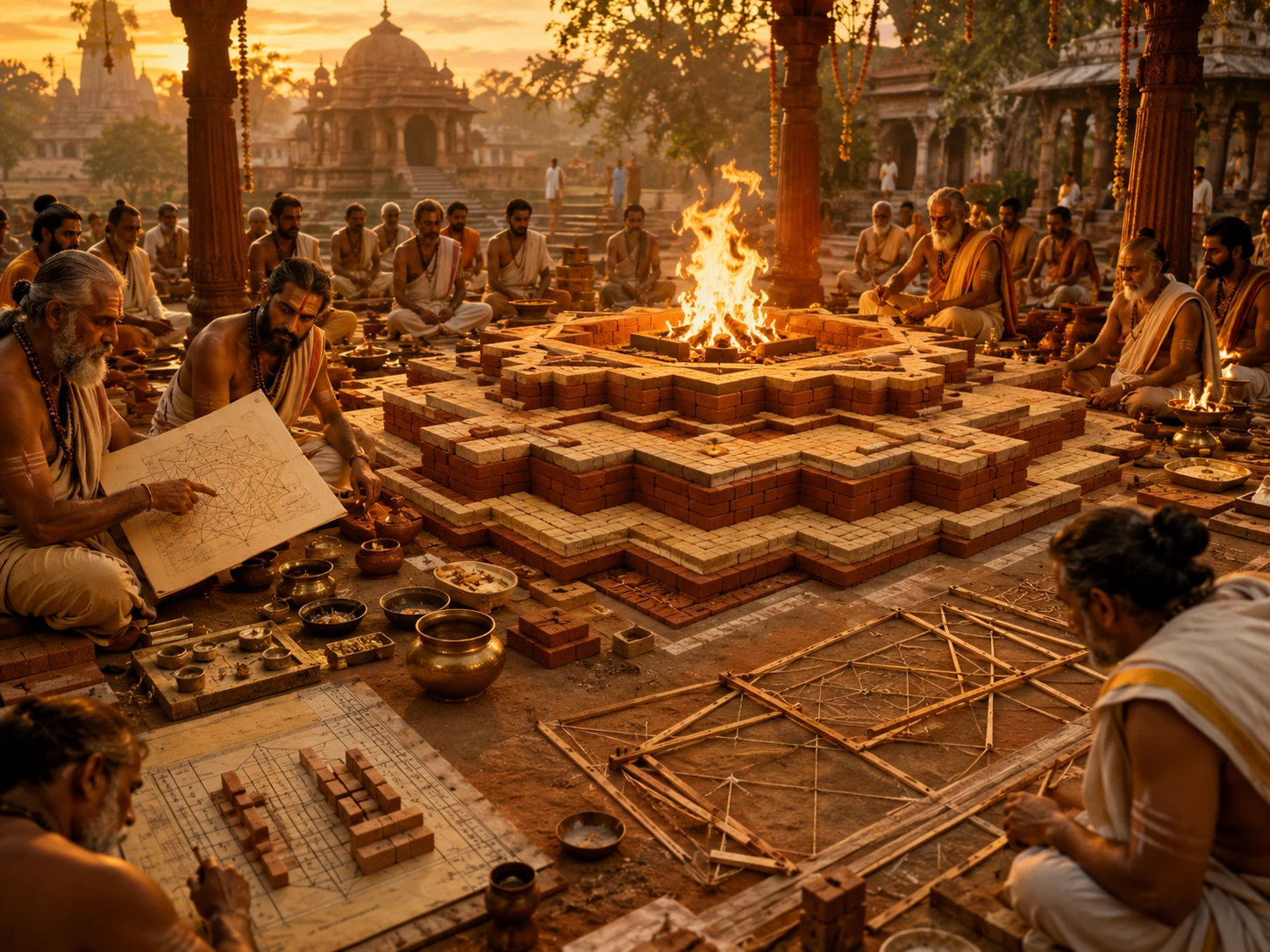
Agnichayana -- The Falcon-Shaped Fire Altar That Survived 3,000 Years
12 min read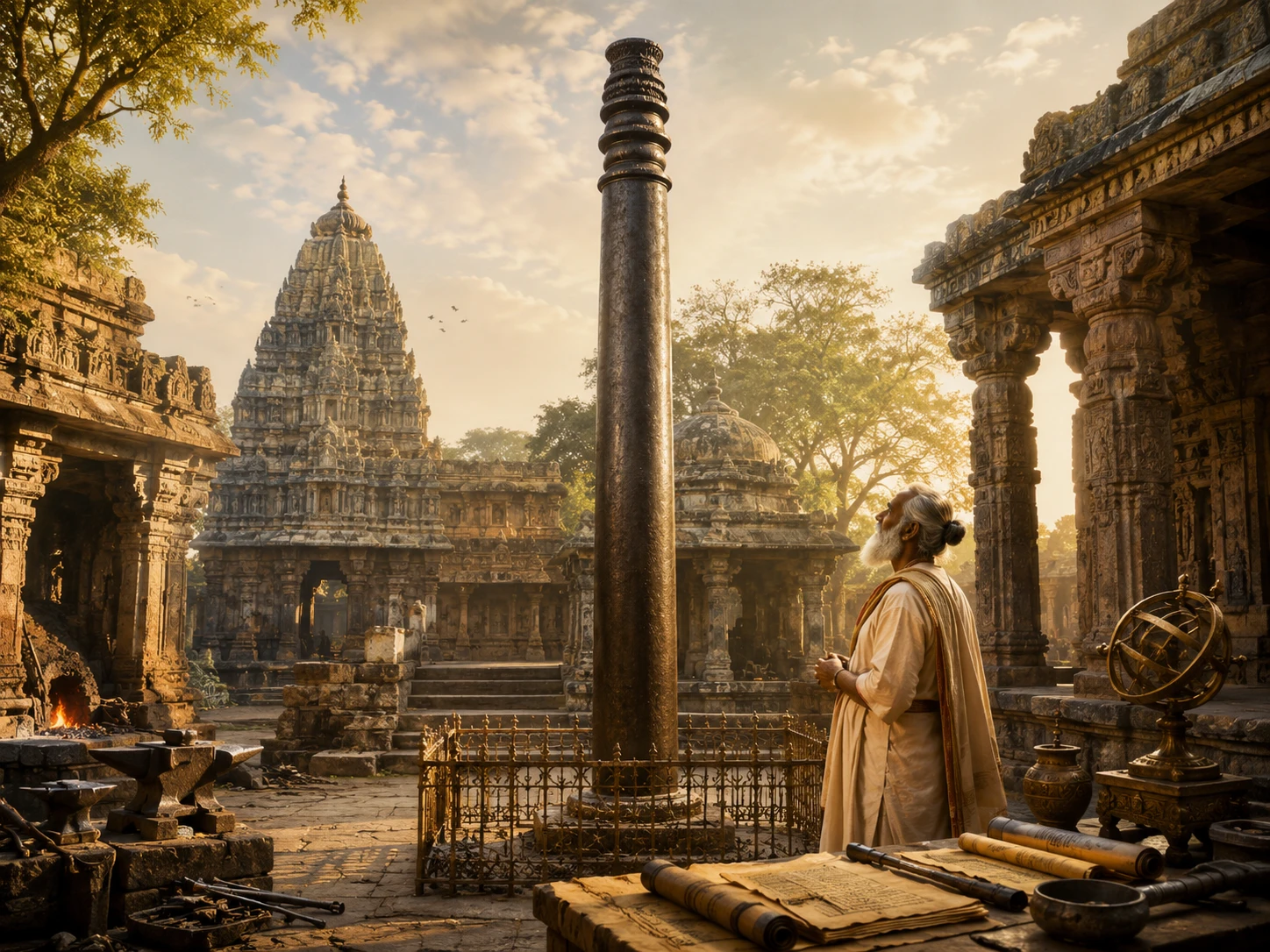
Ancient Indian Metallurgy -- The Iron Pillar That Refuses to Rust
13 min readAryabhata -- The Astronomer Who Said the Earth Turns
3 min readThe same translation error that turned '33 Koti' into '33 crore' in Hinduism also happened in Buddhism. The Chinese translation of Buddhist texts rendered 'Sapta Koti Buddha' (7 Supreme Buddhas) as '7 Crore Buddhas.' The…
Deities AvatarsCommunity Reflections
🕉️
Be the first to share your reflection.