Dashavatara -- Why Vishnu Comes Back Ten Times
दशावतार -- विष्णु बार-बार क्यों आते हैं
अवतार की अवधारणा हिन्दू धर्म का सबसे विशिष्ट धर्मशास्त्रीय नवाचार है। कोई अन्य प्रमुख धर्म यह दावा नहीं करता कि ईश्वर बार-बार भौतिक संसार में अवतरित होता है, शारीरिक रूप धारण करता है, किसी विशिष्ट युग की सीमाओं में पूर्ण जीवन जीता है, और उस युग की समस्याओं के अनुसार शिक्षाएँ छोड़ जाता है। ईसाई अवतरण एक बार होता है। इस्लामी पैग़म्बर परम्परा में मानव सन्देशवाहक हैं, स्वयं ईश्वर नहीं। बौद्ध बोधिसत्त्व अवधारणा सबसे निकट आती है लेकिन भिन्न तात्त्विक नियमों के अन्तर्गत कार्य करती है। वैष्णवता में ईश्वर एजेण्ट नहीं भेजता। स्वयं आता है। बार-बार।
'अवतार' शब्द संस्कृत मूल 'अवतरण' से आता है -- नीचे उतरना। इसका शाब्दिक अर्थ है 'जो अवतरित हो।' इस विषय पर भगवद्गीता का सबसे प्रसिद्ध कथन अध्याय 4, श्लोक 7-8 में आता है, जहाँ कृष्ण अर्जुन को बताता है कि जब-जब धर्म की हानि और अधर्म की वृद्धि होती है, वह स्वयं को प्रकट करता है। यह एक बार की घटना नहीं, आवर्ती प्रतिमान है -- एक ब्रह्माण्डीय रखरखाव चक्र जिसमें दिव्यता ब्रह्माण्ड की नैतिक व्यवस्था को पुनः संशोधित करने अवतरित होती है।
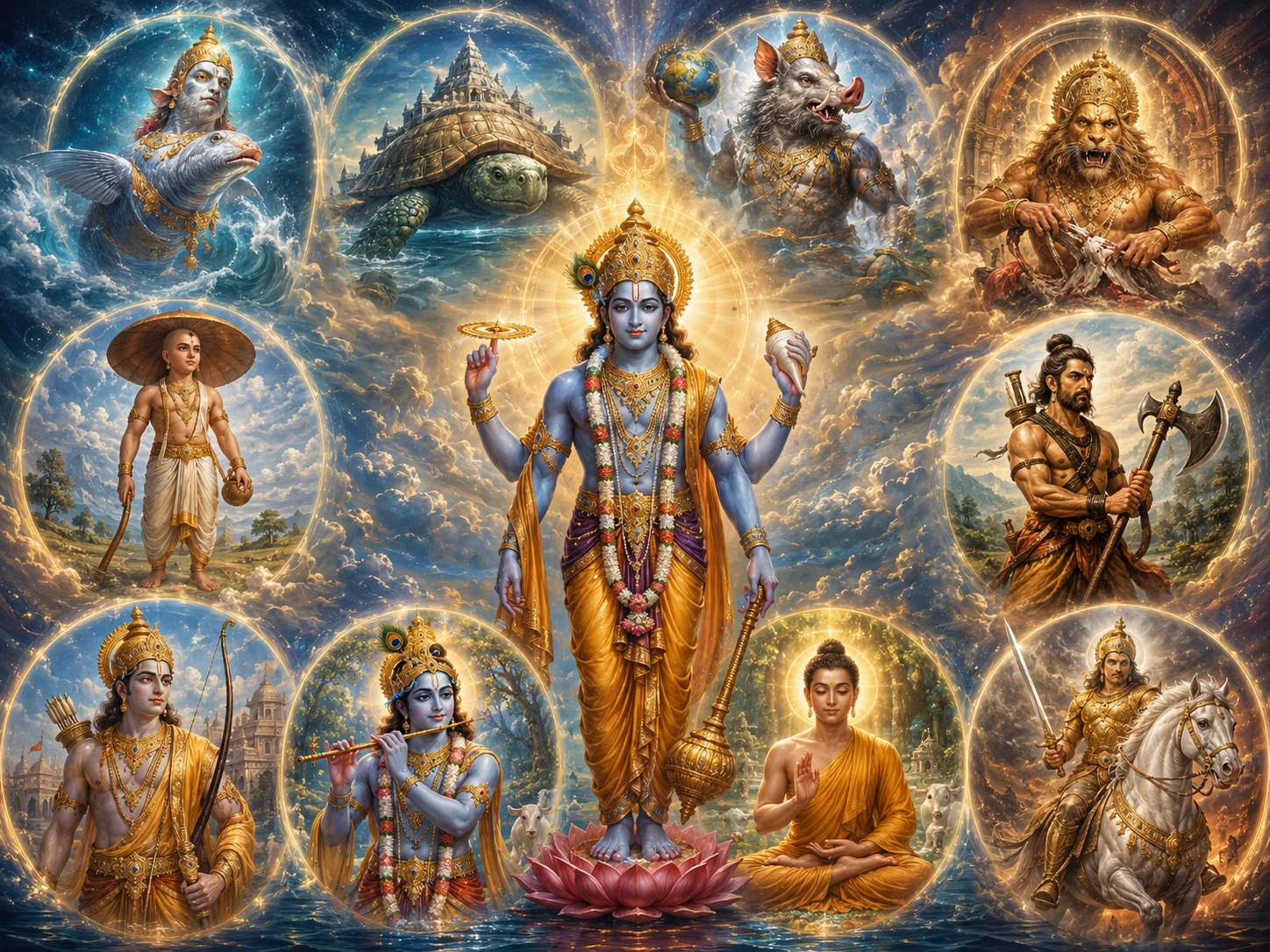
दस अवतारों की मानक सूची, गरुड़ पुराण और भागवत पुराण द्वारा लोकप्रिय, है: मत्स्य (मछली), कूर्म (कछुआ), वराह (सूकर), नरसिंह (नर-सिंह), वामन (बौना ब्राह्मण), परशुराम (योद्धा ब्राह्मण), राम (अयोध्या का राजकुमार), कृष्ण (वृन्दावन का ग्वाला), बुद्ध (ज्ञानी), और कल्कि (भविष्य का अश्वारोही जो कलियुग समाप्त करता है)। कुछ परम्पराएँ बुद्ध के स्थान पर बलराम, कृष्ण के बड़े भाई, को रखती हैं। भागवत पुराण स्वयं स्कन्ध 1 में 22 अवतार सूचीबद्ध करता है, जिससे 'दस' शास्त्रीय सिद्धान्त के बजाय लोकप्रिय सरलीकरण है।
इस सूची को बौद्धिक रूप से विस्फोटक बनाने वाली चीज़ है -- क्रम। 1894 में कर्नल ग्रूबर ने -- और बाद में, थियोसोफ़िस्ट हेलेना ब्लावात्स्की और मोनियर-विलियम्स जैसे विद्वानों ने -- नोट किया कि दस अवतार जैविक विकासवाद से अजीब रूप से मिलता-जुलता प्रतिमान अनुसरण करते हैं। जलीय (मत्स्य) से उभयचर (कूर्म) से स्थलीय स्तनपायी (वराह) से संक्रमणकालीन मानवाकार (नरसिंह) से लघु मानव (वामन) से आक्रामक आदि-मानव (परशुराम) से सभ्य राजा (राम) से दार्शनिक रणनीतिकार (कृष्ण) से पारलौकिक गुरु (बुद्ध) से प्रलयकारी संहारक-नवीनीकर्ता (कल्कि)। यह दावा नहीं कि प्राचीन भारतीयों ने 'विकासवाद खोजा।' यह नोट करना है कि कथात्मक अन्तर्ज्ञान -- जीवन जल से थल की ओर बढ़ता है, सहजवृत्ति से बुद्धि की ओर, पाशविक बल से परिष्कृत प्रज्ञा की ओर -- भारतीय पौराणिक चिन्तन में डार्विन से सहस्राब्दियों पहले अन्तर्निहित था।
यदा यदा हि धर्मस्य ग्लानिर्भवति भारत। अभ्युत्थानमधर्मस्य तदात्मानं सृजाम्यहम्॥ परित्राणाय साधूनां विनाशाय च दुष्कृताम्। धर्मसंस्थापनार्थाय सम्भवामि युगे युगे॥
yadā yadā hi dharmasya glānir bhavati bhārata | abhyutthānam adharmasya tadātmānaṁ sṛjāmy aham || paritrāṇāya sādhūnāṁ vināśāya ca duṣkṛtām | dharma-saṁsthāpanārthāya sambhavāmi yuge yuge ||
जब-जब धर्म की हानि होती है और अधर्म बढ़ता है, हे भारत, मैं स्वयं को प्रकट करता हूँ। साधुओं की रक्षा, दुष्टों के विनाश, और धर्म की स्थापना के लिए मैं युग-युग में अवतार लेता हूँ।
— Bhagavad Gita, Adhyaya 4, Shloka 7-8
आओ प्रत्येक अवतार से गुज़रें, न केवल कहानी बल्कि वह संकट जिसका वह उत्तर है और शासन का वह प्रतिमान जो वह प्रस्तुत करता है।
मत्स्य (मछली): विष्णु विशाल मछली का रूप धारण कर मनु (मानवता के पूर्वज), सप्तऋषियों, सभी पौधों के बीज, और सभी प्राणियों के नमूनों को प्रलयकारी बाढ़ से बचाता है। वासुकि नाग को रस्सी और मन्दर पर्वत को लंगर बनाकर उनकी नाव खींचता है। नूह की कहानी से समानता स्पष्ट है और 18वीं शताब्दी से विद्वानों ने नोट की है -- लेकिन निर्णायक अन्तर प्रयोजन में है। अब्राहमिक बाढ़ में ईश्वर पापी संसार को दण्डित करता है। हिन्दू बाढ़ में ईश्वर ज्ञान को संरक्षित करता है। मत्स्य पुरानी दुनिया नष्ट नहीं करता; सुनिश्चित करता है कि उसकी बुद्धिमत्ता नई दुनिया में संक्रमण से बचे। मत्स्य पुराण कहता है कि मछली ने उस दानव से वेद भी पुनः प्राप्त किए जिसने अराजकता के दौरान उन्हें चुराया था। यह संरक्षण अवतार है -- दण्डात्मक नहीं, संग्रहात्मक।
कूर्म (कछुआ): समुद्र मन्थन के दौरान मन्थन दण्ड (मन्दर पर्वत) डूबने लगता है। विष्णु विशाल कछुए का रूप धारण कर पर्वत के नीचे स्थिर आधार बन जाता है। शिक्षा अवसंरचना के बारे में है। हर महत्त्वाकांक्षी परियोजना को एक मौन नींव चाहिए जो भार सहे। IIT प्रोफ़ेसर जिसका नाम startup पर कभी नहीं आता लेकिन जिसकी lab ने संस्थापकों को प्रशिक्षित किया। DRDO का तकनीशियन जिसने अग्नि मिसाइल की heat shield परीक्षित की लेकिन जिसका नाम press release में नहीं। कूर्म अदृश्य भार-वाहक का धर्मशास्त्र है।
वराह (सूकर): दानव हिरण्याक्ष पृथ्वी को ब्रह्माण्डीय सागर की तली में खींच ले जाता है। विष्णु विशाल वराह का रूप धारण कर सागर तल तक डुबकी लगाता है, हिरण्याक्ष से हज़ार वर्ष युद्ध करता है, उसे मारता है, और पृथ्वी को अपने दाँतों पर उठाता है। यह पहला अवतार है जिसमें शारीरिक हिंसा शामिल है -- और पुराण अवधि के बारे में विशिष्ट हैं। हज़ार वर्ष का युद्ध मतलब सभ्यता को अस्तित्वगत संकट से उबारना एक वीरतापूर्ण क्षण नहीं। यह लम्बी, थकाऊ, गन्दी लड़ाई है। जिसने भी आपदा राहत में काम किया है -- केदारनाथ बाढ़ के बाद NDRF टीमें, चक्रवात फ़ानी के बाद ओडिशा -- जानता है। बचाव वह ग्लैमरस हेलीकॉप्टर शॉट नहीं। कीचड़ से शव निकालने के दिन और सप्ताह हैं।
नरसिंह (नर-सिंह): इस अवतार का इस श्रृंखला में अपना समर्पित लेख है, इसलिए यहाँ संक्षेप में। हिरण्यकशिपु ने वरदान प्राप्त कर स्वयं को लगभग अजेय बना लिया -- न मनुष्य मार सके न पशु, न भीतर न बाहर, न दिन में न रात, न धरती पर न आकाश में, किसी अस्त्र से नहीं। विष्णु नरसिंह प्रकट होता है -- अर्ध-मानव, अर्ध-सिंह -- और उसे देहली पर मारता है (न भीतर न बाहर), गोधूलि में (न दिन न रात), अपनी गोद में (न धरती न आकाश), अपने नखों से (अस्त्र नहीं)। शिक्षा: अत्याचार में हमेशा कमज़ोरियाँ होती हैं। जितना विस्तृत कवच, उतनी विशिष्ट भेद्यता।
वामन (बौना): राजा बलि, एक सदाचारी असुर, ने तीनों लोकों पर विजय प्राप्त की है -- अत्याचार से नहीं, शुद्ध प्रशासनिक उत्कृष्टता से। देवता विस्थापित हैं। विष्णु छोटे ब्राह्मण बालक का रूप धारण कर एक महान यज्ञ के दौरान बलि के पास जाता है, केवल तीन पग भूमि माँगता है। बलि, अपने गुरु शुक्राचार्य की चेतावनी के बावजूद, सहमत होता है। वामन फिर ब्रह्माण्डीय अनुपात में विस्तारित होता है -- एक पग पृथ्वी ढँकता है, दूसरा स्वर्ग। तीसरे के लिए कुछ शेष नहीं। बलि अपना सिर अर्पित करता है। विष्णु उसे पाताल में धकेलता है लेकिन वहाँ संप्रभुता और अगले मन्वन्तर में इन्द्र बनने का वचन देता है।
इस कहानी में दशावतार का सबसे सूक्ष्म राजनीतिक धर्मशास्त्र है। बलि दुष्ट नहीं है। सक्षम, उदार और धर्मपरायण है। एकमात्र दोष -- उसकी सफलता ने ब्रह्माण्डीय व्यवस्था विस्थापित कर दी। पाठ यह नहीं कि योग्यता को दण्डित किया जाए बल्कि यह कि वैध शक्ति को भी अपनी निर्धारित सीमाओं में रहना चाहिए। आधुनिक भारतीय शासन में यह गहरी गूँज रखता है -- सोचो ऐसी राज्य सरकार जो इतनी कुशल है कि केन्द्रीय क्षेत्रों में अतिक्रमण करने लगे, या tech कम्पनी जो इतनी प्रभावी हो कि समानान्तर सरकार की तरह कार्य करे। प्रतिक्रिया विनाश नहीं बल्कि सीमाओं का पुनर्निर्धारण है।
परशुराम (योद्धा ब्राह्मण): एक ब्राह्मण जो कुल्हाड़ी उठाता है। परशुराम के पिता, ऋषि जमदग्नि, को क्षत्रिय राजा कार्तवीर्यार्जुन (महाभारत का अर्जुन नहीं) ने दिव्य गाय कामधेनु के लिए मार डाला। परशुराम का उत्तर -- सम्पूर्ण क्षत्रिय वर्ग के विरुद्ध युद्ध -- एक बार नहीं, 21 बार, पृथ्वी को भ्रष्ट योद्धा-राजाओं से मुक्त करता है। वह कोमल नहीं। कूटनीतिक नहीं। वह साक्षात् धार्मिक क्रोध है।
परशुराम असुविधाजनक अवतार है -- जो अहिंसक समाधानों की आधुनिक वरीयता को चुनौती देता है। उसकी शिक्षा कि जब कोई सम्पूर्ण वर्ग या संस्था प्रणालीगत रूप से भ्रष्ट हो जाए, विनम्र सुधार काम नहीं करता। कुल्हाड़ी चाहिए। भारतीय इतिहास में हर बड़ी सामाजिक क्रान्ति का अपना परशुराम क्षण रहा: अम्बेडकर का जाति-सुधारवाद को अस्वीकार कर संवैधानिक क्रान्ति का चयन, आपातकाल का पाठ कि लोकतान्त्रिक संस्थाओं को हथियार बनाया जा सकता है, 2011 के लोकपाल आन्दोलन का आग्रह कि व्यवस्था स्वयं -- केवल व्यक्तिगत नेता नहीं -- भ्रष्ट थी।
राम (आदर्श राजा): राम की कथा रामायण में फैली है और धार्मिक राजत्व का प्रतिमान बनाती है -- वह शासक जो सार्वजनिक कर्तव्य के लिए व्यक्तिगत सुख बलिदान करता है। 14 वर्ष का वनवास स्वीकार करता है पिता के वचन का सम्मान करने को। युद्ध लड़ता है राज्य के लिए नहीं, पत्नी के सम्मान की पुनर्प्राप्ति के लिए। फिर कठिन निर्णय का सामना करता है कि सीता को स्वीकार करे या नहीं, जानते हुए कि जनधारणा -- चाहे कितनी भी अन्यायपूर्ण -- राजा के लिए महत्त्व रखती है।
कृष्ण (दिव्य रणनीतिकार): जहाँ राम नियमों का अन्त तक पालन करता है, कृष्ण उन्हें पुनर्लिखित करता है। कुरुक्षेत्र युद्ध जीतने के लिए झूठ बोलता है (अश्वत्थामा छल)। तकनीकी बारीकियों से योद्धाओं की मृत्यु अभियन्त्रित करता है, निष्पक्ष युद्ध के बजाय। गीता सिखाता है -- हिन्दू धर्म का सर्वाधिक परिष्कृत नैतिक ग्रन्थ -- उस योद्धा को जो लड़ना नहीं चाहता। कृष्ण व्यावहारिक बुद्धिमत्ता का अवतार है: संसार कठोर नियमावली के लिए बहुत जटिल है।
बुद्ध: बुद्ध का विष्णु अवतार के रूप में समावेश सूची की सबसे विवादास्पद और राजनीतिक रूप से महत्त्वपूर्ण प्रविष्टि है। भागवत पुराण (1.3.24) एक अवतार का उल्लेख करता है जो कलियुग के आरम्भ में 'देवों के शत्रुओं को भ्रमित करने' प्रकट होता है। बाद की वैष्णव परम्परा इसे सिद्धार्थ गौतम पहचानती है। धर्मशास्त्रीय चाल प्रतिभाशाली है: बौद्ध धर्म के संस्थापक को वैष्णव ढाँचे में समाहित कर हिन्दू धर्म एक साथ बुद्ध की नैतिक शिक्षाओं का सम्मान करता है और बौद्ध धर्म को पृथक धर्म के रूप में निष्प्रभावित करता है।
कल्कि (भविष्य का अवतार): कल्कि अभी प्रकट नहीं हुए। कल्कि पुराण और विष्णु पुराण उन्हें श्वेत अश्व पर योद्धा के रूप में वर्णित करते हैं जो कलियुग के अन्त में प्रकट होंगे जब मानव सभ्यता मरम्मत से परे क्षीण हो चुकी होगी। वे भ्रष्ट विश्व व्यवस्था नष्ट कर नया सतयुग प्रारम्भ करेंगे। कल्कि reset बटन है -- वचन कि चाहे स्थिति कितनी भी बुरी हो, चक्र घूमेगा।
10 अवतार -- संकट, रूप और शिक्षा
| Avatar | Form | Crisis | Core Teaching | Evolutionary Parallel |
|---|---|---|---|---|
| Matsya | Fish | Cosmic flood; Vedas stolen | Preserve knowledge across catastrophe | Aquatic life |
| Kurma | Tortoise | Churning rod sinking | Be the invisible foundation | Amphibian |
| Varaha | Boar | Earth dragged to ocean floor | Recovery takes prolonged, unglamorous fight | Terrestrial mammal |
| Narasimha | Man-Lion | Tyrant with total immunity | Every shield has a loophole | Transition to humanoid |
| Vamana | Dwarf Brahmin | Virtuous Asura displacing cosmic order | Even legitimate power has boundaries | Short early human |
| Parashurama | Warrior Brahmin | Systemic Kshatriya corruption | When institutions rot, the axe is needed | Aggressive homo sapiens |
| Rama | Prince-King | Disorder in ideal governance | Leadership demands personal sacrifice | Civilised ruler |
| Krishna | Cowherd-Strategist | Complex moral war | Rigid codes fail in complex reality | Philosophical mind |
| Buddha | Renunciant Teacher | Ritualism overriding compassion | Compassion transcends ritual | Transcendent consciousness |
| Kalki | Horseman (future) | Total civilisational collapse | The cycle will turn; reset is promised | Future evolution |
विकासवादी समानता पहली बार 19वीं शताब्दी में पश्चिमी शोध में नोट की गई। हालाँकि पौराणिक लेखकों ने सम्भवतः जैविक क्रम का इरादा नहीं किया, सरल से जटिल रूपों की प्रगति का सहज तर्क विस्मयकारी है।
भारत का मिसाइल कार्यक्रम दशावतार की सूची जैसा पढ़ा जाता है। अग्नि श्रृंखला (अग्निदेव के नाम पर), पृथ्वी, आकाश, त्रिशूल, नाग, और ब्रह्मोस (ब्रह्मपुत्र + मॉस्को) -- सब हिन्दू पौराणिक शब्दावली से लिए गए। DRDO की नामकरण प्रणाली आकस्मिक नहीं -- यह आधुनिक रक्षा प्रौद्योगिकी को सभ्यतागत कथा में जानबूझकर स्थापित करना है। जब 2012 में अग्नि-V मिसाइल 5,000+ किमी रेंज के साथ सफलतापूर्वक परीक्षित हुई, भारतीय social media दशावतार memes से भर गया -- मिसाइल के संस्करणों की उन्नति की विष्णु के अवतार-क्रम से तुलना।
दशावतार का गहन राजनीतिक पठन शासन-विकास का सिद्धान्त प्रकट करता है। प्रारम्भिक अवतार (मत्स्य से वराह) अस्तित्वगत ख़तरों से निपटते हैं -- बाढ़, ब्रह्माण्डीय अस्थिरता, ग्रहीय अपहरण। प्रतिक्रियाएँ प्रत्यक्ष, शारीरिक और एकपक्षीय हैं। एक सत्ता कार्य करती है, संकट हल होता है। यह आपातकालीन शासन है: सत्तावादी, आवश्यक, प्रभावी।
मध्य अवतार (नरसिंह से परशुराम) संस्थागत भ्रष्टाचार से निपटते हैं -- अत्याचारी राजा जिन्होंने व्यवस्था को अपने पक्ष में कर लिया। प्रतिक्रियाओं में रचनात्मक कमज़ोरियाँ खोजना (नरसिंह), शक्ति सीमाओं का पुनर्निर्धारण (वामन), या हिंसक क्रान्ति (परशुराम) शामिल है। यह संरचनात्मक सुधार है।
उत्तरवर्ती अवतार (राम से बुद्ध) नैतिक और दार्शनिक संकटों से निपटते हैं -- शासन का सही तरीका क्या है, न्यायसंगत युद्ध कैसे लड़ें, करुणा और व्यवस्था में सन्तुलन कैसे रखें। प्रतिक्रियाओं में जटिल नैतिक तर्क, रणनीतिक चिन्तन, और अन्ततः राजनीतिक ढाँचे का पूर्ण अतिक्रमण (बुद्ध) शामिल है। यह सभ्यतागत परिपक्वता है।
कल्कि, अन्तिम अवतार, यह स्वीकृति है कि सभी व्यवस्थाएँ अन्ततः विफल होती हैं और शून्य से पुनर्निर्मित करनी पड़ती हैं। यह सबसे ईमानदार राजनीतिक अन्तर्दृष्टि है: एन्ट्रॉपी जीतती है।
Old Rajinder Nagar में शासन प्रतिमान पढ़ रहे UPSC अभ्यर्थी के लिए दशावतार पौराणिक कथा नहीं, ढाँचा है: आपातकालीन शक्तियाँ (मत्स्य-वराह), संरचनात्मक सुधार (नरसिंह-वामन-परशुराम), नैतिक नेतृत्व (राम-कृष्ण), पारलौकिक समालोचना (बुद्ध), और प्रणालीगत reset (कल्कि)। सिविल सेवा परीक्षा का हर शासन प्रश्न इस चाप पर कहीं न कहीं अवस्थित होता है।
एते चांशकलाः पुंसः कृष्णस्तु भगवान्स्वयम्। इन्द्रारिव्याकुलं लोकं मृडयन्ति युगे युगे॥
ete cāṁśa-kalāḥ puṁsaḥ kṛṣṇas tu bhagavān svayam | indrāri-vyākulaṁ lokaṁ mṛḍayanti yuge yuge ||
ये सभी अवतार परमपुरुष के अंश या अंशों के अंश हैं। लेकिन कृष्ण स्वयं भगवान हैं। वे इन्द्र के शत्रुओं से व्याकुल संसार की रक्षा करते हैं, युग-युग में।
— Bhagavata Purana, Skandha 1, Adhyaya 3, Shloka 28
जयदेव की 12वीं शताब्दी की कविता गीत गोविन्द 'दशावतार स्तोत्र' से आरम्भ होती है -- सभी दस अवतारों की क्रमिक स्तुति। यह स्तोत्र भारतीय शास्त्रीय संगीत की सर्वाधिक प्रस्तुत रचनाओं में से एक का आधार बना। एम.एस. सुब्बुलक्ष्मी का 'प्रलय पयोधि जले' (इस स्तोत्र का मत्स्य श्लोक) गायन कर्नाटक संगीत की सर्वश्रेष्ठ रिकॉर्डिंग में गिना जाता है। कविता ने प्रत्यक्ष रूप से बादामी गुफ़ा मन्दिरों (6वीं शताब्दी), बेलूर के चेन्नकेशव मन्दिर (12वीं शताब्दी), और देवगढ़, उत्तर प्रदेश के दशावतार मन्दिर -- भारत के सबसे पुराने जीवित हिन्दू पाषाण मन्दिरों में से एक, गुप्त काल (5वीं शताब्दी ईस्वी) -- के दशावतार उत्कीर्ण फलकों को प्रेरित किया।
दशावतार स्तोत्र का जप करो
गीत गोविन्द से जयदेव के दशावतार स्तोत्र का अनुसरण करो। प्रत्येक श्लोक एक अवतार का सम्मान करता है। दैनिक जप का ट्रैक रखने के लिए जप काउण्टर का उपयोग करो।
Tags
Eternal Raga · शाश्वत राग
Institutional voice — scholarly articles on Sanatan Dharma
अपनी समझ गहरी करें
अपनी समझ और गहरी करें
deities avatars
Krishna Leela -- Why God Chose to Play
He stole butter, broke pots, lied to his mother's face, danced with married women under the full moon, and lifted an entire mountain on his little finger. The Bhagavata Purana's Tenth Skandha -- the most popular 4,000 verses in all of Hindu literature -- is not a biography. It is a theological argument that the Supreme Being's highest expression is not creation, destruction, or cosmic governance. It is play. Krishna Leela is the radical idea that God's truest nature is joy.
deities avatars
Narasimha -- The Avatar Who Broke Every Rule to Keep His Word
Hiranyakashipu thought he had hacked the universe. His boon covered every loophole -- no man, no animal, no weapon, no time, no place could kill him. He forgot one thing: God is not bound by the categories God created. Narasimha -- half-man, half-lion, appearing at twilight on a threshold with bare claws -- is Hinduism's most terrifying avatar and its most precise legal argument. The message is not that tyranny will be punished. The message is that tyranny's own logic contains its destruction.
scriptural exegesis
Samudra Manthan -- When Gods and Demons Ran a Joint Venture and the Universe Almost Died
A cosmic ocean. A mountain for a churning rod. A serpent king for a rope. Gods on one end, demons on the other. And out came 14 treasures -- including wealth, beauty, medicine, immortality, and one poison so lethal it could end creation itself. The Samudra Manthan is not mythology. It is the original playbook for collaboration, crisis management, and how to handle it when your joint venture partner tries to cheat you.
scriptural exegesis
Gita Chapter 2 -- Sankhya Yoga: The Chapter That Changed Indian Philosophy Forever
Arjuna drops his bow. His hands shake. He tells Krishna he would rather beg for food than kill his teachers and cousins. Krishna's response in Chapter 2 is the philosophical backbone of the entire Gita -- covering the immortality of the soul, the ethics of action without attachment, and the portrait of the Sthitaprajna (the person of steady wisdom). This single chapter contains more quotable verses than most entire scriptures. 'Karmanye vadhikaraste' lives on WhatsApp statuses for a reason.
philosophy darshana
Rama vs Krishna -- Two Faces of Dharma, One Question for Your Life
Rama followed every rule and lost his wife. Krishna broke every rule and won the war. Both are Vishnu. Both upheld Dharma. So who was right? The answer might be the most important thing Hindu philosophy has to say to a world that thinks morality is simple.
भारत का मिसाइल कार्यक्रम दशावतार की सूची जैसा पढ़ा जाता है। अग्नि श्रृंखला (अग्निदेव के नाम पर), पृथ्वी, आकाश, त्रिशूल, नाग, और ब्रह्मोस (ब्रह्मपुत्र + मॉस्को) -- सब हिन्दू पौराणिक शब्दावली से लिए गए। DRDO की नामकरण प्रण…
More in Deities & Avatars
33 Koti Devata -- Why Hinduism Has 33 Types of Gods, Not 33 Crore
13 मिनट पढ़ें
Agni -- The Fire God
19 मिनट पढ़ें
Annapurna -- Goddess of Food
19 मिनट पढ़ेंवही अनुवाद त्रुटि जिसने हिन्दू धर्म में '33 कोटि' को '33 करोड़' बनाया, बौद्ध धर्म में भी हुई। बौद्ध ग्रन्थों के चीनी अनुवाद ने 'सप्त कोटि बुद्ध' (7 श्रेष्ठ बुद्ध) का अनुवाद '7 करोड़ बुद्ध' कर दिया। तिब्बती अनुवाद ने सही …
Deities AvatarsCommunity Reflections
🕉️
Be the first to share your reflection.