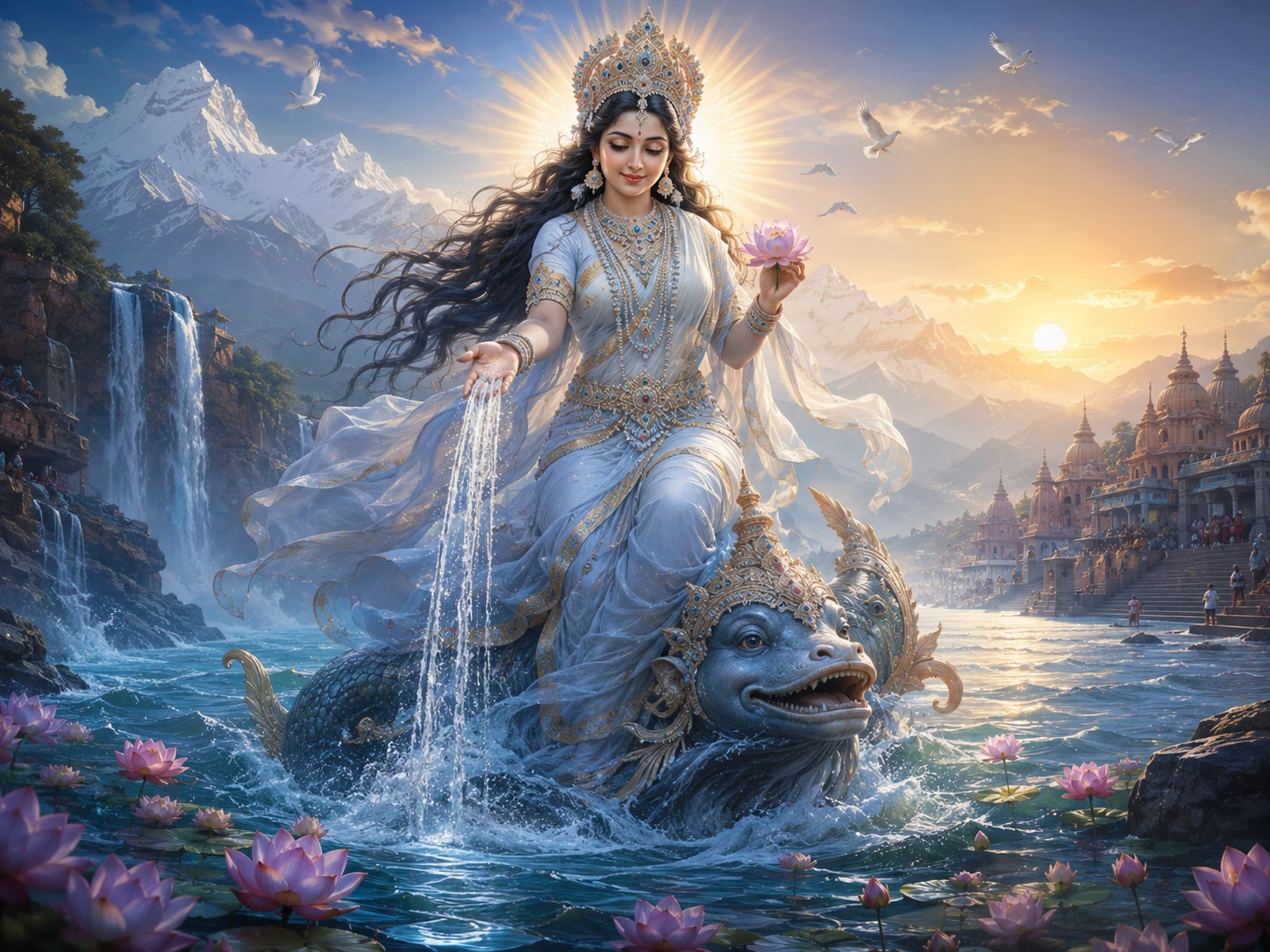
Ganga as Goddess
गंगा -- देवी रूप
The Ganga descends from the Gangotri glacier in Uttarakhand at 4,023 meters above sea level, travels approximately 2,525 kilometers across the northern Indian plains through Uttarakhand, Uttar Pradesh, Bihar, Jharkhand, and West Bengal, and enters the Bay of Bengal at the Sundarbans delta. In purely geographic terms, this is one of Asia's major rivers. In Hindu theology, it is also the living body of a goddess. The distinction matters. A Jewish reader visiting Israel does not think the Jordan is the body of a deity. A Chinese reader standing beside the Yangtze does not understand it as an embodied goddess. But a Hindu pilgrim at Hardwar, at Kashi, at Prayag, at Varanasi, or at Gangasagar is engaging with something that Hindu tradition insists is simultaneously a watercourse and a person. The Ganga in Hindu theology has a name and addresses her by it. She is listed among the fifty-one Shakti Pithas. She has her own temple complex at Gangotri and at Devprayag where she meets the Alaknanda. She has her own stotras, her own festivals, her own iconography. The river is not a metaphor for the goddess; the goddess is the river. This is one of the oldest continuous theological identifications in any living religious tradition.
The myth of Ganga's descent to earth is narrated in the Mahabharata's Vana Parva, in the Ramayana's Bala Kanda, and in several Puranas. King Sagara had sixty thousand sons, who were burned to ash when they disturbed the sage Kapila meditating deep in the underworld. Kapila told them their souls could be liberated only by the waters of the celestial Ganga, which at that time flowed only in heaven. It was Sagara's great-great-grandson Bhagiratha who undertook the millennia-long tapas to bring Ganga down. Brahma granted the boon. Then a second problem arose: the Ganga's descent from heaven would shatter the earth with its force. Shiva intervened. He stood at the centre of the earth and received the descending Ganga in his matted hair, breaking her fall into a thousand streams so the earth could accept her. The Ganga then emerged from Shiva's jata at Gangotri and flowed eastward, reaching the ash-heap of Sagara's sons and liberating them. Bhagiratha's name survives today in Bhagirathi, the principal headstream of the Ganga, and in the colloquial Hindi phrase 'Bhagirath prayatna' (a Bhagiratha-level effort) used when someone undertakes a nearly impossible task. The whole narrative structurally makes three theological points: karma can be dissolved; divine intervention is required for the impossible; and nothing worth doing is quick.
देवि सुरेश्वरि भगवति गङ्गे त्रिभुवनतारिणि तरलतरङ्गे । शङ्करमौलिविहारिणि विमले मम मतिरास्तां तव पदकमले ॥१॥
devi sureśvari bhagavati gaṅge tribhuvanatāriṇi taralataraṅge | śaṅkaramauliviḥāriṇi vimale mama matir āstāṃ tava padakamale ||1||
O Devi, queen of the gods, divine mother Ganga, saviour of the three worlds, of flowing waves. You who play upon the matted crown of Shankara, O pure one. May my mind rest forever at your lotus feet.
— Ganga Stotram by Adi Shankaracharya, Verse 1
Ganga's iconography is well-defined in Puranic tradition and in medieval temple sculpture. She is shown as a young woman with a light complexion, often white or pale gold, dressed in flowing white garments. In one hand she holds a water pot (kalasha), in the other a lotus. She rides a makara, a composite sea-creature somewhere between a crocodile and a dolphin, which is her vahana and also the symbol of the zodiac sign Capricorn. Her head bears a crown. She is sometimes shown with four arms, sometimes with two. Her expression is serene and motherly. In temple panels, particularly at doorways, Ganga is paired with Yamuna on the opposite side of the entrance, the two river goddesses together forming a welcoming arch. This dvara-shakhe-ganga-yamuna iconographic motif is found across temples from the Gupta period (fourth-sixth centuries) onward, including at Udayagiri, at the Dashavatara Temple in Deogarh, at the Brihadisvara Temple in Thanjavur, and at hundreds of smaller shrines. To enter a Hindu temple is, architecturally, to walk between the two great rivers. The gate is the moment of crossing.
Varanasi, also called Kashi or Banaras, is the pre-eminent Ganga city in the Hindu imagination. The city sits on the west bank at a particular bend of the river where, almost uniquely, the Ganga flows northward rather than eastward. This anomaly is considered theologically significant in the tradition: the river briefly turns back toward her source, and this reversal is read as the city itself being slightly outside the linear flow of time. The 88 ghats of Varanasi line the west bank for approximately four kilometers, with the most famous being Dashashwamedh Ghat where the nightly Ganga Aarti is performed, Manikarnika Ghat where the cremation fires have burned continuously for centuries, and Assi Ghat at the southern end. The Kashi Vishwanath temple, one of the twelve jyotirlingas of Shiva, sits a few hundred meters from the river. The Kashi pilgrim circuit takes in the panchkroshi yatra, a five-day 88-kilometer walking route around the sacred precinct. For orthodox Hindus of all sampradayas, dying in Kashi is understood to grant moksha directly, a teaching attributed to Shiva himself in the Kashi Khanda of the Skanda Purana. Hundreds of elderly Hindus continue to migrate to Kashi specifically for this purpose, living in the moksha bhavans (liberation hostels) in the city until death.
The Four Great Ganga Pilgrimage Sites
| Site | Location | Significance |
|---|---|---|
| Gangotri / गंगोत्री | Uttarakhand / उत्तराखंड | The source; the Ganga emerges from the Gaumukh glacier. Open only May to November. / उद्गम; गौमुख हिमनद से गंगा निकलती हैं। केवल मई से नवंबर तक खुला। |
| Haridwar / हरिद्वार | Uttarakhand / उत्तराखंड | Where the Ganga enters the plains. Har-ki-Pauri evening aarti draws thousands daily. / वह स्थल जहाँ गंगा मैदानों में प्रवेश करती हैं। हर-की-पौड़ी की शाम आरती हज़ारों को खींचती है। |
| Prayagraj / प्रयागराज | Uttar Pradesh / उत्तर प्रदेश | The Triveni Sangam where Ganga, Yamuna, and the invisible Sarasvati meet. Kumbh Mela site. / त्रिवेणी संगम जहाँ गंगा, यमुना, और अदृश्य सरस्वती मिलती हैं। कुम्भ मेला स्थल। |
| Varanasi / वाराणसी | Uttar Pradesh / उत्तर प्रदेश | The city of Shiva on the Ganga; dying here grants moksha. / गंगा पर शिव का नगर; यहाँ मृत्यु मोक्ष देती है। |
| Gangasagar / गंगासागर | West Bengal / पश्चिम बंगाल | The mouth of the Ganga where she enters the sea. Makar Sankranti mela in January. / वह मुख जहाँ गंगा समुद्र में प्रवेश करती हैं। जनवरी में मकर संक्रांति मेला। |
The full sacred geography of the Ganga includes dozens of additional tirthas, most notably Rishikesh, Bithoor near Kanpur, Ayodhya on the Sarayu tributary, and the Farakka barrage region. The river is treated as sacred along its entire length.
The Kumbh Mela is the largest religious gathering in the world. Held every twelve years at four sites on a rotational basis -- Haridwar on the Ganga, Prayagraj at the Triveni Sangam, Ujjain on the Shipra, and Nashik on the Godavari -- the Kumbh draws tens of millions of pilgrims to bathe at astronomically significant moments. The Prayagraj Ardha Kumbh of 2019 drew an estimated 150 million visitors over 49 days; the Maha Kumbh of 2025 at Prayagraj drew approximately 660 million over its duration, making it by a substantial margin the largest single religious event in human history. The astronomical basis of the Kumbh timing is specific: it occurs when Jupiter enters certain zodiac signs in relation to the Sun and Moon. The shahi snan (royal bath) days, when the principal akharas of sadhus enter the river in grand procession, are the peak of the mela. The theological logic is that during these moments, bathing in the Ganga produces the maximum karmic effect: accumulated sins of multiple lifetimes are dissolved, and auspicious punya is generated. Whether or not a pilgrim accepts the literal theological claim, the Kumbh remains a social phenomenon of extraordinary scale and logistical complexity. The Indian government mobilizes military-level infrastructure support for every Kumbh. The Maha Kumbh of 2025 specifically deserves additional note: preliminary government figures indicate approximately 660 million individual visits, though unique persons were lower since many pilgrims came multiple times. The scale created unprecedented logistics challenges. Uttar Pradesh set up a temporary city of 4,000 hectares with 150,000 toilets, 40,000 police, 67,000 street lights, and the deployment of 3,000 special trains by Indian Railways to ferry pilgrims. The event's carbon footprint, waste management, and crowd safety were matters of intense public debate, and one stampede during the Mauni Amavasya shahi snan on 29 January 2025 killed at least 30 pilgrims. The incident prompted revised crowd management protocols for the remaining days.
Despite severe pollution in several stretches, Ganga water has been found in multiple studies to possess specific antibacterial properties not observed in comparably polluted rivers. A 2019 study published in the Journal of Environmental Research identified unusual concentrations of novel bacteriophages -- viruses that specifically attack harmful bacteria -- in Ganga water, particularly in the upper reaches from Gangotri to Haridwar. British colonial scientist Ernest Hankin had already documented this antibacterial effect in 1896, noting that cholera bacteria introduced into Ganga water died within three hours. More recent research has partially confirmed and refined his observations. The mechanism is not fully understood; it appears to involve a combination of radioactive minerals from the Himalayan source rock, high dissolved oxygen from the river's fast flow, and the bacteriophage populations. None of this justifies drinking untreated polluted Ganga water, and the National Mission for Clean Ganga continues major remediation efforts. But the scientific findings do provide an interesting convergence with the traditional Hindu claim that the river has an intrinsic self-purifying capacity. The traditional claim and the scientific data point in related directions, even if the underlying reasoning is different.
The ecological crisis faced by the Ganga in the twentieth and twenty-first centuries has been severe. Industrial discharge from tanneries at Kanpur, sewage from cities along the length, agricultural runoff carrying pesticides, and solid waste from pilgrimage traffic have all contributed to pollution levels that in some stretches have rendered the water unsafe for bathing, let alone drinking. The Central Pollution Control Board has consistently categorized long stretches as class C or class D water. The Namami Gange Programme, launched in 2014 with an initial budget of approximately 20,000 crore rupees, has sought to address this through sewage treatment plants, riverfront development, afforestation, and industrial effluent regulation. Progress has been uneven. Certain stretches, notably around Varanasi's main ghats, have measurably improved; others remain deeply polluted. The theological tension is real: a goddess who is also a river cannot be protected by faith alone. She requires sewage treatment plants, industrial regulation, and water-sharing agreements. Contemporary Hindu environmental organizations including Ganga Action Parivar, the Ganga Mahasabha, and Isha Foundation's Rally for Rivers have increasingly framed Ganga protection as simultaneously a religious and an ecological imperative. The argument is that Hindu theology never claimed the river was self-cleaning without human cooperation; the devotee was always understood to be part of the purification process.
Ganga Dussehra, falling on the tenth day of the waxing moon in Jyeshtha (usually late May or early June), commemorates the day on which the Ganga descended to earth. On this day, millions of Hindus bathe in the river at any accessible point, offer flowers and diyas on the water, and recite Ganga-stotras including the one by Adi Shankara quoted above. The festival is celebrated particularly at Haridwar, Rishikesh, and Varanasi, with the Har-ki-Pauri aarti at Haridwar drawing hundreds of thousands. The other major Ganga festival is Ganga Saptami, celebrated on the seventh day of the waxing moon in Vaishakha, which commemorates Ganga's reappearance from Bhagiratha's receiving vessel. Both festivals are ritual re-enactments: on one, the goddess descends; on the other, she emerges. Between these two dates, and particularly on the monthly Ekadashi and Purnima days, Hindu families who live anywhere near a river or lake will offer small clay lamps floated on the water -- a practice called diya-daan. A child in a suburban Delhi apartment complex who has never seen the Ganga may still participate, through her grandmother's teaching, in the theological intuition that every body of water carries something of the great river's consecration.
The doctrine that Ganga can dissolve karma has specific theological qualifications that are often flattened in popular retelling. The Garuda Purana and the Skanda Purana both specify that bathing in the Ganga with genuine contrition and with a clear resolve not to repeat the action dissolves past karma. Bathing without contrition simply produces a wet body. The purification is not automatic; it requires what the tradition calls antaranga shuddhi, inner purification, of which the water-bath is an outer symbol. Adi Shankara in his Vivekachudamani states this more severely: the waters of the Ganga cannot wash the attachment out of a person who has not examined it; the bath is useful for those who have done the inner work, redundant for those who have not. This qualification matters because it prevents the Ganga theology from degenerating into a form of ritual magic where sins can be washed off as casually as dirt. The tradition's position is that the goddess cooperates with the genuine effort of the devotee; she does not substitute for it. A Bollywood producer flying his mother to Haridwar for an annual bath at Har-ki-Pauri and then returning to a business practice full of small cruelties is not performing Ganga-theology correctly. The tradition has always known this. The ritual is not a shortcut.
The practice of immersing the ashes of the dead in the Ganga -- asthi-visarjan -- is one of the most widely observed Hindu rituals and cuts across caste, region, and sect. After cremation (which under Hindu tradition should happen within 24 hours of death), the ashes are collected, stored in a clay pot, and carried by family members to a Ganga tirtha. Haridwar, Prayagraj, Varanasi, and Gaya are the most common destinations, though any accessible stretch of the river is considered valid. At the river, a final prayer is offered, and the ashes are released into the current. The theological rationale is that the Ganga's waters carry the subtle elements of the body to the ancestors' world and allow the soul to proceed without earthly attachment. For millions of families across India and in the Hindu diaspora, this is the one Hindu ritual that is never skipped, even by those who do not otherwise observe religious practice. The grandchild of a Hindu NRI family in California whose grandfather passed in San Jose may still fly back to India with his father specifically to complete the asthi-visarjan at Haridwar. This is one of the single most visible examples of how Hindu religious geography continues to organize diaspora family practice more than a century after significant outward migration began.
The Ganga flows through one of the most densely populated basins on earth. Approximately 600 million people live in the Ganga basin -- more than the combined population of the United States and Indonesia. The river sustains their agriculture, their drinking water, their industry, their trade, and their religion. For the tradition, the goddess chose to incarnate specifically on this land and among this population; her role is not primarily spiritual but comprehensively human. In the Mahabharata's Shanti Parva, the sage Bhishma -- who in the epic is the son of Ganga herself -- teaches Yudhishthira that the greatest form of devotion to the river is to ensure that her waters reach those who need them: farmers before priests, thirsty before bathers, the living before the dead. This teaching is rarely emphasized in popular retellings, but it is theologically foundational. The Ganga's sanctity is inseparable from her utility. A river that cannot irrigate crops is a river that is failing her deity. A river polluted beyond safe use is a goddess who is being insulted. The older Hindu intuition is that spiritual significance and material utility cannot be separated in the case of this particular river. She is worshipped because she sustains; she sustains because she is worshipped. The cycle is closed and total. Contemporary Hindu discourse on the Ganga has increasingly converged around this older insight. Celebrity gurus, scientific advisors, political leaders, and grassroots activists -- the full spectrum of public commentary -- now routinely describe Ganga protection as simultaneously religious duty and national responsibility, collapsing any neat distinction between the devotional and the civic.
The Ganga's headwaters carry specific geographic and theological identities. From Gangotri glacier she flows as Bhagirathi, named for Bhagiratha who brought her down. At Devprayag, 70 kilometers downstream, she meets the Alaknanda flowing from the Badrinath-Kedarnath region. Only after Devprayag is the combined stream called Ganga by convention. The Alaknanda itself is fed by the Mandakini (which flows from Kedarnath), the Pindar, the Nandakini, and the Dhauliganga. Each of the five confluences is a panch-prayag (five sacred meetings): Vishnuprayag, Nandaprayag, Karnaprayag, Rudraprayag, and Devprayag. Orthodox pilgrimage protocol requires visiting all five confluences in specific order during the Char Dham yatra in the summer months when the high Himalayas are passable. The Himalayan stretch of the Ganga is therefore not a single river but a network of five tributaries, each theologically personified, converging at five specific ritual points before the combined river enters the plains at Haridwar. This multiplicity at the source stands in deliberate contrast to the river's unified identity downstream: the goddess has many origins but a single name.
A simple contemporary Ganga practice for someone who cannot visit the river regularly: keep a small copper or silver vessel containing Ganga water in the home puja space. Most orthodox Hindu families have one; Ganga water in sealed containers is available at any puja-samagri shop in any Indian city, sourced from Haridwar or Varanasi directly. A few drops of this water are added to the water used for abhishekam (bathing the deity image), for any puja sankalpa, and for the final purification of the body after certain ritual impurities. The water does not spoil; traditional Hindu households keep the same container replenished for years without concern. Beyond this, on Ganga Dussehra and on the monthly Ekadashi, a practitioner can recite the Ganga Stotram of Adi Shankara (14 verses, available in every puja book) while pouring a pitcher of water into the household tulsi plant or into any nearby body of water. The ritual connects the home water to the goddess's body without requiring travel. For those who can travel, an annual Ganga-snan at Haridwar during Magh (January-February, the coldest month, considered the most auspicious for bathing) is a traditional devotional commitment. The water is freezing. The practice is considered valuable precisely because of this. Some orthodox practitioners also observe the daily ritual of offering water from a small kalasha to the rising sun while silently invoking the Ganga by name, a minimal form of the sandhyavandana practice adapted for urban life without direct river access. Three minutes in the morning is enough.
Recite the Ganga Stotram on Ganga Dussehra
Adi Shankara's Ganga Stotram is on Eternal Raga with its meaning. Recite it on Ganga Dussehra, during the month of Magh, or monthly on Ekadashi while pouring water into the household tulsi plant.
Tags
Eternal Raga · शाश्वत राग
Institutional voice — scholarly articles on Sanatan Dharma
Deepen Your Understanding
अपनी समझ और गहरी करें
deities avatars
Who is Shiva?
He is the ash-smeared ascetic who is also the ideal husband. The destroyer of the universe who is called 'The Auspicious One.' The god of death who drank poison to save all life. He sits in meditation on a Himalayan peak, and simultaneously dances the cosmos into existence and annihilation. No deity in Hinduism contains more contradictions -- and no deity resolves them more completely. This is not a mythology explainer. This is an attempt to stand at the foot of the mountain and look up.
deities avatars
Dashavatara -- Why Vishnu Comes Back Ten Times
Fish, tortoise, boar, half-lion, dwarf, axe-warrior, prince, cowherd, enlightened teacher, future horseman. The ten avatars of Vishnu are not random folklore. Read them in sequence and you get something startling -- a narrative that mirrors evolutionary biology, tracks the rise and fall of political systems, and argues that God does not sit above history but enters it, gets dirty, and does the work. The Dashavatara is Hinduism's answer to the question every civilisation asks: why does the world keep breaking, and who fixes it?
scriptural exegesis
Samudra Manthan -- When Gods and Demons Ran a Joint Venture and the Universe Almost Died
A cosmic ocean. A mountain for a churning rod. A serpent king for a rope. Gods on one end, demons on the other. And out came 14 treasures -- including wealth, beauty, medicine, immortality, and one poison so lethal it could end creation itself. The Samudra Manthan is not mythology. It is the original playbook for collaboration, crisis management, and how to handle it when your joint venture partner tries to cheat you.
rituals traditions
Tirtha Yatra -- Why Hindus Travel to Get Closer to God
The word 'Tirtha' does not mean 'holy place.' It means 'crossing point' -- a ford where the river of worldly existence can be crossed to reach the far shore of liberation. Hindu pilgrimage is not tourism with a spiritual label. It is the deliberate journey to locations where the boundary between the material and the divine is believed to be thinnest -- where the crossing is easiest. From Kashi to Kailash, from Char Dham to Kumbh Mela, the tradition maps a sacred geography onto the physical landscape of the subcontinent, turning the act of travel itself into a spiritual practice.
tantra mantra yantra
Mahamrityunjaya Mantra -- Conquering Death
A 16-year-old boy clings to a Shiva Linga as the god of death throws a noose around his neck. Shiva emerges from the Linga, kicks Yama in the chest, and declares the boy immortal. That boy is Markandeya. That mantra is the Mahamrityunjaya. It appears in the Rig Veda, the Yajur Veda, and the Atharva Veda -- the only healing mantra attested in three of the four Vedas. It is chanted in ICU corridors, before surgeries, at bedsides, and in cremation grounds. This is not a mantra about avoiding death. It is a mantra about not being afraid of it.
rituals traditions
Vrata -- What a Hindu Vow Really Means (It Is Not Just Fasting)
Your mother kept Karva Chauth without water for sixteen hours. Your grandmother observed Ekadashi every fortnight without fail. Your colleague skips lunch on Tuesdays 'for Hanuman.' The world sees Hindu fasting as dietary restriction. The tradition sees it as something far more radical: Vrata is a voluntary, time-bound act of self-imposed discipline that rewires the relationship between desire and willpower. Fasting is the most visible expression. But the real Vrata happens inside.
deities avatars
Nine Forms of Shiva -- The Many Faces of Mahadeva
He is the silent teacher under a banyan tree and the screaming destroyer on a battlefield. He is half-woman and half-man. He drank the poison that would have ended the universe and his throat turned blue. Nine scripturally-attested forms of Shiva -- from Nataraja to Rudra -- and why each one exists.
Despite severe pollution in several stretches, Ganga water has been found in multiple studies to possess specific antibacterial properties not observed in comparably polluted rivers. A 2019 study published in the Journal…
More in Deities & Avatars
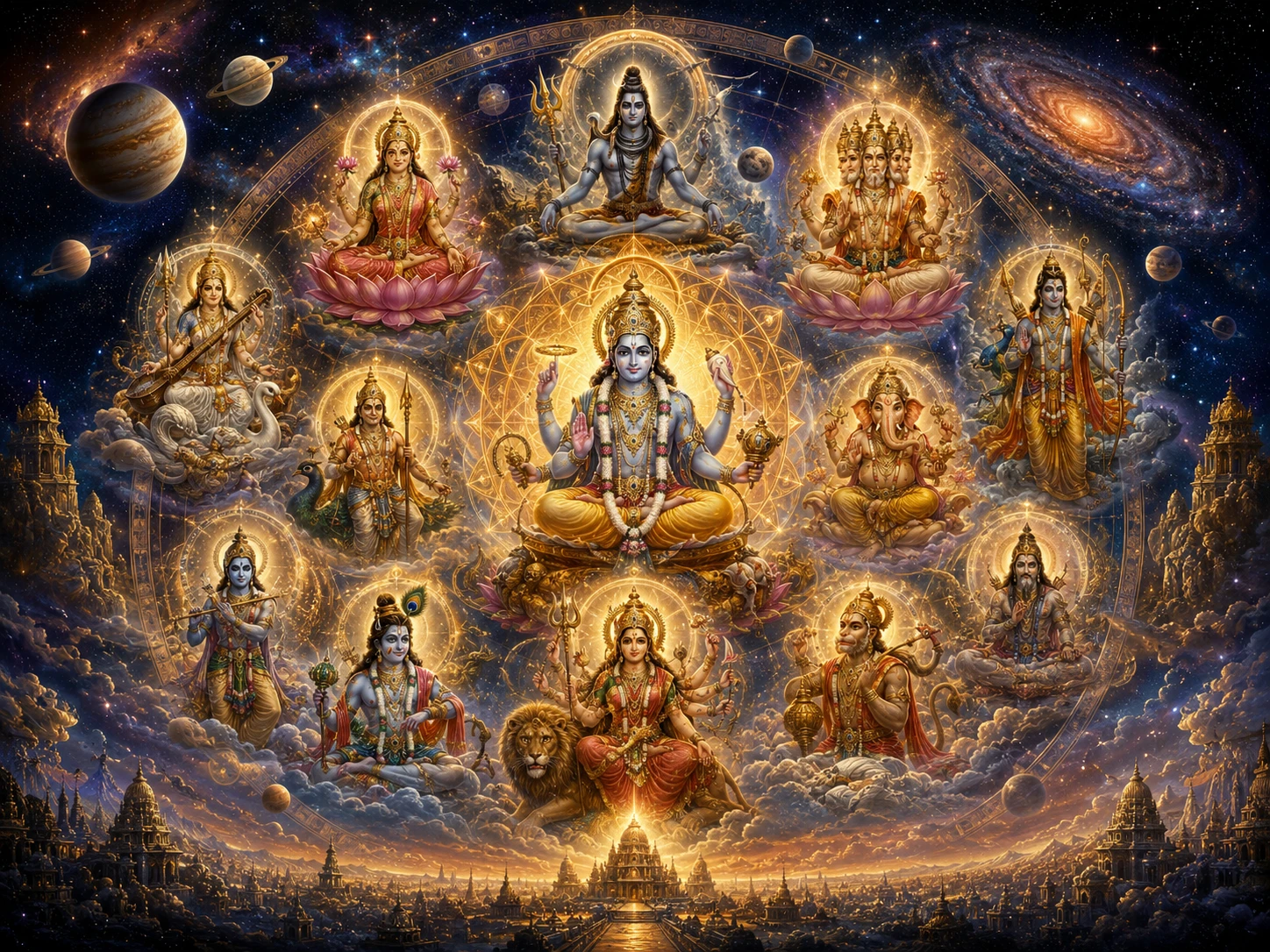
33 Koti Devata -- Why Hinduism Has 33 Types of Gods, Not 33 Crore
13 min read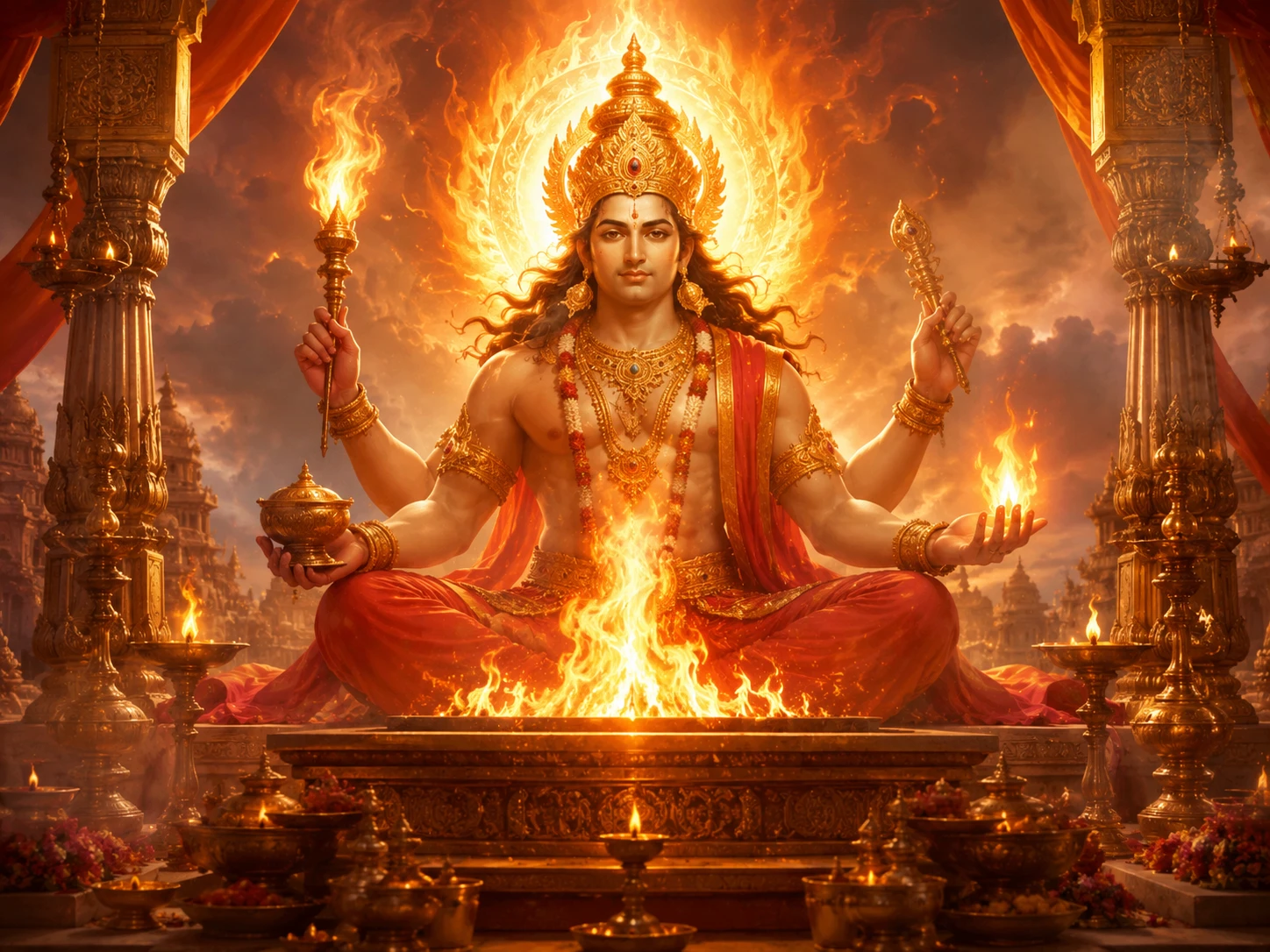
Agni -- The Fire God
19 min read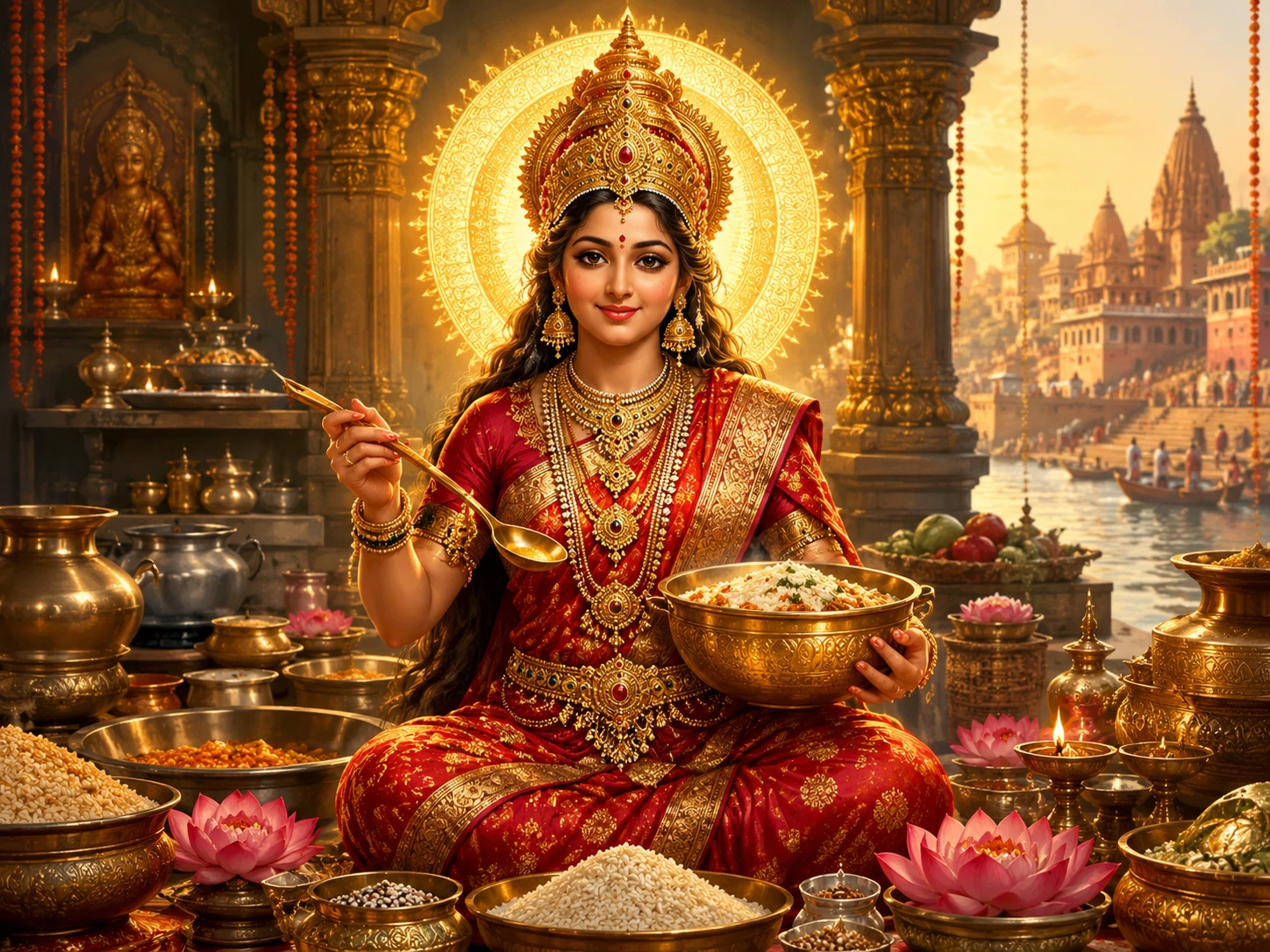
Annapurna -- Goddess of Food
19 min readThe same translation error that turned '33 Koti' into '33 crore' in Hinduism also happened in Buddhism. The Chinese translation of Buddhist texts rendered 'Sapta Koti Buddha' (7 Supreme Buddhas) as '7 Crore Buddhas.' The…
Deities AvatarsCommunity Reflections
🕉️
Be the first to share your reflection.