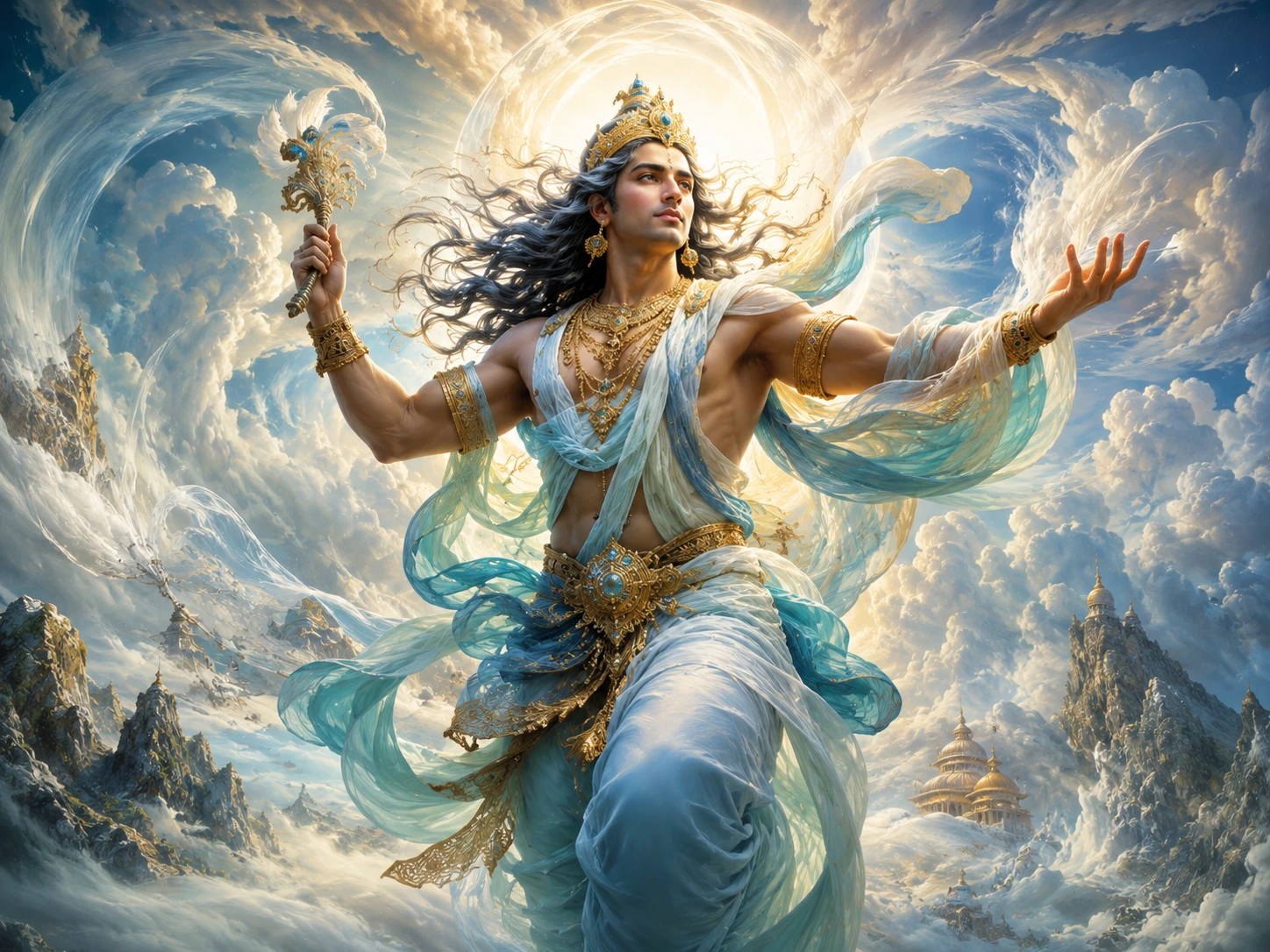
Vayu -- The Wind God
वायु -- पवन देव
Vayu, the wind god, holds a position in Hindu religious thought that is both elemental and deeply personal. He is the divine principle of wind at the cosmic level, of breath at the bodily level, and of movement at the psychological level. In Rig Veda 1.2, he is invoked immediately after Agni and alongside Indra; the two deities are frequent companions in Vedic ritual. He is mentioned as one of the five great elements (pancha-mahabhuta), along with earth, water, fire, and space, and his sphere of operation is the atmosphere between the heavens and the earth. By the Puranic period he had acquired a specific iconography, a consort, a vahana, a son (Hanuman) in one lineage and another (Bhima) in a second, and a theological position in the Madhva tradition that placed him second only to Vishnu in the hierarchy of beings. For most contemporary Hindus, Vayu is met not through his own worship but through the worship of his sons -- every Hanuman Chalisa, every Bajrang Bali prayer, every Maharashtrian respect for Bhima is indirectly a remembrance of Vayu. He is one of the Hindu deities whose continuing presence in everyday life is most often mediated through his offspring.
The Upanishads elevate Vayu to a position of special significance by equating him with prana, the life-breath. In the Chhandogya Upanishad (4.3.1-2), a famous dialogue between the sage Raikva and a seeking king establishes that when everything else departs from a sleeping or dying body, prana-vayu remains. The body becomes inert when Vayu leaves; it becomes alive when Vayu enters. This equation has several consequences for how Hindu practice treats breath. Pranayama, the fourth limb of Patanjali's eight-fold yoga, is fundamentally a discipline of engaging with Vayu in his internal form. The five pranas -- prana (upward-moving breath in the head and chest), apana (downward-moving breath), samana (equalizing breath in the navel), udana (ascending breath), and vyana (pervading breath) -- are all forms of Vayu circulating in the body. When a yoga teacher in a Bengaluru studio tells students to 'breathe with awareness,' she is invoking, at an implicit theological level, the principle of internal Vayu. The yogic technology of breath control did not invent its subject. It gave systematic method to the Upanishadic insight that Vayu is the vehicle of consciousness itself.
ॐ सर्वप्राणाय विद्महे यष्टिहस्ताय धीमहि । तन्नो वायुः प्रचोदयात् ॥
oṃ sarvaprāṇāya vidmahe yaṣṭihastāya dhīmahi | tanno vāyuḥ pracodayāt ||
Om. Let us meditate upon the life-giving breath of all beings. Let us contemplate the one who holds the staff. May Vayu kindle our minds.
— Vayu Gayatri Mantra (traditional, from the Devi Bhagavata and later Smarta compilations)
The iconography of Vayu in Puranic and Agamic description is detailed. He is shown as a strong, dark-skinned man holding a flag (dhvaja) and a sharp goad (ankusha). His vehicle is sometimes a deer and sometimes a group of horses, depending on the text. His banner bears the image of a lion. His colour is typically deep grey or dusky, reflecting rain-bearing cloud. He is dressed in white and wears a crown. His consort is Bharati, also known as Svasti, a lesser-known but theologically important goddess of well-being. In the eight-dikpala scheme, Vayu guards the north-west direction, and north-west corners of Hindu temples frequently show him in panel relief. Notable examples include the Lakshmana Temple at Khajuraho, the Brihadisvara Temple at Thanjavur, and the Konark Sun Temple in Odisha. Each representation includes the flag, the goad, and the swirling wind markers around the deity. His hands make the abhaya mudra (granting fearlessness) and the varada mudra (granting boons). The iconography survived in temple architecture long after direct Vayu-worship had receded; he remained a structural presence in the cosmological geometry of every properly designed Hindu temple.
The most famous Vayu narrative in popular Hindu consciousness is the birth of Hanuman. The Ramayana and the Vayu Purana give slightly different accounts, but the core is this: Anjana, a celestial nymph cursed to be born as a vanara (forest-dwelling being), was married to Kesari. The couple longed for a child. Anjana performed tapas for twelve years at Mount Anjanadri. The wind god Vayu, moved by her devotion, visited her and blessed her that a child would be born combining his own power, the blessings of Shiva, and the penance of Anjana herself. The child, Hanuman, was therefore called Vayuputra (son of Vayu), Pavanaputra (son of the wind), and Maruti (descendant of the Maruts). The devotional name Pavansut used in every recitation of the Hanuman Chalisa refers to this paternity. Vayu's paternity gives Hanuman three distinctive capacities -- the ability to fly across any distance, the strength to lift mountains, and the endurance to remain in motion without fatigue. These three capacities are all directly Vayu-attributes: wind travels fast, wind has tremendous force, and wind does not tire. The theology of Hanuman cannot be separated from the theology of Vayu. The two deities are a single unit in Hindu devotional practice, with Hanuman receiving most of the direct worship and Vayu being present through his son.
The Five Pranas: Internal Forms of Vayu
| Prana | Seat | Function |
|---|---|---|
| Prana / प्राण | Heart and head / हृदय और सिर | The inhaling breath; governs senses and cognition. / श्वास लेने वाला प्राण; इन्द्रियाँ और बोध शासित करता है। |
| Apana / अपान | Lower abdomen / नाभि के नीचे | The downward breath; governs elimination and reproduction. / नीचेमुखी प्राण; उत्सर्जन और प्रजनन शासित करता है। |
| Samana / समान | Navel region / नाभि क्षेत्र | The equalizing breath; governs digestion and assimilation. / संतुलनकारी प्राण; पाचन और ग्रहण शासित करता है। |
| Udana / उदान | Throat / कण्ठ | The ascending breath; governs speech and upward movement. / ऊपर जाता प्राण; वाणी और ऊर्ध्व गति शासित करता है। |
| Vyana / व्यान | Whole body / पूरा शरीर | The pervading breath; governs circulation and coordination. / सर्वव्यापी प्राण; परिसंचरण और समन्वय शासित करता है। |
The classical Hatha Yoga Pradipika and later texts like the Gheranda Samhita map specific pranayama techniques onto these five pranas. Nadi-shodhana works primarily on prana and apana; kapalabhati activates udana; bhastrika affects all five.
The second great son of Vayu is Bhima of the Mahabharata. The story is told in the Adi Parva: Kunti, using the mantra given her by the sage Durvasa, invoked Vayu in order to have a second son after Yudhishthira. Vayu arrived, and Bhima was born to her with the specific boon that he would have the strength of ten thousand elephants. Throughout the Mahabharata, Bhima is described in language that draws on Vayu-imagery: he moves with the speed of wind, he cannot be stopped by walls, he breaks obstructions as air breaks barriers. His mace is the standard Vayu-weapon, heavy and blunt, not a subtle arrow. His appetite is famously enormous, and the Puranic commentary treats this as a direct Vayu trait -- wind has endless capacity because it carries no attachment. Bhima's iconic deed in the epic is the slaying of Dushasana and the drinking of his blood, a fulfilment of a vow he made when Draupadi was disrobed. This act, too, is read in some Puranic commentary as expression of Vayu's elemental ferocity: wind can become storm, storm can become hurricane, and what begins as breath can become destruction when dharma is violated. Between Hanuman and Bhima, Vayu has fathered the two great strongmen of the two great Hindu epics. The paternity is not incidental to either figure.
The Madhva sampradaya, founded by Sri Madhvacharya (1238-1317) in coastal Karnataka, holds a theological position about Vayu found in no other Hindu tradition. Madhva taught that Vayu is the jivottama -- the greatest among souls after Vishnu -- and that he has incarnated three times on earth: first as Hanuman in the Treta Yuga to serve Rama, second as Bhima in the Dvapara Yuga to serve Krishna, and third as Madhvacharya himself in the Kali Yuga to establish Dvaita Vedanta and serve the cause of truth in the world. This triple-incarnation theology is formally stated in Madhva's own writings, in the subsequent Madhva lineage texts, and in the daily prayer of every Madhva household, which concludes with veneration of Madhva as the third Vayu. The Udupi Krishna Temple and the eight mathas surrounding it -- Palimar, Adamar, Krishnapur, Puttige, Shirur, Sode, Kaniyur, and Pejawar -- all operate within this framework. A Kannada-speaking Madhva family in Bengaluru or in Udupi observes this doctrine as matter-of-fact: Hanuman, Bhima, and Madhva are three phases of a single soul, the soul of Vayu himself, appearing in three yugas to do three different but related pieces of work.
Pranayama practice in Indian yoga is, at its most fundamental level, the deliberate engagement with Vayu as prana. Patanjali's Yoga Sutras (2.49-2.53) define pranayama as the regulation of the in-breath and the out-breath and describe it as the preparation for meditation. Later texts -- the Hatha Yoga Pradipika, the Gheranda Samhita, the Shiva Samhita -- elaborate specific techniques: nadi-shodhana (alternate-nostril breathing), bhastrika (bellows breath), kapalabhati (skull-cleansing breath), ujjayi (ocean breath), bhramari (bee breath), sitali (cooling breath), murcha (fainting breath), and plavini (floating breath). Each technique works on a specific vayu-configuration and produces a specific physiological and mental effect. Modern scientific research, including studies conducted at the Morarji Desai National Institute of Yoga in Delhi and at Dev Sanskriti Vishwavidyalaya in Haridwar, has documented measurable effects of pranayama on heart rate variability, blood pressure, cortisol levels, and EEG patterns. A corporate executive in Mumbai who does twenty minutes of nadi-shodhana before her morning meetings is engaging with internal Vayu, whether or not she uses the theological vocabulary. The technique works independently of belief. The tradition is explicit that this is by design.
Vayu's role as messenger of the gods is an important but often overlooked dimension. In several Rig Vedic hymns, Vayu carries messages between deities; he is the fastest and most reliable courier in the Vedic pantheon. The Shatapatha Brahmana describes Vayu as the one who travels between the worlds without being detained by any obstacle. This function makes him the theological ancestor of a specific Hindu ritual practice: when an offering is made and the accompanying mantra says agnaye svaha or indraya svaha, the theological mechanism by which that offering reaches its recipient involves Vayu carrying the smoke upward. The smoke of the yajna is the vehicle; Agni produces the smoke; but Vayu is the one who lifts the smoke to where the gods can receive it. Without Vayu, the ritual would fail. This quiet background role in every Vedic ritual is why Vayu's presence is considered necessary at every yajna, even though he is not the principal deity being addressed. He is the postal system of the cosmos. Every Hindu ritual that involves fire and mantra assumes his participation, whether or not he is named.
The meteorological aspect of Vayu -- the wind that brings monsoon clouds across the Indian subcontinent every year -- holds distinct cultural significance. For a country where the agricultural economy has for two millennia depended on the south-west monsoon and the north-east monsoon, wind is not merely weather. It is the arrival mechanism for the rain that determines whether farms will yield, reservoirs will fill, and rural economies will hold through the dry season. The southwest monsoon arrives typically by the first week of June at the Kerala coast and progresses northward through July, covering the whole country by mid-July. The northeast monsoon follows in October and November, delivering rain principally to Tamil Nadu and parts of Andhra Pradesh and Karnataka. Before the Indian Meteorological Department began issuing scientific forecasts in the late nineteenth century, and before contemporary satellite tracking, farmers across the subcontinent performed specific rituals to Vayu at the transitional points of the agricultural year -- before the first ploughing, at the sowing of the kharif crop, and at the harvest. These rituals are largely gone from modern commercial agriculture, but traces survive in the traditional festivals of Maharashtra's rural communities, in Odisha's Rath Yatra, and in coastal Tamil Nadu's Aadi Perukku, where offerings are made to the wind along with the water.
Direct Vayu temples in India are few. The most prominent is the Vayu Temple at Kalayamputtur in Tamil Nadu's Theni district, associated with the story of Vayu's contest with Adishesha (where Vayu snapped off the peak of Mount Meru and threw it into the ocean, forming the island of Sri Lanka). Another is the Pavanesha Temple at Talakaveri in Karnataka. Most Hindu engagement with Vayu happens not at his own temple but at Hanuman temples, of which there are tens of thousands across India. Every Tuesday and Saturday, Hanuman temples fill with devotees who recite the Hanuman Chalisa, the Sundar Kand, or the Bajrang Baan. These three devotional texts all identify Hanuman by his Vayu-paternity: 'Pavan Tanay Bal Gunan Ki Dhani,' 'Pavan Sut,' 'Pavan Putra.' A young man in a coaching hostel in Kota preparing for JEE who recites the Hanuman Chalisa every evening is, every time he reaches the line 'Pavan Tanay Bal Sankaran Roopa,' invoking Vayu through Hanuman. The paternity is ritually repeated. The doubled deity -- Hanuman-and-Vayu -- is probably the most widely worshipped divine pair in contemporary Hindu practice, though most worshippers think of it as a single devotion rather than two.
The Vayu Purana, one of the eighteen major Puranas, is specifically associated with Vayu as its narrator. It is classified as a Shaiva Purana, devoted primarily to Shiva, but its narrative frame is that of Vayu telling the stories to the sages at Naimisharanya. The Vayu Purana contains extensive cosmology, geography, genealogy of kings, and accounts of various yugas and manvantaras. It is among the older Puranas, with textual layers possibly dating from the third to eighth centuries of the Common Era. For a serious student of Hindu cosmology, the Vayu Purana is one of the primary sources. Its accounts of the Saptarishis, the seven sages of each manvantara, and of the cycles of time, are detailed and influential. The text survives in multiple manuscript traditions, and complete English translations are available from Motilal Banarsidass. A graduate student in Sanskrit at Jawaharlal Nehru University or at Benaras Hindu University who specializes in Puranic literature will treat the Vayu Purana as a primary source; for most contemporary Hindus, however, it is not a text they encounter directly. The Vayu Purana's narrative structure reflects Vayu's ancient role as messenger: stories travel across the worlds through his mouth.
Vayu's connection to speech and sound is a specific Vedic-Upanishadic doctrine that shapes every later discussion of mantra. Speech is produced by the passage of breath through the vocal apparatus; without breath, there is no speech. The Chhandogya Upanishad and the Brihadaranyaka Upanishad both observe this and develop the theological point that vak (speech) is the daughter of prana (breath), and therefore of Vayu. This is why mantra, at its root, is considered a disciplined use of Vayu. When a Brahmin priest at a Chennai wedding chants Sanskrit mantras with the traditional svara (tone), he is shaping Vayu into specific acoustic forms that carry specific spiritual effects. The same logic applies to any chanting tradition: Vedic, bhajan, Carnatic, Hindustani, Sufi qawwali. The raw material is Vayu. The discipline is in what form Vayu is released. Contemporary voice training in Indian classical music -- at institutions like the Music Academy Madras or the Bhatkhande Music Institute in Lucknow -- still uses pranayama exercises as its foundation. Before a singer trains the tongue, the throat, or the pitch, she trains her breath. The student who cannot control Vayu cannot control vak. This is the hidden theology of every raga performance.
The environmental dimension of Vayu-theology has taken on new relevance as India has confronted severe air pollution in its major cities. Delhi, Mumbai, Kolkata, and most North Indian urban centres record air quality index values that frequently exceed safe thresholds, particularly in winter months. Vayu-traditional thought treats air not as neutral resource but as a deity, and some contemporary Hindu organizations have begun arguing that the pollution of air is therefore not only a public health crisis but a religious violation. This argument has found a voice in Hindu environmental movements such as the Vaishno Devi Shrine Board's air-quality initiatives and in the writings of environmentalists like Vandana Shiva, who explicitly connects the Vedic veneration of the pancha-mahabhuta -- the five elements -- to contemporary ecological responsibility. The argument is not that religious theology alone will solve air pollution. The argument is that religious theology has always framed air as sacred, and modern public health merely adds quantitative urgency to what tradition already said qualitatively. A Delhi resident who wears a mask through the November smog season and also lights a small tulsi-ghee lamp every evening in his balcony is not performing two separate activities. He is responding, at two different registers, to the same condition: Vayu is compromised, and the human community must address this both practically and ritually. The Ayurvedic understanding that vata imbalance is exacerbated by polluted, dry, and chaotic air adds a clinical layer to this religious framing. Practitioners report measurably increased rates of respiratory illness, anxiety, and insomnia during the worst pollution weeks -- exactly the vata-disorders the classical Ayurvedic texts predict when external vayu is disturbed. Religion, ecology, and medicine converge at this single point.
For a contemporary practitioner beginning a Vayu practice, the entry point is not a separate temple visit but the breath itself. Sit in any posture with the spine upright. Close the eyes. Observe the natural breath for two minutes without changing it. Then begin nadi-shodhana: close the right nostril with the thumb, breathe in slowly through the left, close the left nostril with the ring finger, release the right nostril and breathe out; breathe in through the right, close the right, release the left, breathe out. That is one round. Complete ten rounds. Sit for two minutes in silence afterward. The whole practice takes about fifteen minutes. This is Vayu-sadhana in its simplest form, and it is accessible to any person of any tradition who can sit upright and breathe. For those who want an explicit mantra framework, recite the Vayu Gayatri (given above in the verse block) eleven times before beginning the pranayama, and eleven times at the end. The tradition holds that the mantra layer makes the breath practice more potent; those without faith in the mantra framework can skip it without losing the physiological effect. Vayu, like his breath, is non-denominational in the functional sense. What is required is regularity. Done daily for forty days, this practice measurably changes the practitioner.
Practice Nadi Shodhana with the Vayu Gayatri
Recite the Vayu Gayatri eleven times, practise nadi shodhana (alternate-nostril breathing) for fifteen minutes, and close with eleven more recitations. The nadi shodhana page on Eternal Raga explains the technique step by step.
Eternal Raga · शाश्वत राग
Institutional voice — scholarly articles on Sanatan Dharma
Deepen Your Understanding
अपनी समझ और गहरी करें
deities avatars
Who is Shiva?
He is the ash-smeared ascetic who is also the ideal husband. The destroyer of the universe who is called 'The Auspicious One.' The god of death who drank poison to save all life. He sits in meditation on a Himalayan peak, and simultaneously dances the cosmos into existence and annihilation. No deity in Hinduism contains more contradictions -- and no deity resolves them more completely. This is not a mythology explainer. This is an attempt to stand at the foot of the mountain and look up.
deities avatars
Dashavatara -- Why Vishnu Comes Back Ten Times
Fish, tortoise, boar, half-lion, dwarf, axe-warrior, prince, cowherd, enlightened teacher, future horseman. The ten avatars of Vishnu are not random folklore. Read them in sequence and you get something startling -- a narrative that mirrors evolutionary biology, tracks the rise and fall of political systems, and argues that God does not sit above history but enters it, gets dirty, and does the work. The Dashavatara is Hinduism's answer to the question every civilisation asks: why does the world keep breaking, and who fixes it?
scriptural exegesis
Samudra Manthan -- When Gods and Demons Ran a Joint Venture and the Universe Almost Died
A cosmic ocean. A mountain for a churning rod. A serpent king for a rope. Gods on one end, demons on the other. And out came 14 treasures -- including wealth, beauty, medicine, immortality, and one poison so lethal it could end creation itself. The Samudra Manthan is not mythology. It is the original playbook for collaboration, crisis management, and how to handle it when your joint venture partner tries to cheat you.
tantra mantra yantra
Mahamrityunjaya Mantra -- Conquering Death
A 16-year-old boy clings to a Shiva Linga as the god of death throws a noose around his neck. Shiva emerges from the Linga, kicks Yama in the chest, and declares the boy immortal. That boy is Markandeya. That mantra is the Mahamrityunjaya. It appears in the Rig Veda, the Yajur Veda, and the Atharva Veda -- the only healing mantra attested in three of the four Vedas. It is chanted in ICU corridors, before surgeries, at bedsides, and in cremation grounds. This is not a mantra about avoiding death. It is a mantra about not being afraid of it.
rituals traditions
Vrata -- What a Hindu Vow Really Means (It Is Not Just Fasting)
Your mother kept Karva Chauth without water for sixteen hours. Your grandmother observed Ekadashi every fortnight without fail. Your colleague skips lunch on Tuesdays 'for Hanuman.' The world sees Hindu fasting as dietary restriction. The tradition sees it as something far more radical: Vrata is a voluntary, time-bound act of self-imposed discipline that rewires the relationship between desire and willpower. Fasting is the most visible expression. But the real Vrata happens inside.
deities avatars
Nine Forms of Shiva -- The Many Faces of Mahadeva
He is the silent teacher under a banyan tree and the screaming destroyer on a battlefield. He is half-woman and half-man. He drank the poison that would have ended the universe and his throat turned blue. Nine scripturally-attested forms of Shiva -- from Nataraja to Rudra -- and why each one exists.
rituals traditions
Tirtha Yatra -- Why Hindus Travel to Get Closer to God
The word 'Tirtha' does not mean 'holy place.' It means 'crossing point' -- a ford where the river of worldly existence can be crossed to reach the far shore of liberation. Hindu pilgrimage is not tourism with a spiritual label. It is the deliberate journey to locations where the boundary between the material and the divine is believed to be thinnest -- where the crossing is easiest. From Kashi to Kailash, from Char Dham to Kumbh Mela, the tradition maps a sacred geography onto the physical landscape of the subcontinent, turning the act of travel itself into a spiritual practice.
The Madhva sampradaya, founded by Sri Madhvacharya (1238-1317) in coastal Karnataka, holds a theological position about Vayu found in no other Hindu tradition. Madhva taught that Vayu is the jivottama -- the greatest amo…
More in Deities & Avatars
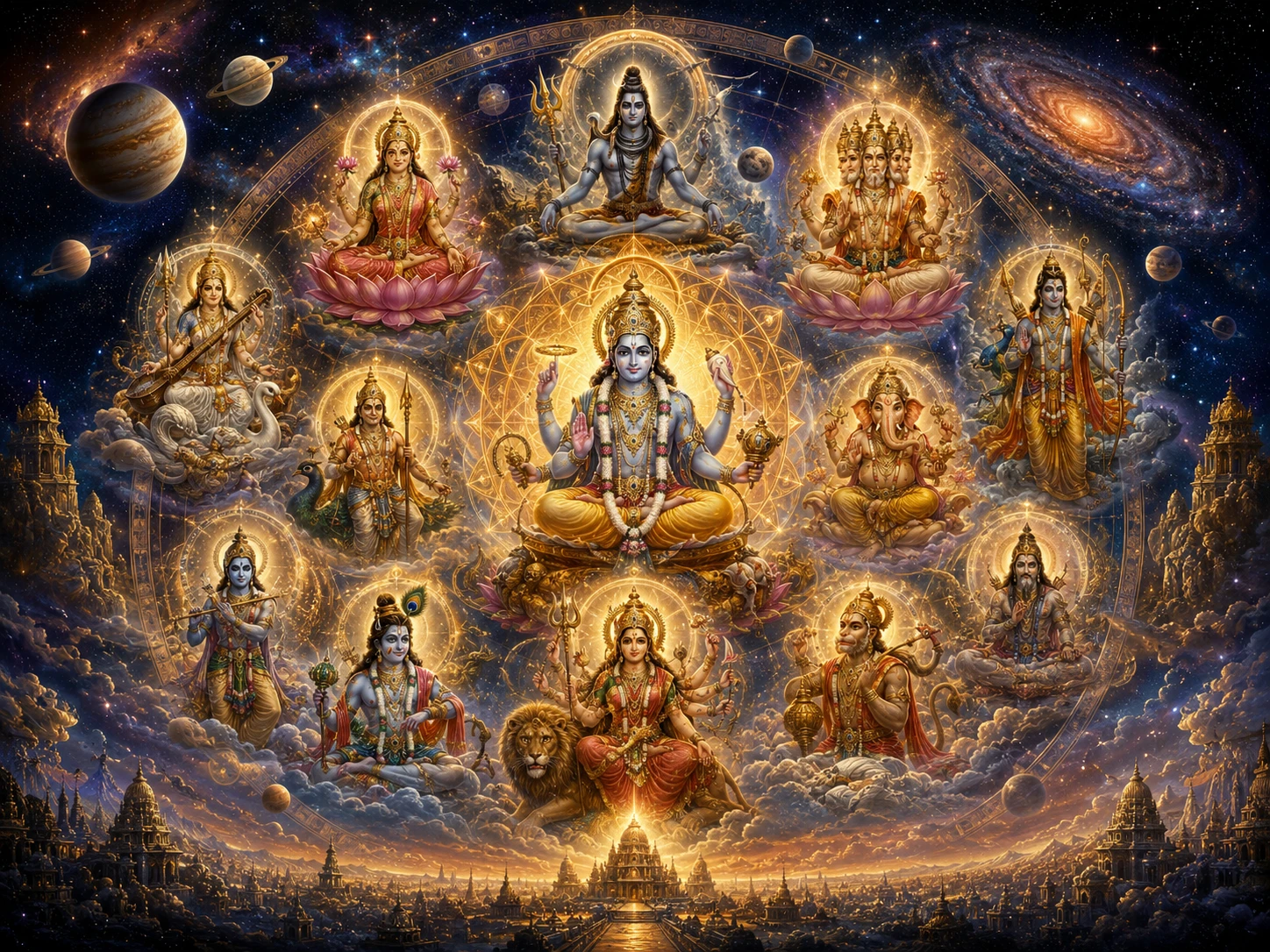
33 Koti Devata -- Why Hinduism Has 33 Types of Gods, Not 33 Crore
13 min read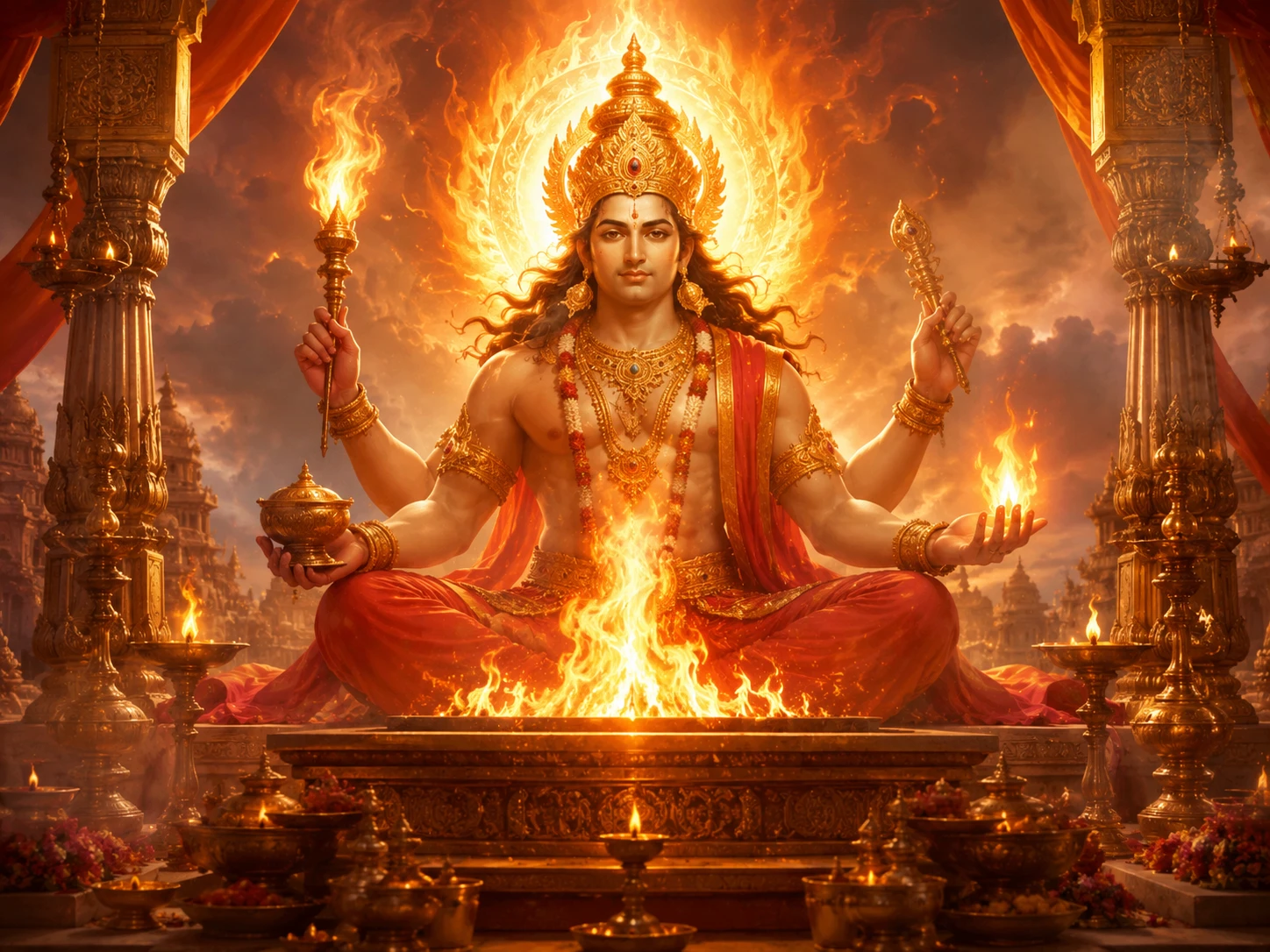
Agni -- The Fire God
19 min read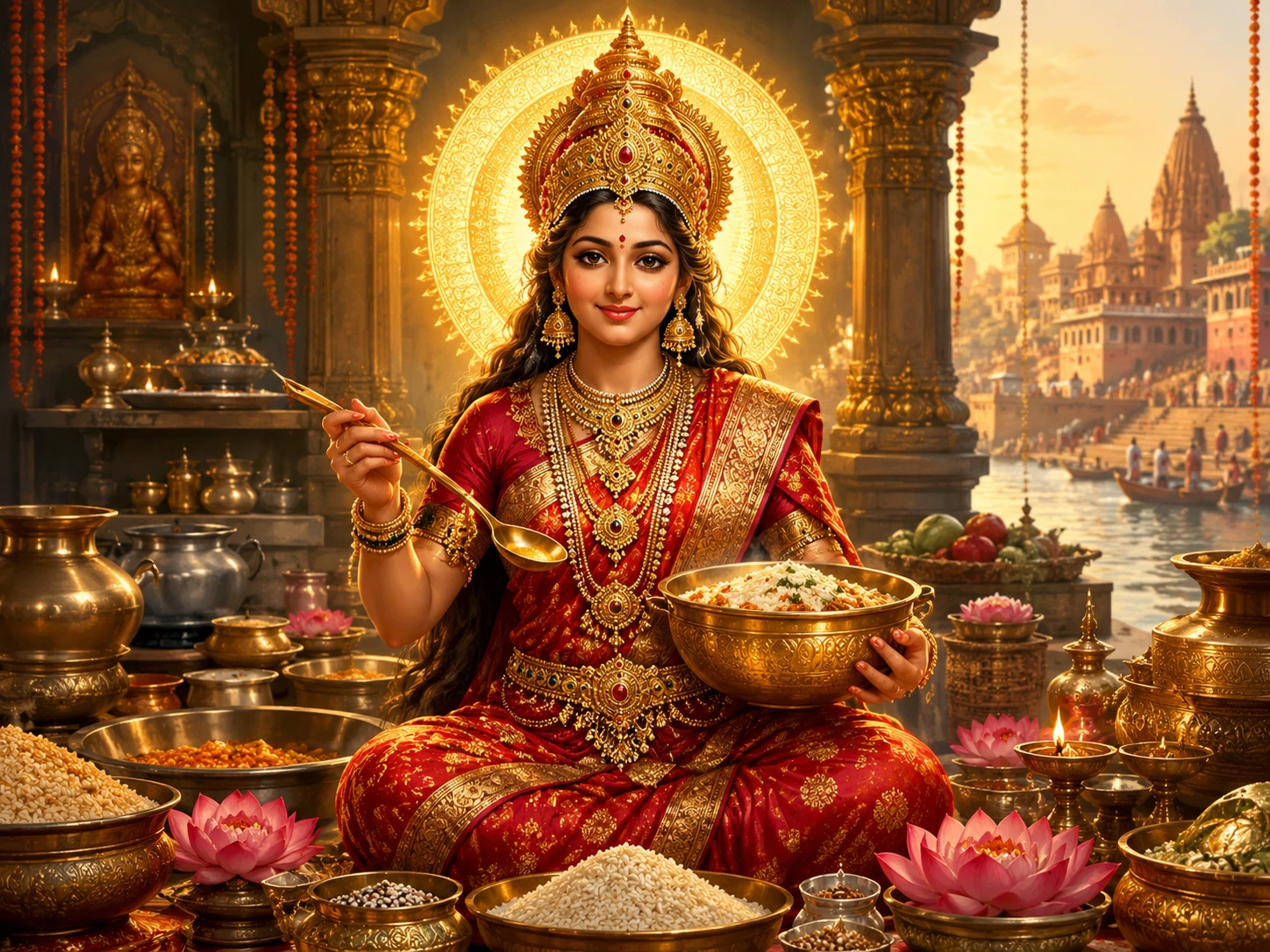
Annapurna -- Goddess of Food
19 min readThe same translation error that turned '33 Koti' into '33 crore' in Hinduism also happened in Buddhism. The Chinese translation of Buddhist texts rendered 'Sapta Koti Buddha' (7 Supreme Buddhas) as '7 Crore Buddhas.' The…
Deities AvatarsCommunity Reflections
🕉️
Be the first to share your reflection.