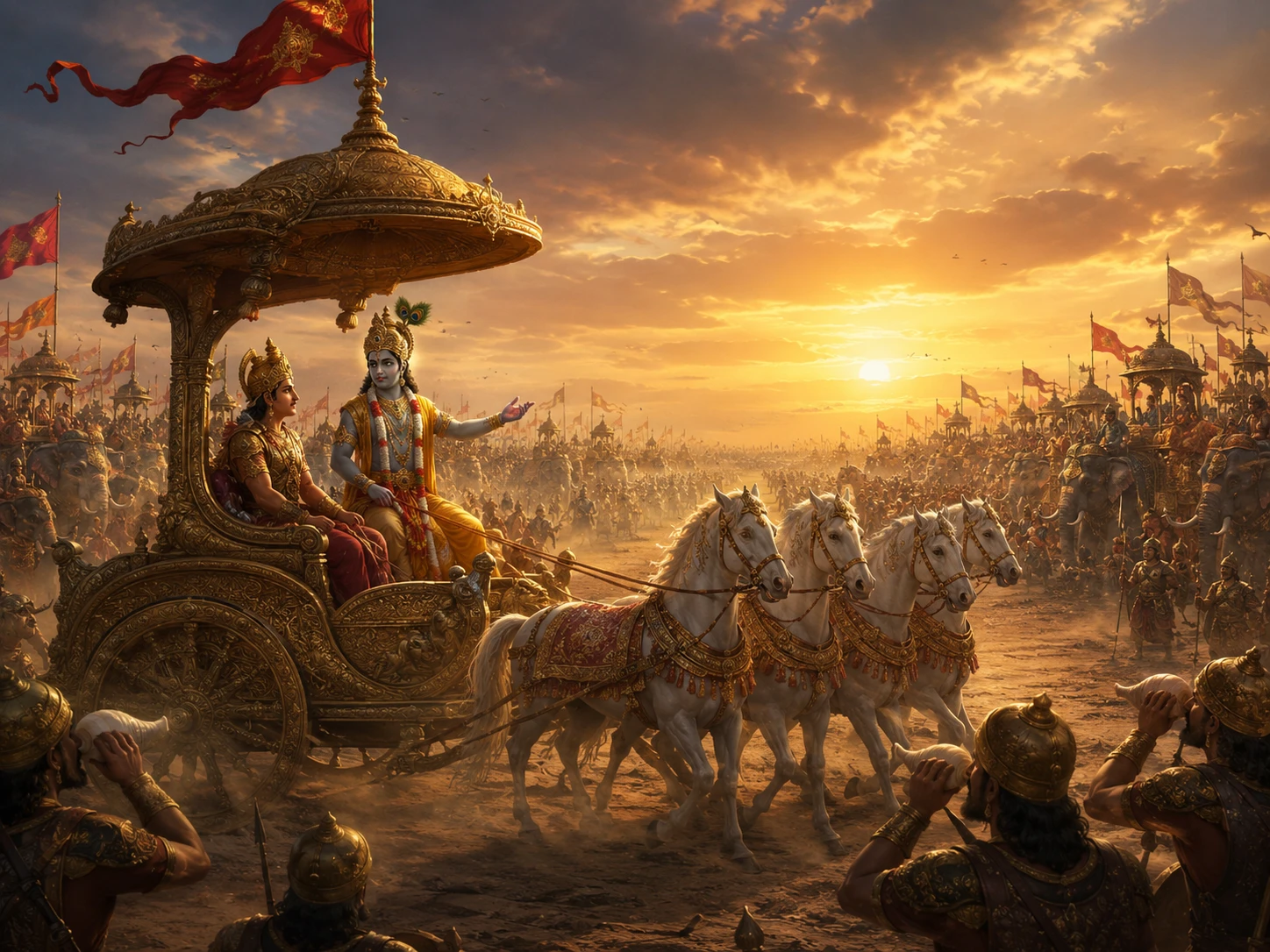
Kurukshetra Battle Alliances -- Which Kings Joined Which Side
कुरुक्षेत्र युद्ध गठबन्धन -- कौन राजा किस पक्ष में
The Mahabharata war was the World War of its age. It was not a border skirmish between two cousins. It was a continental mobilisation -- kingdoms from the Gandhara region (modern Afghanistan-Pakistan border) to the Pandya country (modern Tamil Nadu), from the Kamboja realm (Central Asian steppes) to the Pragjyotishapura (modern Assam) sent troops, generals, or war materiel to Kurukshetra.
The diplomatic manoeuvring that preceded the war is recorded primarily in the Udyoga Parva (Book of Effort), the fifth book of the Mahabharata. The name 'Udyoga' means effort -- this was the parva of frantic last-minute diplomacy, alliance-building, and deal-making before the killing began. Krishna's peace embassy to the Kaurava court, Duryodhana's recruitment drives, Shalya being tricked into joining the wrong side, Karna's secret meeting with Kunti -- all happen here.
The basic arithmetic: the Pandavas assembled 7 akshauhinis. The Kauravas assembled 11 akshauhinis. One akshauhini, as defined in Adi Parva 2.15-23, consists of 21,870 chariots, 21,870 elephants, 65,610 cavalry, and 109,350 infantry -- totalling 218,700 warriors (not counting charioteers and support staff). The ratio is 1 chariot : 1 elephant : 3 horses : 5 foot soldiers.
Do the multiplication: the Pandava side fielded approximately 1,530,900 warriors. The Kaurava side fielded approximately 2,405,700. Combined: roughly 3.94 million men on the field. Even allowing for literary exaggeration, the text is describing a conflict of staggering scale.
The combined dead, as Yudhishthira reports to Dhritarashtra after the war: 1.66 billion casualties (textual number -- clearly a literary-cosmic figure, not a census). Survivors on both sides combined: a handful. The five Pandavas, Krishna, Satyaki, Yuyutsu (the only Kaurava who switched sides), Ashwatthama, Kritavarma, Kripacharya, and Vrishaketu (Karna's youngest son).
Pandava Side -- 7 Akshauhinis
| Kingdom/Force | Leader | Akshauhini | Why They Joined | राज्य/सेना | नेता | अक्षौहिणी | क्यों जुड़े |
|---|---|---|---|---|---|---|---|
| Panchala | King Drupada / Dhrishtadyumna | 1 | Draupadi's father; Dhrishtadyumna born to kill Drona | पांचाल | राजा द्रुपद / धृष्टद्युम्न | 1 | द्रौपदी के पिता; धृष्टद्युम्न द्रोण-वध के लिए जन्मा |
| Matsya | King Virata | 1 | Pandavas served in disguise during 13th year exile | मत्स्य | राजा विराट | 1 | पाण्डवों ने 13वें वर्ष अज्ञातवास में सेवा की |
| Vrishni-Yadava | Satyaki (Yuyudhana) | 1 | Krishna's clan; Satyaki trained by Arjuna | वृष्णि-यादव | सात्यकि (युयुधान) | 1 | कृष्ण का कुल; सात्यकि अर्जुन का शिष्य |
| Chedi-Kashi-Karusha | Dhrishtaketu | 1 | Alliance with Pandavas; Nakula married Chedi princess | चेदि-काशी-करूष | धृष्टकेतु | 1 | पाण्डवों से गठबन्धन; नकुल ने चेदि राजकुमारी से विवाह |
| Magadha | Jayatsena (Sahadeva's brother-in-law) | 1 | Family alliance via Sahadeva's marriage | मगध | जयत्सेन (सहदेव का साला) | 1 | सहदेव के विवाह से पारिवारिक गठबन्धन |
| Pandya (South India) | Malayadhvaja Pandya | 1 | Joined with Chola and Chera conjugate force | पाण्ड्य (दक्षिण भारत) | मलयध्वज पाण्ड्य | 1 | चोल और चेर संयुक्त बल के साथ |
| Kekaya (5 exiled princes) | Brihatakshatra and brothers | 1 | Deprived of throne; supported Pandavas' cause | केकय (5 निर्वासित राजकुमार) | बृहत्क्षत्र और भाई | 1 | सिंहासन से वंचित; पाण्डवों के पक्ष का समर्थन |
Commander-in-chief: Dhrishtadyumna (all 18 days). Additional forces: Ghatotkacha's Rakshasa brigade, Iravan's Naga warriors, Shikhandi's division, Abhimanyu's unit, Kuntibhoja's troops. Krishna served as Arjuna's charioteer but did not fight.
Kaurava Side -- 11 Akshauhinis
| Kingdom/Force | Leader | Akshauhini | Why They Joined | राज्य/सेना | नेता | अक्षौहिणी | क्यों जुड़े |
|---|---|---|---|---|---|---|---|
| Hastinapura (Kuru) | Duryodhana / Bhishma | 1 | The throne itself; Bhishma bound by oath to the seat | हस्तिनापुर (कुरु) | दुर्योधन / भीष्म | 1 | स्वयं सिंहासन; भीष्म गद्दी की शपथ से बँधे |
| Narayani Sena (Dwaraka) | Kritavarma | 1 | Duryodhana chose Krishna's army; Arjuna chose Krishna alone | नारायणी सेना (द्वारका) | कृतवर्मा | 1 | दुर्योधन ने कृष्ण की सेना चुनी; अर्जुन ने अकेला कृष्ण |
| Madra | King Shalya | 1 | Tricked by Duryodhana's lavish hospitality en route to Pandavas | मद्र | राजा शल्य | 1 | पाण्डवों के पास जाते हुए दुर्योधन के आतिथ्य से फँसा दिया |
| Gandhara | Shakuni / Uluka | 1 | Duryodhana's maternal uncle; architect of the dice game | गान्धार | शकुनि / उलूक | 1 | दुर्योधन का मामा; पासे के खेल का सूत्रधार |
| Sindhu-Sauvira | King Jayadratha | 1 | Duryodhana's brother-in-law (married Dushala) | सिन्धु-सौवीर | राजा जयद्रथ | 1 | दुर्योधन का बहनोई (दुश्शला से विवाह) |
| Kamboja | King Sudakshina | 1 | Had Yavana and Shaka mercenaries in his force | कम्बोज | राजा सुदक्षिण | 1 | यवन और शक भाड़े के सैनिक सेना में |
| Bahlika (Bactria) | King Bhurishravas | 1 | Descended from Kuru patriarch Bahlika, Shantanu's brother | बाह्लीक (बैक्ट्रिया) | राजा भूरिश्रवस | 1 | कुरु पूर्वज बाह्लीक (शान्तनु के भाई) का वंशज |
| Avanti (two halves) | Vinda and Anuvinda | 2 | Two brothers ruling two halves of Avanti; each brought 1 akshauhini | अवन्ति (दो भाग) | विन्द और अनुविन्द | 2 | दो भाई अवन्ति के दो भागों पर राज; प्रत्येक 1 अक्षौहिणी लाया |
| Kekaya (ruling branch) | Kekaya princes | 1 | The branch that held the throne (vs. the 5 exiled princes on Pandava side) | केकय (शासक शाखा) | केकय राजकुमार | 1 | गद्दी पर बैठी शाखा (बनाम 5 निर्वासित राजकुमार पाण्डव पक्ष में) |
| Other kingdoms (combined) | Various kings | ~1 | Multiple smaller kingdoms pressed or allied by Duryodhana | अन्य राज्य (संयुक्त) | विविध राजा | ~1 | दुर्योधन द्वारा दबाव या गठबन्धन से जुड़े छोटे राज्य |
Commanders-in-chief rotated: Bhishma (Days 1-10), Drona (Days 11-15), Karna (Days 16-17), Shalya (Day 18). Karna was barred from fighting under Bhishma. Ashwatthama was named commander for the night raid after the formal war ended. Notable neutrals: Balarama (went on pilgrimage), Rukmi of Vidarbha (rejected by both sides), and the King of Udupi (served as cook for both armies).
The geopolitics behind these alliances reveals that the Kurukshetra war was not a simple dharma-vs-adharma split. Many kings joined the Kauravas because of legitimate political obligations, not moral failure. Bhishma fought for the Kaurava throne because he had sworn an oath to protect it, regardless of who sat on it. Drona fought because Hastinapura was his employer. Shalya intended to fight for the Pandavas -- he was Nakula and Sahadeva's maternal uncle -- but Duryodhana intercepted him with such lavish hospitality during his march that Shalya, bound by the honour-debt of accepting hospitality, was obligated to join the Kaurava side. Even then, he promised Yudhishthira he would demoralise Karna from within.
The Kekaya kingdom is the starkest example of a family split by the war. Five Kekaya princes, stripped of their inheritance, joined the Pandavas. The ruling branch of the same family joined the Kauravas. This was not unique -- the Yadava clan itself was divided. Krishna and Satyaki fought (or served) on the Pandava side. The entire Narayani Sena -- Krishna's own trained army -- fought for the Kauravas under Kritavarma. Balarama, Krishna's brother, refused to fight for either side and left on pilgrimage to the Sarasvati river.
The southern Indian contribution is often overlooked. Malayadhvaja Pandya brought a combined Pandya-Chola-Chera force from the deep south. The Mahabharata explicitly names these southern kingdoms as participants, making the war a pan-Indian event, not just a north Indian one. This has implications for how we understand ancient Indian political geography -- the Kuru heartland in modern Haryana was connected by alliance networks that stretched from Central Asia to Kanyakumari.
The most fascinating neutral was the King of Udupi (a tradition particularly strong in Karnataka). When summoned by both sides, he reportedly told Krishna: 'I have no interest in this war. But someone must feed the armies. Allow me to serve as the cook.' Krishna agreed. The Udupi king cooked for both sides throughout the 18 days -- and, according to the tradition, knew exactly how many soldiers to cook for each day because he counted how many bananas Krishna ate the previous evening. This story, whether canonical or folk, reflects a profound Indian insight: not every contribution to a war is martial. Logistics wins battles.
हतो वा प्राप्स्यसि स्वर्गं जित्वा वा भोक्ष्यसे महीम्। तस्मादुत्तिष्ठ कौन्तेय युद्धाय कृतनिश्चयः॥
hato vā prāpsyasi svargaṃ jitvā vā bhokṣyase mahīm | tasmāduttiṣṭha kaunteya yuddhāya kṛtaniścayaḥ ||
If slain, you will attain heaven. If victorious, you will enjoy the earth. Therefore arise, O son of Kunti, resolved to fight.
— Bhagavad Gita 2.37
The akshauhini military unit structure described in the Mahabharata (Adi Parva 2.15-23) uses a ratio of 1:1:3:5 (chariots : elephants : cavalry : infantry) that Indian military historians consider an early articulation of combined arms doctrine. The Indian Army's formation of integrated battle groups in 2021 cited ancient Indian military treatises as philosophical precursors. The Kekaya kingdom split -- five exiled princes for Pandavas, ruling branch for Kauravas -- mirrors the real geopolitical phenomenon of proxy wars within dynasties that shaped medieval Rajputana and Maratha politics for centuries. The King of Udupi's 'cook of Kurukshetra' tradition is celebrated every year during the Krishna Janmashtami festival in Udupi, Karnataka, where the Krishna Matha serves free meals to thousands -- a direct cultural descendant of the tradition that the greatest service in war is feeding those who fight.
Read the Bhagavad Gita -- The War's Opening Dialogue
The Gita begins on the first morning of Kurukshetra, with Arjuna surveying these very armies. Read all eighteen chapters on Eternal Raga, with Sanskrit and meaning.
Tags
Eternal Raga · शाश्वत राग
Institutional voice — scholarly articles on Sanatan Dharma
Deepen Your Understanding
अपनी समझ और गहरी करें
scriptural exegesis
After Kurukshetra -- What Happened Next
The war ended. The Pandavas won. And then everything fell apart. Krishna's clan destroyed itself in a drunken brawl. Dwaraka sank into the sea. Arjuna's divine powers vanished. And the five brothers who fought the greatest war in history walked into the Himalayas to die. The Mahabharata's post-war chapters are darker, stranger, and more relevant than the war itself.
scriptural exegesis
100 Kauravas -- The Forgotten Brothers of the Mahabharata
Everyone knows Duryodhana and Dushasana. But what about Vikarna, who stood up for Draupadi when no one else did? Or Yuyutsu, who defected to the Pandavas because his conscience demanded it? The Mahabharata names all 100 sons of Dhritarashtra -- warriors, strategists, and dissenters -- most of whom are killed across 18 days. Their story is not just a casualty list. It is the most devastating portrait of fratricidal war ever composed.
scriptural exegesis
Mahabharata -- History or Myth? What the Evidence Actually Says
Submerged cities off Gujarat. 35+ archaeological sites matching the epic's geography. 200+ astronomical events verified by planetarium software. A river that vanished exactly as the text describes. Five categories of evidence that do not 'prove' the Mahabharata -- but make dismissing it as pure fiction increasingly difficult.
scriptural exegesis
Gita Chapter 4 -- Jnana Karma Sannyasa Yoga
Chapter 4 of the Bhagavad Gita contains the most quoted verse in all of Hinduism -- 'Yada Yada Hi Dharmasya' -- and the most radical claim Krishna ever made: that He incarnates across ages whenever dharma declines. But this chapter is not just about avatars. It is a masterclass in how knowledge transforms action from bondage into liberation.
scriptural exegesis
Wives of Arjuna -- Four Women Who Shaped the War
Arjuna did not marry for romance. Each of his four marriages -- to Draupadi, Subhadra, Ulupi, and Chitrangada -- was a strategic alliance that brought the Pandavas military power, divine protection, or political legitimacy they could not have won on the battlefield. A Panchala princess, a Yadava sister, a Naga queen, and a Manipuri warrior-princess: four women from four different civilisations, each changing the course of the Mahabharata.
scriptural exegesis
Pandavas in Hell -- The Shocking Finale of the Mahabharata
The Mahabharata does not end with victory. It ends with the heroes falling dead on a Himalayan climb, the villains seated in heaven, and the one righteous king demanding to be sent to hell. The Swargarohana Parva is the most unsettling, most philosophically radical, and most misunderstood finale in all of world literature.
scriptural exegesis
Non-Human Races of the Epics -- Vanaras, Nagas, Yakshas & Beyond
Hindu mythology is not a two-player game between gods and humans. The epics describe at least eight distinct non-human civilisations -- forest-dwelling Vanaras with their own kingdoms and politics, serpentine Nagas with underground empires, shape-shifting Rakshasas with advanced technology, celestial Gandharvas who controlled music, and wealth-guarding Yakshas. This is the Mahabharata's multiverse -- and it was written millennia before Marvel.
The akshauhini military unit structure described in the Mahabharata (Adi Parva 2.15-23) uses a ratio of 1:1:3:5 (chariots : elephants : cavalry : infantry) that Indian military historians consider an early articulation o…
More in Scriptural Exegesis
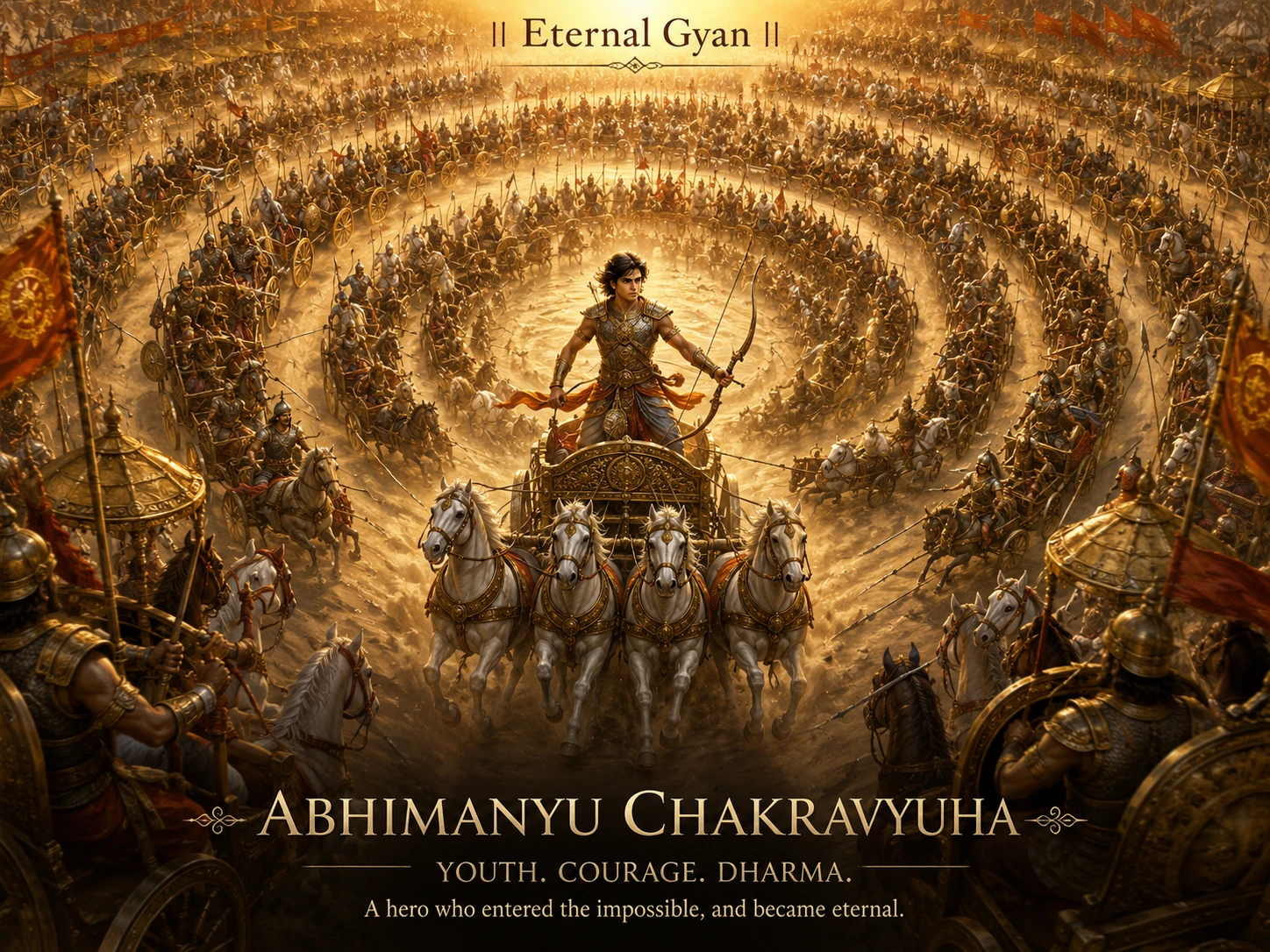
Abhimanyu and the Chakravyuha -- The Boy Who Knew How to Enter but Not How to Leave
14 min read
Adbhuta Ramayana -- The Ramayana Where Sita Becomes Kali
9 min read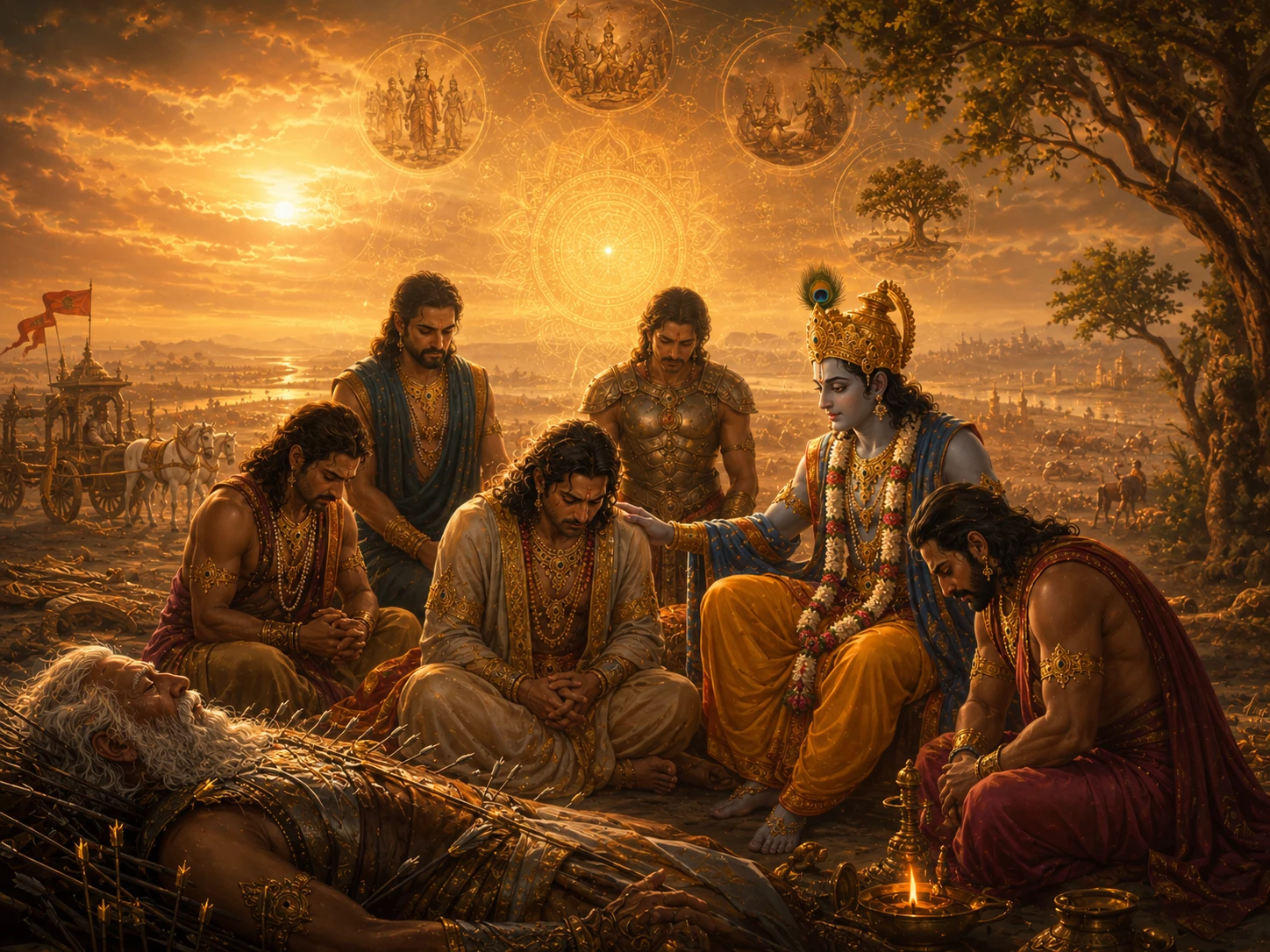
After Kurukshetra -- What Happened Next
14 min readThe same translation error that turned '33 Koti' into '33 crore' in Hinduism also happened in Buddhism. The Chinese translation of Buddhist texts rendered 'Sapta Koti Buddha' (7 Supreme Buddhas) as '7 Crore Buddhas.' The…
Deities AvatarsCommunity Reflections
🕉️
Be the first to share your reflection.