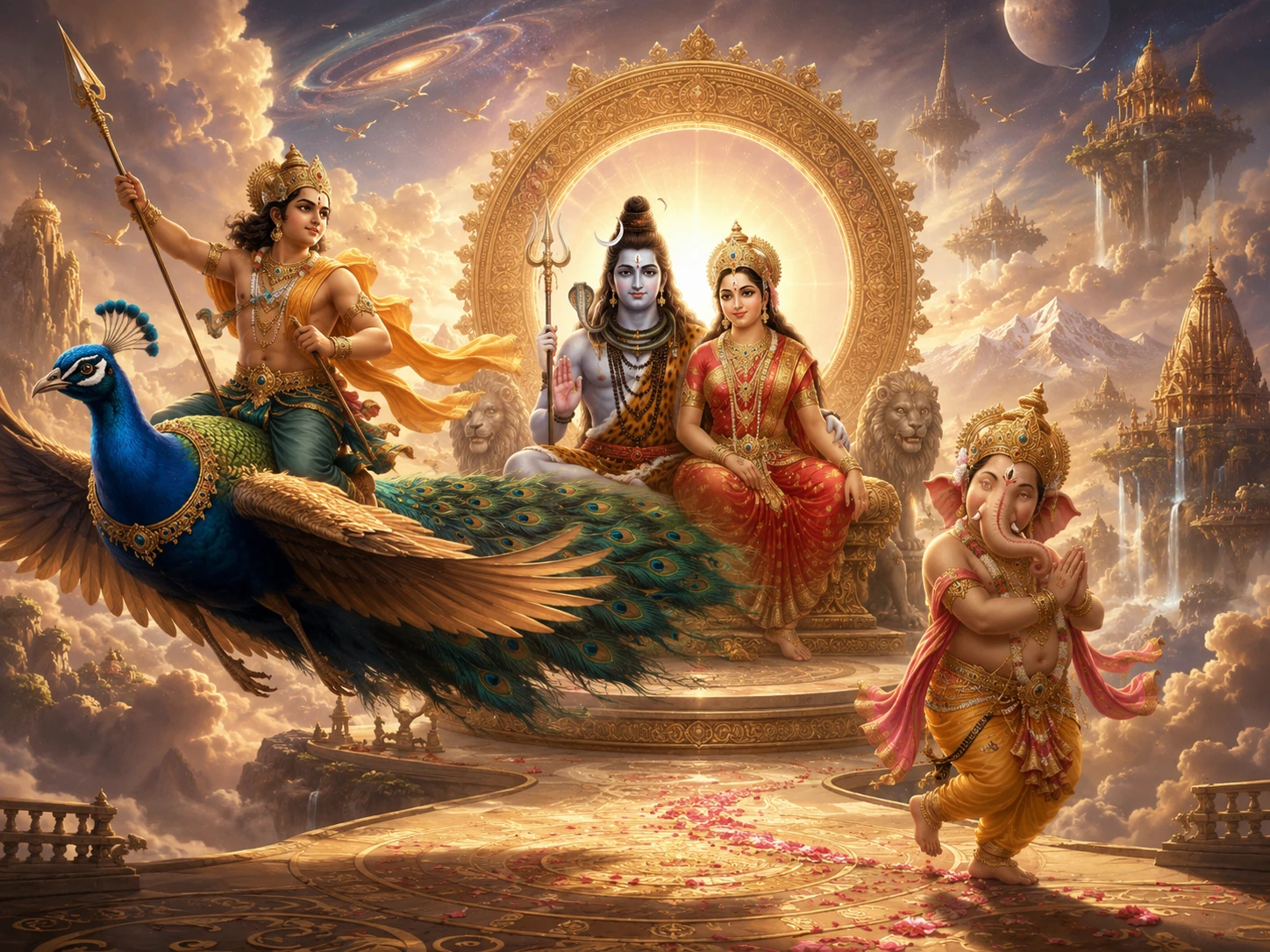
Kartikeya vs Ganesh -- The Cosmic Race Around the Universe That Every Indian Parent Secretly Hopes Their Children Will Understand
कार्तिकेय बनाम गणेश -- ब्रह्माण्ड की वो परिक्रमा जो हर भारतीय माता-पिता चुपचाप चाहते हैं कि उनके बच्चे समझें
This is the story that every Indian grandparent tells. Every Indian child hears it by age five. And most Indian adults, if they are honest, admit they still think about it.
Shiva and Parvati received a divine fruit -- in some versions a mango from Narada, in others a fruit of immortality, in others a fruit of knowledge. The fruit could not be divided. One child must receive it whole. But Shiva and Parvati had two sons: Kartikeya (also called Murugan, Skanda, Subramanya), the god of war -- athletic, disciplined, fearless, the commander of the divine armies who had defeated the demon Tarakasura; and Ganesha, the elephant-headed god of wisdom -- rotund, sweet-toothed, riding a mouse, the remover of obstacles who is worshipped before all other gods.
To decide who would receive the fruit, Shiva set a challenge: whoever circumnavigates the universe first wins. The race was on.
Kartikeya did what any high-achiever would do. He mounted his vahana -- the peacock -- and took off at cosmic speed. He flew across the physical universe (Bhuloka), the celestial universe (Svarloka), the nether worlds (Patala), and every realm in between. He crossed oceans, continents, galaxies. He circled Meru, the cosmic mountain at the axis of creation. He was fast, thorough, and magnificent.
Ganesha watched his brother disappear into the sky. Then he turned to his parents, Shiva and Parvati, who were seated together. He walked around them. Once. Twice. Three times. Then he stopped, folded his hands, and said: 'You -- my parents -- are my universe. Whoever circumambulates their parents circumambulates the entire creation. Because the parents contain within them all that exists.'
Shiva smiled. Parvati's eyes filled with tears. The fruit was given to Ganesha.
When Kartikeya returned -- exhausted, triumphant, having physically traversed the cosmos -- he found that his younger brother had already won. In some versions of the story, Kartikeya is angry and leaves for the south (which is why Murugan worship is dominant in Tamil Nadu while Ganesha worship is dominant in the north). In other versions, he accepts the verdict with grace, recognising that wisdom outperforms speed.
This story has been told for at least two thousand years. It has been illustrated in temple sculptures, miniature paintings, animated cartoons, Amar Chitra Katha comics, school textbooks, and bedtime story collections. It is, quite possibly, the most widely known Indian parable after the Ramayana and Mahabharata. And like all great stories, it operates on multiple levels simultaneously.
वक्रतुण्ड महाकाय सूर्यकोटिसमप्रभ। निर्विघ्नं कुरु मे देव सर्वकार्येषु सर्वदा॥
vakratuṇḍa mahākāya sūryakoṭisamaprabha | irvighnaṃ kuru me deva sarvakāryeṣu sarvadā ||
O Lord with the curved trunk and massive body, whose radiance equals that of a crore suns -- O Deva, make all my endeavours free of obstacles, always.
— Ganesha Dhyana Shloka (widely recited invocation, source varies across Puranas)
The philosophical layers of this story unfold like a fractal -- the deeper you look, the more structure you find.
Layer 1: Wisdom vs Speed. Kartikeya represents physical achievement -- the person who works the hardest, runs the fastest, covers the most ground. Ganesha represents intellectual achievement -- the person who finds the elegant solution, the shortcut that is not a shortcut but a deeper understanding. In JEE terms: Kartikeya is the student who solves every problem by brute-force calculation. Ganesha is the student who sees the pattern and writes the answer in two lines. Both are valid. But when the fruit is single, the prize goes to insight.
Layer 2: Parents as Universe. The theological claim embedded in Ganesha's answer is not merely sentimental. It is metaphysical. In Hindu theology, Shiva represents Purusha (consciousness, the static principle) and Parvati represents Prakriti (nature, the dynamic principle). Together, they constitute the entire cosmos. The Ardhanarishvara form makes this explicit: Shiva-Parvati ARE the universe. Ganesha is not being clever or sycophantic. He is being theologically precise. The universe IS his parents. Circumambulating them IS circumambulating the cosmos. His 'shortcut' is not a trick; it is the correct answer.
Layer 3: North-South Divide. Kartikeya's departure to the south is the mythological explanation for one of the most significant regional divides in Hindu worship patterns. In North India, Ganesha is overwhelmingly dominant. Ganesh Chaturthi is a massive festival (particularly in Maharashtra, where the Pune and Mumbai celebrations are among the largest in India). Kartikeya/Murugan worship is comparatively minor in the north. In Tamil Nadu, it is reversed: Murugan is the dominant deity, with six major temples (Arupadai Veedu) dedicated to him, and the Thaipusam festival (celebrated with kavadi -- elaborate devotional structures carried on the body) is one of the most intense devotional practices in Hinduism. The theological rivalry between the brothers is mirrored in the cultural geography of the subcontinent.
Layer 4: The Fruit. What was the fruit? The Shiva Purana calls it a jnana-phala (fruit of knowledge). The Skanda Purana calls it an amrita-phala (fruit of immortality). Some folk versions call it a mango (Narada's mango). The ambiguity is the point: the fruit represents the one thing in life that cannot be shared or divided. Your calling. Your vocation. Your unique gift. The story says: two people can want the same thing, and the one who approaches it with wisdom rather than mere effort will receive it.
Layer 5: The Loser. The story's treatment of Kartikeya is compassionate, not dismissive. He did everything right. He was fast, disciplined, thorough. He physically circumnavigated the cosmos. That is an extraordinary achievement. The story does not say he failed. It says he lost to someone who found a better way. This is the difference between failure and defeat -- and every UPSC aspirant who comes second, every startup founder whose competitor found a smarter model, every athlete who gives everything and still loses to genius, understands this difference in their bones.
For the parent who wants their child to be Kartikeya -- ambitious, hardworking, physically accomplished -- but secretly hopes they will be Ganesha -- wise, devoted, able to see what matters. For the child who looks at their parents across the dinner table and does not yet understand that what they are looking at is, in the deepest theological sense, the entire universe. For the grandparent who tells this story at bedtime, voice softening, knowing that the child will remember it for sixty years. The cosmic race is still running. Kartikeya is still flying. Ganesha is still walking around his parents. And the fruit is still waiting for whoever understands.
Kartikeya vs Ganesha -- Two Models of Achievement
| Attribute | Kartikeya | Ganesha |
|---|---|---|
| Method | Physical effort -- flies across entire cosmos | Wisdom -- circumambulates parents |
| Vahana | Peacock (beauty + speed) | Mouse (humility + ability to fit anywhere) |
| Approach to Problems | Direct confrontation, warrior's discipline | Lateral thinking, remover of obstacles |
| Body Type | Athletic, lean warrior | Rotund, comfortable, large-bellied |
| Regional Dominance | South India (Tamil Nadu, Kerala, Karnataka) | North + West India (Maharashtra, UP, Rajasthan) |
| Festival | Thaipusam, Skanda Shashti | Ganesh Chaturthi, Sankashti Chaturthi |
| Symbol of | Strength, discipline, martial valour | Wisdom, auspiciousness, new beginnings |
| Number of Temples | Six major (Arupadai Veedu) + thousands | Ashtavinayak (8 in Maharashtra) + millions worldwide |
| ISKCON/Global | Less known outside India | Globally iconic -- from Indonesia to Japan to corporate logos |
| Startup Analogy | The founder who outworks everyone | The founder who finds product-market fit |
The story does not say Kartikeya is wrong. It says both approaches are valid, but when forced to choose, wisdom creates more value than effort. This is not an argument against hard work -- it is an argument for working smart.
The cosmic race story has generated an entire ecosystem of cultural practices, temple traditions, and family rituals across India.
Pradakshina (circumambulation) -- walking clockwise around a temple, a deity, a sacred fire, or one's parents -- is one of the most universally practised rituals in Hinduism, and its theological root is Ganesha's race. When a devotee walks around a Shiva lingam, a Peepal tree, or the path around a temple's garbhagriha, they are performing what Ganesha performed: acknowledging that the divine is at the centre of their world and that their movement around it constitutes the complete journey.
The number of Pradakshinas varies by deity and tradition: one for Ganesha, three for Shiva, seven for Surya. The direction is always clockwise (keeping the deity to the right -- the 'dakshin' or auspicious side), except in specific funerary rites where counter-clockwise circumambulation marks the reversal of normal order. In many South Indian temples, the Pradakshina path is a designated walkway with oil lamps, sculpture panels, and subsidiary shrines -- making the circumambulation itself a meditation, not merely a physical exercise.
The cosmic race also encodes a distinctly Indian theory of knowledge. In Western epistemology, knowledge is typically gained through exploration -- going outward, travelling far, collecting data from distant sources. Columbus had to sail across the Atlantic to discover America. Scientists send probes to Mars. The assumption is: truth is somewhere else, and you must go find it.
The Ganesh model inverts this. Truth is not somewhere else. It is at the centre of where you already are. The parents are the universe. The guru is Brahman. The atman within you IS the Brahman you are seeking outside. Ganesha does not reject Kartikeya's outward journey; he simply demonstrates that the inward journey arrives at the same destination faster. This is the foundational insight of Advaita Vedanta, expressed not as an abstract philosophical proposition but as a children's story about two brothers and a fruit.
Kartikeya's post-race departure to Tamil Nadu has generated a rich theological and cultural tradition in the south. The Palani Murugan Temple, built on the hilltop where Kartikeya is said to have settled after the race, is one of the six Arupadai Veedu (battle camps of Murugan) and receives 5-7 million annual visitors. The deity at Palani is unique: Murugan is depicted as a Dandayudhapani -- standing with a walking staff (danda), having renounced all weapons, wearing only a loincloth. This is not the fierce warrior of the Skanda Purana; this is the post-race Kartikeya, the brother who lost, who gave up his weapons and his anger and chose the simplicity of a wandering ascetic. The transformation from warrior to renunciant is itself a teaching: losing gracefully can be more transformative than winning.
The Thaipusam festival -- celebrated primarily by Tamil communities worldwide (especially in Malaysia, where the Batu Caves near Kuala Lumpur host one of the largest Hindu festival gatherings outside India) -- is a Murugan festival that involves kavadi (devotional structures, sometimes piercing the body with hooks and skewers) as acts of penance and devotion. The intensity of Thaipusam is directly connected to Kartikeya's warrior nature -- this is devotion expressed through physical endurance, through pain willingly embraced, through the body becoming the battlefield of spiritual transformation.
In contemporary Indian families, the cosmic race plays out every day in a very different context. The Kartikeya child is the one preparing for JEE, running the marathon of 16-hour study days, conquering the syllabus by brute force. The Ganesha child is the one who comes home, touches the parents' feet, and says: 'I got campus placement at a good company, I will stay in India, and I will look after you.' Both children are valued. Both paths are honoured. But there is a moment -- usually when the parents are old, when the father is in the hospital and the mother needs someone to drive her to the temple -- when every Indian family discovers which of their children is Kartikeya (abroad, successful, loving but distant) and which is Ganesha (nearby, perhaps less materially accomplished, but present).
The fruit, in those moments, goes to the one who is present. Every time.
The cosmic race story appears in multiple Puranas with slight variations: the Shiva Purana, the Skanda Purana, the Brahmanda Purana, and the Mudgala Purana each tell slightly different versions. In some, the fruit is a mango brought by Narada specifically to cause a quarrel (Narada being the divine instigator). In others, it is the fruit of the Kalpavriksha (wish-fulfilling tree). The Skanda Purana's version adds that Kartikeya, upon losing, was so upset that he renounced his family and went to live alone on Mount Palani in Tamil Nadu -- which is the mythological origin of the Palani Murugan Temple, one of the six Arupadai Veedu and one of the most visited temples in South India (approximately 5-7 million annual visitors). Meanwhile, the practice of Pradakshina (circumambulation) -- walking clockwise around a temple, a deity, or one's parents -- is directly derived from this story. When you walk around a temple in India, you are performing Ganesha's race. And the teaching is embedded in every circuit: the divine is not far away. It is right here, at the centre of your circle.
The sibling dynamic between Kartikeya and Ganesha mirrors one of the deepest tensions in Indian family life -- and the story's enduring power comes from the fact that every Indian family recognises itself in it.
Kartikeya is the firstborn. He is the elder brother. He is the one who went out into the world, fought the demon Tarakasura, commanded armies, proved himself through action. He did everything that was expected of a firstborn son in a traditional Indian family: he was brave, competent, and externally accomplished. Ganesha is the younger. He is the one who stayed home. He is clever rather than brave, wise rather than accomplished, devoted rather than independent.
In traditional Indian families -- particularly in joint family structures -- these two archetypes play out with remarkable consistency. The elder son goes to IIT, gets an MS from Stanford, works at Google in Mountain View. The younger son stays in Indore, joins the family business, drives the parents to the hospital, arranges the family pujas, manages the property disputes. At Diwali, the elder son sends money from California. The younger son lights the diyas.
The story does not judge either brother. This is crucial. Kartikeya is not villainised for his ambition or his journey. Ganesha is not presented as lazy for staying home. Both paths are honoured. But when the single fruit must go to one -- when the question is not 'Who achieved more?' but 'Who understood more?' -- the answer goes to the one who recognised that the journey outward and the journey inward arrive at the same destination, and that the inward journey is faster.
This is why the story survives. It is not a parable about which brother is 'better.' It is a parable about two legitimate modes of being human, and the recognition that wisdom -- the ability to see the deep structure beneath the surface appearance -- trumps effort when effort alone cannot solve the problem. In a civilisation that produced both the Karmayoga of the Gita (act without attachment to results) and the Jnanayoga of the Upanishads (realise that the Self is Brahman), the cosmic race story is the junction point. It says: act like Kartikeya. But think like Ganesha. And when you must choose between the two, choose thought.
Every Ganesh Chaturthi -- when hundreds of millions of Indians install clay murtis of Ganesha in their homes and communities, worship them for 1.5 to 11 days, and then immerse them in water -- they are celebrating the victory of the younger brother who walked around his parents instead of around the universe. They are celebrating the triumph of wisdom over speed, of devotion over ambition, of presence over distance. And every parent watching their child touch the murti's feet before the visarjan is secretly thinking: be Ganesha. Stay close. Understand that we are your universe. And that understanding is the only fruit worth winning.
Chant the Vakratunda Mahakaya -- Ganesha Invocation
Begin any new endeavour with the most widely chanted verse in Hinduism -- the Vakratunda Mahakaya, the Ganesha invocation that asks the Remover of Obstacles to clear your path. It is on Eternal Raga with its meaning.
Eternal Raga · शाश्वत राग
Institutional voice — scholarly articles on Sanatan Dharma
Deepen Your Understanding
अपनी समझ और गहरी करें
deities avatars
Ganesha -- The Elephant God Decoded
An elephant head on a child's body. A broken tusk in one hand and a sweet in the other. A mouse as a vehicle for the largest deity in the room. Nothing about Ganesha makes sense on the surface -- and everything makes sense once you decode the symbols. This is the deity India invokes before every exam, every business launch, and every WhatsApp group creation.
deities avatars
Kartikeya (Murugan) -- The Commander of the Devas
Six faces, twelve arms, a spear of light, and a peacock that was once a demon. Kartikeya is the warrior god Tamil Nadu calls Murugan, the one teenagers in Chennai pray to before JEE, and the one a million devotees climb Batu Caves for during Thaipusam. His story is the story of how anger becomes discipline.
deities avatars
Parvati -- Shakti, Wife, Mother, and the Woman Who Moved a Mountain God
She is the daughter of the Himalayas who performed tapas so intense that even Shiva -- the god who burned Kamadeva to ash for daring to disturb his meditation -- was compelled to open his eyes. Parvati is Hinduism's most complete feminine archetype: lover, mother, warrior, philosopher, and the literal other half of god.
deities avatars
Nataraja -- The Cosmic Dancer
One foot crushes a dwarf. The other is raised in liberation. A ring of fire frames the dance. A drum beats creation into existence. An open palm says 'do not fear.' This is Nataraja -- Shiva as the Lord of Dance -- and it is the single most replicated Indian bronze in the history of art. The physicists at CERN chose it to stand outside the world's largest particle accelerator. The Chola bronzesmiths of Tamil Nadu perfected it a thousand years ago. And every time a subatomic particle appears and disappears, the cosmic dance continues.
deities avatars
Nine Forms of Shiva -- The Many Faces of Mahadeva
He is the silent teacher under a banyan tree and the screaming destroyer on a battlefield. He is half-woman and half-man. He drank the poison that would have ended the universe and his throat turned blue. Nine scripturally-attested forms of Shiva -- from Nataraja to Rudra -- and why each one exists.
rituals traditions
Pradakshina and Namaskara -- Why Hindus Walk Clockwise and Touch the Ground
You have seen it a thousand times: devotees walking clockwise around a temple, a deity, a sacred tree, or even a person. You have seen people fall flat on the ground -- forehead, chest, knees, palms all touching the earth -- before a deity or an elder. Pradakshina (circumambulation) and Namaskara (prostration) are the two most physically embodied acts of Hindu worship. They are not empty gestures. The clockwise walk mirrors planetary orbits and channels energy through the body's right side. The prostration dissolves ego by making the body a straight line of surrender. Both are technologies of the body that the mind alone cannot replicate.
deities avatars
Dakshinamurti -- The Silent Teacher Who Taught the Universe Through Silence
Under a banyan tree sits a young guru, surrounded by old disciples. He says nothing. They understand everything. This is Dakshinamurti -- Shiva as the original teacher -- and his image is the most profound statement on education in any civilisation: the highest knowledge cannot be spoken. It can only be transmitted through presence.
The cosmic race story appears in multiple Puranas with slight variations: the Shiva Purana, the Skanda Purana, the Brahmanda Purana, and the Mudgala Purana each tell slightly different versions. In some, the fruit is a m…
More in Deities & Avatars
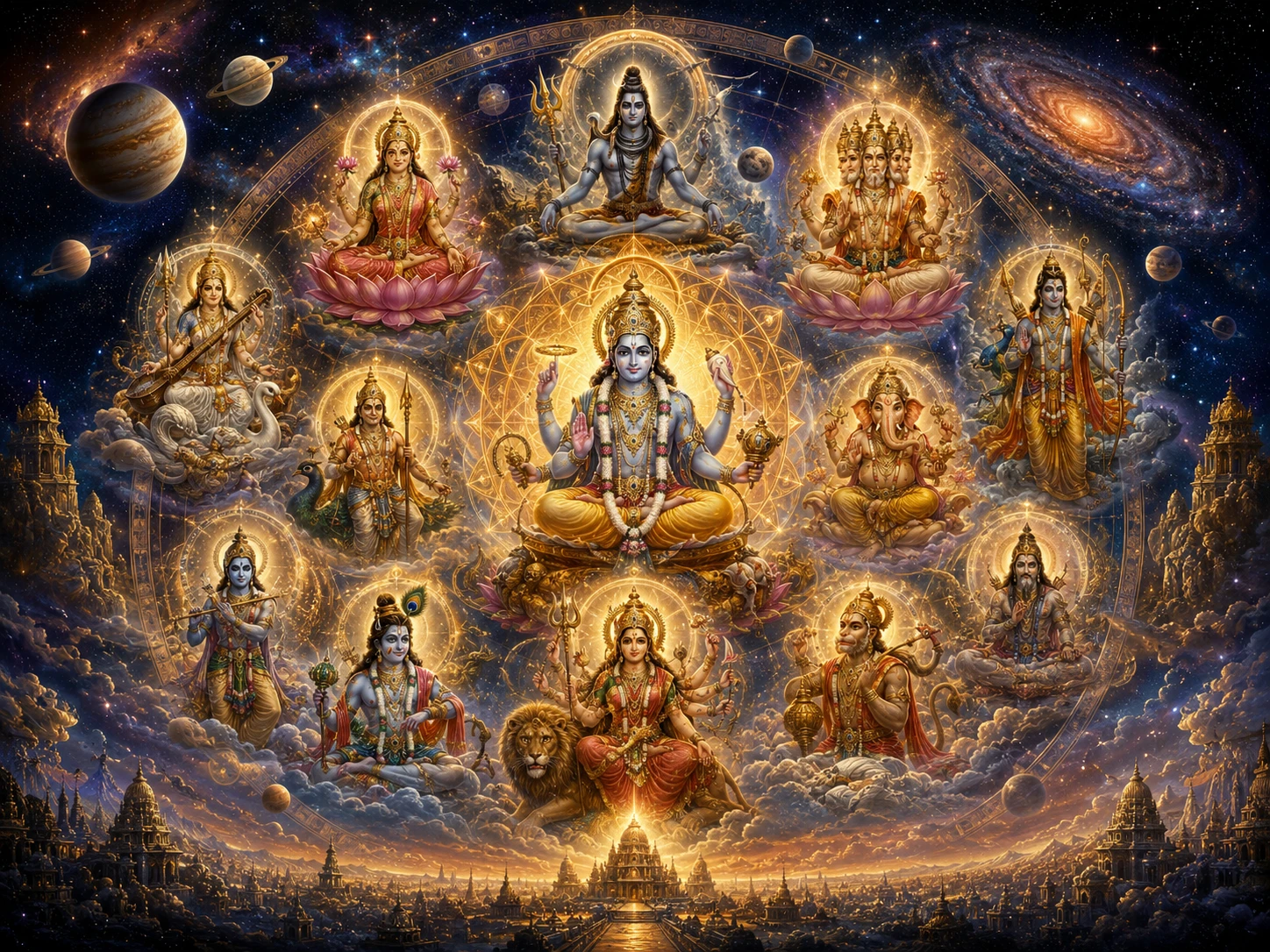
33 Koti Devata -- Why Hinduism Has 33 Types of Gods, Not 33 Crore
13 min read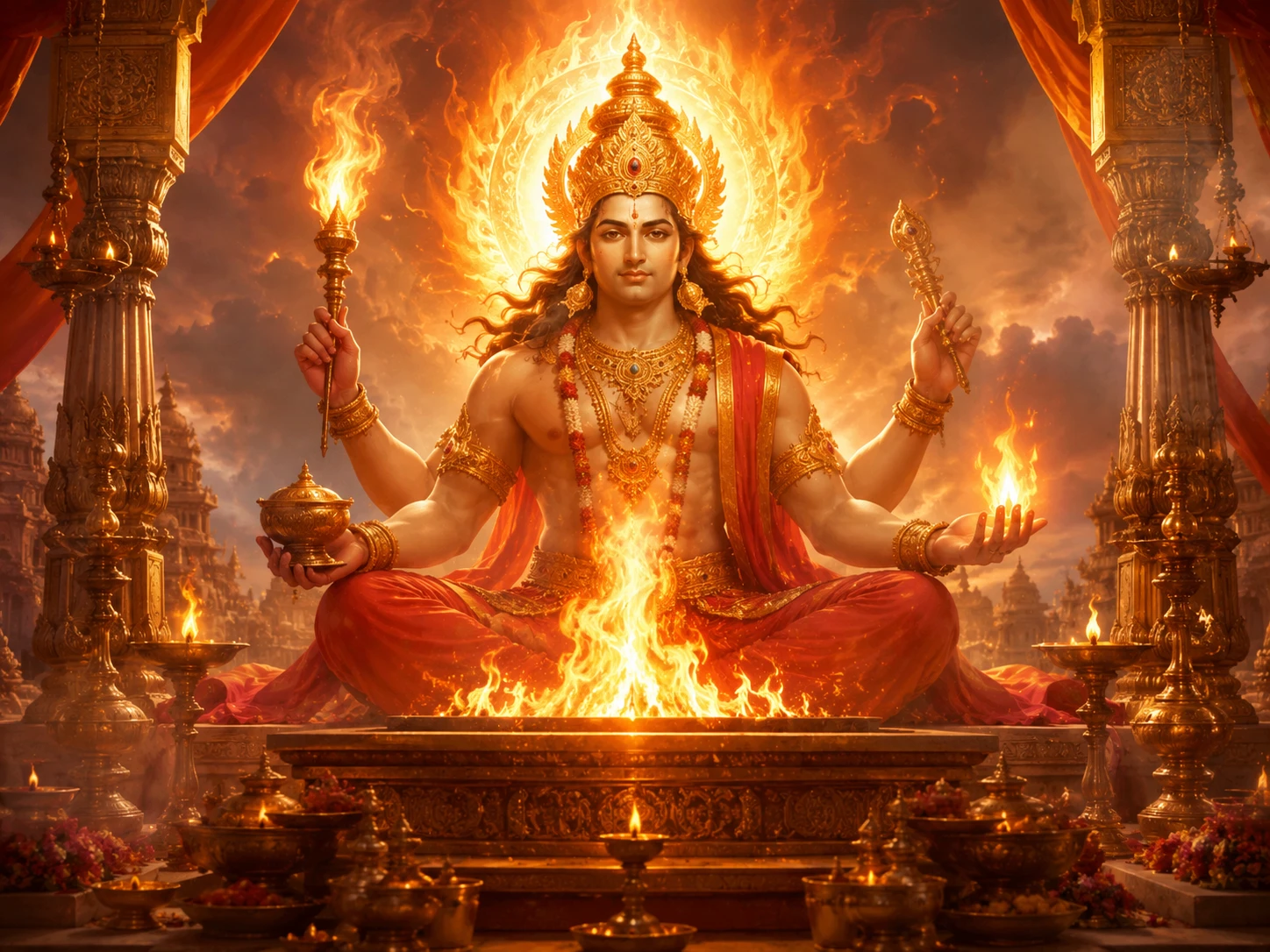
Agni -- The Fire God
19 min read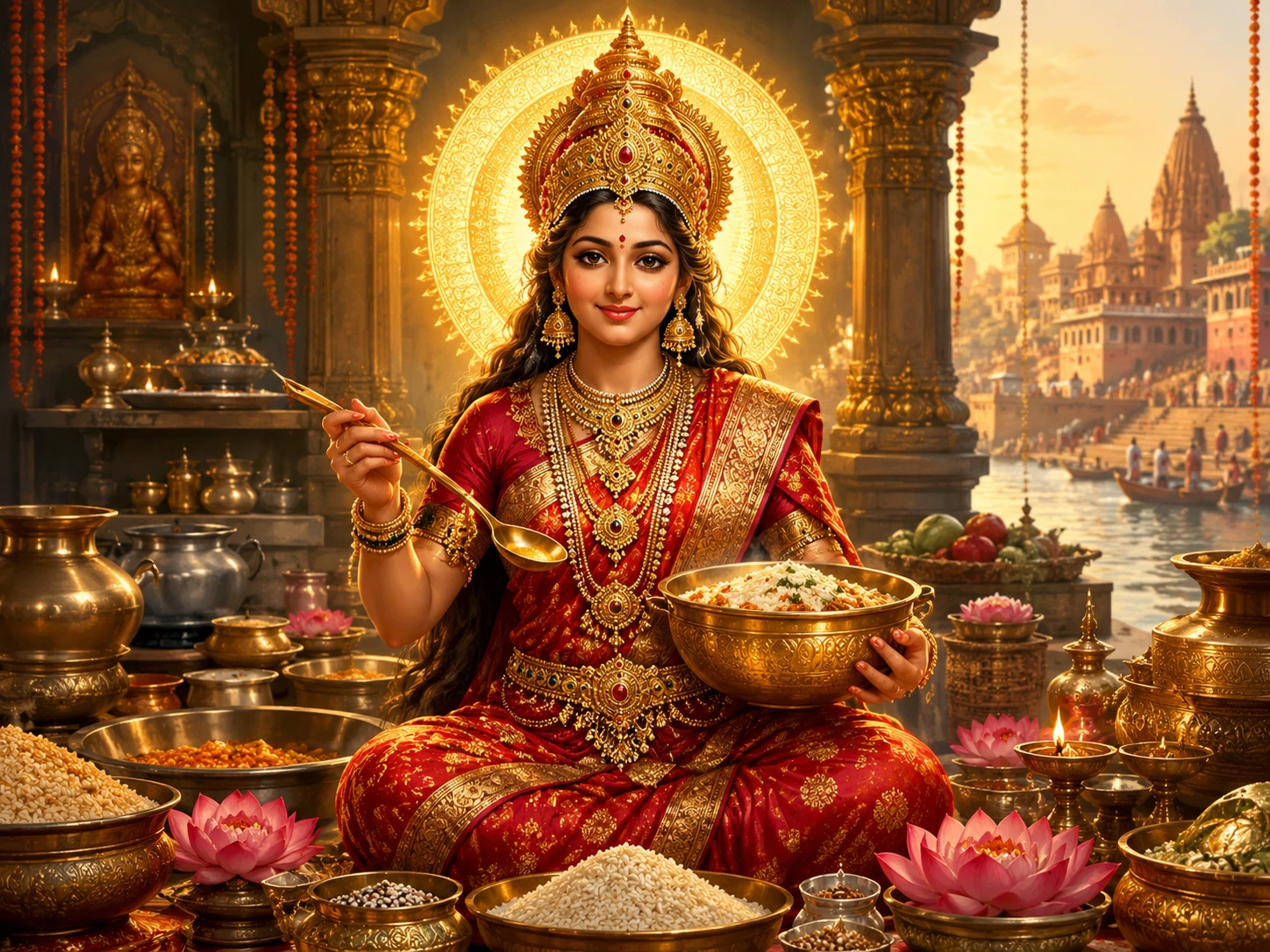
Annapurna -- Goddess of Food
19 min readThe same translation error that turned '33 Koti' into '33 crore' in Hinduism also happened in Buddhism. The Chinese translation of Buddhist texts rendered 'Sapta Koti Buddha' (7 Supreme Buddhas) as '7 Crore Buddhas.' The…
Deities AvatarsCommunity Reflections
🕉️
Be the first to share your reflection.