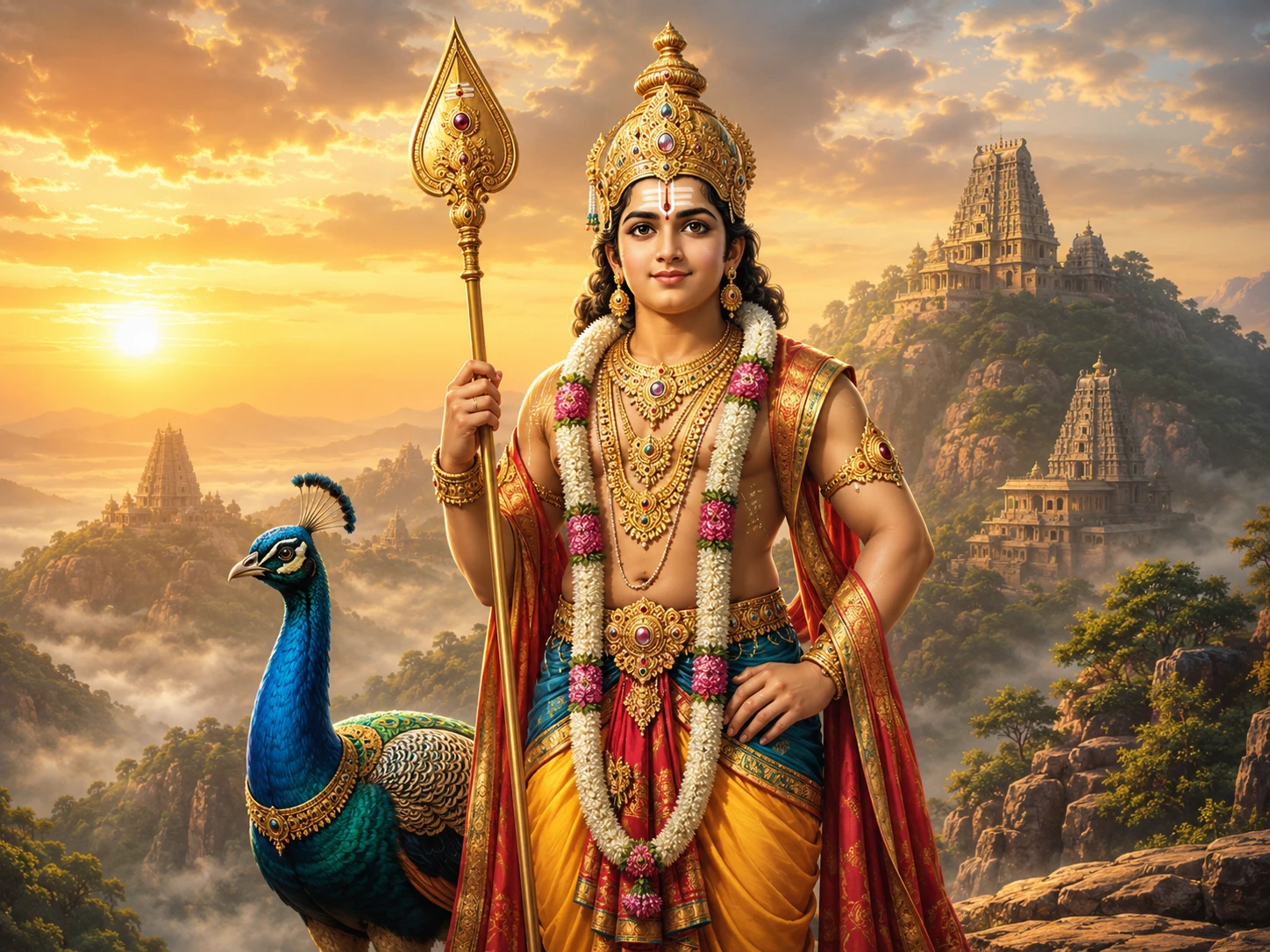
Kartikeya (Murugan) -- The Commander of the Devas
कार्तिकेय (मुरुगन) -- देव सेनापति
The Palani hill in Tamil Nadu rises about 450 feet out of flat plains, and every morning before dawn barefoot pilgrims climb the 693 steps to reach the shrine at the top. The idol they come for stands a little over three feet tall, sculpted from a mix of nine minerals called navapashanam, and holds a staff in his right hand. His name in Tamil is Murugan. In North India the same god is called Kartikeya, Skanda, Subrahmanya, or simply Kumara. He is the commander of the army of the devas, the younger brother of Ganesha, and the son of Shiva and Parvati.
In Chennai, a schoolgoing child preparing for the NEET exam may tie a small Vel-shaped locket around her neck the night before the paper. In Bengaluru, IT engineers stop at the Kumaraswamy temple on Tumkur Road on their way to work. In Kuala Lumpur, a million people walk barefoot to Batu Caves every January or February during Thaipusam, carrying milk pots and wooden kavadi arches pierced through the skin. In Mauritius and Singapore, Tamil diaspora families keep the same festival alive.
Murugan is not a footnote in the Hindu pantheon. In the southern half of India he is the warrior god, the god of youth, the god of discipline converted out of anger. His weapon, the Vel, is a spear of focused light. His mount, Paravani, is a peacock that was once a demon. His six faces look in six directions, so no enemy can surprise him.
The birth story begins with a crisis. The asura Tarakasura had done tapas so severe that Brahma granted him a strange boon: he could be killed only by a son of Shiva. At the time, Shiva was in deep meditation after the death of his first wife Sati, and it seemed there would never be such a son. The devas, losing the war to Tarakasura, sent Parvati to win Shiva back, and sent Kamadeva to break his meditation with a flower arrow. Shiva, angered, opened his third eye and reduced Kamadeva to ash. But the meditation was broken. Love had entered the equation.
From the union that followed, a seed of such intensity was produced that no womb could hold it. In the Shiva Purana and the Skanda Purana, the seed passes from Agni to Vayu to Ganga, and is finally deposited in a reed forest called Sharavana. There it splits into six flames, and each flame becomes an infant. Six Krittika stars, the Pleiades, nurse the six babies. When Parvati arrives and holds all six at once, they fuse into one child with six heads and twelve arms. Because the Krittikas raised him, he is called Kartikeya. Because he was born in the Sharavana reeds, he is called Saravanabhava. Because he is the young prince, he is called Kumara. Because he leapt forth fully formed, he is called Skanda.
A few days old, he leads the deva army and kills Tarakasura. This is the first war ever won in the Puranas by a child.
लसत्स्वर्णगेहे नृणां कामदोहे सुमस्तोमसञ्छन्नमाणिक्यमञ्चे। समुद्यत्सहस्रार्कतुल्यप्रकाशं सदा भावये कार्तिकेयं सुरेशम्॥
lasat-svarṇa-gehe nṛṇāṁ kāma-dohe suma-stoma-sañchanna-māṇikya-mañce, samudyat-sahasrārka-tulya-prakāśaṁ sadā bhāvaye kārtikeyaṁ sureśam.
I meditate always on Kartikeya, the Lord of the Devas. He dwells in a shining golden hall that fulfils every wish of those who come. His throne, piled with flowers and set with rubies, holds a figure whose radiance is like a thousand suns rising together.
— Subrahmanya Bhujangam by Adi Shankaracharya, Verse 8
The six heads of Kartikeya are not decorative. Each face has a specific job. One face bestows grace on devotees. One directs the yajna fire. One gives protection. One is the teacher who instructs, even instructing Shiva once on the meaning of the sacred syllable Om (the famous episode called Swaminatha, which gives Swamimalai temple its name). One is the warrior who faces the enemy. One is the son who sits in his mother's lap. Six faces, six functions. This is why he is called Shanmukha, the six-faced one, and why one of his great abodes is called Arumukham.
His weapon, the Vel, was given to him by Parvati. It is not a standard spear. The head is leaf-shaped, wide at the base, sharp at the tip, and the symbolism matters: wide intelligence narrowing into focused action. A tamil proverb says, Vel irukka bhayam yen -- when the Vel is with you, why fear? In shops across Chennai, Madurai, and Coimbatore, the Vel is hung over doorways the way the Trishul is hung in North Indian homes.
His mount Paravani has an origin that says everything about Murugan. In the war against Tarakasura's brother Surapadman, the demon transformed himself into a giant mango tree in the middle of the ocean near Tiruchendur. Murugan split the tree with the Vel. One half became a peacock, which he mounted. The other half became a rooster, which became his flag, the Seval Kodi. The enemy was not destroyed. The enemy was transformed into a vehicle for dharma. This is the inner teaching.
Tamil Nadu holds six principal temples for Murugan called the Arupadai Veedu, the Six Battle Camps. They are not a random list. Each marks a specific moment in his life and a specific theme of his worship. A full pilgrimage from one to the next takes about ten days and covers roughly fifteen hundred kilometres across the state.
Palani Murugan, where he stands as a young renunciant holding a staff, marks the episode of the cosmic mango and the race with Ganesha. Tiruchendur, on the Bay of Bengal, marks the site of the Surapadman war. Thiruparankunram near Madurai marks his wedding to Devasena. Pazhamudircholai in the high forest marks the old Tamil poetry that calls him the god of the hills. Swamimalai marks his role as the teacher of Shiva. Thiruthani marks the site where he married Valli, the tribal hunter's daughter. Kartikeya is the only major Hindu god with two wives -- Devasena, daughter of Indra, representing royal order, and Valli, the tribal girl he wooed in secret, representing the tribal, forest, wild. The pairing is intentional. The commander of the devas marries both the establishment and the outsider.
The Six Abodes (Arupadai Veedu) of Murugan
| Temple / मंदिर | Location / स्थान | Theme / विषय | Key Episode / मुख्य प्रसंग |
|---|---|---|---|
| Palani / पलानी | Dindigul district / डिंडीगुल ज़िला | Renunciation / वैराग्य | Loss of the cosmic mango, departure from Kailash / दिव्य आम खोना, कैलाश छोड़ना |
| Tiruchendur / तिरुचेंदूर | Thoothukudi coast / थूथुकुड़ी तट | Victory / विजय | Killing of Surapadman / सूरपद्मन वध |
| Thiruparankunram / तिरुपरंकुन्रम | Near Madurai / मदुरै के पास | Royal marriage / राजकीय विवाह | Wedding with Devasena, Indra's daughter / इंद्र-पुत्री देवसेना से विवाह |
| Pazhamudircholai / पझमुदिरचोलै | Madurai hills / मदुरै की पहाड़ियां | Tamil antiquity / तमिल प्राचीनता | Oldest poetic homage to Murugan / संगम साहित्य की सबसे पुरानी स्तुति |
| Swamimalai / स्वामीमलै | Kumbakonam region / कुंभकोणम क्षेत्र | Teacher of Shiva / शिव के गुरु | Meaning of Om given to Shiva / ओंकार का अर्थ शिव को समझाया |
| Thiruthani / तिरुथणी | Near Chennai / चेन्नई के पास | Forest love, tribal union / वन प्रेम, जनजातीय मेल | Secret wedding with Valli / वल्ली से गुप्त विवाह |
The Arupadai Veedu pilgrimage is one of the oldest continuous temple circuits in India, with references in Tamil Sangam literature from roughly the first to third century CE.
Thaipusam falls in the Tamil month of Thai, on the day the Pushya nakshatra rises. On this day, according to the tradition, Parvati gave Murugan the Vel so he could defeat Surapadman. Devotees mark it by carrying kavadi -- literally, a burden on the shoulders. The practice runs from a simple milk pot balanced on the head to elaborate frames pierced through cheeks, tongues, and back.
The largest public Thaipusam in the world is not in India. It is in Batu Caves near Kuala Lumpur, where more than a million devotees converge every year, walking from the Sri Mahamariamman temple in the city to the 272 steps at Batu Caves, a distance of about thirteen kilometres. The scene is overwhelming. Men in saffron, bare-chested, kavadi frames mounted on their shoulders, some in a trance, family members walking beside them chanting Vel Vel Muruga. Many of them have prepared for 48 days of vegetarian fasting, celibacy, sleeping on the floor, and daily prayer. The point is not spectacle. The point is that a vow kept for 48 days changes the person who made it.
In India, Thaipusam draws large gatherings at Palani, Tiruchendur, and at the Kapaleeshwarar temple in Chennai. The Skanda Sashti festival in October or November, a six-day fast culminating in a re-enactment of the Surapadman battle at Tiruchendur, draws crowds of a different order. The Tamil month of Karthigai brings Karthigai Deepam, when lamps are lit across rooftops and temples and the red flame of Tiruvannamalai burns on Arunachala hill, linking Murugan worship to Shiva worship at the same mountain.
There is a famous episode that explains why Ganesha is worshipped first across India while Murugan is worshipped first across Tamil Nadu. Shiva offered a divine mango as a prize to whichever son could circle the world first. Kartikeya, the warrior, mounted his peacock and set off at high speed. Ganesha, who rides a mouse, walked three steps around his parents and claimed victory, arguing that his mother and father together are the world. Ganesha won the mango.
In most North Indian retellings, the episode ends here with a smile and a moral about devotion. In Tamil retellings, it does not end there. Kartikeya, angry at what he read as a trick, left Kailash. He came south. He settled on Palani hill as a renunciant, stripped of ornaments, holding only a staff. The idol at Palani to this day shows him in that posture. The south kept the elder brother. The north kept the younger. This is why, in Tamil households, Murugan is often called mudhal kadavul, the first god, and why Pillaiyar (Ganesha) worship in Tamil Nadu is widespread but less first-among-firsts than in the Hindi belt.
In North India, Kartikeya worship became subordinate. The legend developed that women should not worship Kartikeya directly, because of his renunciant Palani form. This is a local custom found in some North Indian communities, not a pan-Hindu rule. In the south, women and men worship Murugan equally. The diaspora Tamils in Singapore, Malaysia, Sri Lanka, and South Africa carry the southern pattern forward without such restrictions.
The Indian Army's elite Madras Regiment, one of the oldest regiments in the country with battle honours going back to 1717, has Murugan as its regimental deity. Before every major operation, soldiers chant Veera Madrasi Adi Kollu Adi Kollu -- the Tamil war cry of the regiment -- and officers salute the Vel. The connection is not ornamental. Murugan is remembered in Tamil military tradition as the prototype commander: young, decisive, and responsible for the safety of those he leads. The Indian Navy's Southern Naval Command, headquartered in Kochi, observes Kartikeya Jayanti in its annual calendar.
In the Skanda Purana, the largest of the eighteen Mahapuranas, Kartikeya gives extensive teaching on what it means to be young. The texts calls him Kumara not because he is biologically young but because he chooses to stay in the state of beginning. Youth, in this telling, is not an age. It is a posture: ready, unattached to old victories, willing to risk the next thing. The teaching is pointed. Most adults stop being young not because of grey hair but because they stop learning. The warrior who will not re-train becomes a liability in the next war.
This is why in contemporary Tamil popular culture, Murugan remains the god of exam pressure, of corporate exhaustion, of young men making a bad relationship into a good one. The Sri Subrahmanya temple in Sringeri sees IAS aspirants from the Hindi belt arrive in the week before the UPSC preliminary exam. The temple at Kurinji Andavar in Kodaikanal fills up with MBA candidates in the weeks before CAT results. The kavadi pierces the body; the preparation pierces the ego. Both are about the same thing.
Murugan is not a god of escapism. His father, Shiva, is the god of the cremation ground, of ash, of the horizon where all things end. Murugan is the opposite pole. He is the god of beginnings that have to be fought for. If Ganesha removes obstacles, Murugan teaches you to fight through them.
The story of Murugan and Valli is possibly the most retold love narrative in Tamil country. Valli was the adopted daughter of a hunter chief in the hills of Veliyamalai. She grew up guarding millet fields, chasing parrots away with a sling. Murugan, having heard of her beauty and spirit, came down from his heaven. He approached her first as a hunter, asking for water. Valli, bound by village rules that prohibited speaking to a strange man alone, refused. He came again the next day as an old man asking for alms. She still refused. Only when he sent his elder brother Ganesha in the form of a wild elephant to startle her -- and only when, frightened, she turned and agreed to marry the hunter-youth who offered to save her -- did the courtship move forward.
The story sounds like a trick until one sees what it teaches. Valli had to choose. She was not delivered to a heavenly bridegroom by her father. The marriage was not arranged by a council of devas. She chose, on a specific day, in fear, in the open, outside the rules of her village. The Tamil tradition insists on this version over any sanitised one, because it says something the polished Puranic narratives rarely say: the tribal bride is not a trophy. She is the chooser. The god goes to her. The god disguises himself. The god waits. In the final form of the story, Valli is worshipped at Thiruthani in exactly the same iconographic status as Devasena, not as a secondary or informal wife.
The sociological reading is just as sharp. The North Indian tradition has a pair Lakshmi-Narayana where the goddess arises from the ocean at churning. The South Indian tradition has Murugan-Valli, where the god goes into the forest and waits on a tribal girl's convenience. The distinction is not small. It shapes, to this day, the role of forest, hill, and tribal shrines in the religious imagination of Tamil Nadu and the way Valli's story continues to anchor the worship of Murugan across rural South India.
Kartikeya's names in different regions tell their own story. In Sanskrit, he is Skanda (the one who leapt forth), Kumara (the young prince), Shanmukha (six-faced), Guha (of the cave, also meaning the secret one), Subrahmanya (dear to Brahmins, the one who knows Brahman), and Senani (commander). In Tamil, he is Murugan (the young, beautiful one), Velan (the one with the Vel), Aarumugan (six-faced), Kumara, and Kandaswami. In Telugu he is Subrahmanyeshwara. In Kannada, Subramanya. In Sri Lanka, the Katargama Deviyo. In the Malay language of Singapore and Malaysia, Thandayuthapani. The 1008 names of Subrahmanya collected in the Skanda Purana include entries in Sanskrit, while Kachiyappa Sivacharya's Kanda Puranam of the 14th century preserves the parallel Tamil tradition.
Beyond India, Kartikeya travelled with the early spread of Indic religion. In the 5th and 6th centuries, Gupta-era bronze images of a six-faced warrior god have been found as far east as Java and Champa (modern central Vietnam). The Cham people of Vietnam worshipped a form of Skanda at Po Nagar until the 15th century. In Japan, the bodhisattva Kumara-tennou is a Buddhist refraction of Skanda, depicted as a fierce young guardian of dharma. These are not accidents. Along the ancient sea routes, the warrior-youth archetype travelled from South India to the coasts of Southeast Asia and beyond.
In modern India, the connection to defence forces is concrete. The Indian Navy's second Veer-class missile boat, commissioned in 1991 and operational until 2019, was named INS Kartikeya. The Defence Research and Development Organisation's Agni series of ballistic missiles shares its root with Agni, the fire-god who carried the seed of Shiva before the birth of Kartikeya. The National Defence Academy at Khadakwasla holds a Kartikeya shrine in its campus that cadets visit before commissioning. The MADRAS Regiment Centre at Wellington, Nilgiris, holds a full-scale annual puja on the day of Skanda Sashti, attended by serving and retired officers alike. Kartikeya is not only remembered in military tradition; he is operationally present.
The kavadi practice at the core of Thaipusam deserves a closer look. The kavadi is a wooden or bamboo frame carried on the shoulders, often decorated with peacock feathers and small bells, sometimes topped with a figure of Murugan himself. Simple kavadis weigh around five kilograms. Elaborate ones can weigh up to fifty. Some devotees add the vel kavadi, where small hooks are pierced into the skin of the chest, back, and cheeks, and a long ceremonial Vel is pushed through the cheeks from side to side. Observers unfamiliar with the practice sometimes describe it as painful or extreme. Practitioners describe it differently: after the 48-day preparation, they report no pain during the kavadi, and many say they experience a state of trance from the moment they lift the frame to the moment they place it down at the shrine.
The psychology has been studied. In 2010, a research team from the University of Connecticut led by Dimitris Xygalatas measured cortisol levels, heart rate variability, and reported pain in kavadi bearers at the Murugan temple in Mauritius. The study found that cortisol levels -- the standard stress marker -- were lower during the kavadi than during the preparation phase, and social bonding scores in the community, measured over the following weeks, were measurably higher in participants than in controls. The ritual, in other words, did not just feel like a transformation. It produced measurable physiological and social changes. The Tamil tradition has insisted on this for two thousand years. Modern instruments have begun to confirm what the tradition already knew about how body, breath, and community intersect under vow.
For most young Tamil and Tamil-diaspora men, the first kavadi is a rite of passage. It is often done at age 16 or 18, after passing a major exam, or before leaving for higher education. The kavadi marks a change of status: the boy who carried the frame is expected, afterward, to behave as a young man responsible for the next step of his life. In Malaysia, the 272 steps of Batu Caves are climbed only after this rite. In Singapore, the procession walks from the Sri Thendayuthapani temple in Tank Road to the Sri Srinivasa Perumal temple about four kilometres away. In Mauritius, the Cavadee Festival has been recognised as an official public holiday since 1876.
The Vel, the short divine spear that Kartikeya carries, is not a prop. It is the deity. At the Palani temple, the Vel is worshipped directly on the sanctum wall, and at many Murugan shrines across Tamil Nadu, the garbha-griha itself holds a Vel rather than a human-form idol. Parvati is said to have given the Vel to her son at the start of the war against Tarakasura and Surapadman, and the weapon carries a name of its own: Shakti Vel, the spear of the Goddess's power. In Tamil iconography, the Vel has five features worth noticing. The blade is leaf-shaped, modelled on the peepal leaf. The shaft is always bamboo, never metal along its full length, because bamboo bends without breaking. The base holds a small bell. The grip is wrapped with yellow thread dyed in turmeric. The tip is sharp enough to draw blood during the kavadi ritual when devotees carry small Vels pierced through the cheek. Poigai Aazhwar, the Tamil saint-poet, described the Vel as the spear that pierces not the body of the enemy but the darkness of ignorance in the worshipper. Military units of the Indian Army that trace lineage to Tamil country still include a stylised Vel in their regimental crests, and the phrase 'Vetri Vel, Veera Vel' -- victory spear, heroic spear -- remains the standard victory cry of Murugan devotees at temple entrances and sporting events across Tamil Nadu.
Kartikeya may be the most travelled Hindu deity in the modern world after Ganesha. The Tamil diaspora carried him everywhere they went during the colonial labour migrations of the nineteenth century, and the shrines they built have grown into some of the largest Hindu temple complexes outside India. Batu Caves, a limestone hill just outside Kuala Lumpur in Malaysia, holds a statue of Murugan that stands 42.7 metres tall, painted gold, the tallest Murugan statue anywhere in the world. The climb to the cave shrine runs 272 steps straight up, and every year during Thaipusam, roughly 1.5 million devotees make that climb, the largest annual Thaipusam gathering outside India. In Singapore, the Sri Thendayuthapani Temple on Tank Road serves as the start-point for the Thaipusam procession, and the government has classified the 4-kilometre kavadi route through the city centre as a national heritage event. Sri Lanka's Tamil regions preserve some of the oldest continuous Murugan worship in the world, with the Kathirkamam shrine near the south-eastern coast drawing pilgrims across ethnic and religious lines, including Muslims and Buddhists. Mauritius runs a Cavadee festival declared a public holiday. When a Tamil IT professional in New Jersey drives two hours to the Ganesha temple in Flushing Queens to do an Abhishekam for Kartikeya on Skanda Sashti, they are participating in a transnational religious network that now spans six continents and is larger, as a worshipping community, than many European national churches.
The oldest Tamil poem about Murugan is not devotional in a simple sense. It is called Tirumurugatrupadai, written by Nakkirar sometime in the second or third century of the Common Era, and it is one of the Ten Idylls (Pattuppattu) of classical Sangam literature. The poem takes the form of a guide. A seeker who has glimpsed Murugan on one hilltop is told how to find him on five others. Each hill is described in physical detail: the trees, the tribal communities, the festival days, the flowers offered, the weapons laid at the shrine. A college student in Chennai reading Tirumurugatrupadai as a set text for the M.A. Tamil syllabus meets a Murugan who is not yet a temple deity with fixed iconography. He is a god of hills and young warriors, danced to by the Veda priestess called the Velan, invoked in the ancient war-dance called Veriyattam. The movement from this Sangam Murugan to the Agamic Subrahmanya of South Indian temples took nearly a thousand years, and both streams still feed into the practice a devotee brings to Palani today.
Every month, on the sixth day of the waxing moon, devotees observe Skanda Shashthi. When the observance is performed with special rigor in the Tamil month of Aippasi (October to November), it is called Skanda Sashti and commemorates the six-day battle Murugan fought to slay Surapadman. During this observance, a devotee fasts for six days and chants the Skanda Shashthi Kavacham, a protective hymn composed by Devaraya Swamigal in the nineteenth century. The Kavacham asks Murugan to protect each part of the body: the head, the forehead, the eyes, the hands, the chest, the stomach, the legs. Line by line, it builds a shield of sound around the one who chants it. Tamil mothers across Chennai, Madurai, and Coimbatore have their children recite the Kavacham before exams, before interviews, before surgery. The Kavacham has been recorded by dozens of Carnatic vocalists, and one rendition by the Soolamangalam Sisters has crossed fifty million plays on YouTube. A startup engineer in Bengaluru who grew up listening to their grandmother recite it every Tuesday morning may find the melody returning on a high-pressure Monday. The hymn is not simply memorized. It is carried in the body of the listener long before any decision is taken to believe in it.
The peacock Kartikeya rides is called Paravani, and in every Murugan temple across Tamil Nadu and Malaysia the peacock stands at the entrance or on the flagstaff, often with a cobra held down by its foot. The peacock in Murugan theology is the transformed Surapadman. When Murugan defeated the asura, he split him into two forms and gave them both a place of honor. Half became the peacock Paravani, the vehicle. Half became the rooster on the battle flag. The lesson, patiently explained by every Shaiva Siddhanta teacher from Madurai to Jaffna, is that a defeated enemy does not cease to exist. He is given a new function in the new order. The cobra under the peacock's foot is not killed either. It is held. Indian ecology enters this symbol cleanly. Peacocks eat snakes; snakes are linked to ego and ignorance in tantric readings; and the bird is the national bird of India, the only bird whose image the Reserve Bank of India has put on currency. When a Singapore-based Tamil family takes their newborn to the Sri Thendayuthapani Temple for the namakarana, they see the same peacock on the gopuram that a farmer in Salem district sees every morning. The continuity is deliberate. The peacock has carried Murugan from the oldest Sangam poem to the latest temple consecration in Toronto.
For someone approaching Murugan for the first time, a reasonable starting point is not the kavadi. It is the simple practice of lighting a lamp in the evening, reciting the Shanmukha Shadakshari mantra -- Saravanabhava -- one hundred and eight times on a Tuesday, and reading one verse from the Subrahmanya Bhujangam of Adi Shankaracharya. The Shankara stotram is short, thirty-three verses, and the tradition says it was composed at Tiruchendur when Shankara himself was ill and sought Murugan's protection. Students preparing for a hard exam, patients facing a difficult diagnosis, and soldiers heading into deployment have chanted these same thirty-three verses for twelve centuries. The practice is portable. No temple required. A small brass Vel on a shelf, a flame, and a steady voice are enough.
Chant Saravanabhava 108 Times
Chant the six-syllable Shanmukha mantra, Om Saravanabhavaya Namah, 108 times on a mala. Many devotees keep this practice for 48 days leading up to Thaipusam or Skanda Shashti. Its page on Eternal Raga gives the meaning and how to chant it.
Eternal Raga · शाश्वत राग
Institutional voice — scholarly articles on Sanatan Dharma
Deepen Your Understanding
अपनी समझ और गहरी करें
deities avatars
Kartikeya vs Ganesh -- The Cosmic Race Around the Universe That Every Indian Parent Secretly Hopes Their Children Will Understand
Two divine brothers are challenged to race around the universe. Kartikeya, the warrior god, mounts his peacock and flies across all three worlds at cosmic speed. Ganesh, the elephant-headed god, simply walks around his parents and says: 'You are my universe.' Ganesh wins. And in that victory is encoded everything Indian civilisation believes about the relationship between wisdom and strength, devotion and ambition, family and cosmos.
deities avatars
Ganesha -- The Elephant God Decoded
An elephant head on a child's body. A broken tusk in one hand and a sweet in the other. A mouse as a vehicle for the largest deity in the room. Nothing about Ganesha makes sense on the surface -- and everything makes sense once you decode the symbols. This is the deity India invokes before every exam, every business launch, and every WhatsApp group creation.
deities avatars
Who is Shiva?
He is the ash-smeared ascetic who is also the ideal husband. The destroyer of the universe who is called 'The Auspicious One.' The god of death who drank poison to save all life. He sits in meditation on a Himalayan peak, and simultaneously dances the cosmos into existence and annihilation. No deity in Hinduism contains more contradictions -- and no deity resolves them more completely. This is not a mythology explainer. This is an attempt to stand at the foot of the mountain and look up.
deities avatars
Parvati -- Shakti, Wife, Mother, and the Woman Who Moved a Mountain God
She is the daughter of the Himalayas who performed tapas so intense that even Shiva -- the god who burned Kamadeva to ash for daring to disturb his meditation -- was compelled to open his eyes. Parvati is Hinduism's most complete feminine archetype: lover, mother, warrior, philosopher, and the literal other half of god.
deities avatars
Nine Forms of Shiva -- The Many Faces of Mahadeva
He is the silent teacher under a banyan tree and the screaming destroyer on a battlefield. He is half-woman and half-man. He drank the poison that would have ended the universe and his throat turned blue. Nine scripturally-attested forms of Shiva -- from Nataraja to Rudra -- and why each one exists.
deities avatars
Daksha's Yagna and Sati -- Why Daksha Hated Shiva
A father so offended by his son-in-law that he held a cosmic sacrifice and invited every god in the universe -- except Shiva. A wife so devastated by the insult that she walked into the sacred fire and burned herself alive. And a husband so enraged by her death that he created a warrior from his dreadlock who destroyed the entire ceremony and beheaded the father-in-law. The Daksha Yagna is not a domestic dispute. It is the origin story of the Shakti Peethas, the theology of Shiva's rage, and the reason Parvati exists.
scriptural exegesis
Mohini and Shiva -- Why the Bhagavatam Tells This Story
Social media loves verse 8.12.32 -- Shiva loses control chasing Mohini. It never shows verse 8.12.36 -- where Shiva recovers instantly and is not at all surprised. It never shows 8.12.37 -- where Vishnu is very pleased to see Shiva unagitated and unashamed. And it never shows 8.12.38 -- where Vishnu Himself declares that Shiva is 'established in his position' despite everything. This is not a story about Shiva's weakness. It is the Bhagavatam's most powerful teaching on Maya, surrender, and why even the greatest ascetic needs divine grace.
The Indian Army's elite Madras Regiment, one of the oldest regiments in the country with battle honours going back to 1717, has Murugan as its regimental deity. Before every major operation, soldiers chant Veera Madrasi …
More in Deities & Avatars
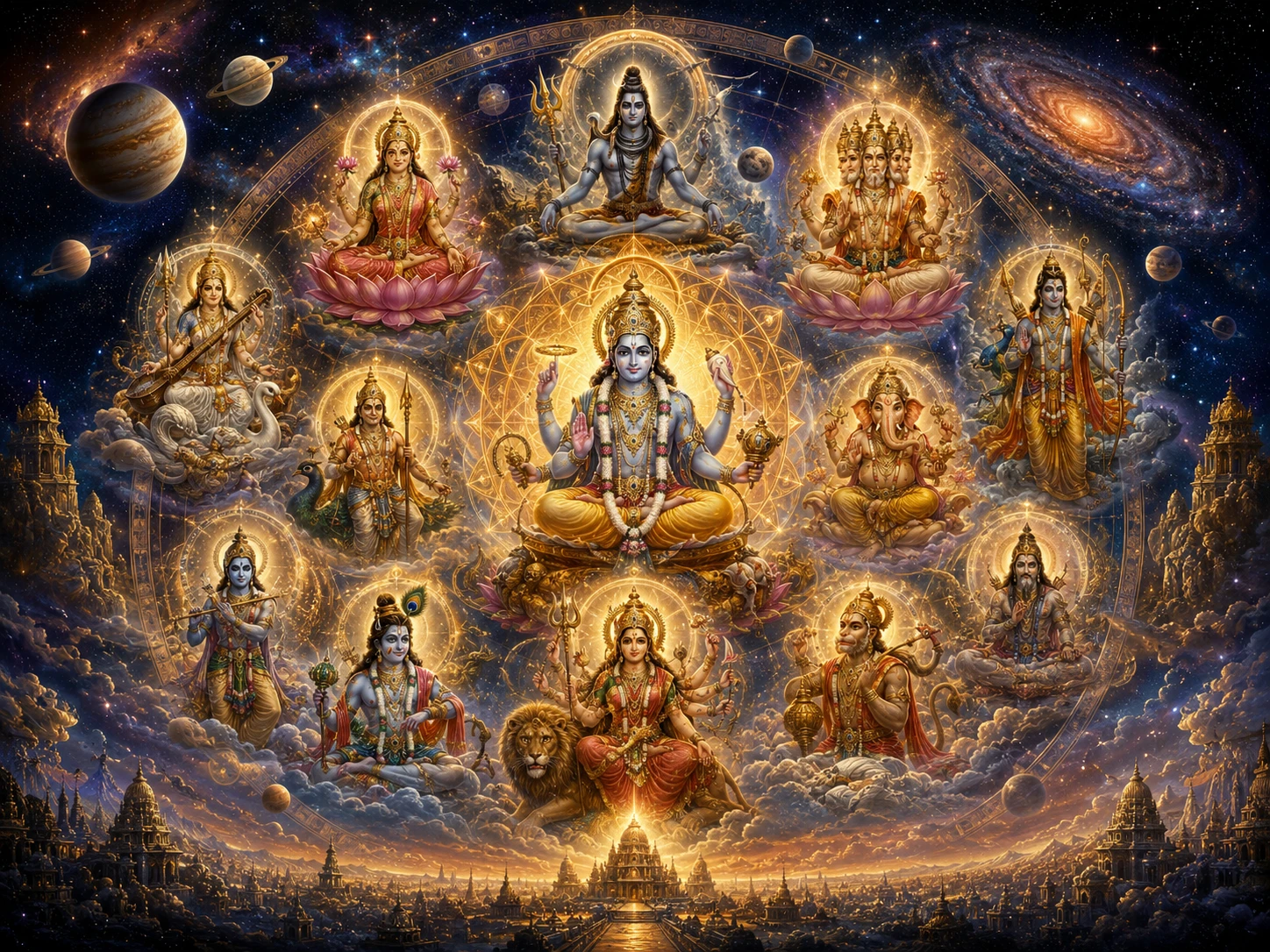
33 Koti Devata -- Why Hinduism Has 33 Types of Gods, Not 33 Crore
13 min read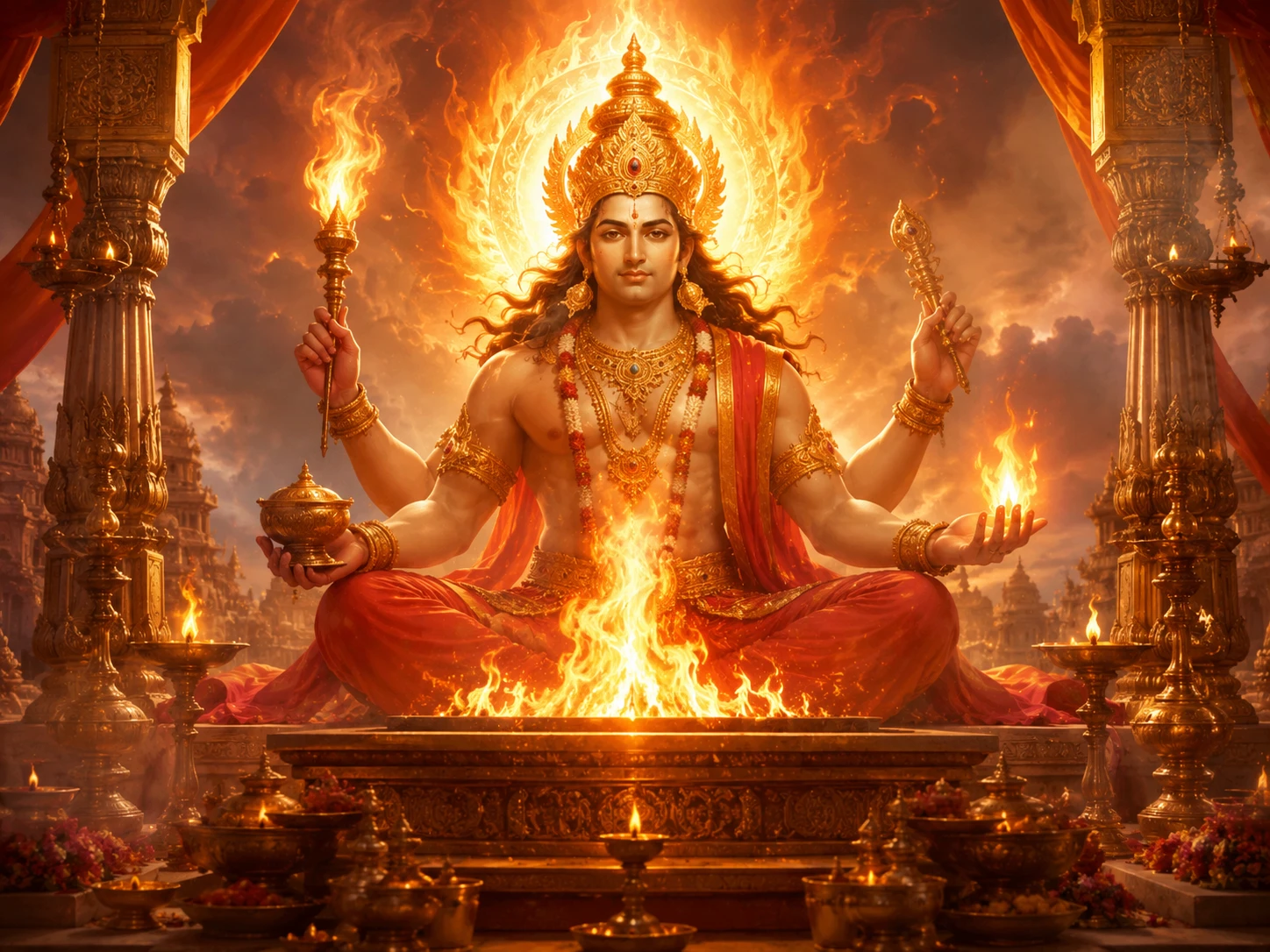
Agni -- The Fire God
19 min read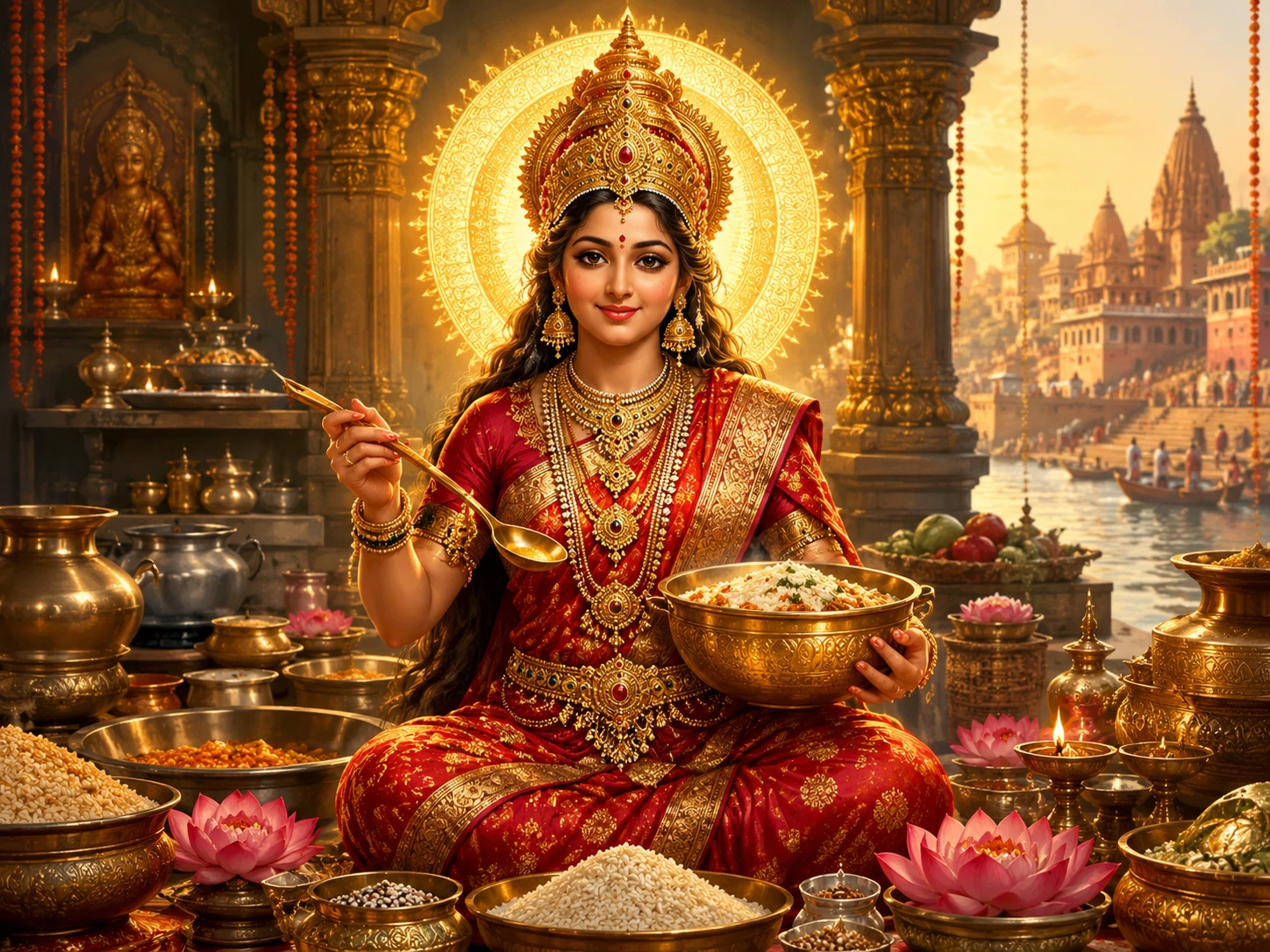
Annapurna -- Goddess of Food
19 min readThe same translation error that turned '33 Koti' into '33 crore' in Hinduism also happened in Buddhism. The Chinese translation of Buddhist texts rendered 'Sapta Koti Buddha' (7 Supreme Buddhas) as '7 Crore Buddhas.' The…
Deities AvatarsCommunity Reflections
🕉️
Be the first to share your reflection.