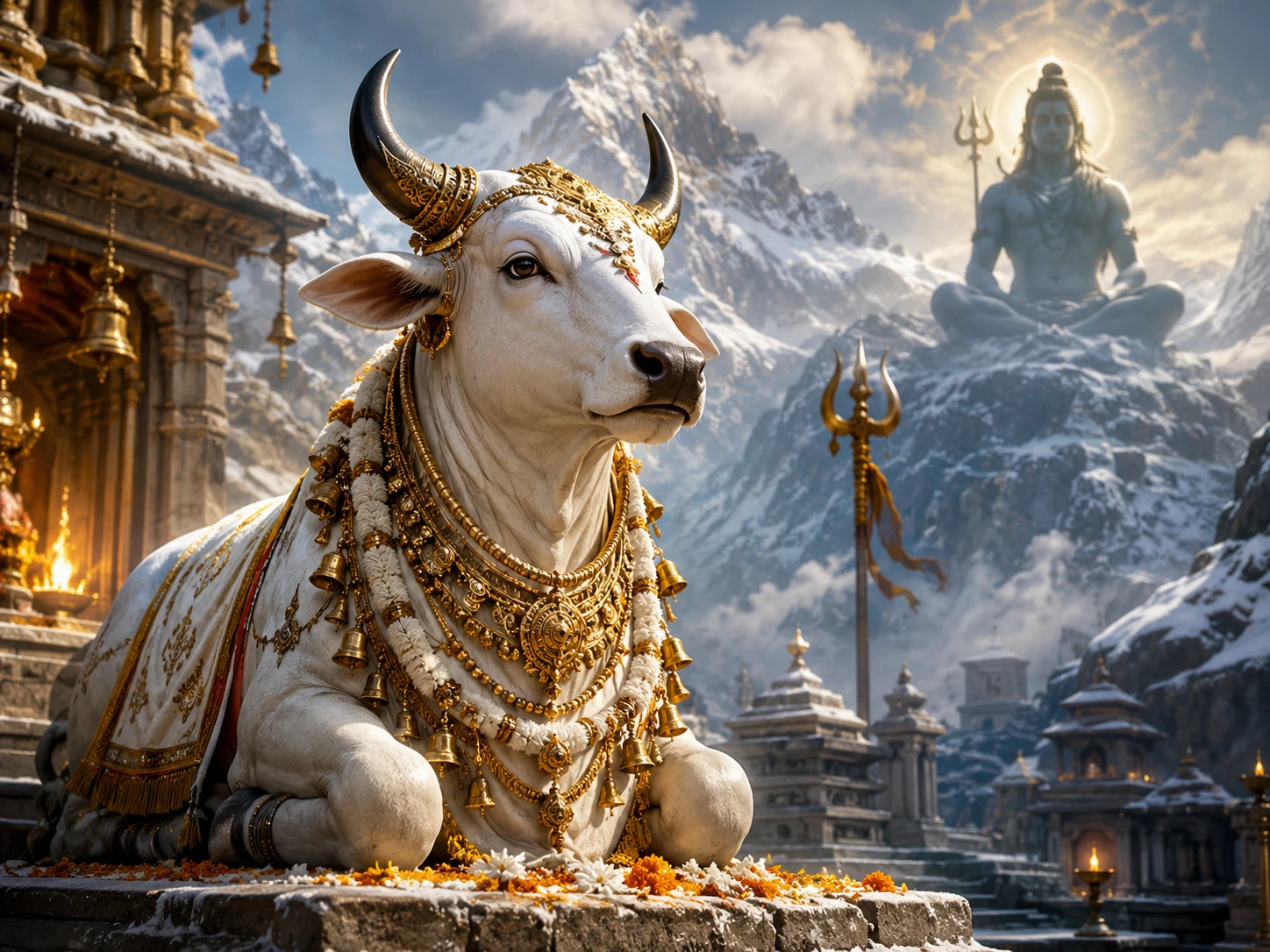
Nandi -- Shiva's Bull and the Guardian of Dharma
नन्दी -- शिव का वृषभ और धर्म का प्रहरी
Nandi is the sacred bull of Shiva and sits outside every Shiva temple in India facing the main sanctum. The arrangement is universal: the bull is seated on a raised platform a few meters in front of the garbhagriha, his head turned toward the Shiva linga inside, his two great horns rising, his hump visible, his eyes half-closed in the characteristic posture of an animal at rest but not asleep. A devotee entering a Shiva temple passes first by Nandi, touches his ear, whispers a wish, and only then proceeds to the linga for darshan. This ritual sequence is followed at Kashi Vishwanath in Varanasi, at Rameshwaram in Tamil Nadu, at Mahakaleshwar in Ujjain, at Kedarnath in the Uttarakhand Himalayas, at Bhimashankar in Maharashtra, and at tens of thousands of smaller Shiva temples across the country. The architectural consistency is extraordinary: regardless of regional style, dynastic patronage, or century of construction, the Nandi-mandapa facing the Shiva-linga is an invariant feature. Shaiva theology holds that without Nandi, the temple is incomplete. The bull is not decoration. He is the first devotee, the senior disciple, and the intermediary through whom ordinary devotees' wishes are conveyed to Shiva.
The whisper-in-Nandi's-ear tradition has a specific theological logic in Shaivism. The belief is that Nandi, as Shiva's most devoted attendant, has Shiva's complete attention at all times. A devotee speaking into Nandi's ear knows that the message will be heard and transmitted. This is not treated as folk superstition by Shaiva tradition; it is the considered position of Shaiva theologians including Appayya Dikshita, Nilakantha Shastri, and contemporary commentators. The ritual involves a specific posture: the devotee approaches Nandi from the right side (always the right, never the left), leans over close to the ear, cups hands around the mouth so no one else can hear, and speaks the wish quietly. After speaking, the devotee does not turn around facing Nandi but backs away respectfully, keeping the bull in sight. This posture pattern signals respect and the acknowledgment that the wish is now out of the devotee's control. Whether the wish is granted is, in theological terms, Shiva's decision. But the wish has been delivered. This ritual is performed by people of every walk of Indian life: a CA preparing for his ICAI final exam, a mother whose daughter has a college admission pending, a farmer hoping for rain, a software engineer seeking an H1B visa outcome, an elderly person before a medical procedure. The bull receives them all.
ॐ तत्पुरुषाय विद्महे चक्रतुण्डाय धीमहि । तन्नो नन्दिः प्रचोदयात् ॥
oṃ tatpuruṣāya vidmahe cakratuṇḍāya dhīmahi | tanno nandiḥ pracodayāt ||
Om. Let us know the great person. Let us meditate upon the one with the disc-shaped muzzle. May Nandi kindle our insight.
— Nandi Gayatri Mantra (traditional Smarta and Agamic corpus)
The iconography of Nandi is consistent across South Indian temple architecture but varies in scale dramatically. The typical sanctum-facing Nandi is a small to medium bull, about two to three feet long, carved from black granite or occasionally cast in bronze. His body is in seated posture -- forelegs tucked under, hind legs folded, head raised -- and his face is turned slightly upward toward the linga. Flowers, vermillion, and sometimes a small cloth are placed on him daily by the temple priests. Larger Nandis, housed in separate Nandi-mandapas (pavilions) at major temples, can be enormous. The most famous monolithic Nandis in India are: the Lepakshi Nandi in Andhra Pradesh, carved in the sixteenth century from a single granite boulder, measuring 4.5 meters tall and 8.23 meters long, considered among the largest monolithic Nandis in the world; the Chamundeshwari Hill Nandi at Mysore, carved in the seventeenth century, approximately 4.8 meters tall; and the Brihadisvara Temple Nandi at Thanjavur, carved during the reign of the Chola king Rajaraja I (985-1014 CE), measuring 6 meters long and 3.7 meters tall, weighing approximately 25 tons. These massive sculptures were carved in place from boulders found at the site, a technique that required specialized sculptors to work for years with simple chisels and hammers. The sculptures have survived almost a millennium of monsoons, earthquakes, and political upheavals.
Nandi's theological identity in Shaiva tradition is layered. The Linga Purana identifies him as the son of the sage Shilada, born from a fire-altar after the sage performed severe tapas for a worthy child. The child Nandi was exceptionally devoted to Shiva from infancy; at age seven he was told that he would live only another few years because of his karmic inheritance. Undeterred, Nandi went into the forest and performed tapas on a Shiva-linga for a thousand years, at the end of which Shiva appeared and granted him immortality, made him the general of his ganas (attendant spirits), and appointed him the gatekeeper of Kailash. This narrative makes Nandi a former human rather than merely an animal; his bull-form is theologically incidental to his identity as a bhakta who gained the closest possible relationship with Shiva through sustained devotion. The Shiva Purana gives additional details: Nandi is Shiva's first disciple and the chief of eight siddhas (spiritually accomplished beings) sent out to teach the eight directions of the world. The eight disciples of Nandi listed in the Nandinatha Sampradaya include Tirumular (the Tamil Shaiva saint and author of the Tirumantiram), Patanjali (the grammarian and compiler of the Yoga Sutras), Vyaghrapada, Sanaka, Sanandana, Sanatana, Sanatkumara, and Shivayoga Muni. The lineage treats Shaivism as originating directly from Nandi's teaching of these eight disciples.
Major Monolithic Nandi Sculptures in India
| Site | Location | Dimensions |
|---|---|---|
| Lepakshi Nandi / लेपाक्षी नन्दी | Andhra Pradesh / आंध्र प्रदेश | 4.5 m tall, 8.23 m long; 16th century Vijayanagara carving. / 4.5 मी ऊँचा, 8.23 मी लंबा; सोलहवीं सदी का विजयनगर शिल्प। |
| Brihadisvara Nandi / बृहदीश्वर नन्दी | Thanjavur, Tamil Nadu / तंजावुर, तमिलनाडु | 3.7 m tall, 6 m long; 11th century Chola sculpture weighing approximately 25 tons. / 3.7 मी ऊँचा, 6 मी लंबा; ग्यारहवीं सदी का चोल शिल्प, वज़न लगभग 25 टन। |
| Chamundi Hill Nandi / चामुण्डी पहाड़ी नन्दी | Mysuru, Karnataka / मैसूरु, कर्नाटक | 4.8 m tall; carved 1659 from a single granite boulder, faces the Chamundeshwari Temple path. / 4.8 मी ऊँचा; 1659 में एक ग्रेनाइट शिला से तराशा, चामुण्डेश्वरी मंदिर मार्ग की ओर मुख। |
| Bull Temple Nandi / बसवन गुड़ी नन्दी | Bengaluru, Karnataka / बेंगलुरु, कर्नाटक | 4.57 m tall, 6.1 m long; 16th century Kempegowda-era carving at Basavanagudi. / 4.57 मी ऊँचा, 6.1 मी लंबा; सोलहवीं सदी का केम्पेगौड़ा-युगीन शिल्प, बसवनगुड़ी पर। |
| Murudeshwar Nandi / मुरुदेश्वर नन्दी | Karnataka / कर्नाटक | A twentieth-century addition; the seated bronze Nandi faces the 37-meter Shiva statue on the coast. / बीसवीं सदी का जोड़; बैठी हुई काँस्य नन्दी मूर्ति तट पर 37-मीटर शिव मूर्ति की ओर मुख किए है। |
These monolithic Nandis represent a specific sculptural tradition of carving large deity-vehicles in situ from natural boulders. The technique required stone-mason lineages to carry specialized knowledge across generations; some of these lineages still survive in Tamil Nadu and Karnataka, producing new monolithic sculptures for contemporary temples.
The symbolic reading of Nandi as dharma-on-four-legs is attributed to several Puranic and Dharmashastric sources. The Brahma Purana (226.3) describes dharma (righteousness) in the Satya Yuga as standing firmly on four legs, these being satya (truth), tapas (austerity), shaucha (purity), and daya (compassion). As yugas progress toward decline, dharma loses legs: in Treta it stands on three, in Dvapara on two, in Kali on only one. The bull as an image of dharma therefore carries this specific allegorical load. Nandi, as the physical form of this symbolic bull, represents the ideal of complete dharma, all four legs intact. His presence outside Shiva temples is a continuous reminder of the ideal. A contemporary Shaiva commentator in Bengaluru or in Tamil Nadu will explicate this allegory as part of standard teaching: every time you see Nandi, you are being shown what full dharma looks like -- present, patient, seated, facing the source. Dharma does not run. Dharma does not pace. Dharma does not perform. Dharma sits facing what it serves, and waits. This quiet theology underwrites a great deal of Shaiva practice. The ideal Shiva-bhakta is not active in the way a Vaishnava-bhakta might be; the ideal Shaiva-bhakta is patient, oriented, still.
The Lepakshi Nandi, located in the Anantapur district of Andhra Pradesh, is considered by the Archaeological Survey of India to be among the largest monolithic bull sculptures anywhere in the world. It was carved during the Vijayanagara period, specifically during the reign of Achyuta Deva Raya (1530-1542) or his successor. The sculpture sits approximately one kilometer from the Veerabhadra Temple, also at Lepakshi, facing a hanging pillar (a pillar that mysteriously does not touch the floor -- a much-photographed architectural feature whose exact mechanism remains contested). Lepakshi is a small village, but its monuments draw visitors from around the world; the Lepakshi Nandi has appeared on commemorative postage stamps issued by India Post and on cultural tourism posters for Andhra Pradesh Tourism. The sculptor's name is not recorded, which is common for pre-modern Indian art -- artists were part of guilds working under royal patronage and were rarely individually credited. Tourist access to the Nandi is free, and the nearby Veerabhadra Temple is one of the few sites in India that preserves substantial Vijayanagara-era mural paintings on its ceilings, with pigments and designs that give direct insight into how Hindu temples looked when originally painted. Most Hindu temples today are seen in their weathered stone state; Lepakshi preserves something closer to the original colour.
The Chamundi Hill in Mysore features one of the most-visited Nandi sculptures in South India, carved during the reign of Dodda Devaraja Wodeyar in 1659. The sculpture sits at approximately the 700th step on the pilgrimage climb up to the Chamundeshwari Temple at the hilltop. Unlike the Lepakshi Nandi which stands alone, this Nandi is part of an active pilgrimage: every devotee climbing to the hilltop Chamundeshwari shrine stops at the Nandi to pay respects, touch his ear, and whisper a wish. On weekends and festival days, Mysoreans arriving by auto-rickshaw or by car climb in large numbers, and the temple complex at the top draws approximately 30,000 visitors per week, with visits peaking during Dasara (September-October), when the Mysore Dasara festival -- one of India's most famous royal-cultural festivals -- brings millions to the city. The Nandi is garlanded daily by the Hill's priests, wears a fresh cloth, and receives offerings of bananas and sugarcane that are later distributed as prasada. A college student in Mysore preparing for her semester exams, or a cricket fan after India's victory in a major match, or an NRI visiting extended family -- all climb to Chamundi and pause at the Nandi. The bull has become, functionally, part of the city's emotional infrastructure. The Nandi itself was carved in 1659 during the reign of Dodda Devaraja Wodeyar of the Mysore Wodeyar dynasty, from a single outcrop of granite that was already partly exposed from the hillside.
The Shaivite Pashupata tradition, one of the oldest sects of Hinduism with roots in the first centuries CE, placed Nandi at the centre of its iconographic and ritual practice. The Pashupata Sutra, attributed to Lakulisha, describes the adept's progression toward identification with Shiva, with Nandi serving as the intermediate model: the devotee learns first to be Nandi -- patient, seated, attending, unmoving in presence -- before any higher states of identification with Shiva himself can be approached. The tradition produced a specific ritual posture called nandi-mudra, a seated cross-legged position with hands folded in namaste, modeled on the bull's seated position facing the linga. Contemporary practitioners of yoga and meditation, particularly in the Kashmir Shaiva and Tamil Shaiva lineages, still teach this posture as a foundation before any advanced practice. The theological logic is that stillness precedes movement; presence precedes activity; orientation precedes action. A yoga teacher at Rishikesh or at Bengaluru's Yoga Institute who begins a class with ten minutes of seated meditation is, at a theological level, having students be Nandi before being anything else. The teaching does not usually name the theology. The theology is implicit in the posture.
The Hindu calendar marks specific days for Nandi observance. Every Monday is associated with Shiva, and by extension with Nandi; orthodox Shaiva families perform a short Nandi-puja on Mondays before approaching the Shiva-linga in their home shrine. The full moon of Shravana (August-September), known as Shravana Purnima, is the annual major festival day for Nandi; on this day, the great temples of South India conduct Nandi-specific processions, and many families tie a sacred cord around Nandi's neck along with their own. Pradosham, the thirteenth day of the lunar fortnight occurring twice a month, is considered the most auspicious time to worship Shiva through Nandi; the window is the 90 minutes before sunset, during which Nandi is said to be specifically attentive to devotee wishes. Pradosham observance at major Shiva temples draws large crowds and is particularly popular among women seeking the resolution of domestic problems or the well-being of family members. The practice is visible at Chennai's Kapaleeshwarar Temple, at Chidambaram, at Madurai Meenakshi, and at thousands of smaller temples. For a Hindu seeking a direct entry into Shaiva devotion, Pradosham at any Shiva temple is the traditional recommendation: the time is defined, the posture is clear, Nandi is the addressee, and the devotion is compact enough to fit into a working person's schedule.
The bull as a sacred animal in Hinduism predates the specific Nandi-narrative and is embedded in the religion's agricultural origins. The Rig Veda (6.28) praises cattle in an extended hymn, using the word vrishabha (bull) with specific reverence and identifying the bull with virility, strength, and the power of the yajna. The bull of the Vedic sacrifice was not slaughtered for meat but was associated with dharma and with the king's power. Post-Vedic Hinduism gradually elevated this general reverence into the specific worship of Nandi attached to Shiva, while maintaining broader cow-and-bull veneration. The traditional practice of cow-slaughter prohibition across much of Hindu tradition is rooted partly in Nandi-related theology: the bull is not an animal but a form of the divine, and the slaughter of a bull is therefore not simply meat-production but violation of the divine. This has serious contemporary political consequences. India's constitutional directive principles (Article 48) call for prohibition of cow slaughter, and most Indian states have enacted varying levels of cow-protection legislation. The theological basis for these laws is contested; some argue they are properly religious, others that they are Hindu-majoritarian imposition on minority dietary practices. A balanced view recognizes that the Nandi-Shiva theology genuinely does treat the bull as sacred, while also recognizing that secular law governing meat consumption must balance plural religious perspectives in a multi-religious democracy.
Nandi's role in Shiva's wedding to Parvati is narrated in the Shiva Purana and retold in regional epics. When Parvati, after her long tapas, was ready to marry Shiva, the wedding procession (barat) assembled at Kailash and descended to the Himalayan plains where Parvati's father Himavat received them. Nandi was at the head of the procession, with Shiva mounted on his back. The entire assembly of Shiva's ganas, Brahma, Vishnu, and other deities followed. Himavat and his wife Mena, meeting this unconventional groom for the first time, were initially alarmed by Shiva's ascetic appearance, his serpents, his ash-covered body, and his fierce attendants, but they received him with full honours after Parvati's insistence. During the seven-step saptapadi around the sacred fire, Nandi stood as witness alongside Agni. The Shiva Purana specifies that Nandi is one of the five witnesses every Hindu should invite to a wedding: Agni (the fire), the yajamana (the one performing the yajna), the priests, the elders of both families, and Nandi. The presence of Nandi-imagery at Hindu weddings in Maharashtra, Karnataka, Tamil Nadu, and other South Indian states is a specific reflection of this theological requirement. A temple priest conducting a wedding in Mangalore will place a small Nandi figurine at the altar even if the wedding is ostensibly Vishnu-oriented. The bull is a universal witness.
The Bull Temple at Basavanagudi in Bengaluru offers a distinct Nandi-centric pilgrimage experience within an urban South Indian context. Built in the sixteenth century under the patronage of the founder-figure of Bengaluru, Kempegowda I, the temple houses a monolithic granite Nandi approximately 4.57 meters tall and 6.1 meters long, carved from a single massive rock. Local legend holds that the rock was originally much larger and that the sculptor was able to stop its growth only by carving the Nandi's form into it. The neighbourhood name Basavanagudi derives from this temple -- basava is the Kannada word for bull and gudi means temple. The annual Kadalekai Parishe festival, held in November-December, is a three-day groundnut festival during which the temple is visited by hundreds of thousands of Bengaluru residents, many from the city's farming hinterland. The festival combines pilgrimage with rural commerce: farmers bring groundnuts to sell, and the temple is surrounded by a large temporary market. A Bengaluru tech worker visiting the Bull Temple on a Sunday morning is walking through a continuous line that connects sixteenth-century Kempegowda's agrarian kingdom to twenty-first-century urban South India, with Nandi as the steady presence across the centuries.
For a contemporary Hindu who wants to begin a Nandi practice, the entry point is weekly consistency rather than elaborate ritual. Every Monday, visit any Shiva temple -- this can be a major jyotirlinga site if you live near one, or a small neighbourhood shrine otherwise. Stand before Nandi. Touch his right ear briefly. Whisper, in your own language, whatever is weighing on you. This takes about a minute. Do not expect Nandi to deliver a result; the practice is about delivery, not response. After the whisper, step back respectfully (not turning your back on him), then proceed to the Shiva-linga and offer one or three pradakshinas (circumambulations) around the sanctum. The total visit takes ten to fifteen minutes and does not require any material offering beyond perhaps a single flower or a pinch of kumkum available at the temple. The practice is specifically recommended for Hindus dealing with stuck situations -- a decision that cannot be made, a relationship that will not resolve, a result that refuses to arrive -- because Nandi's theological quality is patient delivery. What cannot be forced through can be handed over. Done weekly for six months, this practice has been documented in informal surveys by Shaiva magazines and by sociologists of religion to produce measurable decreases in the anxiety of unresolved situations. Whether the wishes are granted is, as noted, a separate matter. The reduction of anxiety appears independently. The bull does not demand devotion. He only receives it, and transmits what he receives further in.
Recite the Nandi Gayatri on Mondays
Recite the Nandi Gayatri 11 or 21 times on Mondays, on Pradosham days, or on Shravana Purnima. It is traditionally paired with a visit to a Shiva temple, where devotees whisper their prayer into Nandi's ear. It is not yet on Eternal Raga; the mantra library has Shiva's hymns.
Tags
Eternal Raga · शाश्वत राग
Institutional voice — scholarly articles on Sanatan Dharma
Deepen Your Understanding
अपनी समझ और गहरी करें
deities avatars
Who is Shiva?
He is the ash-smeared ascetic who is also the ideal husband. The destroyer of the universe who is called 'The Auspicious One.' The god of death who drank poison to save all life. He sits in meditation on a Himalayan peak, and simultaneously dances the cosmos into existence and annihilation. No deity in Hinduism contains more contradictions -- and no deity resolves them more completely. This is not a mythology explainer. This is an attempt to stand at the foot of the mountain and look up.
deities avatars
Nine Forms of Shiva -- The Many Faces of Mahadeva
He is the silent teacher under a banyan tree and the screaming destroyer on a battlefield. He is half-woman and half-man. He drank the poison that would have ended the universe and his throat turned blue. Nine scripturally-attested forms of Shiva -- from Nataraja to Rudra -- and why each one exists.
tantra mantra yantra
Mahamrityunjaya Mantra -- Conquering Death
A 16-year-old boy clings to a Shiva Linga as the god of death throws a noose around his neck. Shiva emerges from the Linga, kicks Yama in the chest, and declares the boy immortal. That boy is Markandeya. That mantra is the Mahamrityunjaya. It appears in the Rig Veda, the Yajur Veda, and the Atharva Veda -- the only healing mantra attested in three of the four Vedas. It is chanted in ICU corridors, before surgeries, at bedsides, and in cremation grounds. This is not a mantra about avoiding death. It is a mantra about not being afraid of it.
deities avatars
Daksha's Yagna and Sati -- Why Daksha Hated Shiva
A father so offended by his son-in-law that he held a cosmic sacrifice and invited every god in the universe -- except Shiva. A wife so devastated by the insult that she walked into the sacred fire and burned herself alive. And a husband so enraged by her death that he created a warrior from his dreadlock who destroyed the entire ceremony and beheaded the father-in-law. The Daksha Yagna is not a domestic dispute. It is the origin story of the Shakti Peethas, the theology of Shiva's rage, and the reason Parvati exists.
deities avatars
Parvati -- Shakti, Wife, Mother, and the Woman Who Moved a Mountain God
She is the daughter of the Himalayas who performed tapas so intense that even Shiva -- the god who burned Kamadeva to ash for daring to disturb his meditation -- was compelled to open his eyes. Parvati is Hinduism's most complete feminine archetype: lover, mother, warrior, philosopher, and the literal other half of god.
rituals traditions
Tirtha Yatra -- Why Hindus Travel to Get Closer to God
The word 'Tirtha' does not mean 'holy place.' It means 'crossing point' -- a ford where the river of worldly existence can be crossed to reach the far shore of liberation. Hindu pilgrimage is not tourism with a spiritual label. It is the deliberate journey to locations where the boundary between the material and the divine is believed to be thinnest -- where the crossing is easiest. From Kashi to Kailash, from Char Dham to Kumbh Mela, the tradition maps a sacred geography onto the physical landscape of the subcontinent, turning the act of travel itself into a spiritual practice.
rituals traditions
Vrata -- What a Hindu Vow Really Means (It Is Not Just Fasting)
Your mother kept Karva Chauth without water for sixteen hours. Your grandmother observed Ekadashi every fortnight without fail. Your colleague skips lunch on Tuesdays 'for Hanuman.' The world sees Hindu fasting as dietary restriction. The tradition sees it as something far more radical: Vrata is a voluntary, time-bound act of self-imposed discipline that rewires the relationship between desire and willpower. Fasting is the most visible expression. But the real Vrata happens inside.
The Lepakshi Nandi, located in the Anantapur district of Andhra Pradesh, is considered by the Archaeological Survey of India to be among the largest monolithic bull sculptures anywhere in the world. It was carved during …
More in Deities & Avatars
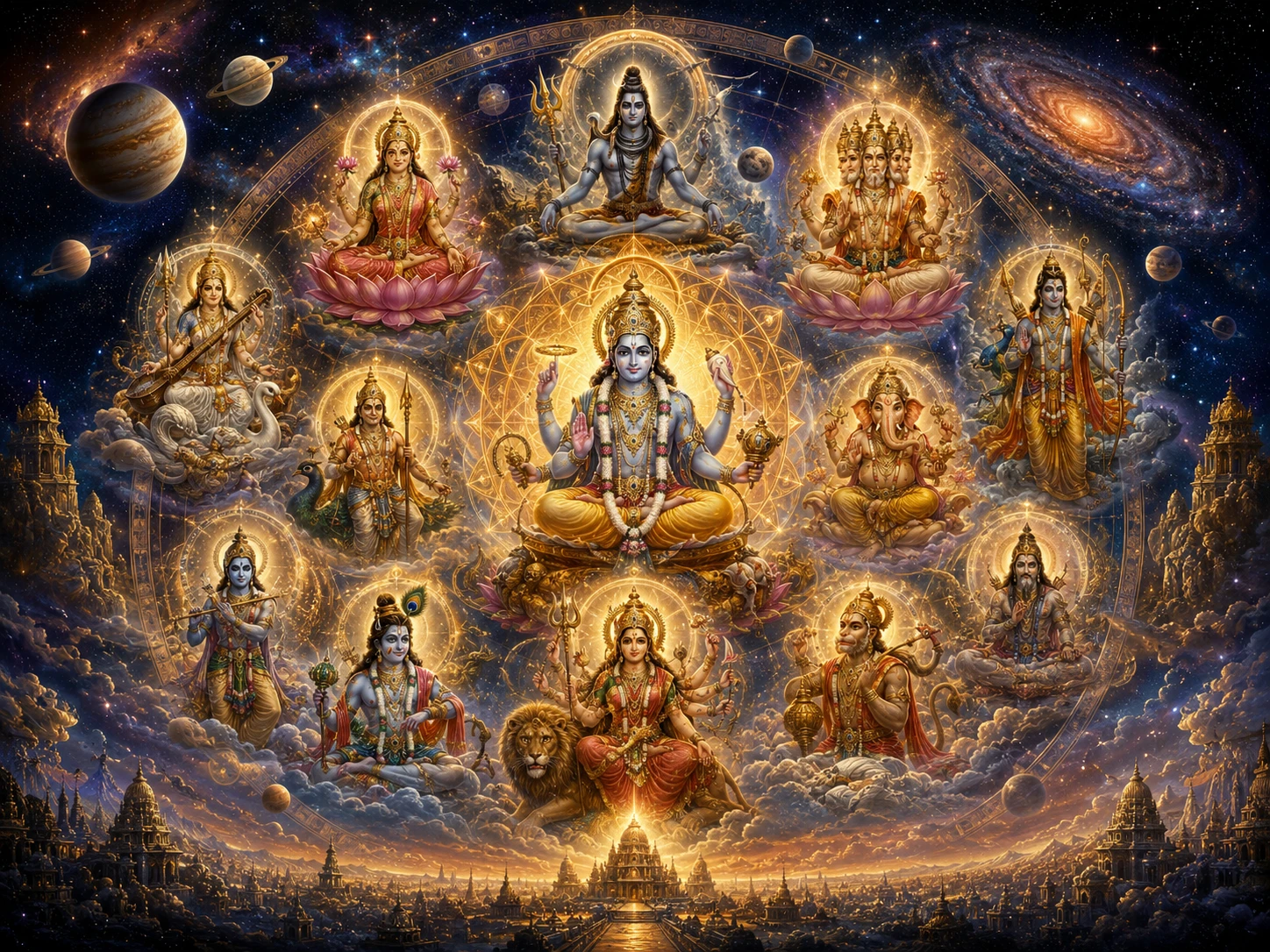
33 Koti Devata -- Why Hinduism Has 33 Types of Gods, Not 33 Crore
13 min read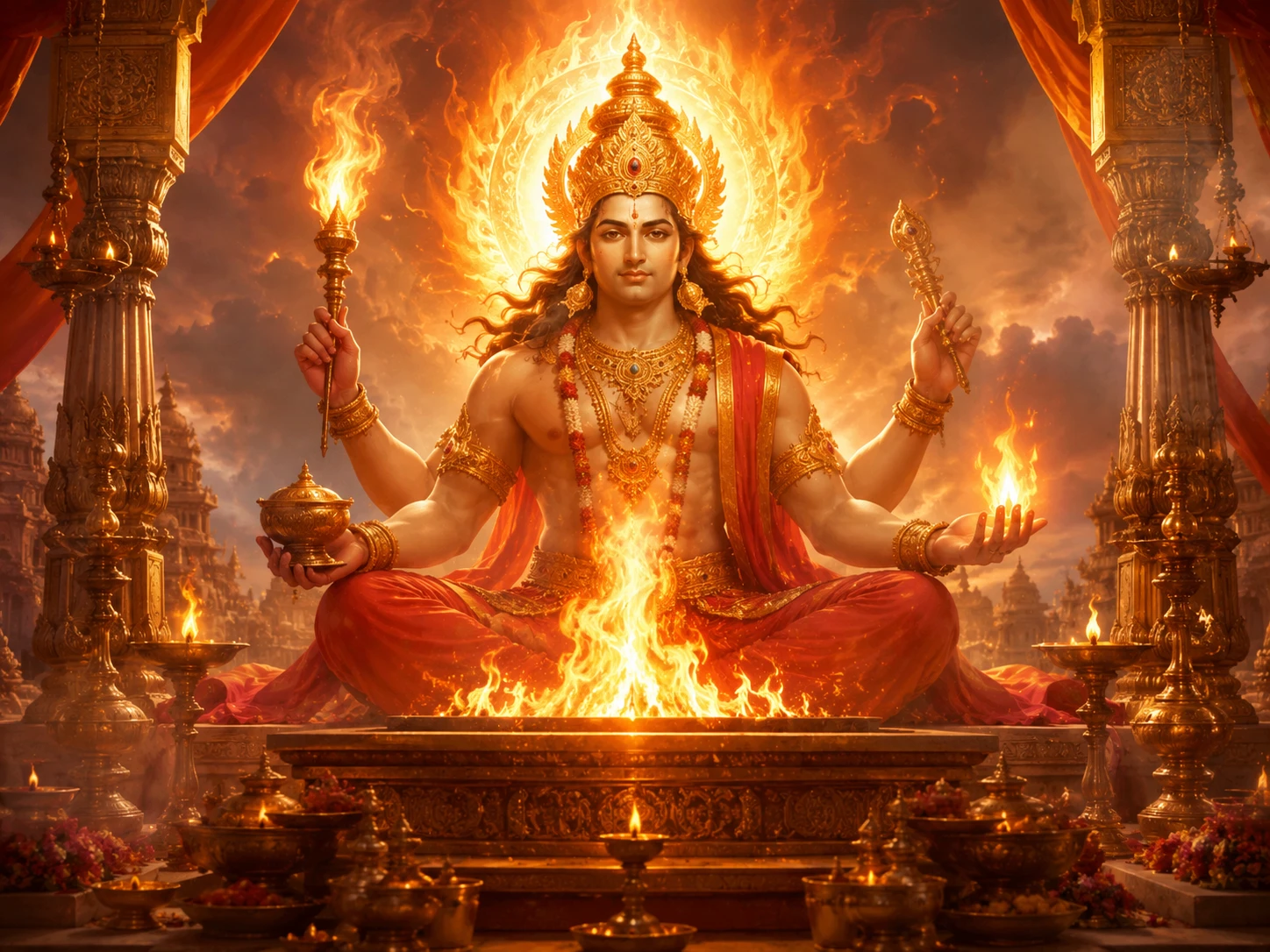
Agni -- The Fire God
19 min read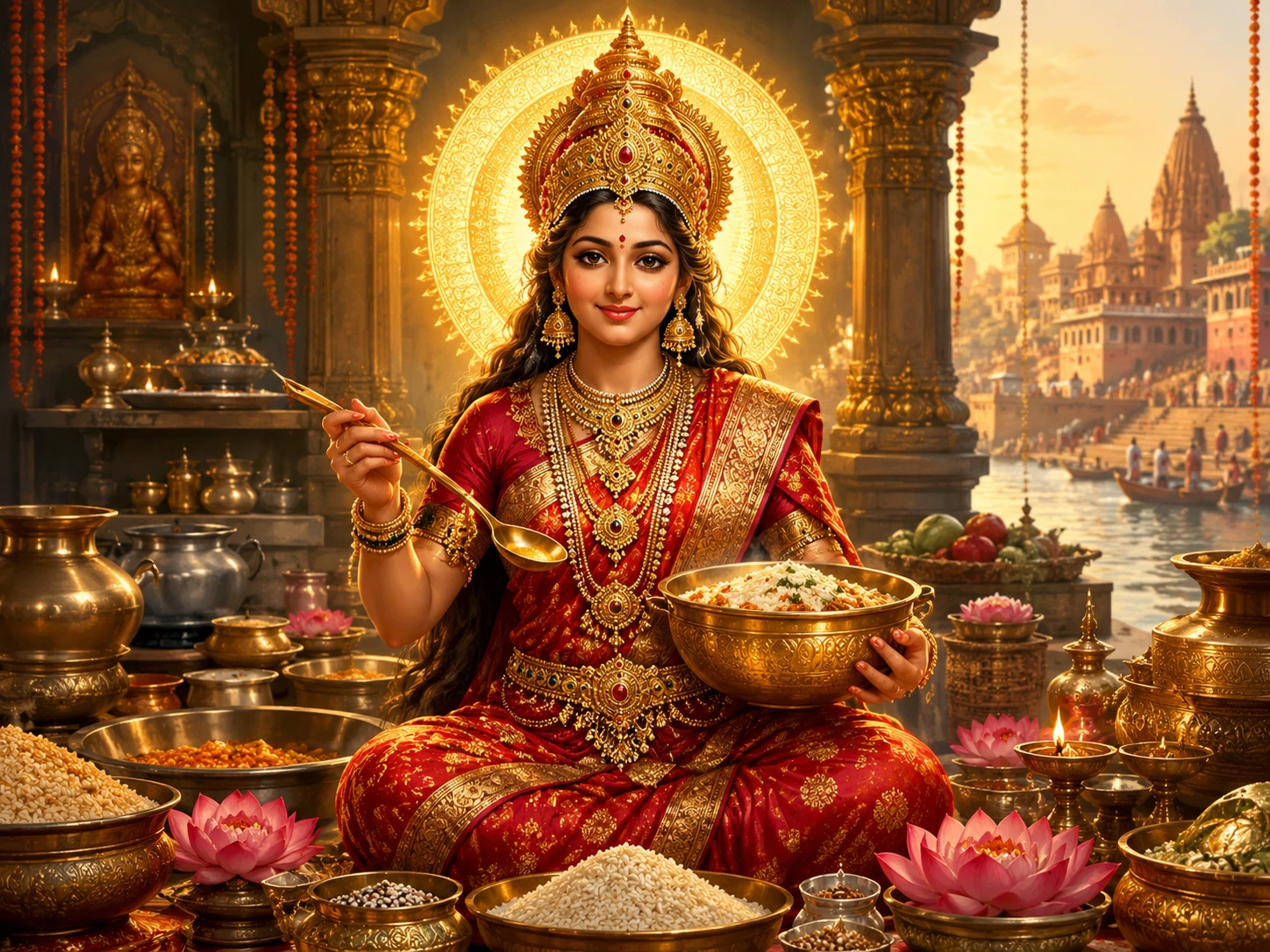
Annapurna -- Goddess of Food
19 min readThe same translation error that turned '33 Koti' into '33 crore' in Hinduism also happened in Buddhism. The Chinese translation of Buddhist texts rendered 'Sapta Koti Buddha' (7 Supreme Buddhas) as '7 Crore Buddhas.' The…
Deities AvatarsCommunity Reflections
🕉️
Be the first to share your reflection.