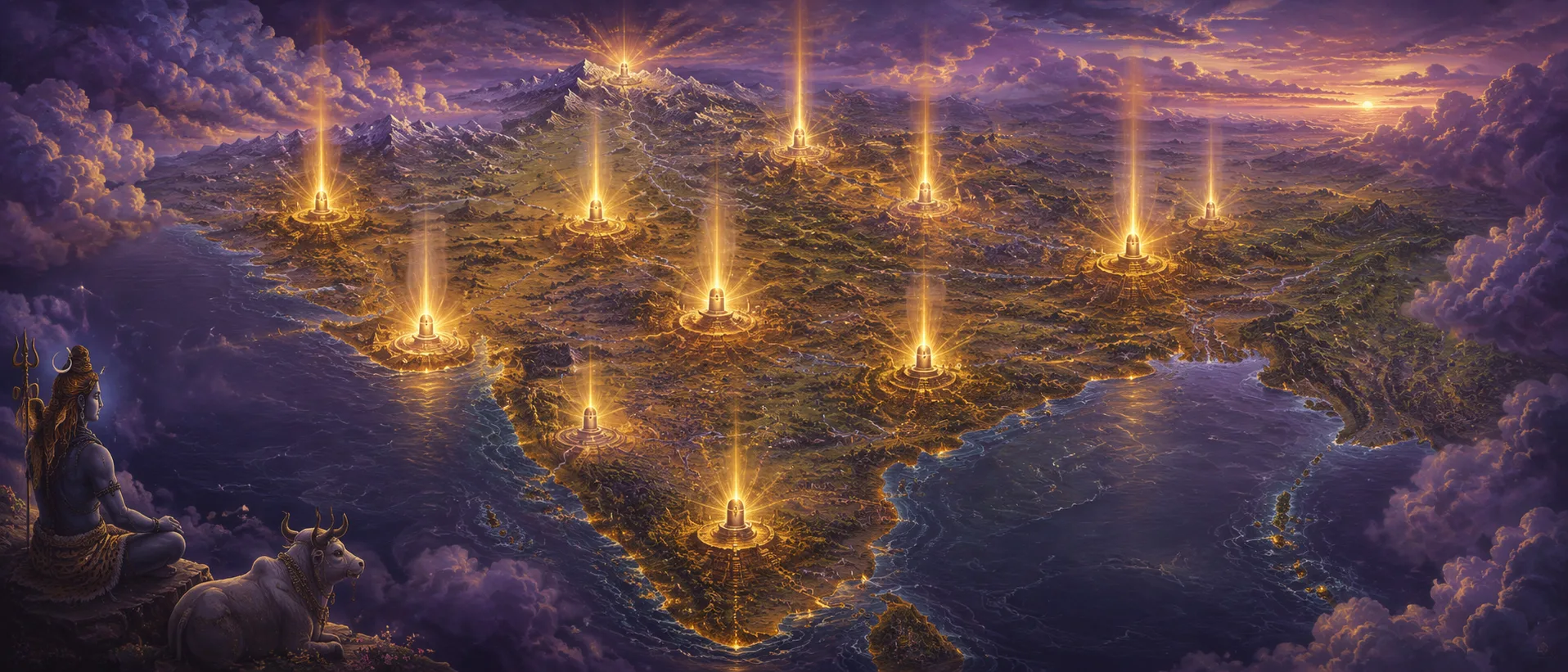
The Kotirudra Samhita is built around a single devotional project: telling the origin-story of each of the twelve Jyotirlingas, Shiva's self-manifested pillars of light, one by one — Somanatha's rescue of the moon-god Chandra from a curse, Mallikarjuna, Mahakala's protection of the devotee-child Shrikara, Omkareshvara's rise from the Vindhya mountain's penance, Kedareshvara through Nara-Narayana and the Pandavas, Bhimeshvara's origin in the destruction of the demon Bhima, Kashi Vishveshvara and Rudra's arrival in that city, Trimbakeshvara, Vaidyanatheshvara tied to the Ravana legend, Nageshvara born from the Rakshasas of Darukavana, Rameshvara consecrated by Rama himself, and finally Ghushmesha, closing the set. Woven through and after this sequence: the story of how Vishnu received the Sudarshana Chakra as a gift from Shiva's own worship, the complete thousand names of Shiva (Shiva Sahasranama) together with the fruits of reciting them, the full procedure and glory of the Shivaratri vow — including the well-loved story of a hunter who unknowingly kept the vow through a night of watchfulness and was liberated — and closing chapters distinguishing Shiva with attributes (saguna) from Shiva beyond them (nirguna), ending in a discourse on liberation and knowledge itself.
Chapters
Why it matters today
The Jyotirlinga cycle at this Samhita's heart remains the direct textual basis for the twelve Jyotirlinga pilgrimage circuit still followed by devotees across India today — each shrine's own local legend, as told at the site, traces back to exactly this text.