Skandha 7

Skandha 7

Saptama Skandha

by Sage Vyasa (Krishna Dvaipayana)

40 chapters · 2,253 shlokas

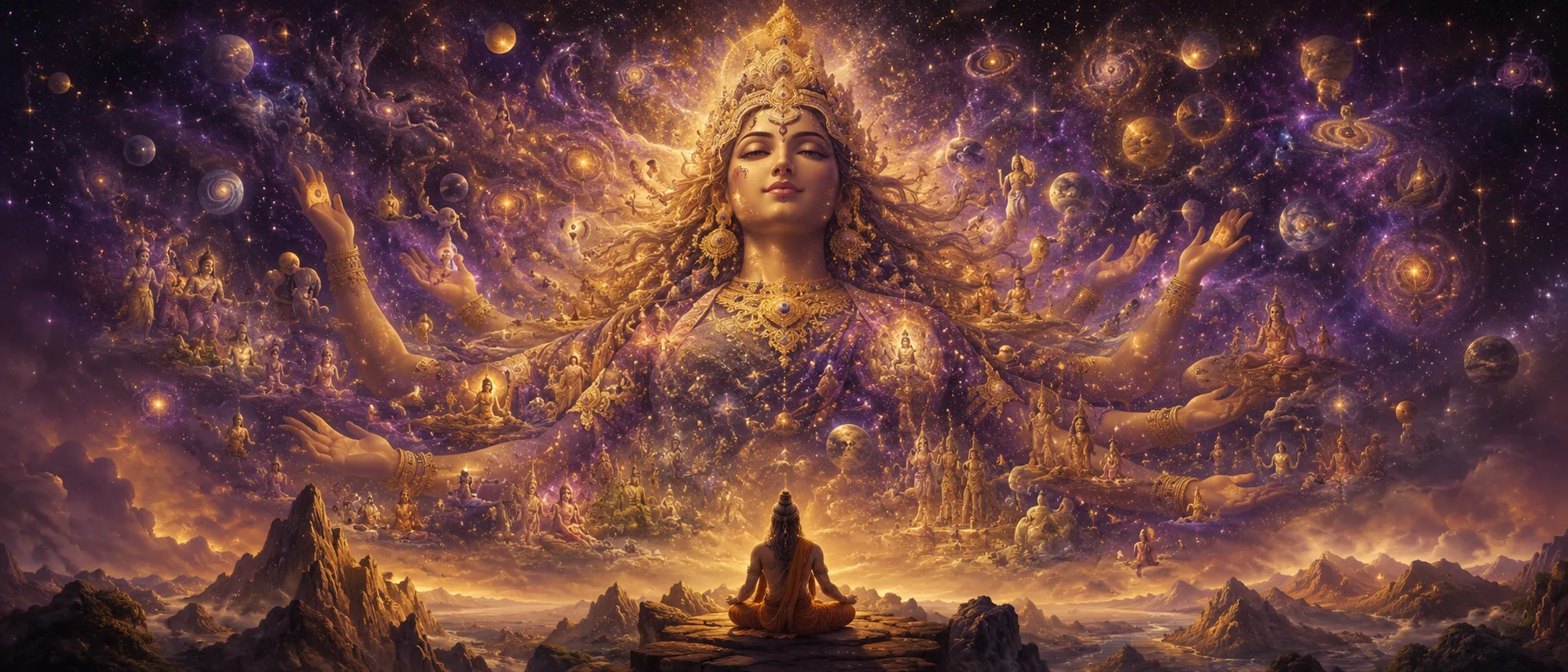
Skandha 7 opens with the aged sage Chyavana's marriage to the young princess Sukanya and the Ashvin twins' successful bid to win Soma-drinking rights among the gods, then traces the Ikshvaku dynasty through Mandhata and the doomed King Trishanku down to Harishchandra, whose full ordeal of truthfulness — selling his kingdom, his wife, and his son, working as a cremation-ground keeper, and finally being ordered to execute his own grieving wife — closes only with his son's resurrection and his own refusal to enter heaven without his subjects. A further narrative movement tells of Shatakshi-Shakambhari's manifestation during a great famine and catalogues the 108 Shakti Pithas, the sites where parts of Sati's body fell. The skandha's final and most celebrated section is the Devi Gita: the Goddess's own extended teaching on her individual and cosmic natures, a Virat-rupa vision of overwhelming cosmic form echoing the Bhagavad Gita's eleventh chapter, the liberating knowledge drawn from the Katha and Mundaka Upanishads, a full yogic path through the six chakras, the four ascending grades of devotion from tamasic to supreme (para), the sacred pithas and their festivals, and finally the rules of external worship — a complete, self-contained Vedanta text embedded within the larger Purana.

Chapters

1The Tale of Daksha Prajapati38 v2The Story of King Sharyati65 v3The Household Life of Chyavana and Sukanya64 v4The Ashvin Twins Counsel Sukanya56 v5Chyavana's Pledge to Win the Ashvins the Soma Draught59 v6The Contest over the Ashvins' Right to Soma61 v7Revata's Journey to Brahmaloka for Revati's Marriage52 v8The Lineage of Ikshvaku56 v9The Birth of Mandhata63 v10The Tale of Satyavrata58 v11Statecraft Taught to Satyavrata53 v12The Story of Trishanku64 v13Vishvamitra's Consolation to Lift Trishanku's Curse62 v14By Varuna's Grace, a Son Born to Shaivya55 v15Harishchandra Afflicted with Dropsy66 v16Vishvamitra Forbids the Slaying of the Brahmin's Son as Sacrificial Victim59 v17The Wager Between Vasishtha and Vishvamitra59 v18Harishchandra's Vow to Give Wealth to the Aged Brahmin58 v19Surrendering All to Kaushika, and the Giving of the Dakshina63 v20Harishchandra's Vow to Fast Until the Debt Is Paid46 v21Vishvamitra's Ultimatum and the Queen's Plea27 v22The Selling of Harishchandra's Wife and Son54 v23Harishchandra Sells Himself to the Chandala38 v24Harishchandra's Anguished Thoughts33 v25By the Chandala's Command, Harishchandra Takes Up the Sword89 v26The King's Resolve to Enter the Fire73 v27The Fruit of Hearing the Tale of Harishchandra42 v28The Story of Shatakshi83 v29The Gods' Austerities to Worship the Goddess45 v30Description of the Devi's Seats (Pithas)102 v31The Devi's Narration to the Gods on Parvati's Birth74 v32The Devi's Individual and Cosmic Forms50 v33The Vision of the Devi's Cosmic Form and the Gods' Hymn of Praise56 v34Knowledge as the Cause of Liberation50 v35The Means to Attain Mantra-Siddhi63 v36The Teaching of Brahmavidya30 v37The Glory of Devotion45 v38Sacred Places, Festivals, and Vows50 v39The Rules of Worship of the Devi47 v40The Rules of External Worship45 v

Why it matters today

The Devi Gita's deliberate structural echo of the Bhagavad Gita — including its own Virat-rupa vision — is a clear act of scriptural argument: by giving the Goddess a teaching this closely modeled on Krishna's, the text stakes an explicit claim that Devi's philosophical authority in Vedanta stands equal to Vishnu's most celebrated teaching.