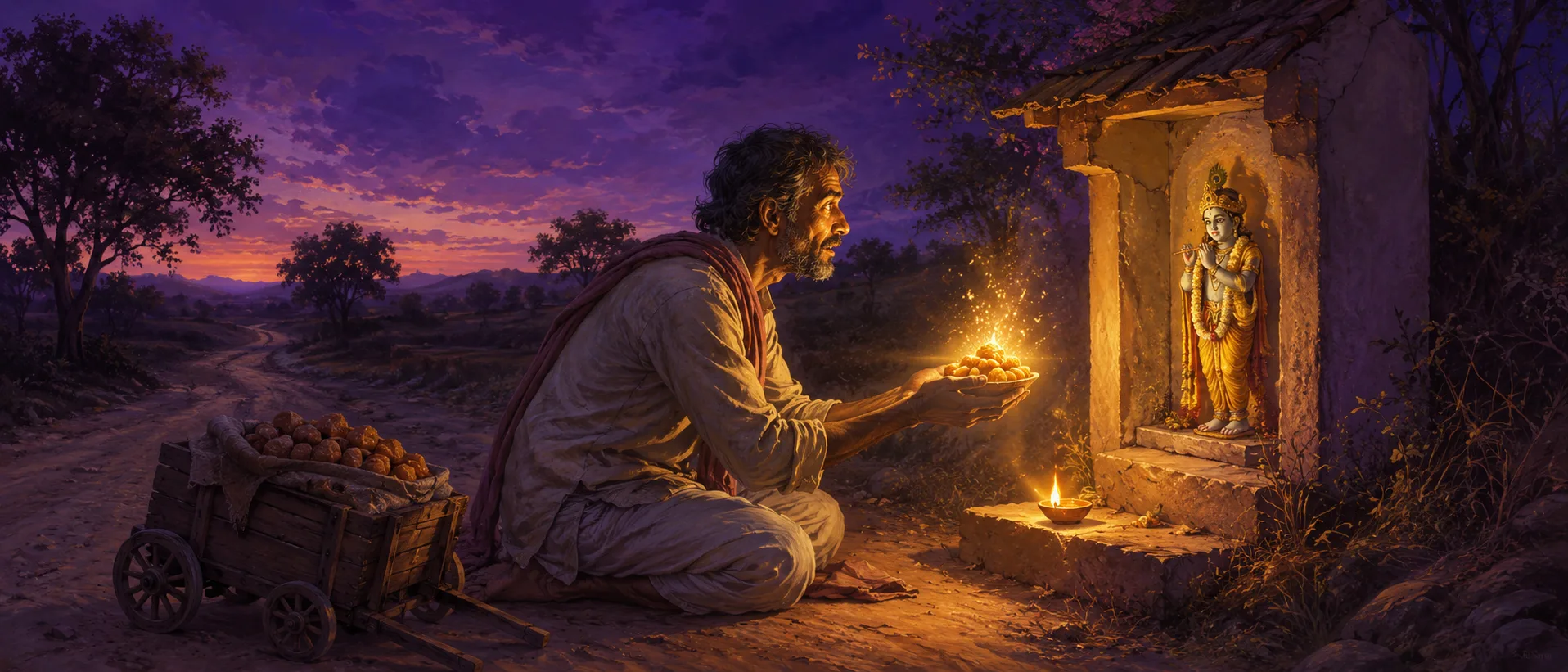
The Kriyayogasara closes the Padma Purana with a sustained argument for the power of devotional action, however small. Bhadratanu receives a boon at Purushottama-kshetra — the sacred site now known as Puri — establishing that pilgrimage site's own glory at length. The bandit Urvisha, offering a mere cart of molasses to Hari without full understanding, is transformed by the act; the text uses this to argue that the fruit of an offering depends less on the giver's knowledge than on the object offered and the recipient. A wide-ranging treatment of dana (gift-giving) follows — food, water, hospitality to the unexpected guest — before the khanda's centerpiece: the full glory of the Ekadashi vow, its own origin myth, and a vivid vision of Yama's realm shown to a doubting soul. The glory of Tulasi and the fruits of atithi-puja (guest-worship) follow, and the text closes by distinguishing the dharma proper to each of the four ages (Krita, Treta, Dvapara, Kali) before turning, in its final verses, to praise the Purana itself — the traditional closing gesture that ends the entire eighteen-book corpus of Puranas, here specifically the Padma.
Chapters
Why it matters today
The Urvisha episode's theological logic — that an offering's power lies more in the sincerity and object of the act than the giver's ritual knowledge — is a recurring theme across bhakti literature, and this Purana's telling is one of its more developed narrative treatments, making the point through a genuinely uncomprehending bandit rather than a already-devout figure.