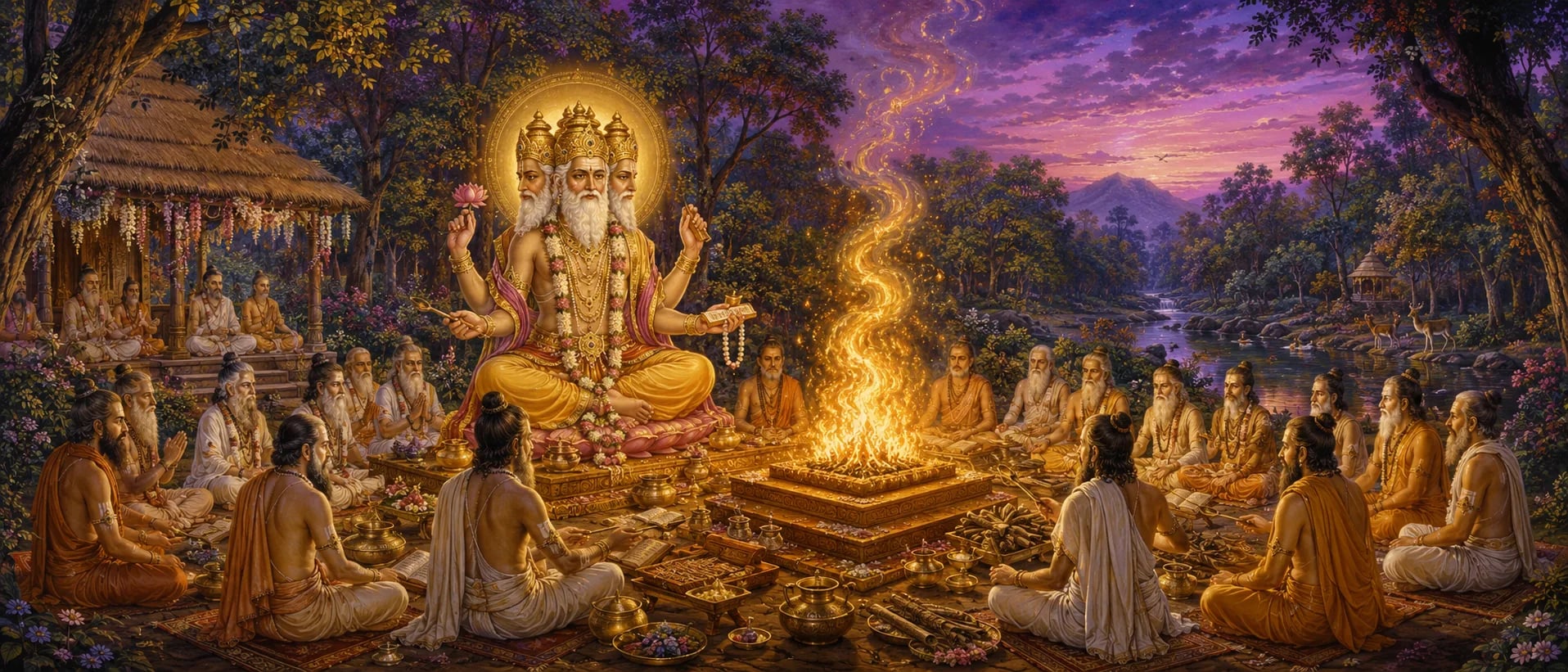
The Brahma Khanda opens with the Setu Khanda, the mahatmya of Rameshvaram and the bridge (Setu) Rama built to Lanka — a catalogue of the tirthas along its length, each with its own story of sin and absolution: Ashvatthama's purification after his night-slaughter of the sleeping Pandava camp, Paravasu's release from killing his own father, and a cycle of stories about a jackal and a monkey working out the karma of a past life together. The Dharmaranya Khanda follows: the founding of a forest sanctuary near the western coast in answer to Yudhishthira's own questions about dharma, widening into an extended manual of daily righteous conduct — purification, the five domestic sacrifices, the eight forms of marriage, and the gotra lineages and their presiding goddesses — interwoven with narrative interludes on right and wrong action. The khanda closes with the Brahmottara Khanda, a shorter capstone book whose own subject, fittingly, is the glory of hearing the Purana itself — the fruit of Purana-recitation, closing not only this khanda but pointing toward the devotional purpose of the entire eighteen-book corpus.
Chapters
Why it matters today
The Setu Khanda's identification of Rameshvaram with the Rama-Setu remains directly tied to one of India's most visited pilgrimage and temple sites today (Ramanathaswamy Temple), and the Dharmaranya Khanda's gotra-and-pravara material still underlies the lineage identifications used in Hindu ritual practice across much of western and southern India.